Counting skills Money Worksheets for Ages 5-8
5 filtered results
-
From - To
Enhance your child's counting skills with our engaging Money Worksheets designed specifically for ages 5-8! These interactive resources make learning about coins and bills fun and intuitive. Kids will practice counting money, identifying different denominations, and solving simple transactions through a variety of dynamic exercises. Our worksheets help build foundational math skills while developing financial literacy from an early age. Perfect for home or classroom use, these activities cater to diverse learning styles, ensuring every child gains confidence in handling money. Start your young learner's math journey with these valuable counting skills worksheets today!
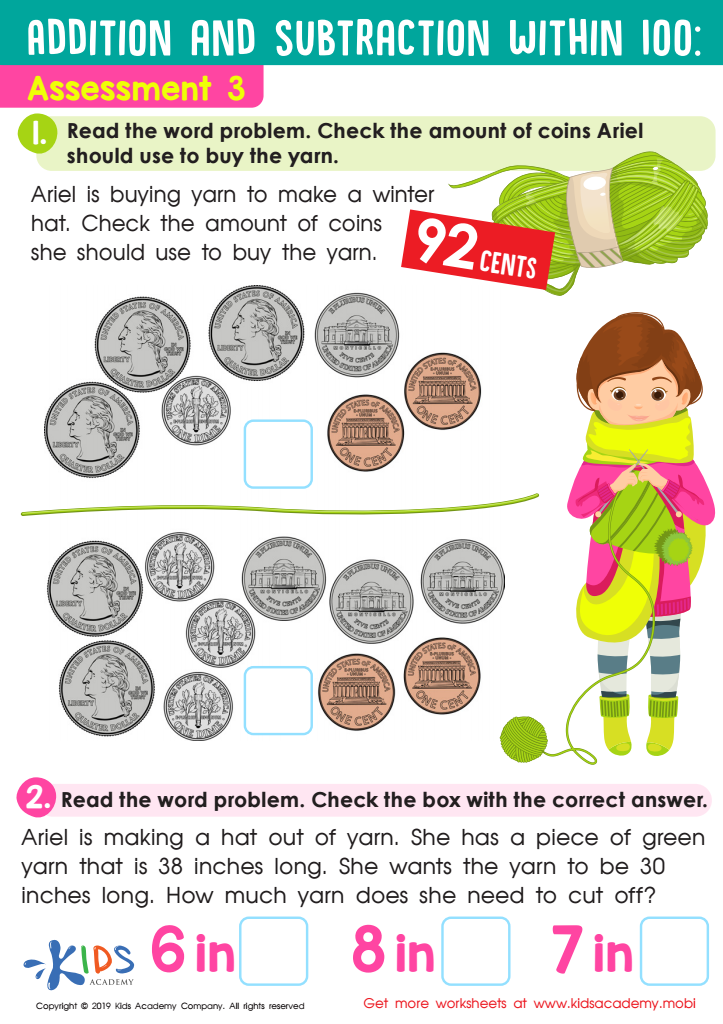
Assessment 3 Math Worksheet
 Assign to My Students
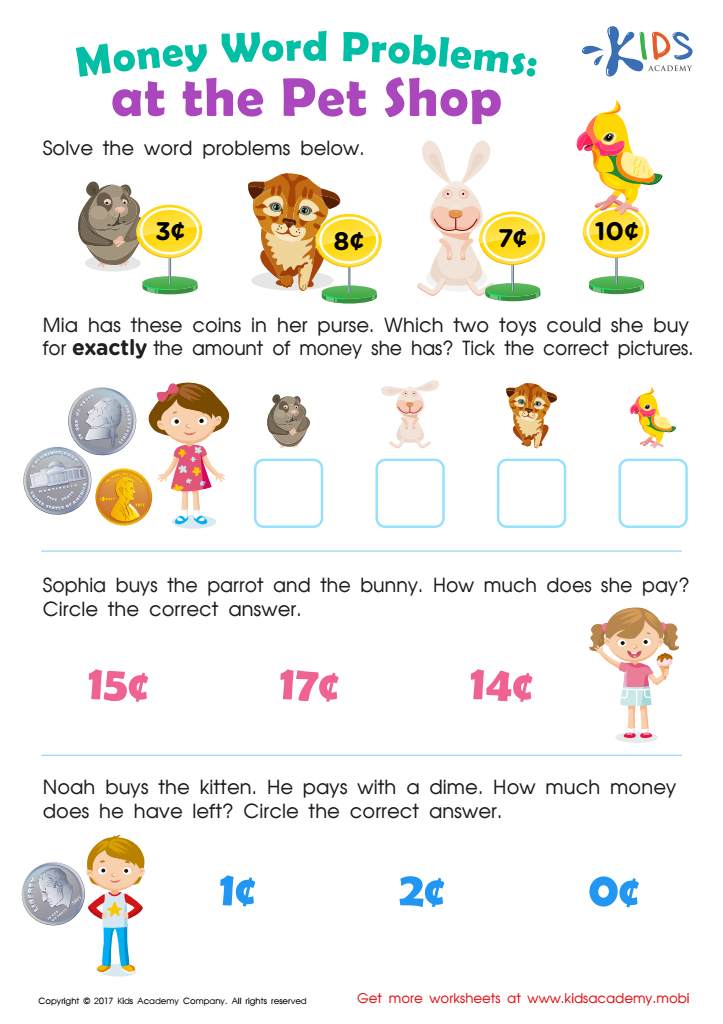
Pet Shop Worksheet
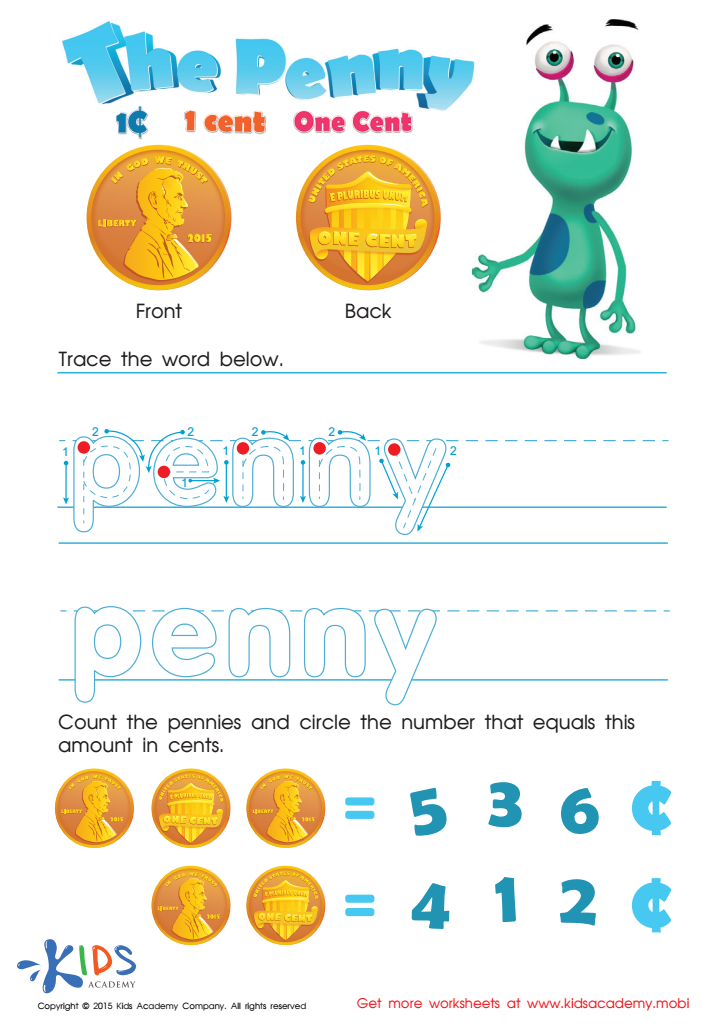
One Cent or the Penny Money Worksheet
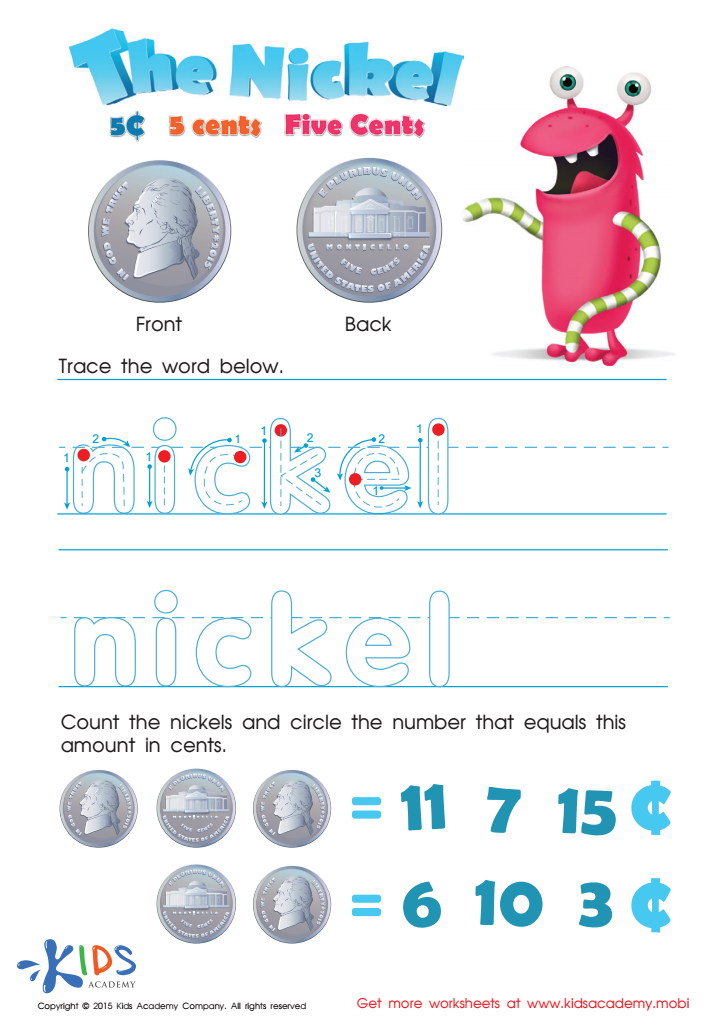
Five Cents or the Nickel Money Worksheet
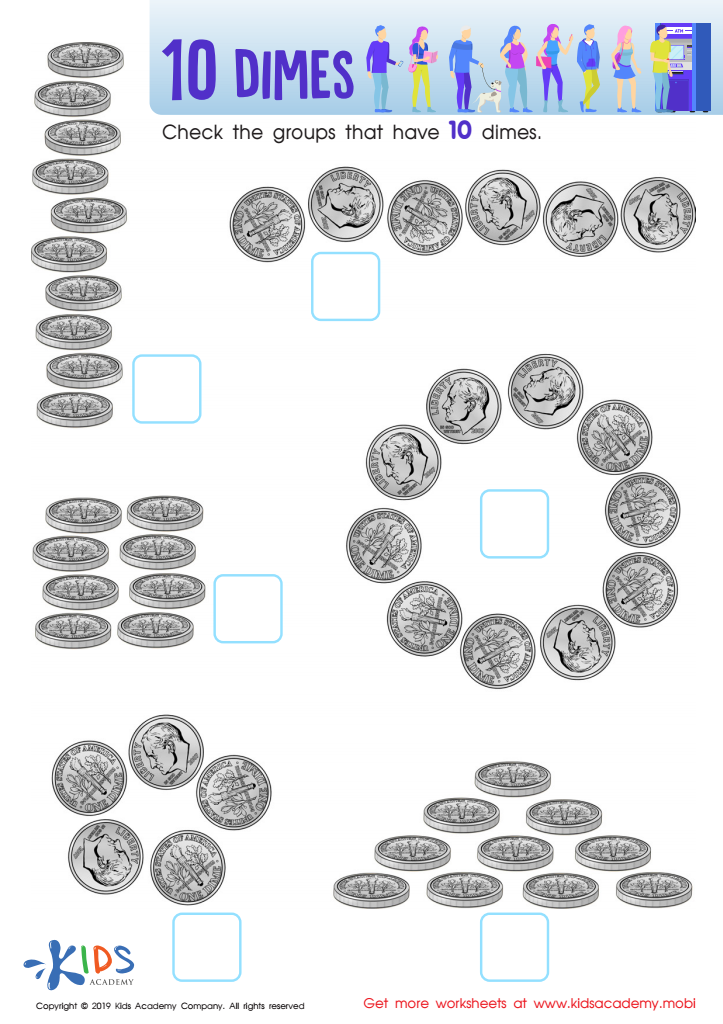
10 Dimes Worksheet








Counting skills and money management for children aged 5 to 8 are crucial building blocks for their future financial literacy and overall cognitive development. At this age, children are naturally curious about numbers and engage in play-based activities. Developing counting skills through money-themed games enhances their mathematical understanding, reinforcing concepts such as addition, subtraction, and sequencing.
Learning to count money helps children understand the value of currency and the importance of saving, budgeting, and making financial decisions. This foundation encourages responsible spending habits from an early age. Engaging in money-related activities—such as giving children an allowance or involving them in simple transactions—instills confidence and independence while also fostering discussions about the worth of items and financial choices.
Furthermore, these skills contribute to a child's problem-solving abilities and critical thinking. Watching parents and teachers model positive money behavior helps children internalize these lessons. As children progress in their education, strong counting and money skills will support their math proficiency and everyday decision-making. By investing in these skills, parents and teachers can ensure children are better prepared for a financially responsible future, nurturing both their academic abilities and life skills.








