Money recognition Money Worksheets for Ages 5-8
5 filtered results
-
From - To
Enhance your child's money recognition skills with our engaging Money Worksheets designed for ages 5-8. Our fun and interactive printable resources help young learners identify different coins and bills, making money concepts easily understandable. Each worksheet offers a variety of exercises, from sorting coins to counting money, ensuring a well-rounded approach to learning. Perfect for at-home practice or in the classroom, these worksheets encourage hands-on learning and build essential financial literacy skills. Designed with colorful visuals and age-appropriate challenges, our Money Worksheets will captivate young minds and provide a solid foundation for understanding money in everyday life. Start learning today!
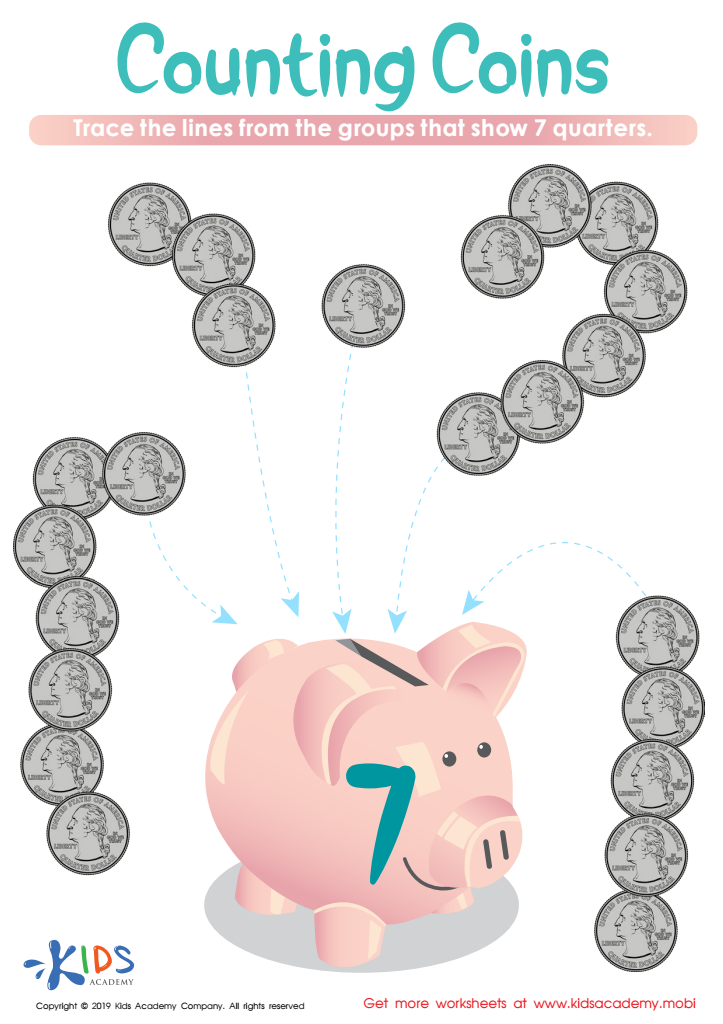
Counting Coins Worksheet
 Assign to My Students
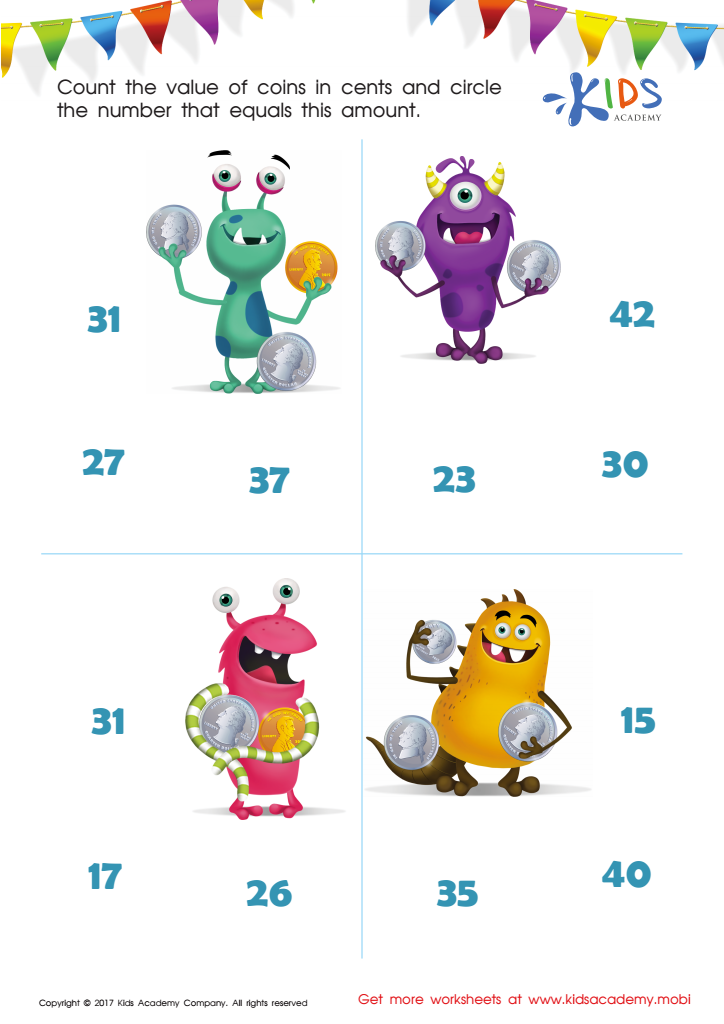
How Many Coins Money Worksheet
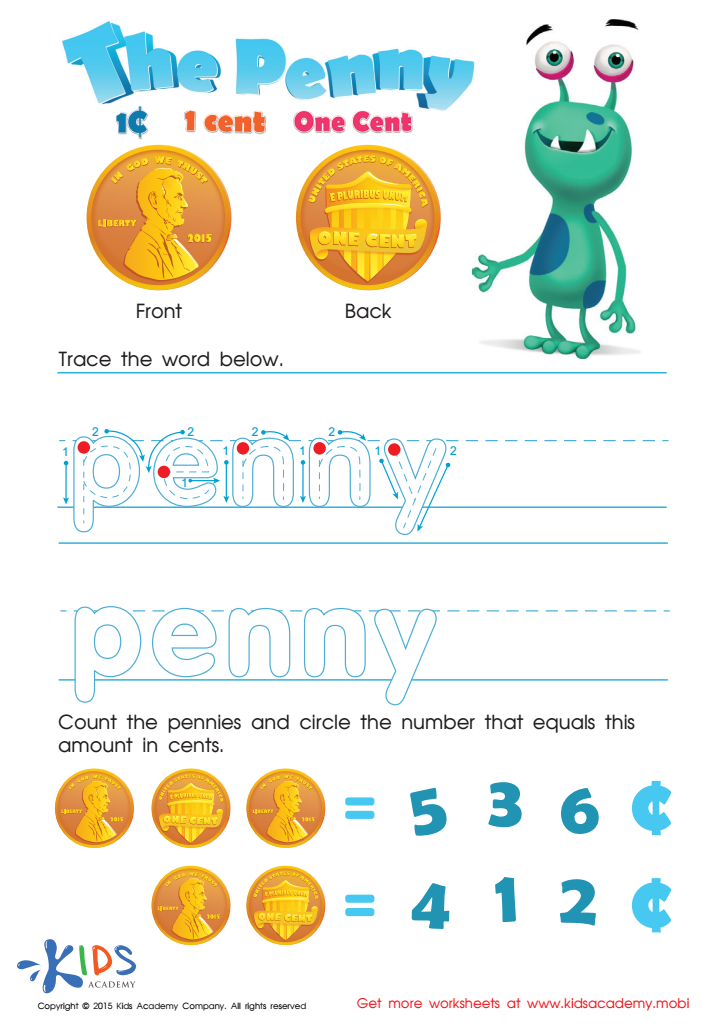
One Cent or the Penny Money Worksheet
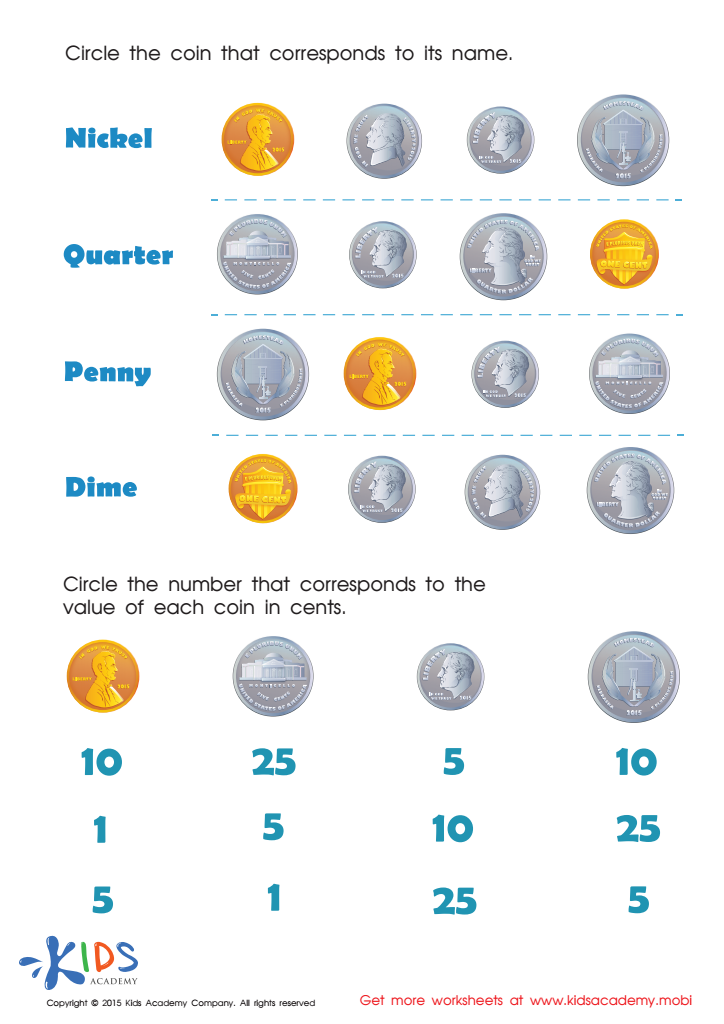
Coin Names and Values Money Worksheet
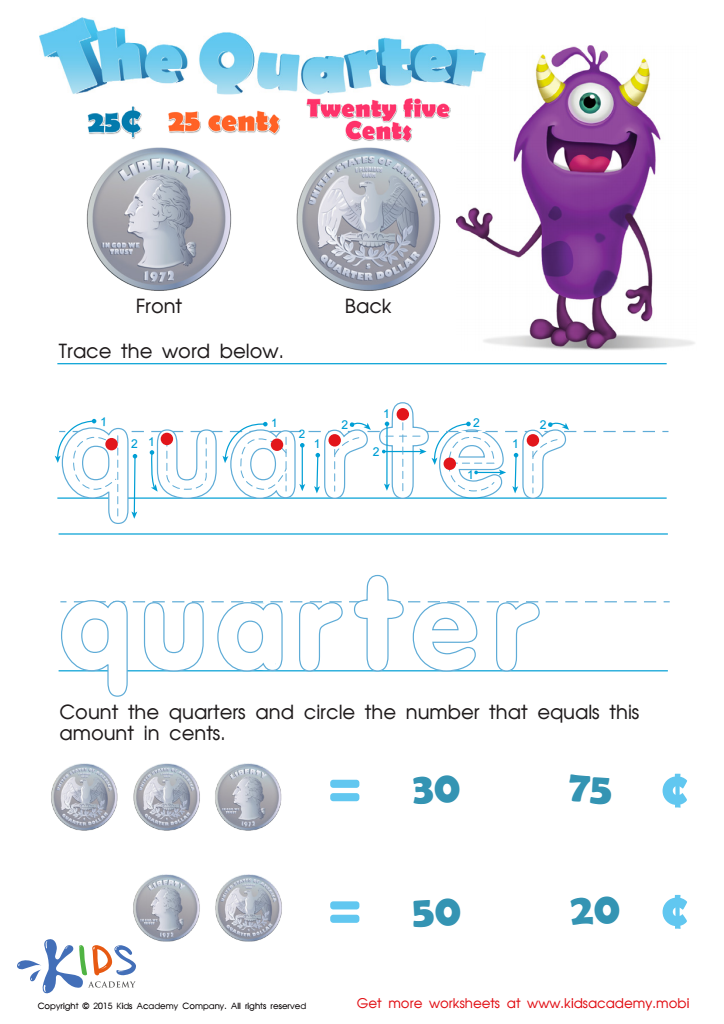
Twenty Five Cents or the Quarter Money Worksheet







Money recognition is a vital skill for children ages 5-8, as it lays the foundation for financial literacy. At this age, children begin to understand the concepts of currency, value, and exchange, which are essential for navigating everyday transactions. Teachers and parents should care about this skill because it empowers children to make informed choices about spending, saving, and even sharing money.
Recognizing different coins and bills helps children grasp the principle of money as a medium of exchange. Early exposure to money helps develop their cognitive skills, including counting and categorizing, enhancing their overall math abilities. Additionally, it encourages practical life skills, such as budgeting and responsible spending when they eventually receive allowances or gifts.
By teaching money recognition, adults can also instill positive attitudes towards saving and managing finances, promoting a mindset of financial responsibility from a young age. Engaging activities, like play shops or budgeting games, make learning enjoyable and memorable, making it easier for children to grasp these concepts. Ultimately, prioritizing money recognition at this developmental stage prepares children for future financial decisions, fostering independence and confidence as they grow.








