Fine Motor Skills Fractions of Shapes Worksheets for Ages 5-8
7 filtered results
-
From - To
Explore our "Fine Motor Skills Fractions of Shapes Worksheets" tailored for kids aged 5-8. These engaging, printable worksheets merge math learning with fine motor skills development, making fractions fun and accessible. Each worksheet features shape divisions that children can color, trace, and shade, helping them grasp fractions while enhancing their dexterity and pencil control. Ideal for young learners, these activities support classroom or home learning, ensuring foundational math skills grow alongside crucial fine motor abilities. Spark your child’s creativity and confidence in math with our expertly designed resources—available now at Kids Academy.
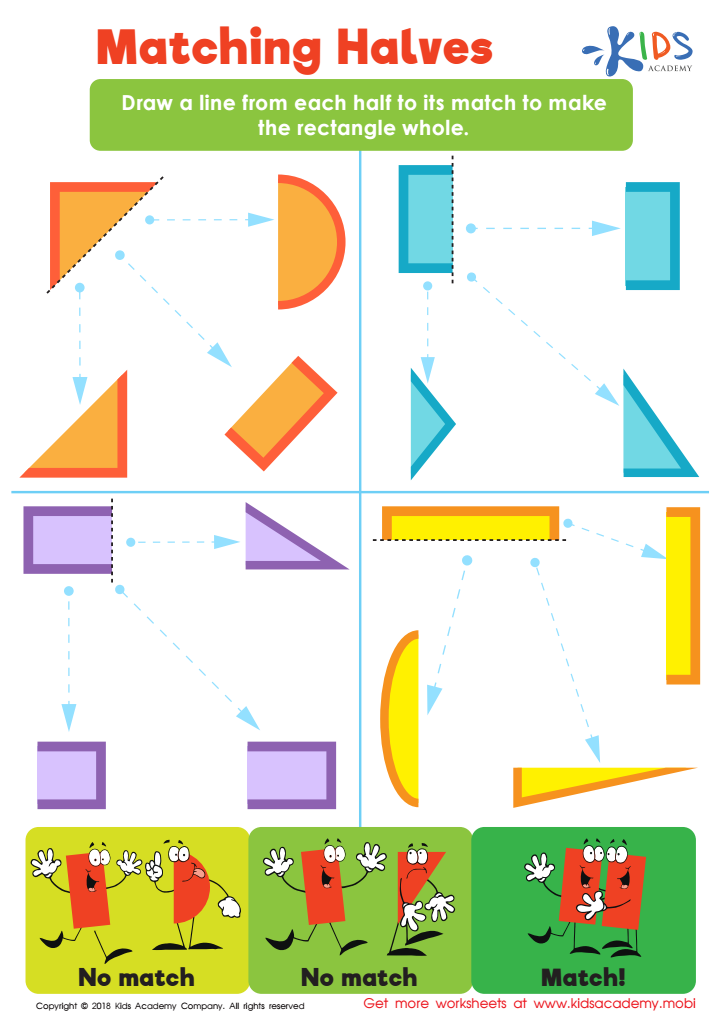
Matching Halves Worksheet
 Assign to My Students
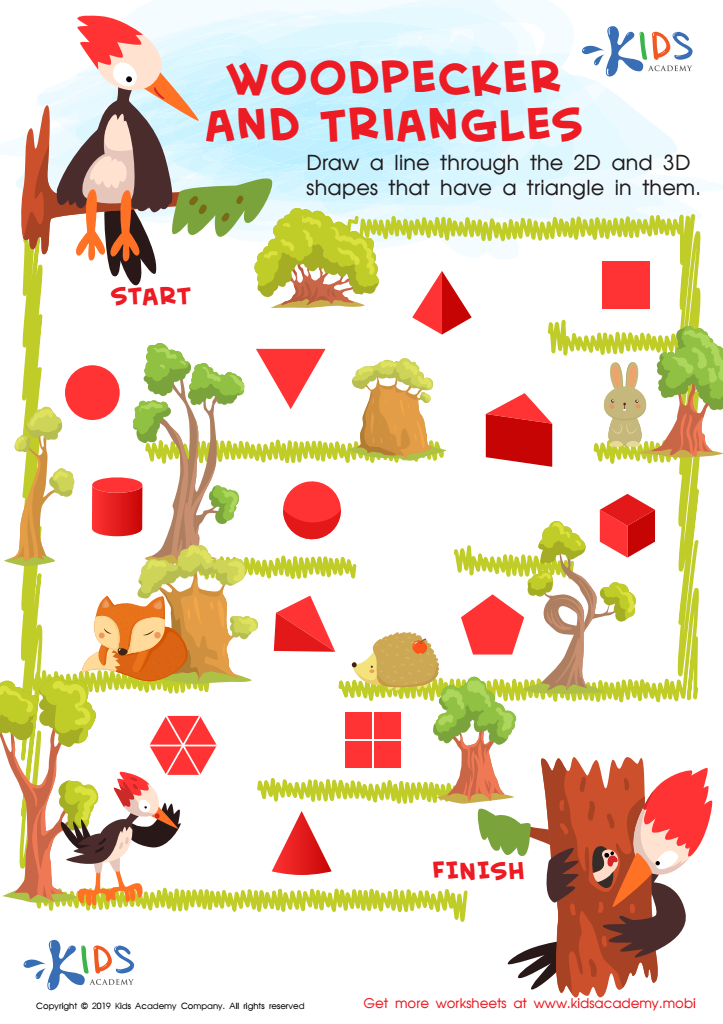
Woodpecker and Triangles Worksheet
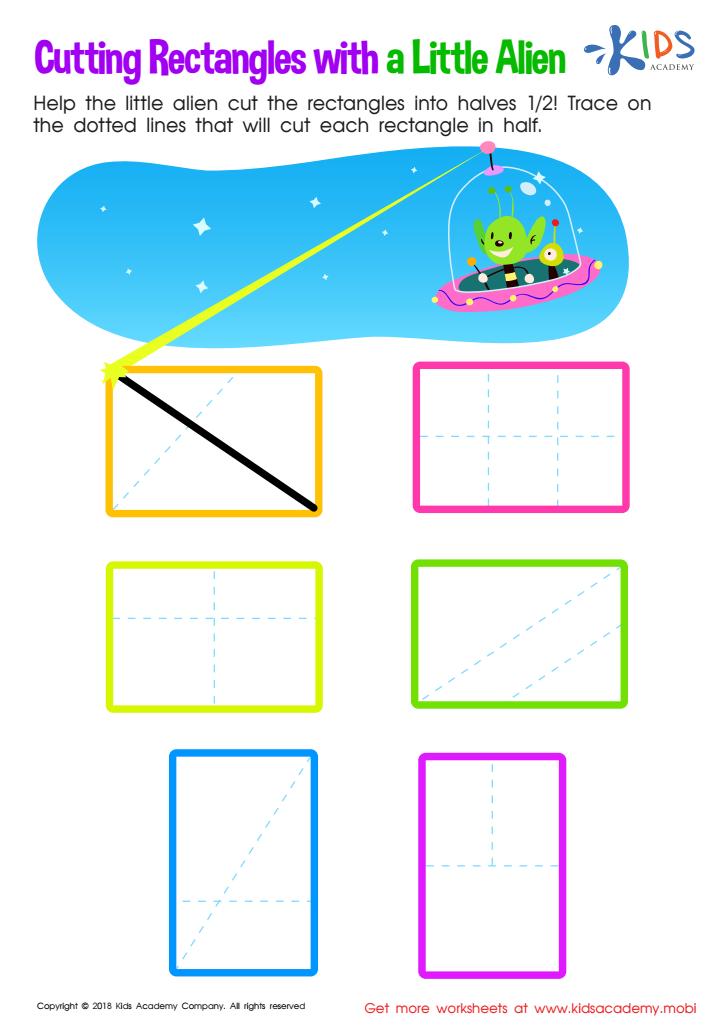
Cutting Rectangles with Alien Worksheet
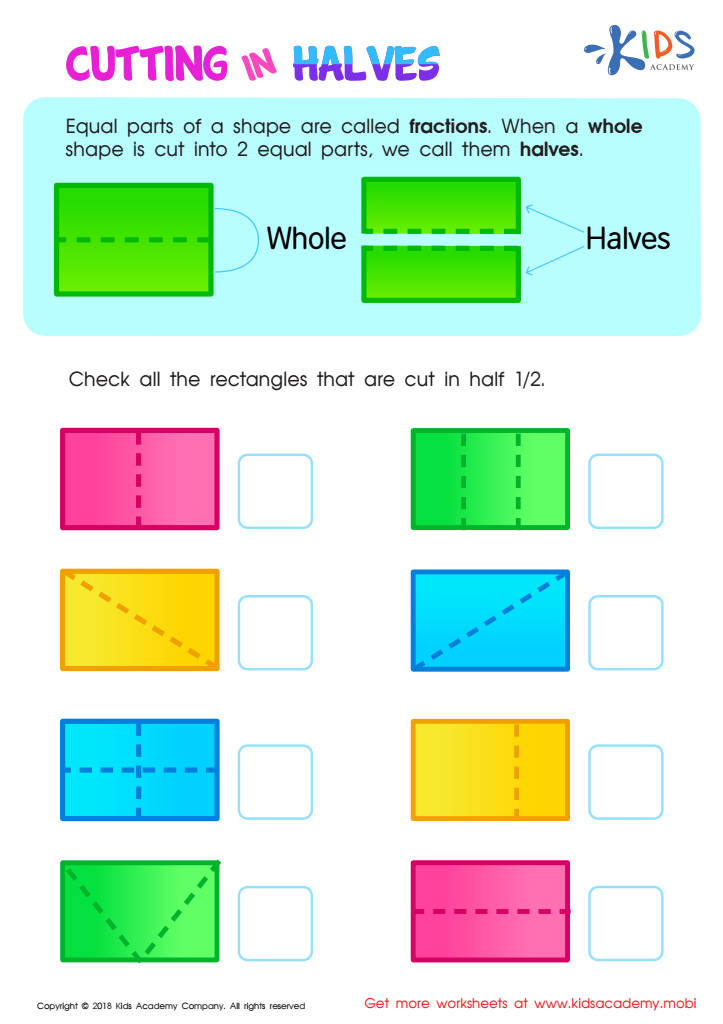
Cutting in Halves Worksheet
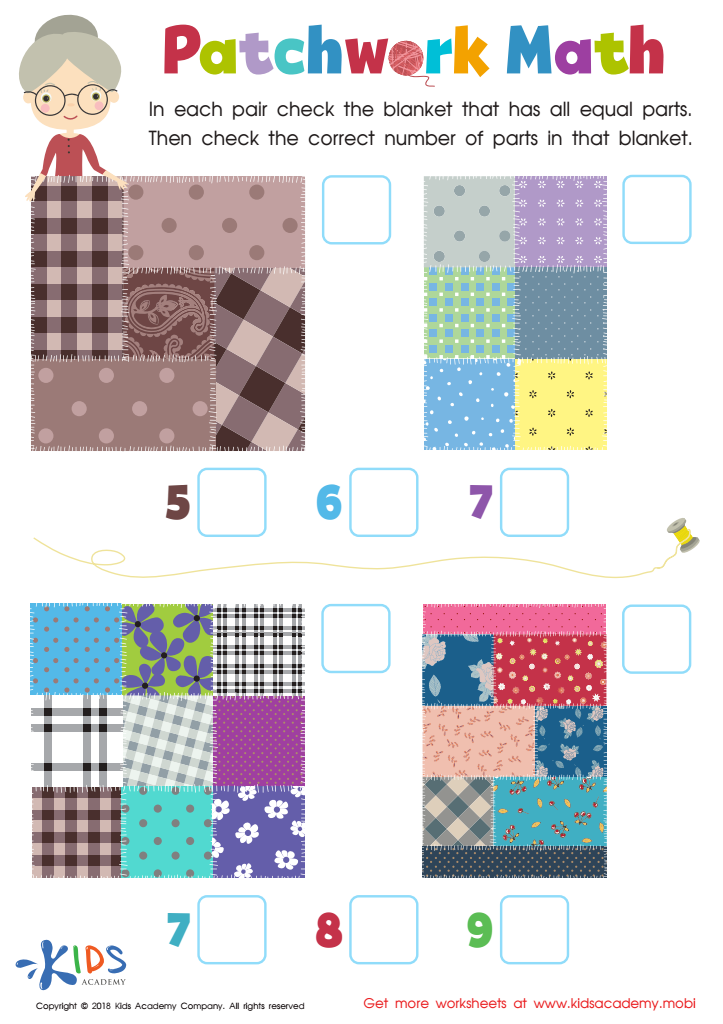
Patchwork Math Worksheet
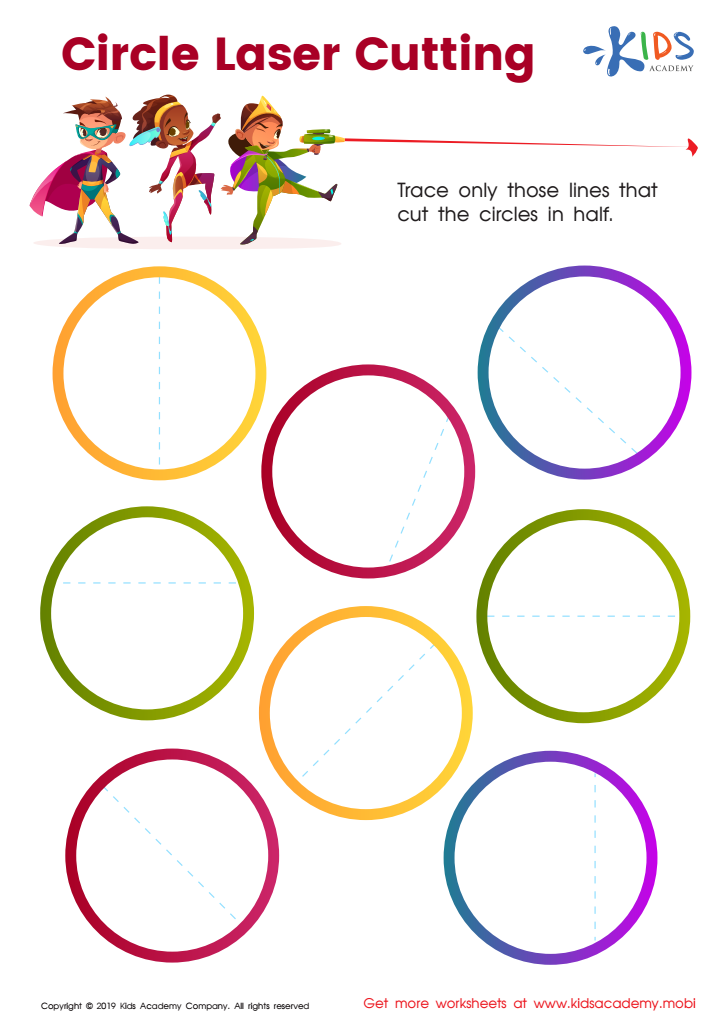
Circle Laser Cutting Worksheet
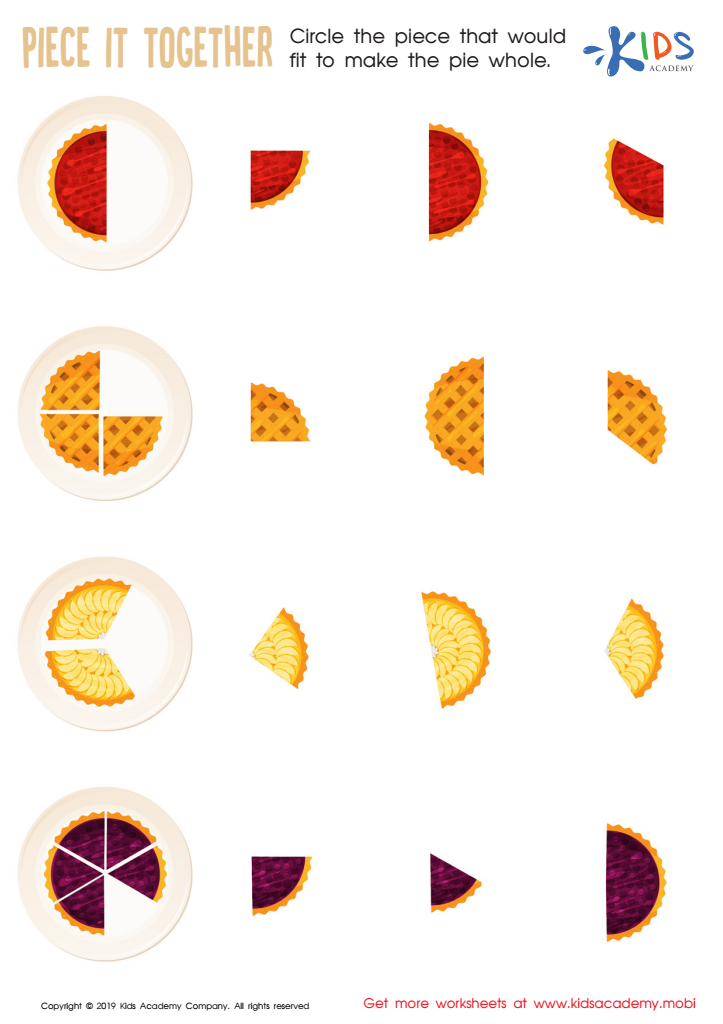
Piece it together Worksheet








Fine motor skills and understanding fractions are pivotal formative experiences for children aged 5-8, often referred to as early childhood. Fine motor skills pertain to the development of muscle control in small movements, specifically with hands and fingers. Mastering these skills enables children to perform essential tasks like writing, buttoning clothes, and using utensils, which promote independence and self-confidence. Engaging in activities that enhance fine motor skills, such as drawing fractions of shapes, sequentially prepares children for more complex literacy and numeracy skills.
Handling fractions through visual representation (like shaded parts of shapes) involves cognitive processes that support math learning in a concrete manner. When children draw fractions of shapes, they not only understand mathematical concepts about parts and wholes but also refine their spatial awareness and problem-solving abilities. These activities integrate both cognitive development and physical coordination, creating well-rounded, hands-on learning experiences.
Parents and teachers should value incorporating fine motor task exercises relating to fractions because they lay down a fundamental framework for future academic success, encourage a deeper intellectual understanding, and instill practical life skills. These foundational practices ultimately contribute to a child’s overall cognitive, physical, and emotional development during crucial formative years.