Problem-Solving Skills Fractions Worksheets for Ages 5-8
3 filtered results
-
From - To
Unlock young minds' potential with our Problem-Solving Skills Fractions Worksheets designed for ages 5-8. These engaging, interactive worksheets help children grasp fundamental fraction concepts in a fun, approachable manner. Through practical problems, visual aids, and creative exercises, kids will learn to identify, compare, and use fractions while enhancing critical thinking skills. Ideal for early learners, these resources provide step-by-step guidance to build confidence in math. Our worksheets ensure a strong mathematical foundation, preparing children for future academic success. Download these effective tools today and watch your child's problem-solving abilities soar!
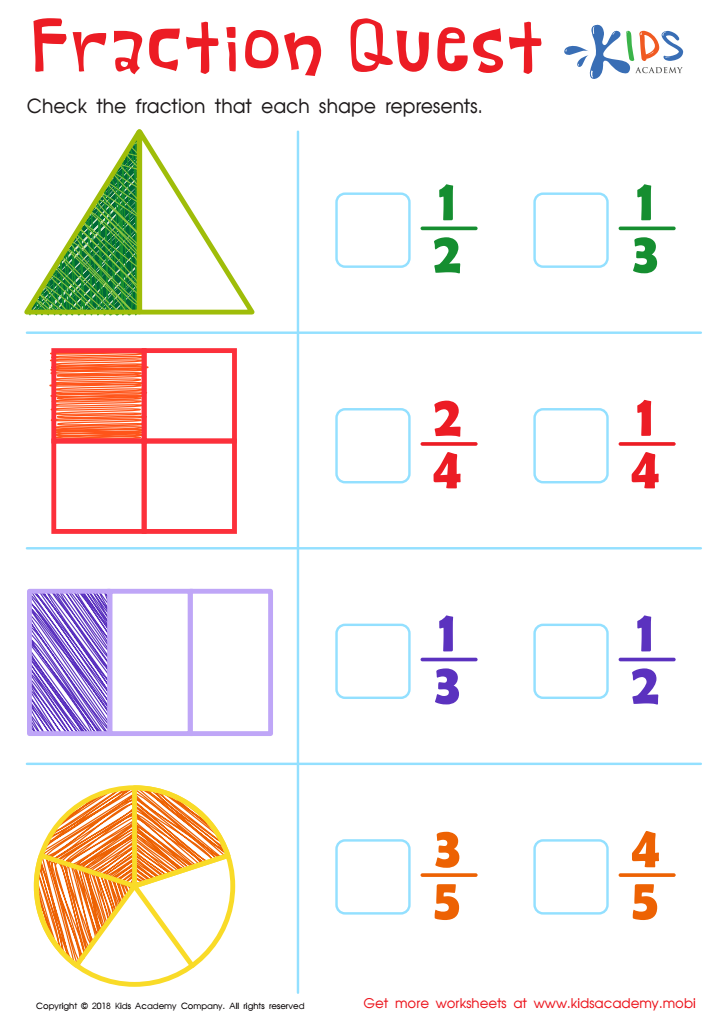
Fraction Quest Worksheet
 Assign to My Students
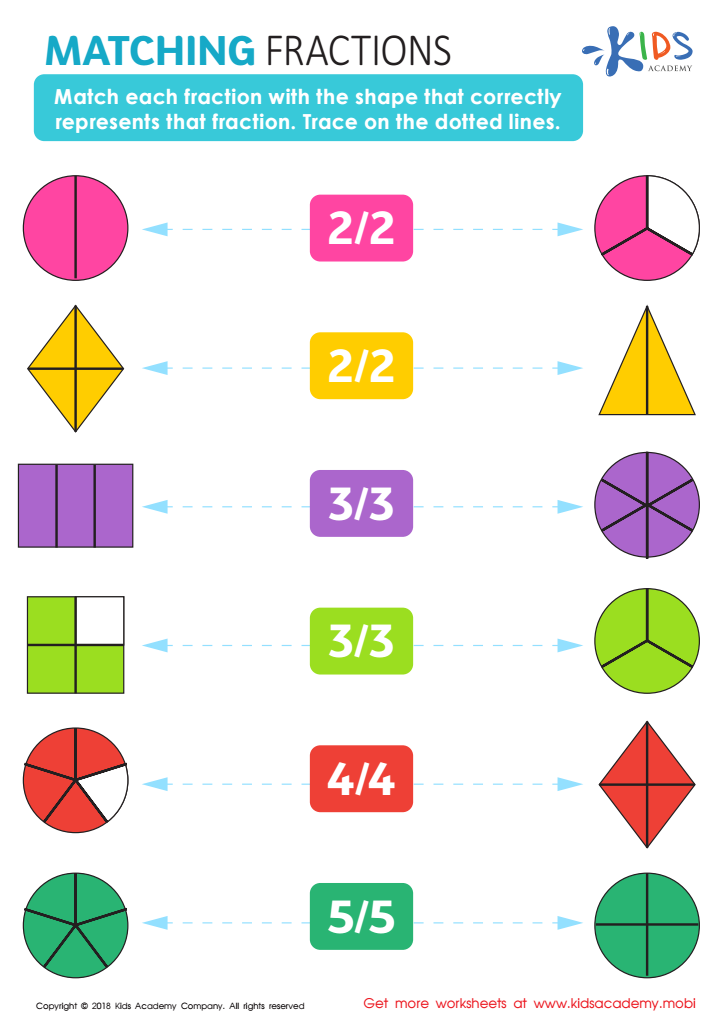
Matching Fractions Worksheet
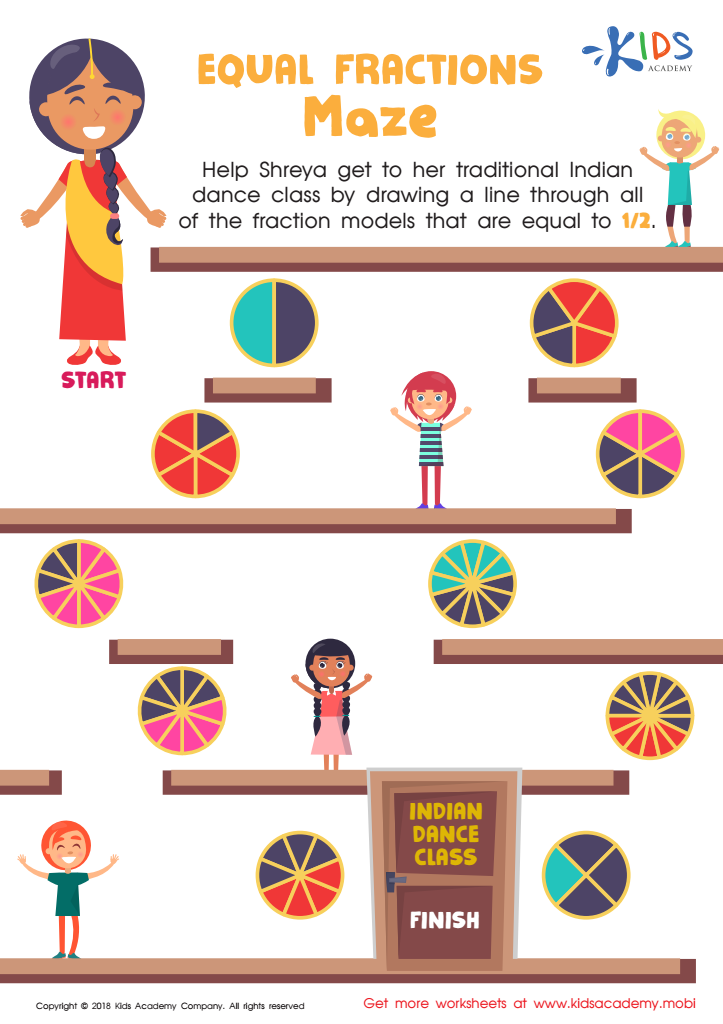
Equal Fractions Maze Worksheet








Parents and teachers should prioritize problem-solving skills in fractions for children aged 5-8 because this foundational knowledge is key to their mathematical development and overall cognitive growth. At this formative age, children develop the critical thinking and analytical skills that will support their academic journey and everyday decision-making. Understanding fractions, even at a basic level, helps children grasp the concept of division and the relation between parts and wholes, which are fundamental in various aspects of mathematics.
Moreover, engaging with fractions enriches children’s problem-solving toolkit, encouraging them to think logically and approach problems methodically. These skills translate beyond mathematics—for instance, when they share toys or divide snacks, they practice fairness and equality in a practical context.
Introducing fractions early also helps demystify the subject, making math more accessible and less intimidating as they advance in their education. It lays the groundwork for more complex mathematical concepts like decimals, percentages, and ratios. Furthermore, early exposure to problem-solving encourages perseverance and the growth mindset, where challenges are perceived as opportunities to develop and learn.
Therefore, investing time and effort into teaching fractions and problem-solving at an early age fosters a positive attitude toward math, equips children with essential life skills, and builds a strong foundation for future academic successes.








