Differentiating shapes Geometry Worksheets for Ages 5-8
3 filtered results
-
From - To
Discover our engaging Differentiating Shapes Geometry Worksheets, specifically designed for young learners aged 5-8. These worksheets support your child in identifying, comparing, and differentiating various shapes through fun and interactive activities. With colorful visuals and expertly crafted exercises, kids will strengthen their understanding of geometry concepts while developing critical thinking and fine motor skills. Perfect for classroom or at-home learning, our worksheets provide a solid foundation in early geometric principles. Help your child excel in their educational journey with these innovative resources from Kids Academy. Explore today and ignite a love for learning geometry!
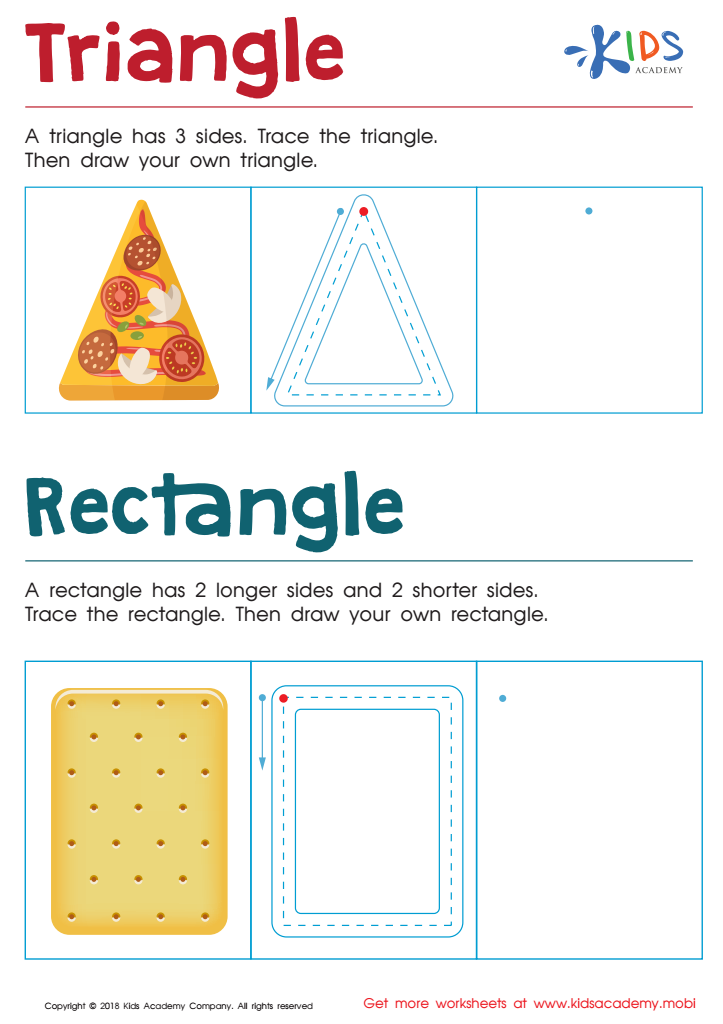
Triangle Rectangle Worksheet
 Assign to My Students











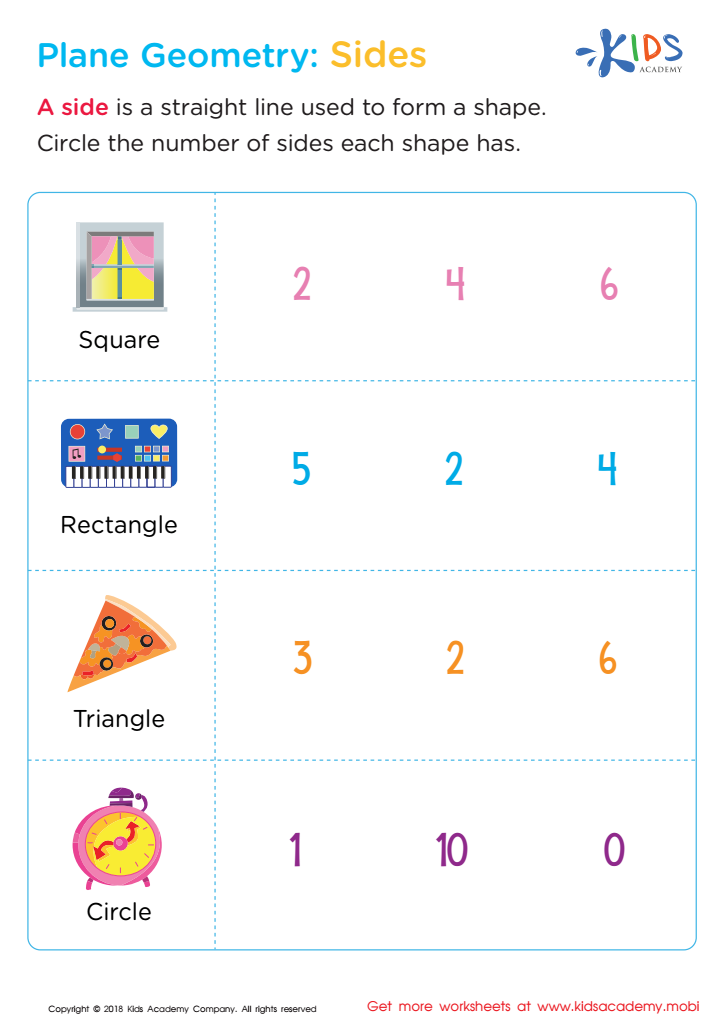
Plane Geometry: Sides Worksheet
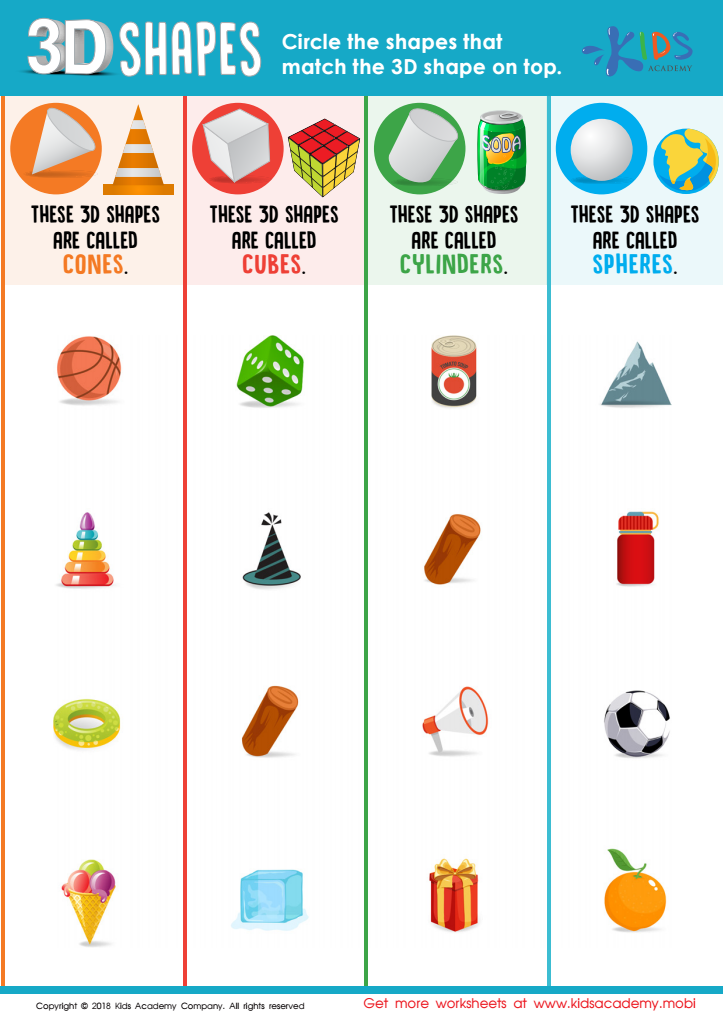
3D Shapes Worksheet








Understanding and differentiating shapes is a fundamental component of early childhood education that profoundly influences cognitive and spatial development in children aged 5-8. At this formative age, children are naturally curious and absorb knowledge quickly; exposing them to geometry can enhance their problem-solving and analytical skills. Recognizing and naming shapes form the foundation for more advanced mathematical concepts that children will encounter later, such as fractions, symmetry, and geometry.
Shapes also relate to daily life, providing a practical context for learning. By identifying shapes in their environment, children become more observant and learn to categorize objects based on common characteristics. For instance, comparing a circular pizza with rectangular books helps them understand dimensions and spatial relationships.
For teachers, incorporating diverse and fun activities around shapes enables differentiated instruction, catering to individual learning styles and paces. Through hands-on experiences like building with blocks or drawing, children engage kinesthetically, visually, and audibly, fostering a deeper understanding and retention.
For parents, observing their child’s growing capability and excitement in recognizing shapes boosts their engagement in their child’s learning journey, forging a stronger family-education link. Thus, focusing on differentiating shapes contributes significantly to holistic early childhood development, equipping children with essential skills for future academic and life success.








