Fraction visualization Geometry Worksheets for Ages 5-8
6 filtered results
-
From - To
Unlock the magic of learning with our Fraction Visualization Geometry Worksheets designed for children aged 5-8. Perfectly tailored to simplify complex concepts, these worksheets from Kids Academy enable young learners to grasp fractions effortlessly through engaging, hands-on activities. Each worksheet brings geometry into play, helping kids visualize fractions in a captivating and accessible manner. By combining interactive designs with age-appropriate challenges, we make learning fractions fun and intuitive. Set your child up for success in mathematics by turning abstract numbers into visual and easy-to-understand formats. Dive into our collection and watch your child's confidence soar!
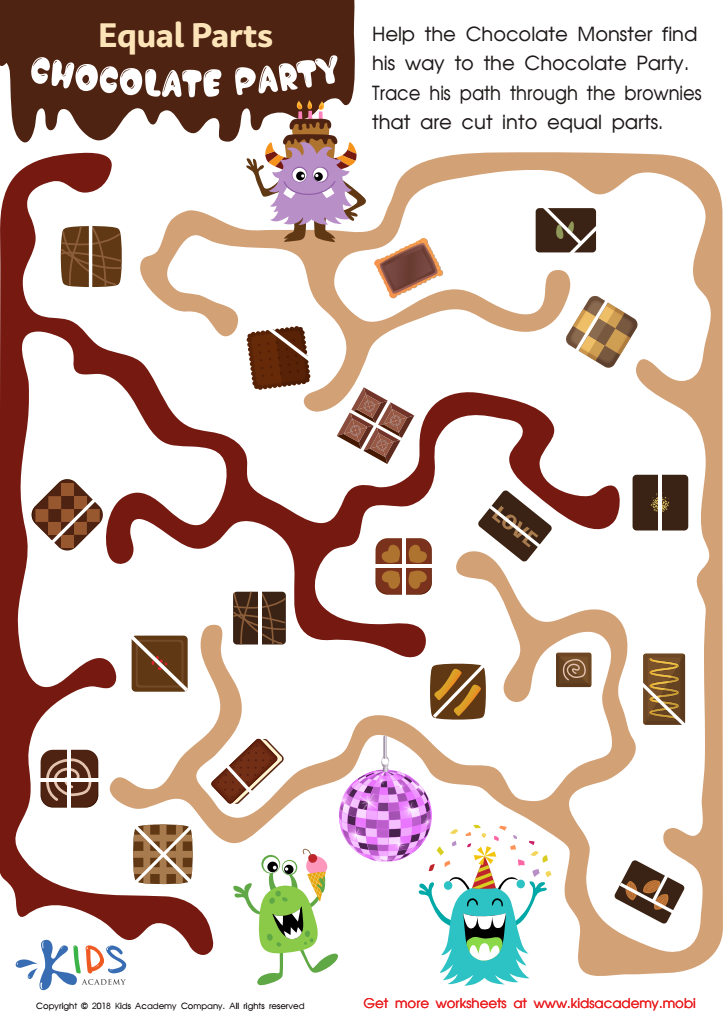
Equal Parts: Chocolate Party Worksheet
 Assign to My Students











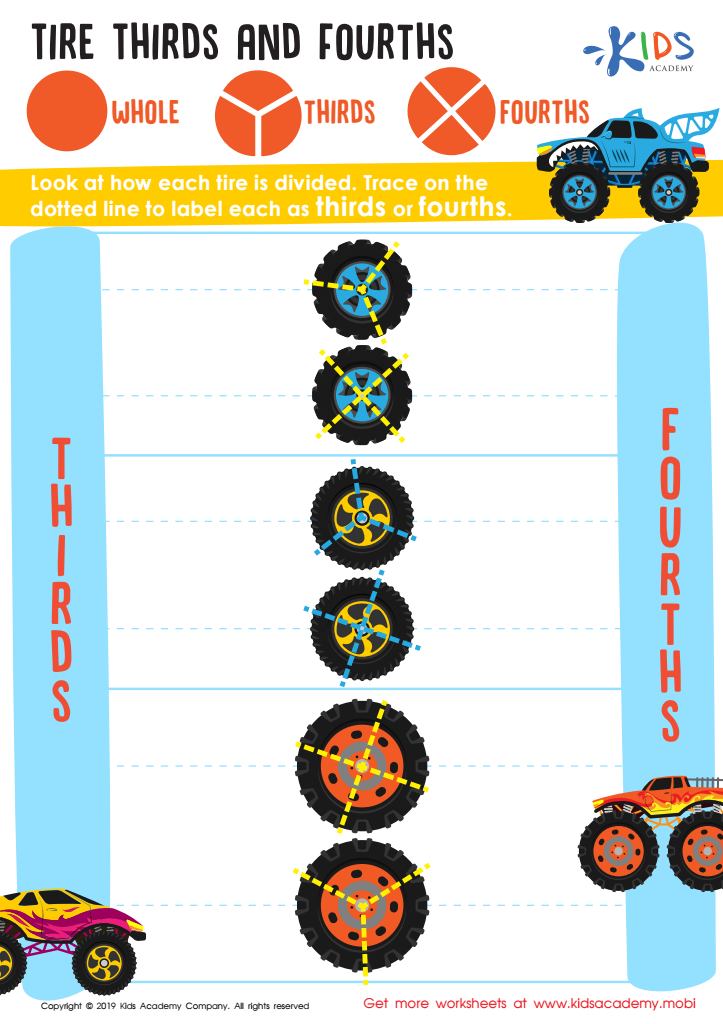
Tire Thirds and Fourths Worksheet
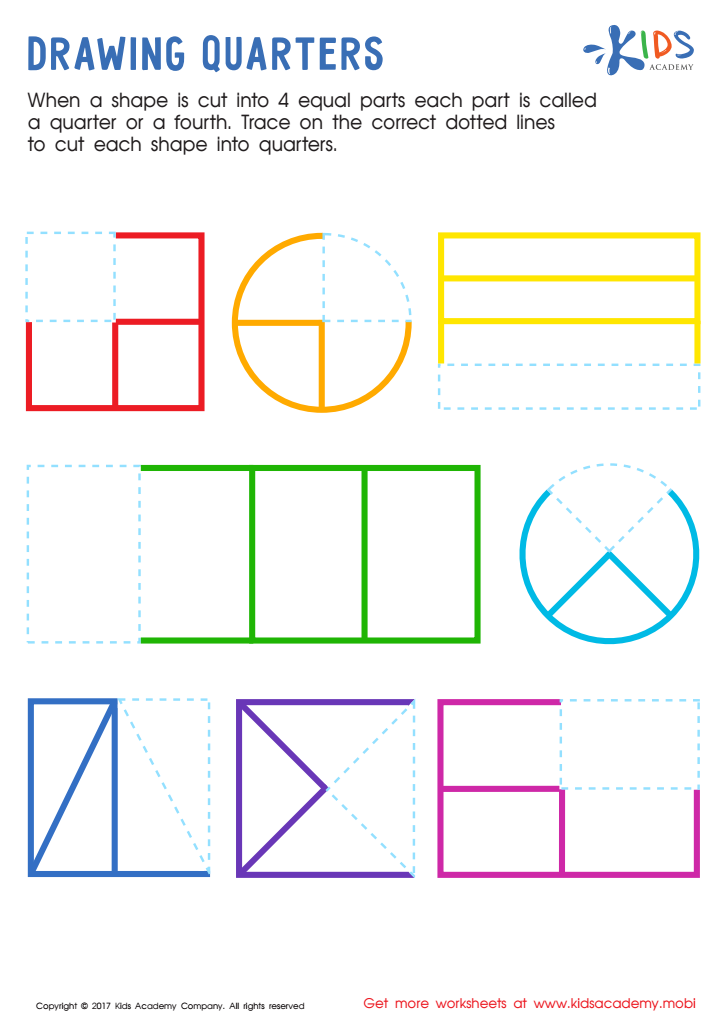
Drawing Quarters Worksheet
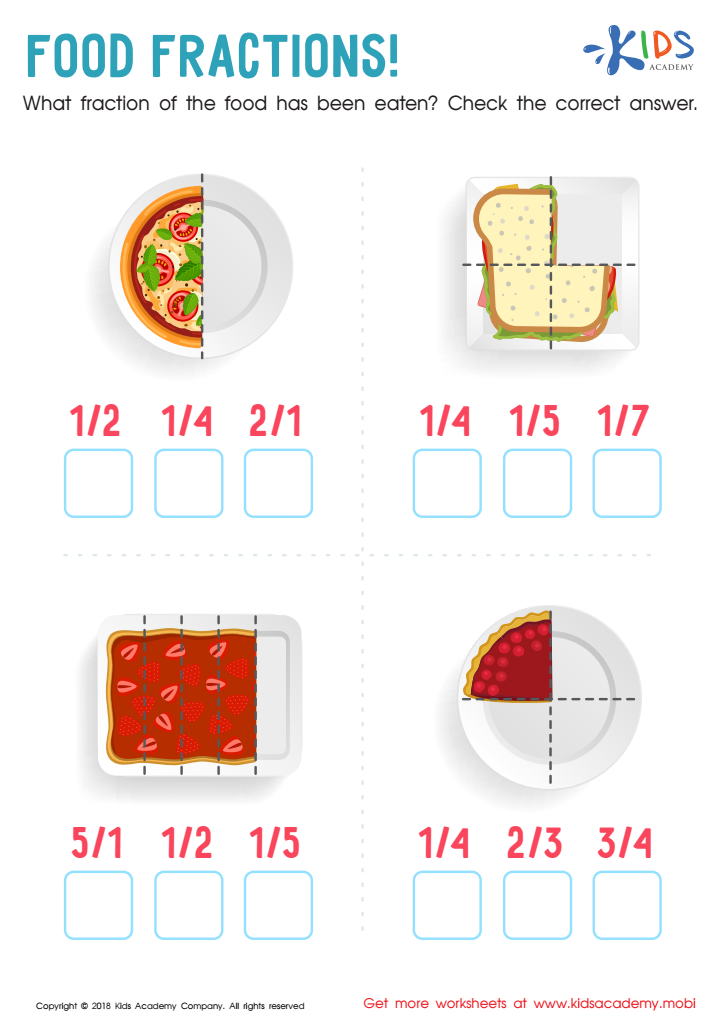
Food Fractions Worksheet
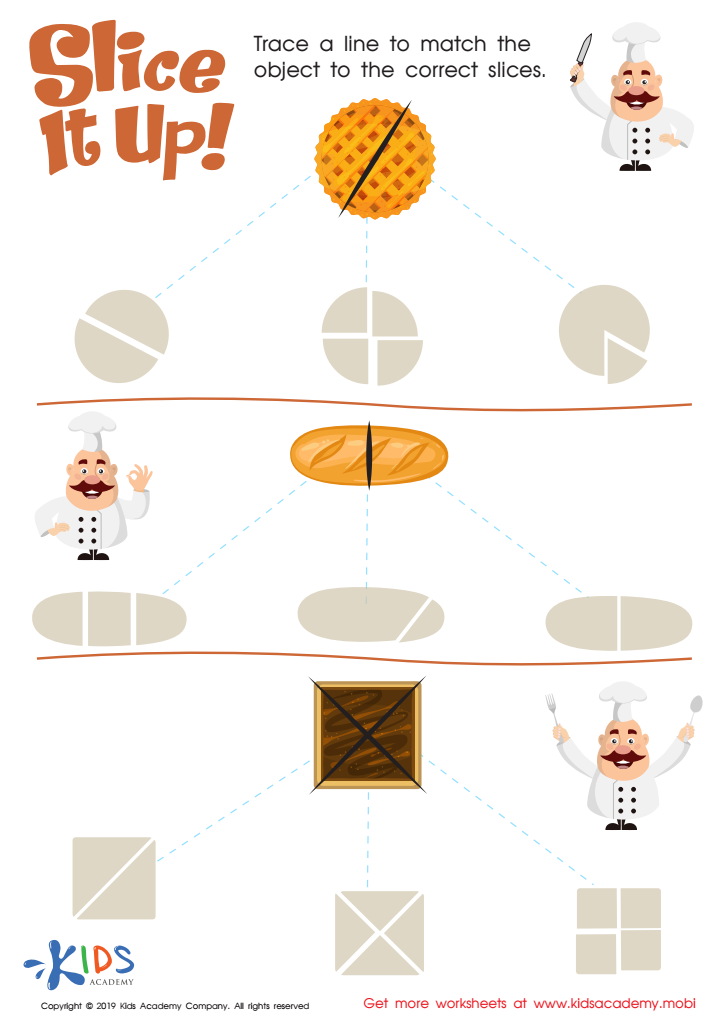
Slice It Up Worksheet
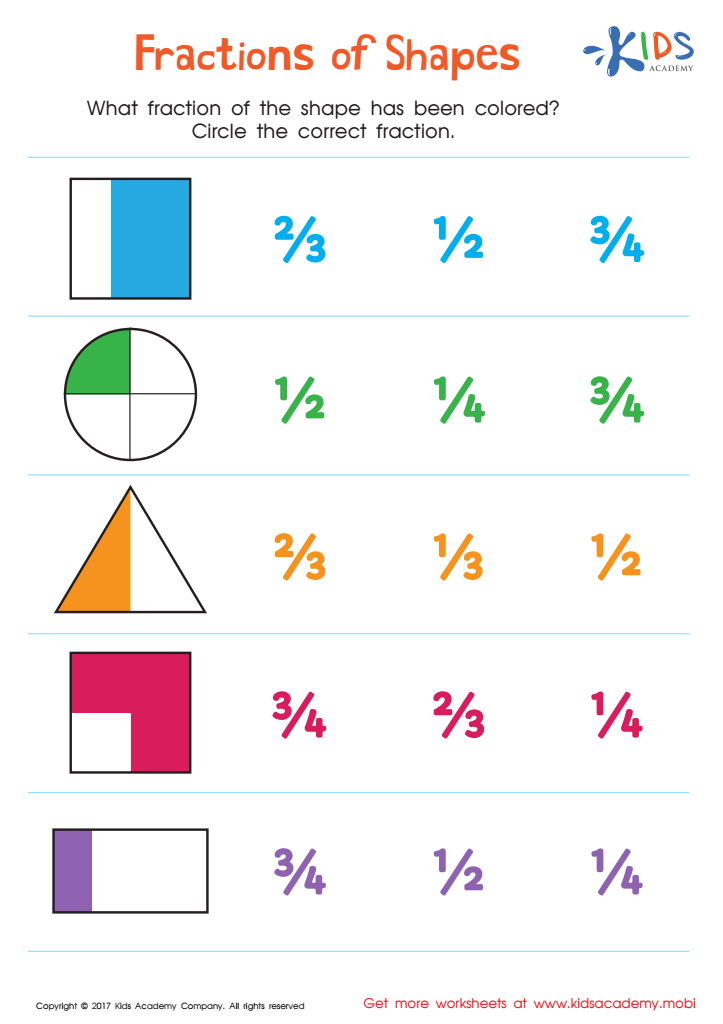
Fractions of Shapes: Math Concept Worksheet








Fraction visualization and geometry for ages 5-8 play a crucial role in children's foundational mathematical understanding. First, these concepts lay the groundwork for advanced math skills. By representing fractions visually, young learners can grasp the idea of parts and wholes, essential for future topics like division, ratios, and algebra.
Secondly, early exposure to geometric shapes helps children recognize patterns and spatial relationships. For instance, understanding how a rectangle can be divided into equal parts fosters not only fraction knowledge but also an appreciation of symmetry and area. These visual tools make abstract concepts tangible, enhancing comprehension and retention.
Furthermore, incorporating fraction visualization and geometry into early education boosts critical thinking and problem-solving skills. When children manipulate shapes to see how fractions fit together, they engage in hands-on learning that promotes logic and reasoning.
Lastly, these skills are directly applicable to everyday life. From dividing a pizza to knowing how much of a task is completed, fractions and geometry are ubiquitous. Instilling these concepts early ensures that children become comfortable using math in real-world contexts, building their confidence and competence.
In summary, fraction visualization and geometry for young children create essential cognitive links, foster important life skills, and prepare them for more advanced mathematical concepts, making them indispensable parts of early education.








