Sorting skills Geometry Worksheets for Ages 5-8
5 filtered results
-
From - To
Boost your child's sorting skills with our engaging Geometry Worksheets designed for ages 5-8! Kids will have fun while enhancing their ability to sort shapes, colors, and sizes, laying a solid foundation for mathematical reasoning. These printable worksheets feature diverse activities that promote critical thinking, perception, and categorization skills. Perfect for both classroom use and at-home learning, they cater to young learners’ varied educational needs. Empower your child’s educational journey with our expertly crafted sorting worksheets that make learning fun and effective. Ideal for teachers and parents looking to provide a robust geometry learning experience.
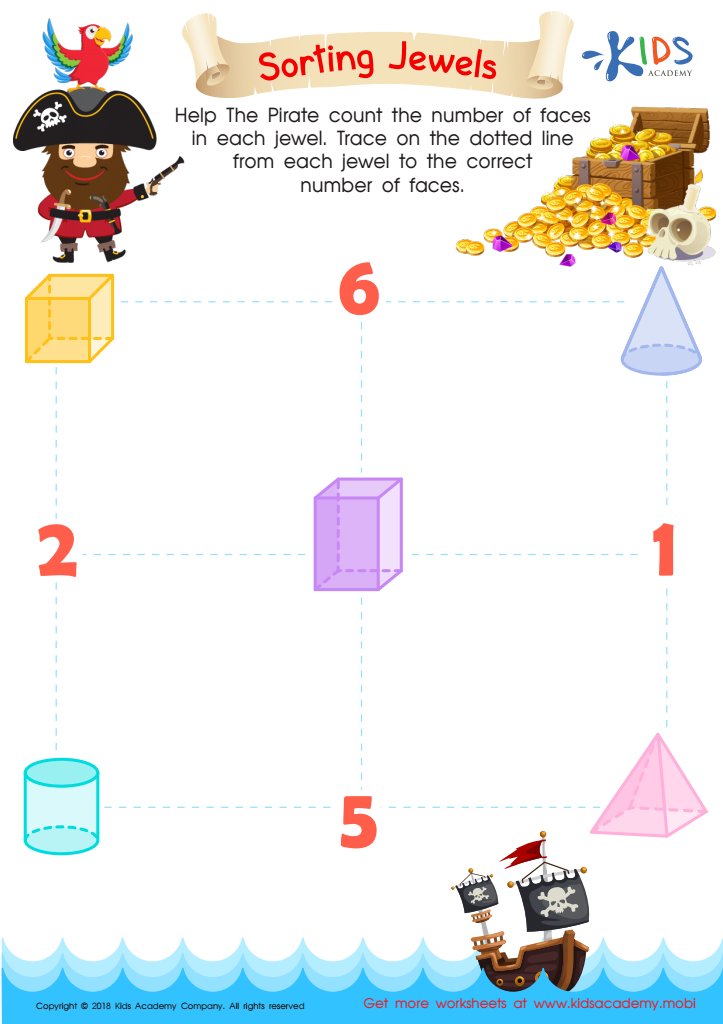
Sorting Jewels Worksheet
 Assign to My Students











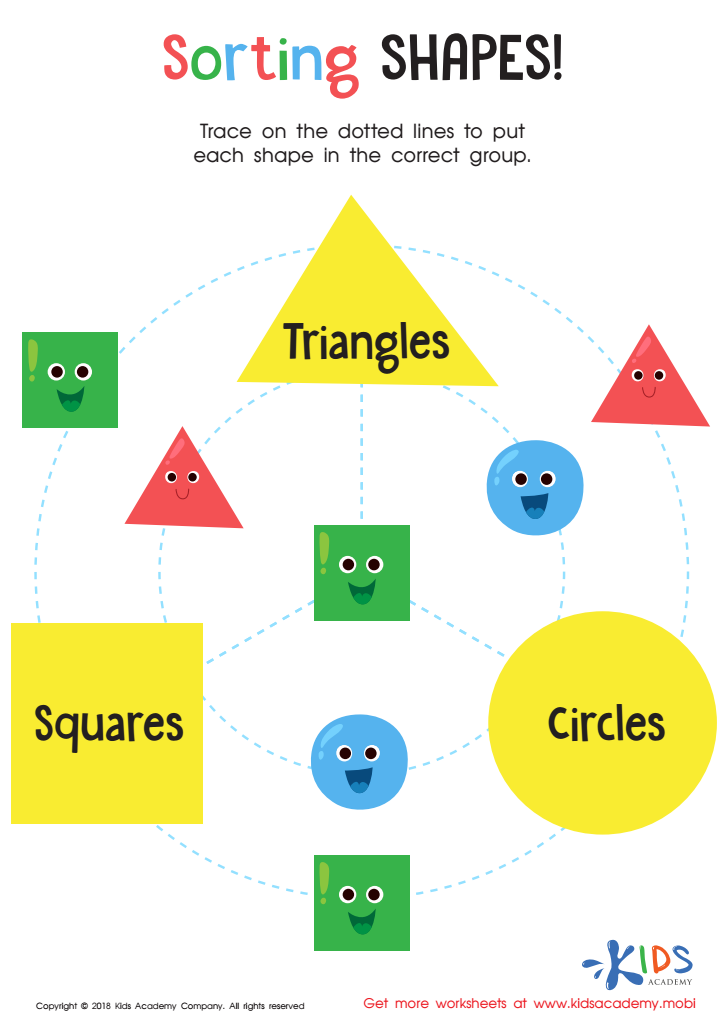
Sorting Shapes - Part 3 Worksheet
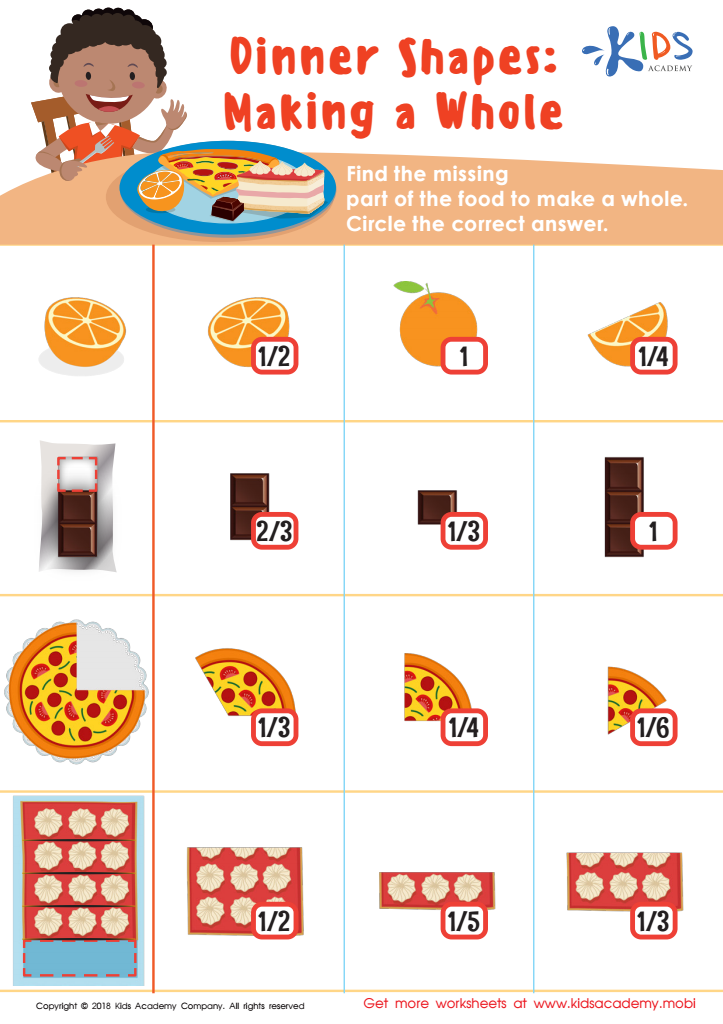
Dinner Shapes: Making a Whole Worksheet
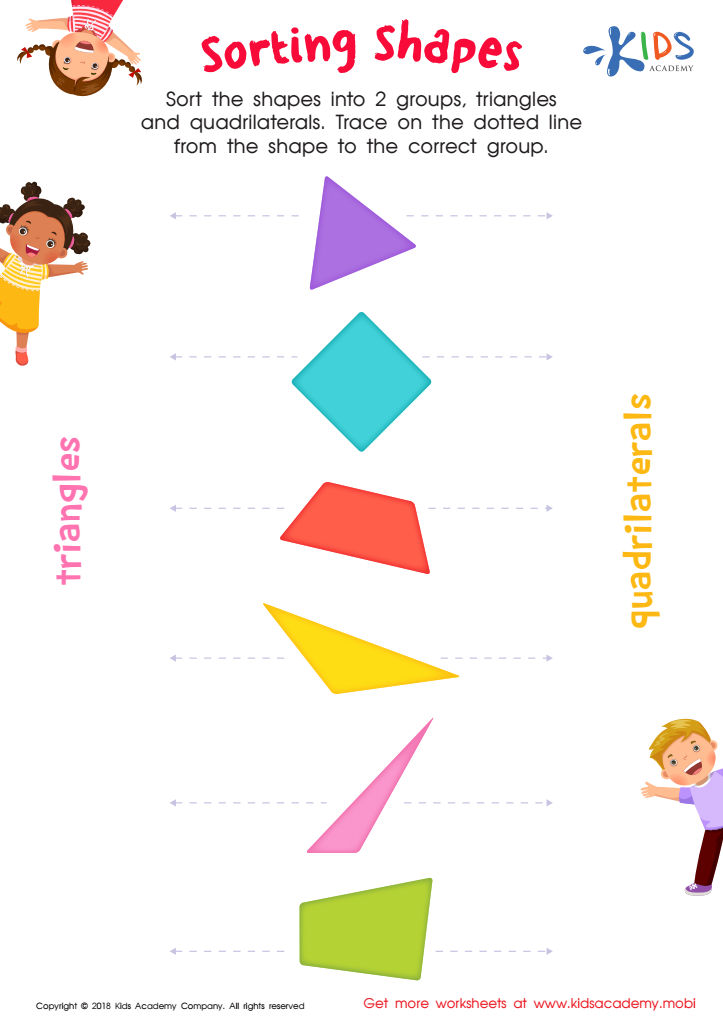
Sorting Shapes Worksheet
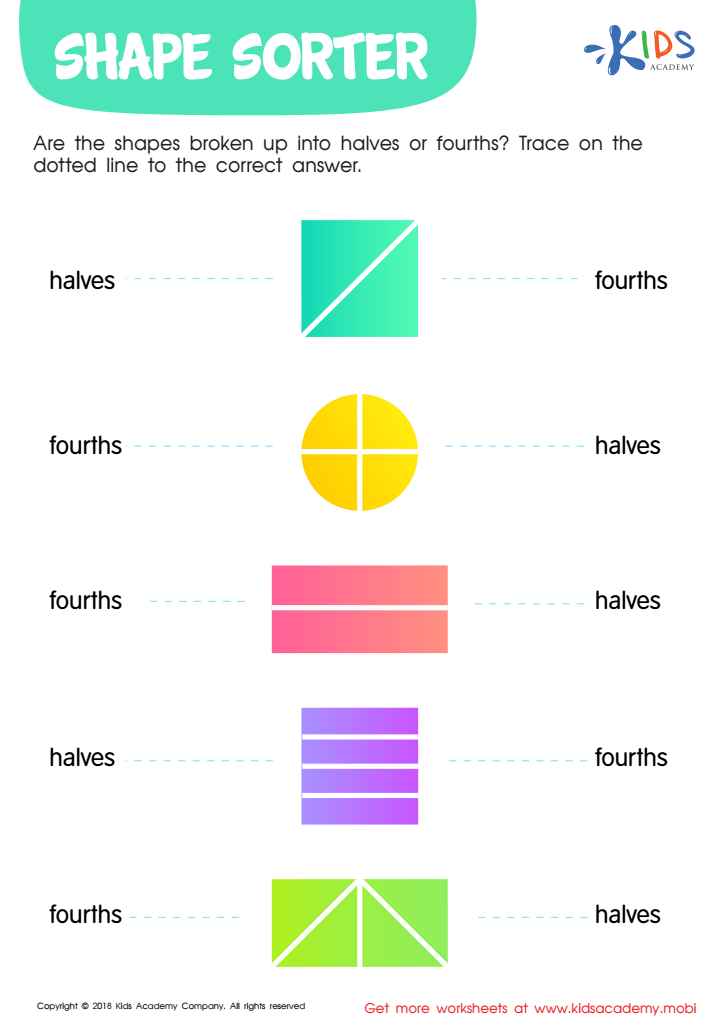
Shape Sorter Worksheet








Sorting skills and geometry are fundamental concepts that serve as building blocks for a child’s cognitive and academic development. At ages 5-8, children are in a critical period of brain growth where they begin to understand and organize the world around them. Engaging in sorting activities helps children develop critical thinking and analytical skills. By sorting objects based on colors, shapes, sizes, or other attributes, they learn how to classify and categorize information—a skill that is essential for problem-solving and higher-level thinking.
Geometry, on the other hand, introduces children to spatial relationships and shapes, which are important not only for math but also for everyday life. Understanding geometric concepts such as symmetry, size comparison, and patterns aids in the development of fine motor skills and hand-eye coordination. These skills are indispensable in activities like writing, drawing, and various sports.
Moreover, integrating sorting and geometry in early education fosters creativity and curiosity. When children group objects or explore shapes, they ask questions and make observations, thus enhancing their inquisitiveness and creativity. When parents and teachers prioritize these skills, they lay a solid foundation for future academic success, particularly in math and science disciplines, where geometry and spatial reasoning play crucial roles.








