Spatial Orientation Geometry Worksheets for Ages 5-8
3 filtered results
-
From - To
Discover engaging Spatial Orientation Geometry Worksheets suitable for children ages 5-8 on Kids Academy! These colorful, exciting worksheets enhance essential skills such as understanding shapes, mapping, and directionality through fun and interactive activities. Perfect for young learners, these worksheets are designed to build a solid foundation in geometry, promoting critical thinking and spatial awareness. Ideal for both classroom and home use, these resources make learning enjoyable and rewarding. Help your child or students master spatial orientation concepts with ease! Visit Kids Academy to explore our diverse collection of age-appropriate geometry worksheets today.
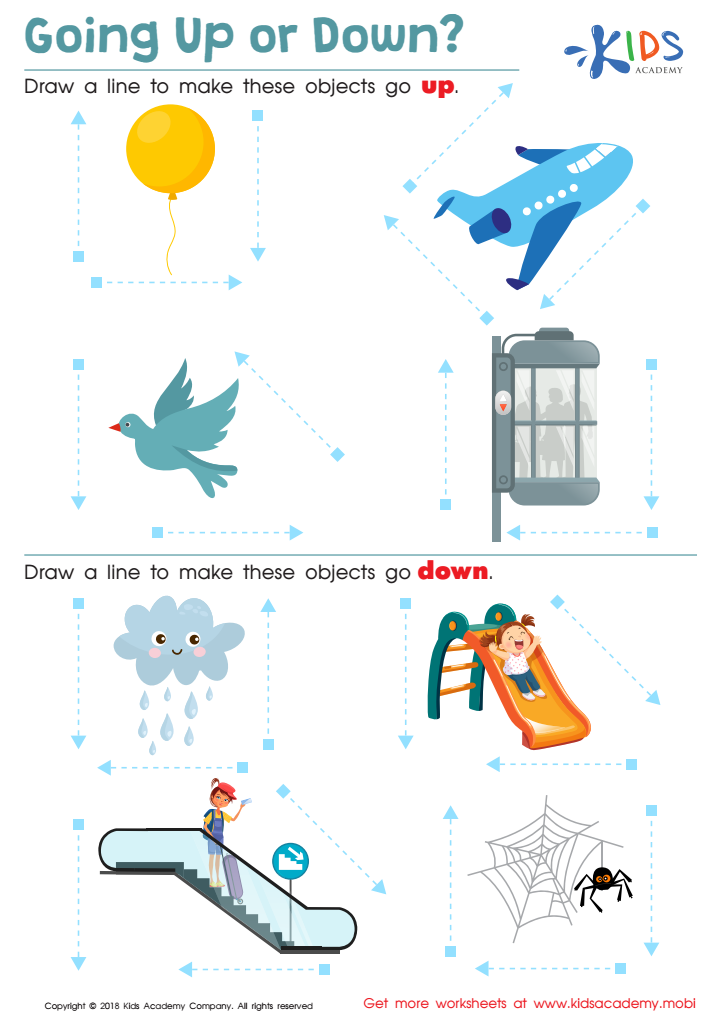
Going up or Down? Worksheet
 Assign to My Students











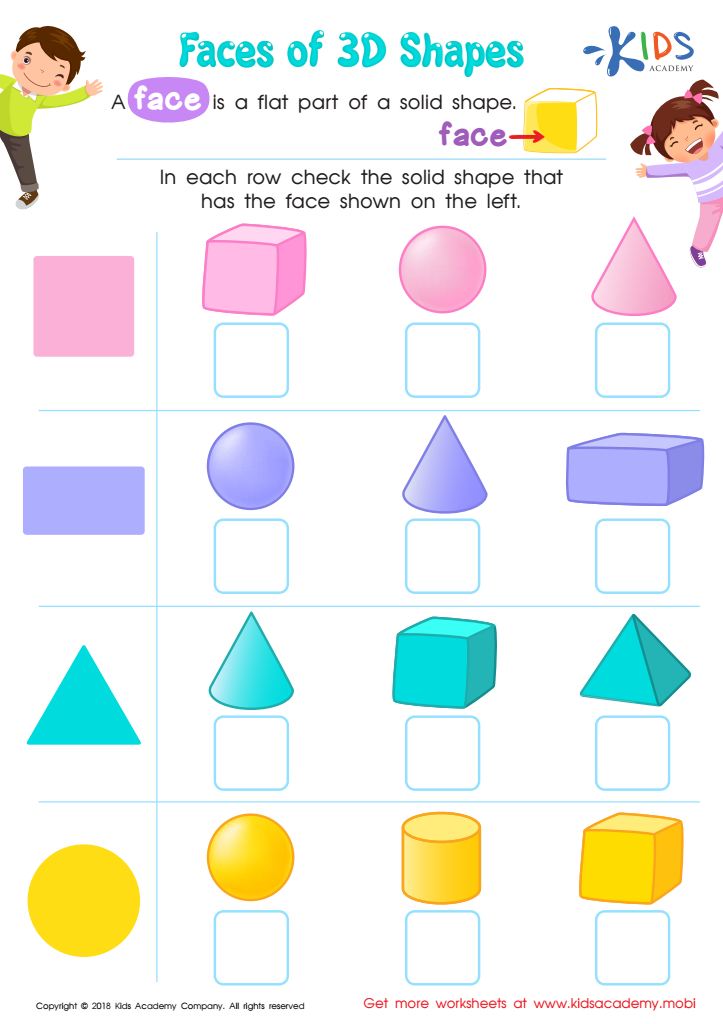
Faces of 3D Shapes Worksheet
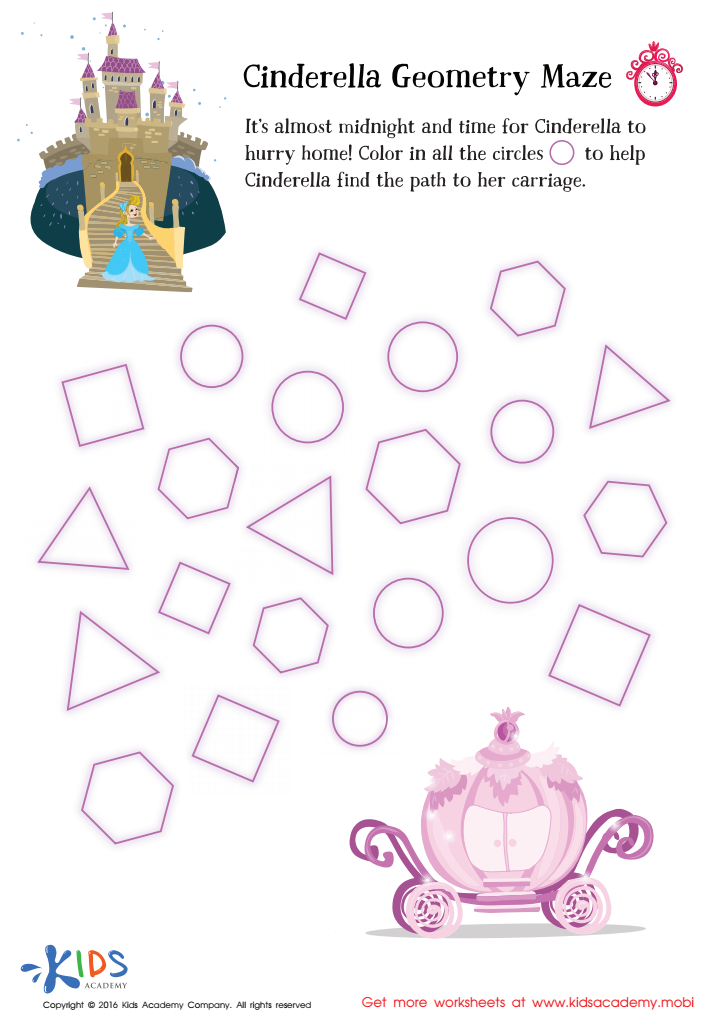
Cinderella Geometry Maze Worksheet








Spatial orientation geometry is crucial for young children (ages 5-8) as it lays foundational cognitive skills essential for their overall development. At this formative age, children are naturally curious about their surroundings and how objects relate to one another in space. By engaging in spatial orientation activities, they develop critical early math skills which are pivotal for later success in complex mathematical concepts such as geometry, algebra, and calculus.
Understanding spatial orientation also plays a significant role in enhancing problem-solving and logical thinking abilities. For example, when children navigate puzzles or build structures with blocks, they learn to visualize shapes, manipulate objects, and understand concepts like behind, next to, above, or below. These skills are transferable to other academic areas, aiding in reading comprehension by helping children to understand and visualize stories and scenarios.
Moreover, spatial skills are integral to daily life. They help children navigate their physical environment, improving their directional abilities, and spatial awareness, which are crucial for tasks such as understanding maps, giving or following directions, and even in sports and arts where spatial judgement is necessary.
Engaging children in spatial orientation activities therefore nurtures their intellectual growth, bolsters their confidence in handling more advanced tasks, and enriches their everyday experiences. Hence, both parents and teachers should pay keen attention to cultivating these skills at an early age.








