Understanding geometry Geometry Worksheets for Ages 5-8
4 filtered results
-
From - To
Dive into the world of shapes and spaces with our "Understanding Geometry Worksheets for Ages 5-8". These carefully crafted activities from Kids Academy help young learners grasp the fundamentals of geometry. Through fun and engaging exercises, children explore various geometric concepts, from basic shape recognition to identifying patterns and symmetry. Designed to be both educational and enjoyable, each worksheet helps foster critical thinking and spatial awareness, laying down a strong foundation for future math skills. Perfect for classroom use or homeschooling, our geometry worksheets make learning a truly exciting adventure for kids. Discover now to watch their geometric understanding grow!
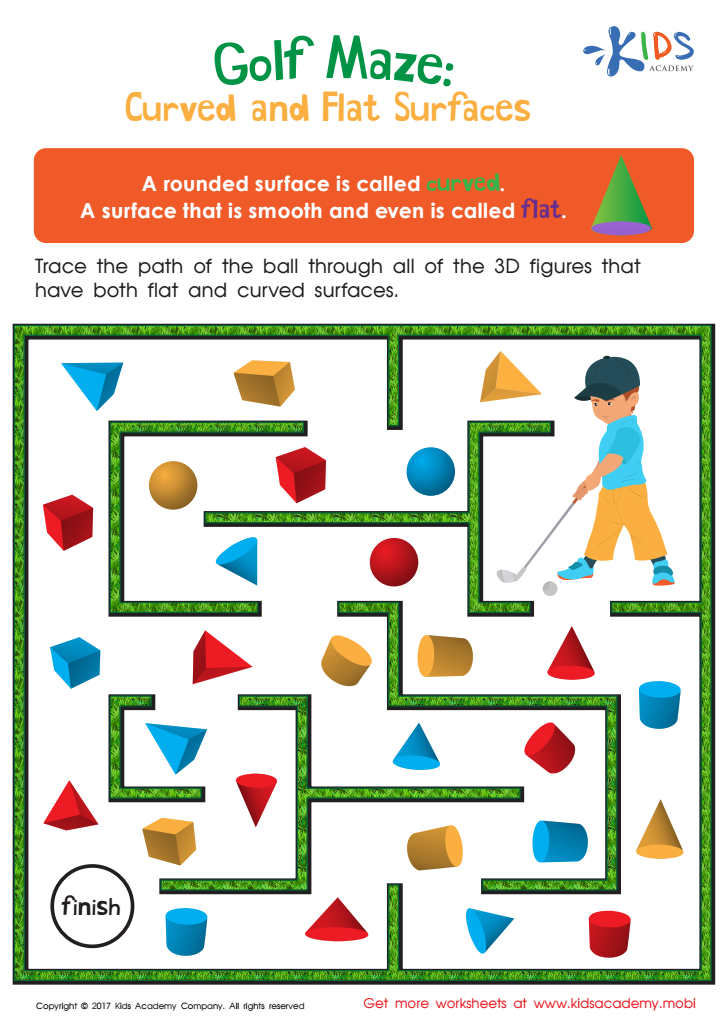
Golf Maze: Curved and Flat Surfaces Worksheet
 Assign to My Students











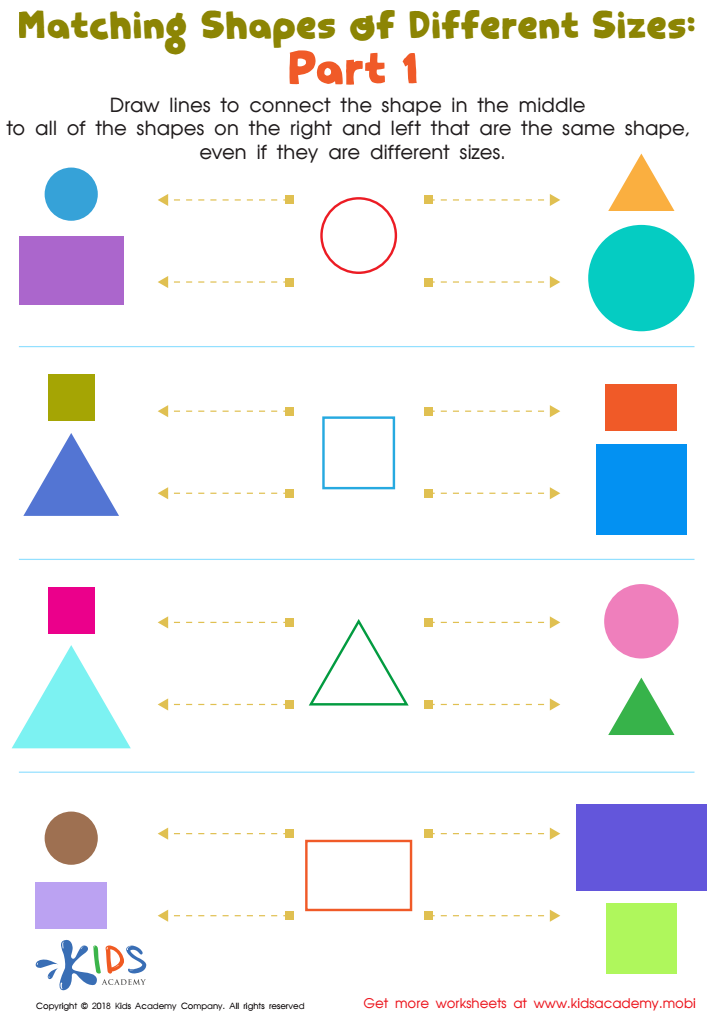
Geometry: part 1 Worksheet
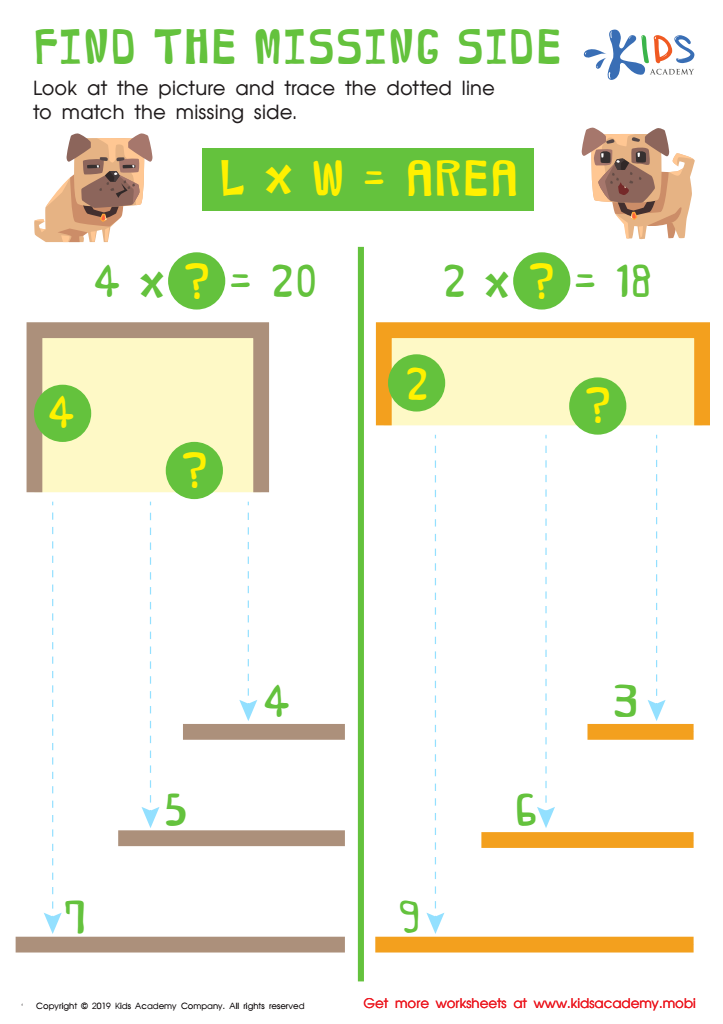
Find the Missing Side Worksheet
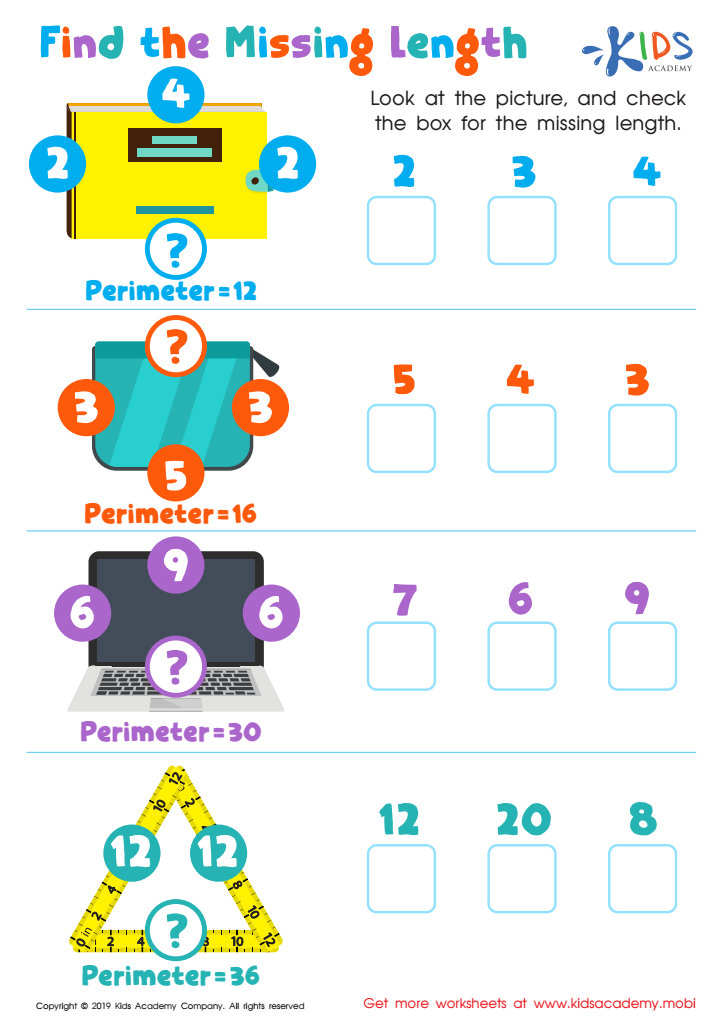
Find the Missing Length Worksheet








Understanding geometry is foundational for young children's cognitive and academic development. For ages 5-8, geometry goes beyond just learning shapes; it builds crucial skills in reasoning, problem-solving, and spatial awareness. Engaging with geometric concepts helps children see and interpret the world around them more accurately. For instance, recognizing shapes and understanding their properties improves visual perception and helps with tasks like organizing objects, following directions, and even developing early handwriting skills by distinguishing different letters and their forms.
Moreover, early exposure to geometry lays the groundwork for future math success. Geometry introduces basic mathematical language and concepts, such as size, position, and dimensions, which are essential for advanced topics in math and science. This stage is optimal for developing a child’s capacity to think critically and analytically, as they learn to observe patterns, classify objects, and make sense of the physical space.
Parents and teachers who emphasize geometry support a balanced mathematical education, encouraging children to explore, manipulate, and discuss different shapes and spaces. This interactive learning cultivates curiosity and enthusiasm, fostering a positive attitude towards mathematics. Early geometrical understanding is not only crucial for academic progress but also for developing practical life skills in a visually complex world.








