Visual Learning Geometry Worksheets for Ages 5-8
5 filtered results
-
From - To
Unlock the power of geometry with our engaging Visual Learning Geometry Worksheets designed for ages 5-8! These printable worksheets make learning shapes, patterns, and spatial awareness fun and interactive. By incorporating colorful visuals and hands-on activities, kids can grasp essential geometric concepts with ease. Perfect for early learners, our worksheets are tailored to build foundational math skills while keeping young minds intrigued and focused. Whether at home or in the classroom, these worksheets provide a stimulating environment for children to explore and enjoy the world of geometry. Start your child's geometric journey today with our expertly crafted visual learning tools!
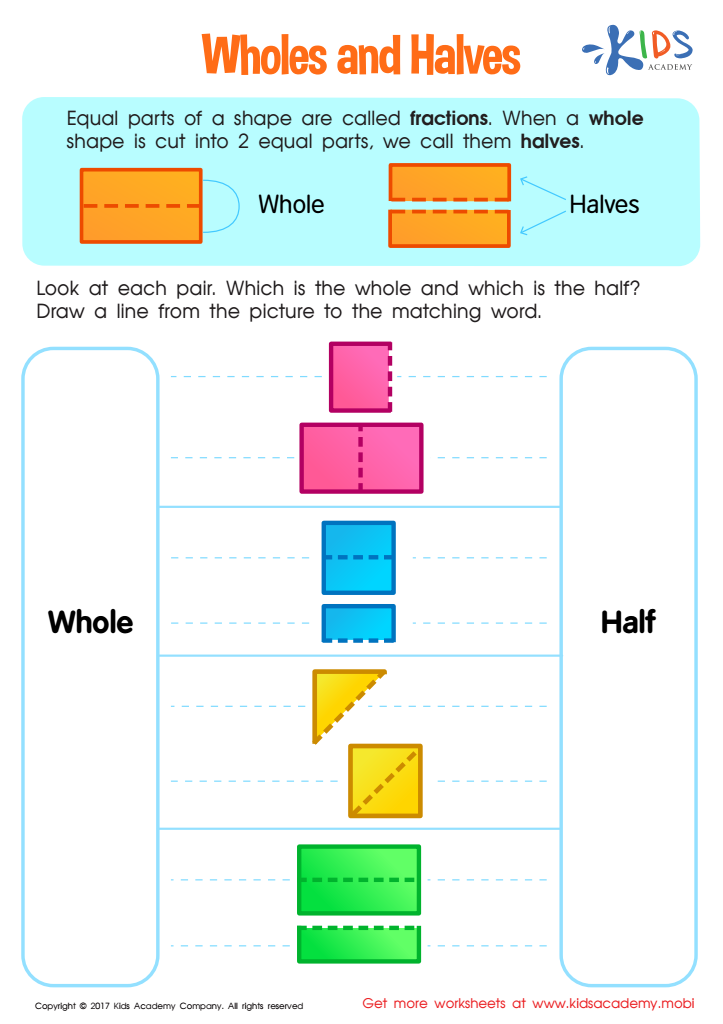
Wholes and Halves Worksheet
 Assign to My Students











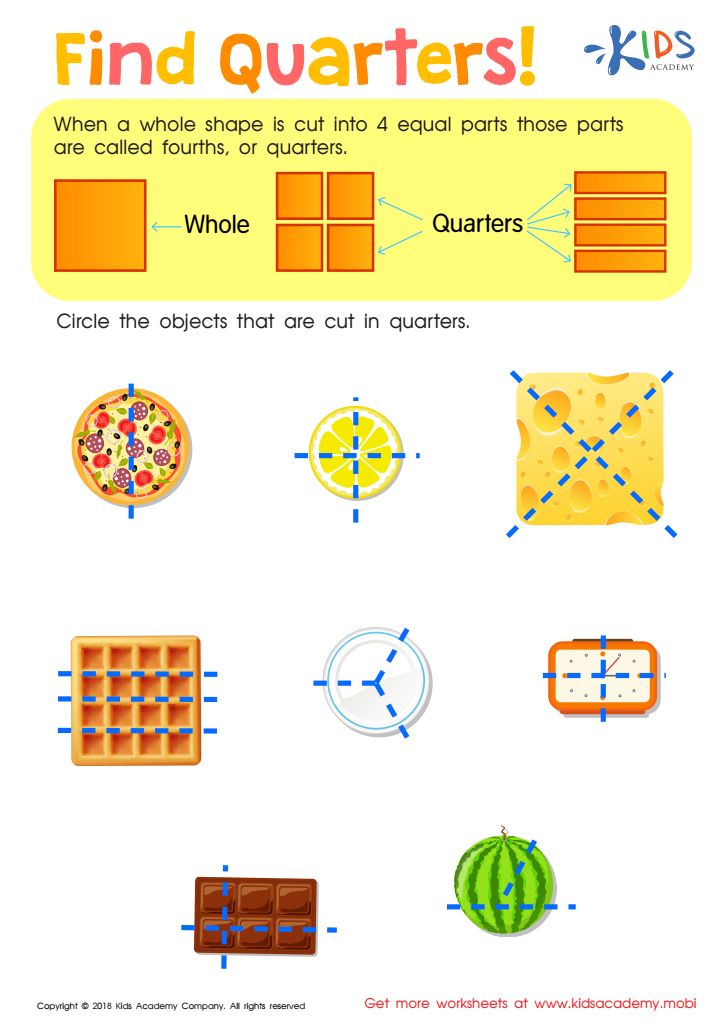
Find Quarters Worksheet
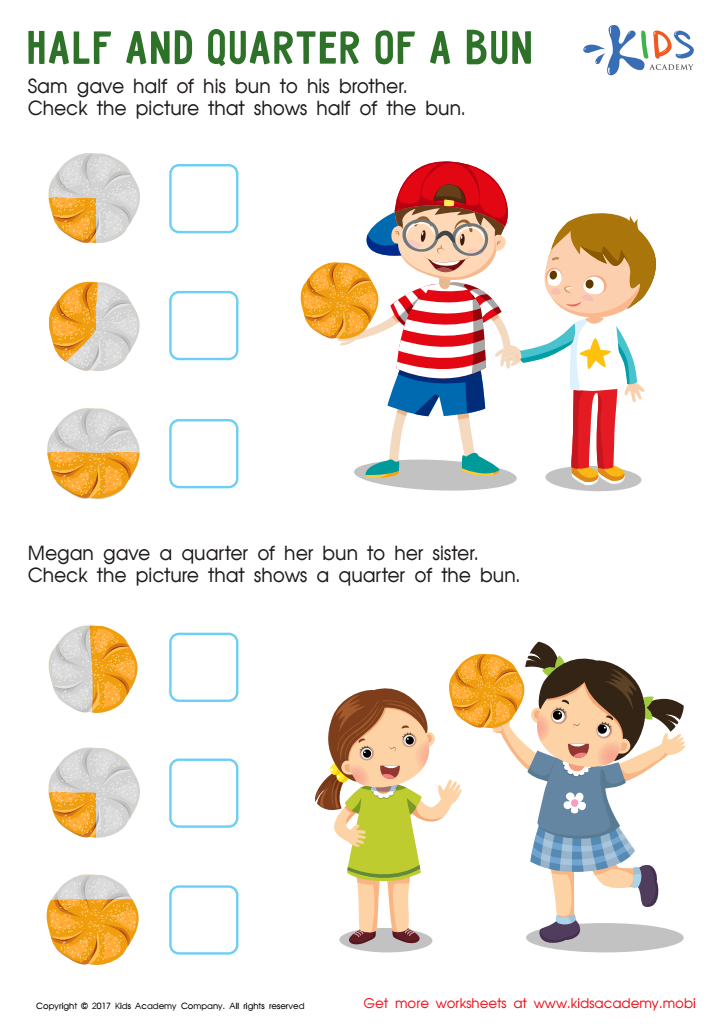
Half and Quarter of a Bun Worksheet
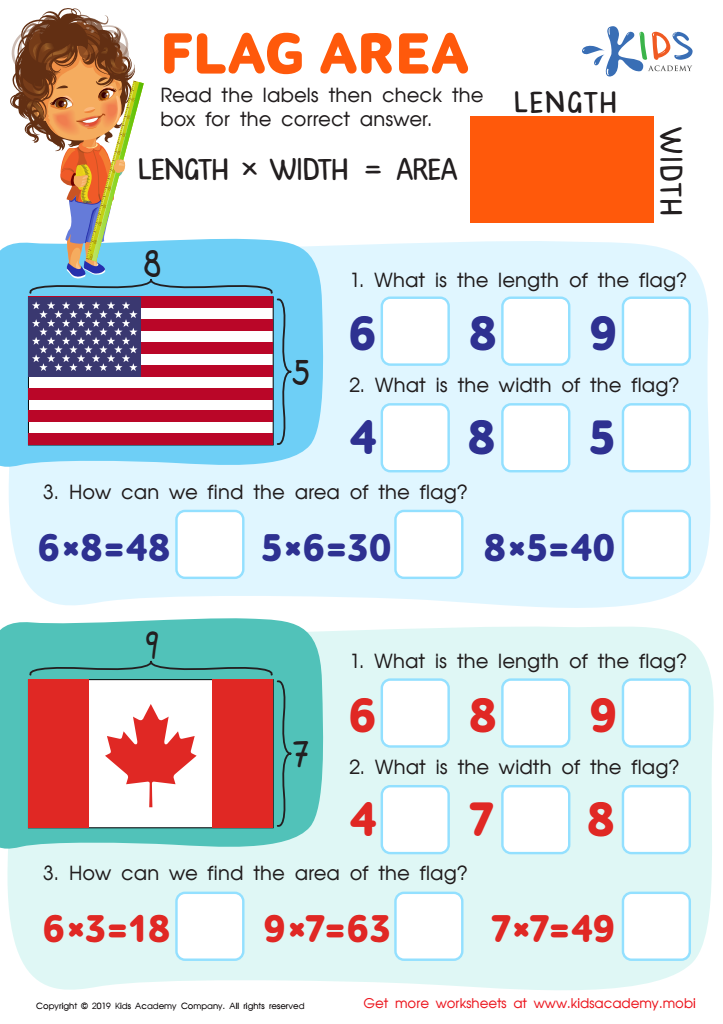
Flag Area Worksheet
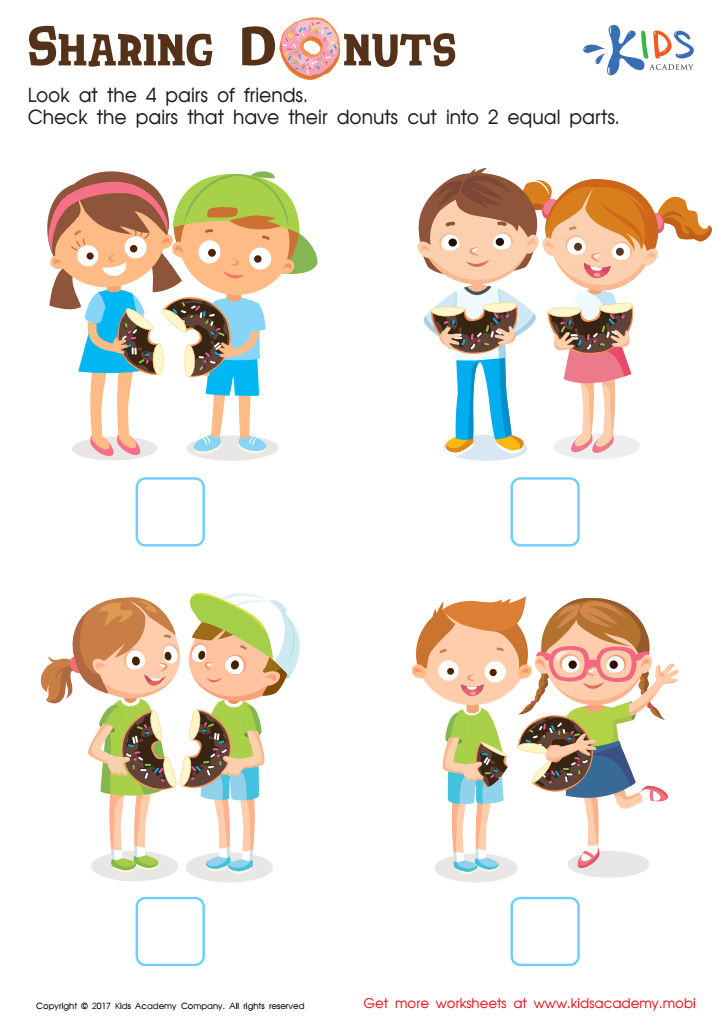
Sharing Donuts Worksheet








Visual learning geometry for ages 5-8 is crucial for both cognitive and academic development. During these formative years, children’s brains are highly receptive to visual stimuli, making this method particularly effective for teaching abstract concepts such as shapes, patterns, and spatial relationships. By incorporating visual elements like diagrams, charts, and colorful illustrations, geometry lessons become more engaging and easier to understand for young learners.
Understanding geometry helps children develop critical thinking and problem-solving skills early on. Recognizing patterns, classifying shapes, and comprehending spatial relationships are foundational skills that contribute to mathematical reasoning and logical thinking. Visual learning makes these abstract concepts concrete, fostering deeper comprehension.
Additionally, visual learning in geometry supports different learning styles. Not all children learn the same way; some may grasp mathematical concepts better through visual aids than through traditional text and verbal instruction. By integrating visual learning strategies, teachers can address diverse learning needs and help ensure all students achieve proficiency.
Finally, engaging with visual learning geometry can boost confidence and enthusiasm for mathematics. Children who experience success and enjoyment in these early encounters are more likely to develop a positive attitude towards more complex mathematical concepts in later grades. This foundational love for math nurtures lifelong learners and critical thinkers.








