Analyzing data Graphs Worksheets for Ages 5-8
5 filtered results
-
From - To
Introduce young learners to the crucial skill of data analysis with our "Analyzing Data Graphs Worksheets" tailored for ages 5-8. These engaging, age-appropriate worksheets seamlessly blend fun and foundational education, helping kids grasp essential concepts of reading and interpreting various types of graphs. Through activities featuring bar graphs, pictographs, and more, children will develop critical thinking, attention to detail, and basic math skills. Perfect for both classroom and home use, these printables make learning interactive and enjoyable, fostering a love for numbers and analytical thinking from an early age. Start their data journey today with our expertly designed resources!
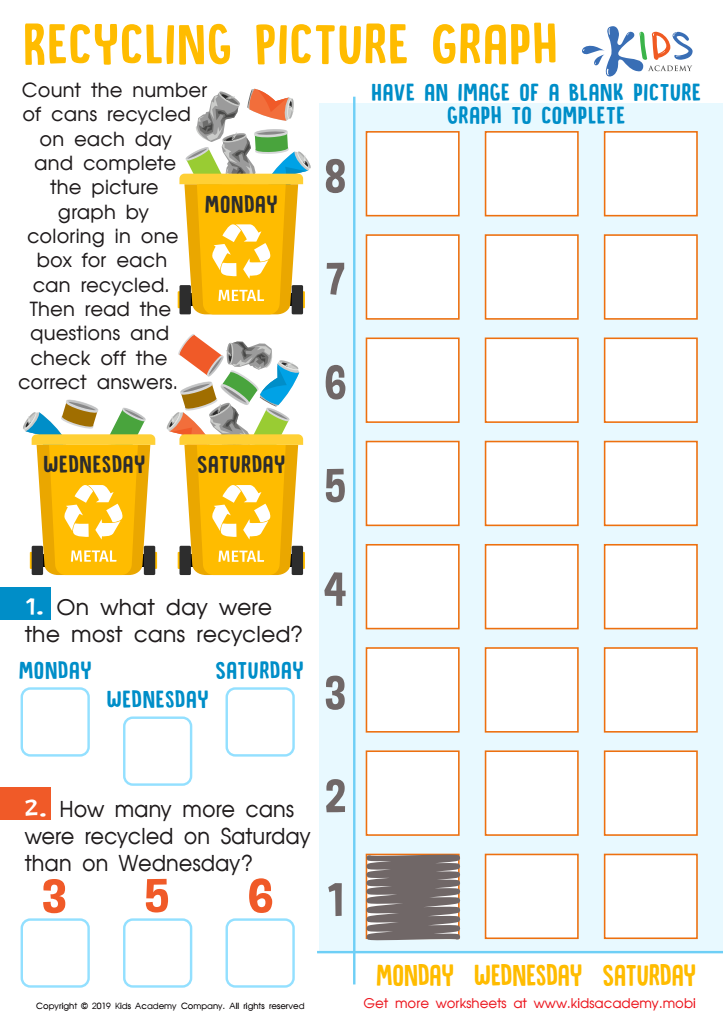
Recycling Picture Graph Worksheet
 Assign to My Students
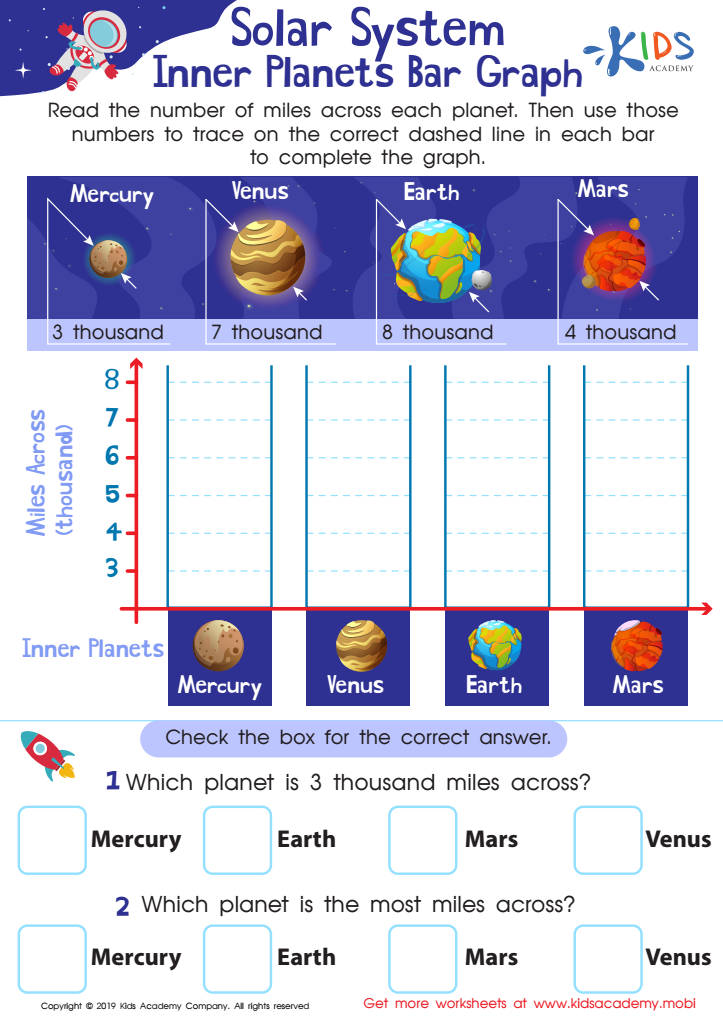
Planets Bar Graph Worksheet
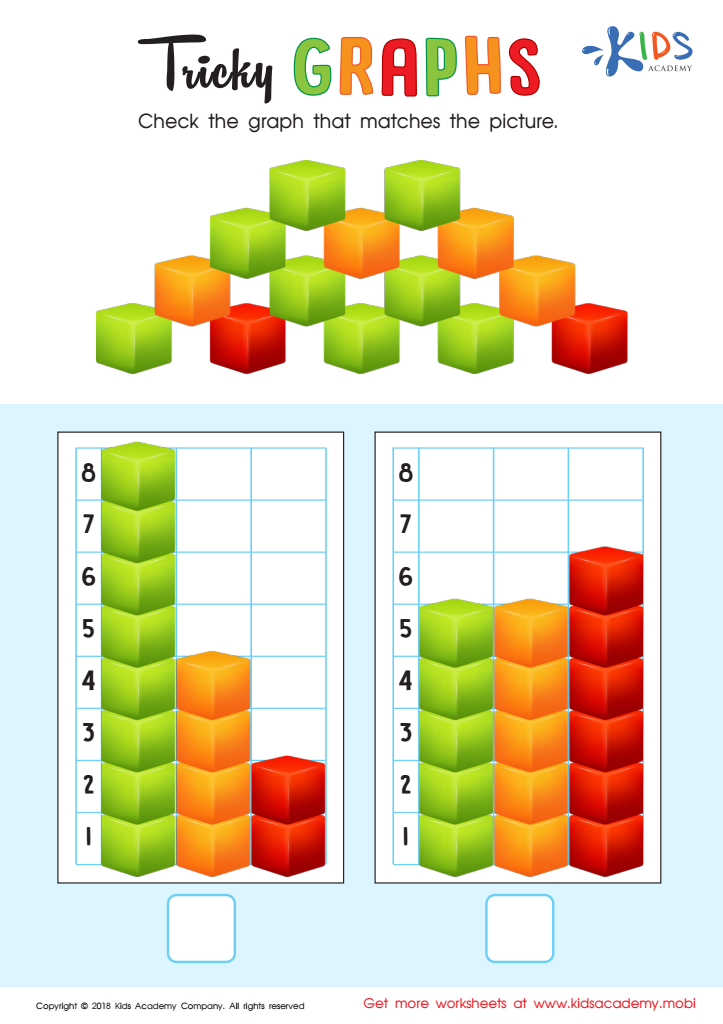
Tricky Graphs Worksheet
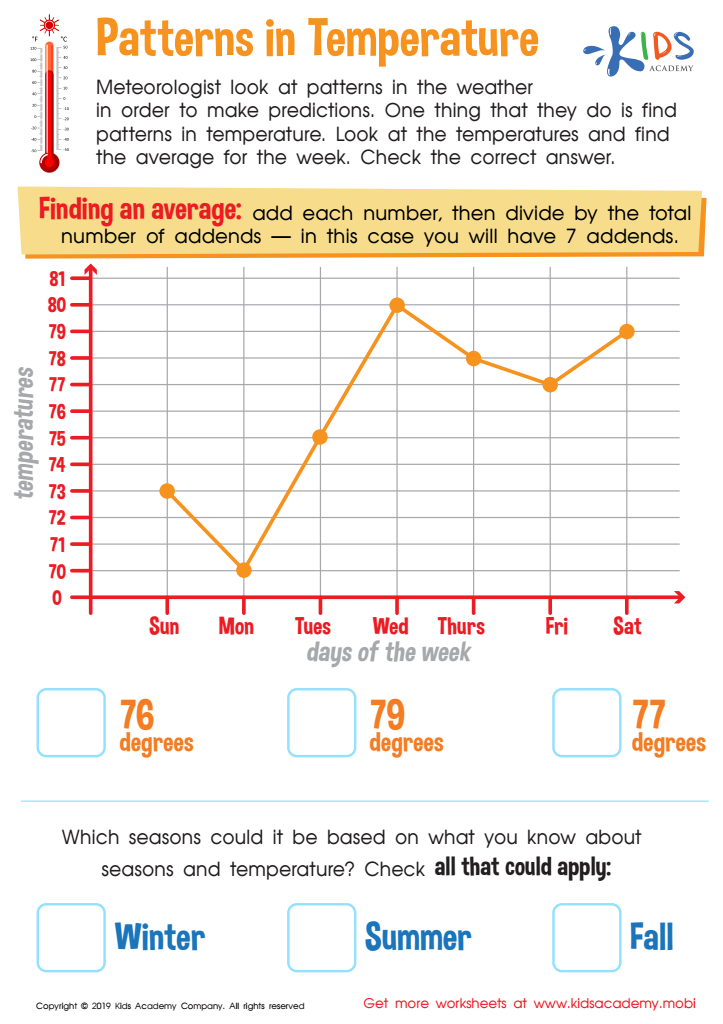
Patterns in Temperature Worksheet
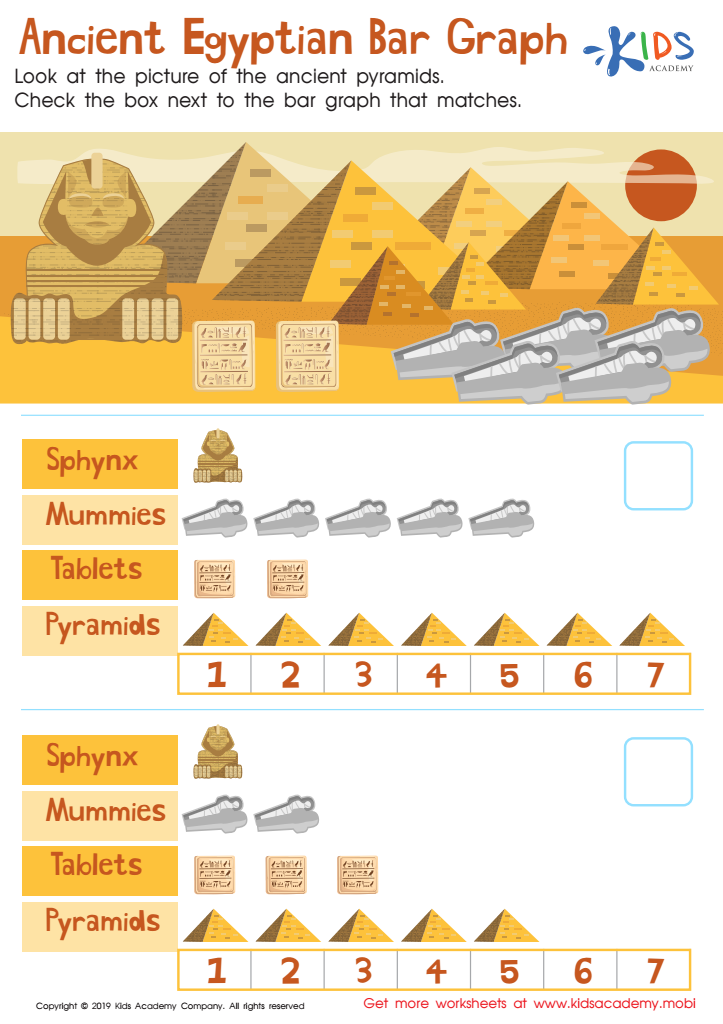
Egyptian Bar Graph Worksheet








Analyzing data graphs is an important skill for children ages 5-8 because it lays a foundation for critical thinking and mathematical reasoning. For teachers and parents, introducing young learners to data graphs helps in cultivating early skills in interpreting and making sense of visual information. It encourages children to observe details and identify patterns, fostering analytical skills that are essential in numerous academic domains.
Data graphs make abstract concepts more tangible for young minds. For instance, simple bar or line graphs can help children quickly grasp ideas of comparison, quantity, and trends without requiring advanced numerical skills. This visual representation promotes better understanding and retention, making learning more engaging and accessible.
Moreover, early familiarity with graphing prepares children for future subjects, such as science and social studies, where data interpretation becomes increasingly significant. Graphs are also invaluable in everyday life, aiding in everything from time management to financial literacy. Encouraging graph literacy ensures that children are better equipped to handle real-world information efficiently.
Lastly, learning to create and interpret graphs boosts confidence in students, as they gain tools to independently explore and present information. For teachers and parents, this early education in graphing fosters an environment of inquiry and curiosity, empowering young learners to become adept problem-solvers and informed individuals.








