Spatial reasoning Numbers Worksheets for Ages 5-8
3 filtered results
-
From - To
Discover our engaging Spatial Reasoning Numbers Worksheets designed specifically for children aged 5-8! These worksheets help young learners enhance their spatial awareness and numerical understanding through fun and interactive activities. Featuring vibrant visuals and age-appropriate challenges, kids will practice essential skills like shape recognition, visualization, and logical reasoning. Our resources are an excellent way to build a strong math foundation while promoting critical thinking and problem-solving abilities. Perfect for teachers and parents, these printable worksheets offer a dynamic approach to learning numbers in a playful and effective manner, making math both enjoyable and educational! Explore now and inspire a love for learning!
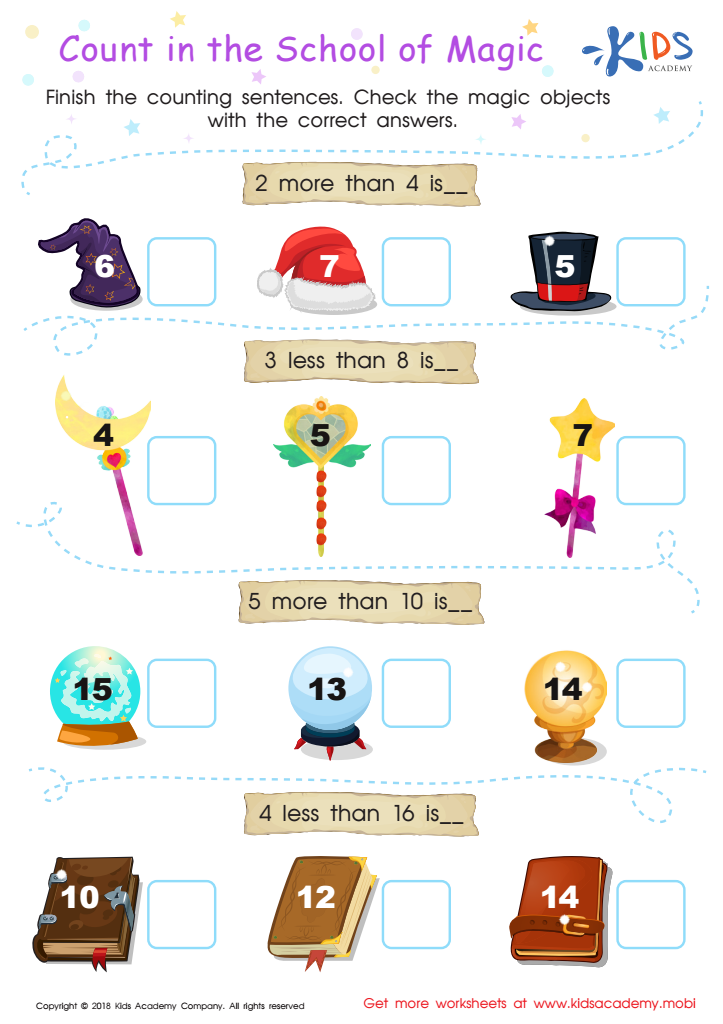
Count in the School of Magic Worksheet
 Assign to My Students
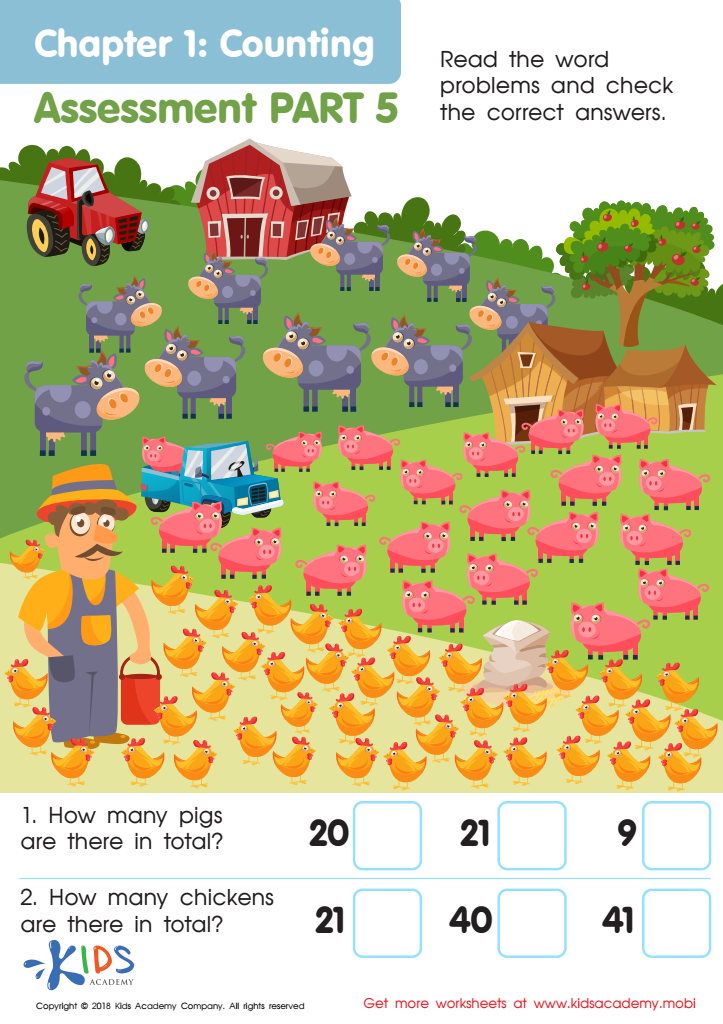
Counting: Assessment 5 Worksheet
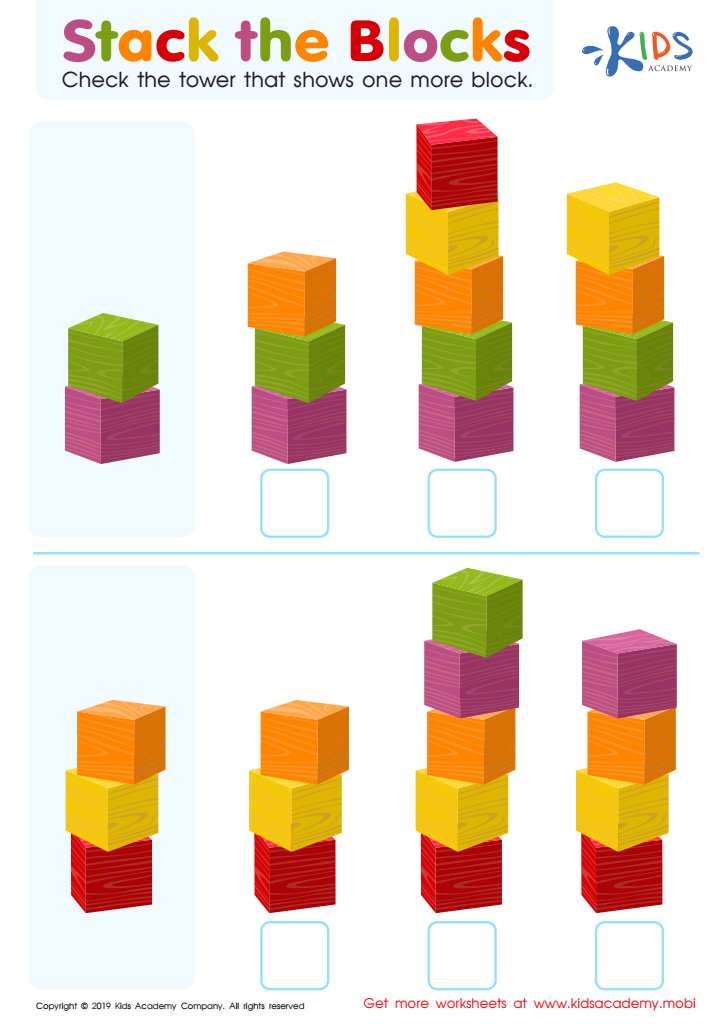
Stack the Blocks Worksheet








Spatial reasoning is a critical skill that significantly influences cognitive development in children aged 5-8. It involves the ability to visualize and manipulate shapes and forms, which is essential for problem-solving in everyday life and academic subjects such as mathematics and science. By fostering spatial reasoning abilities early on, parents and teachers help children build a strong foundation for future learning.
Research indicates that strong spatial skills correlate with enhanced performance in math and reading. For example, children who can visualize geometric concepts are often better equipped to tackle complex math problems later in their education. Additionally, these skills promote critical thinking, creativity, and resilience, essential qualities for navigating real-world challenges.
Engaging children in activities that develop spatial reasoning, such as puzzles, building blocks, or mapping exercises, can enhance their analytical skills and boost confidence. When parents and teachers emphasize these activities, they provide an enriching environment that encourages exploration and curiosity. Ultimately, investing in spatial reasoning capacities lays the groundwork for lifelong learning and supports children's holistic development, making it a vital area of focus in early education. Ignoring this aspect could leave gaps in children's understanding, affecting their performance and opportunities as they progress through school and beyond.








