Addition of fractions Math Worksheets for Ages 5-8
3 filtered results
-
From - To
Discover engaging addition of fractions math worksheets designed for kids ages 5-8 at Kid's Academy. These printable resources offer a variety of fun and educational exercises that simplify the concept of adding fractions for young learners. Our worksheets include colorful visuals, step-by-step instructions, and interactive activities, making learning fractions an enjoyable experience. Ideal for both classroom and at-home use, these materials help children build a solid foundation in math skills. Foster your child's confidence in handling fractions with our expertly crafted worksheets that align with common core standards and ensure progressive learning.
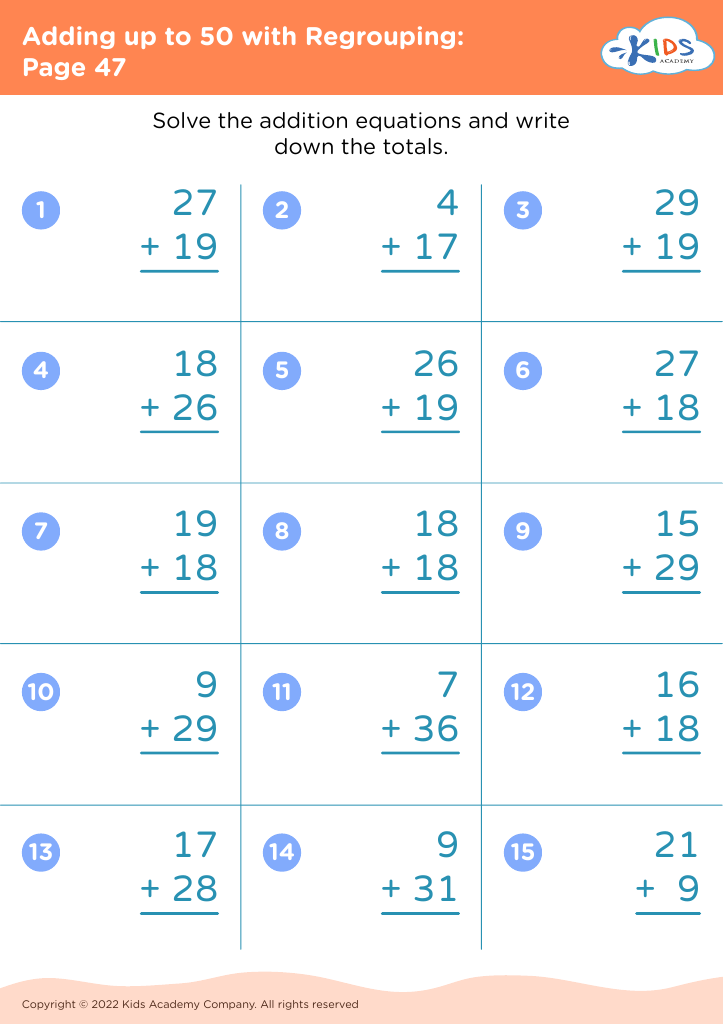
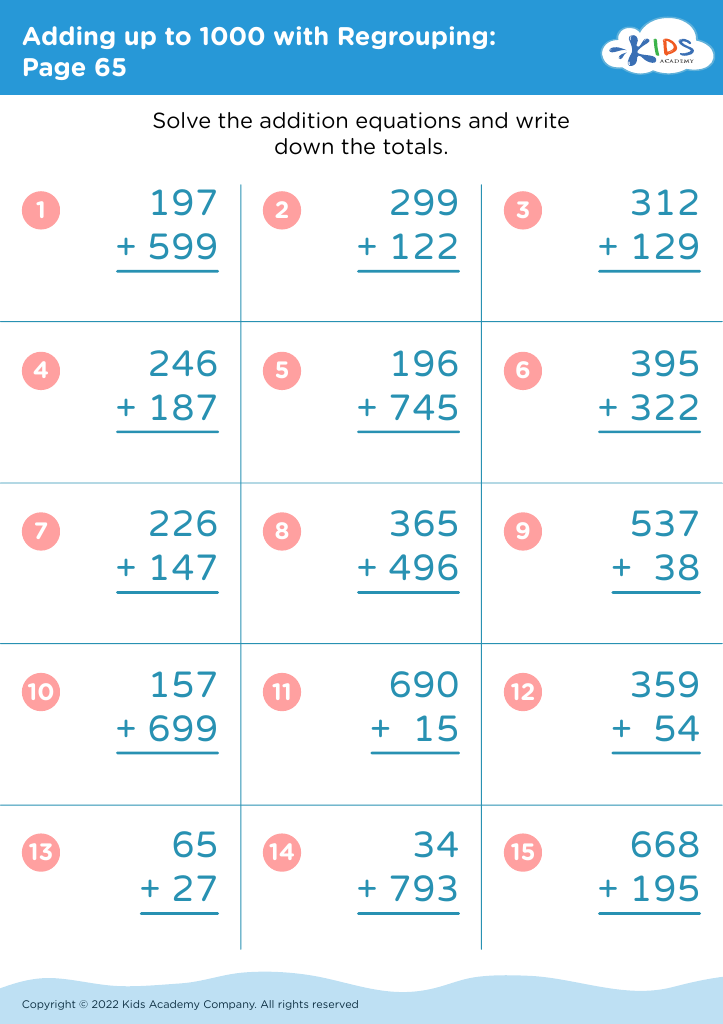
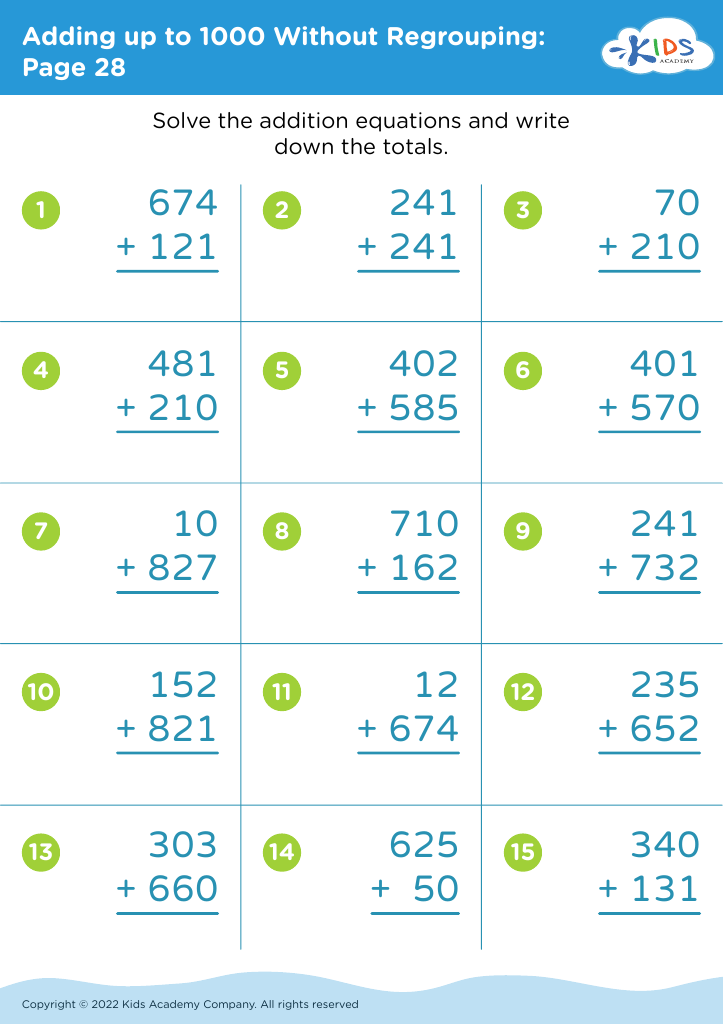








Parents and teachers should care about the addition of fractions for children ages 5-8 as it forms a fundamental building block of mathematical proficiency that is vital for their future academic success. Introducing young learners to fractions helps them develop a strong number sense and an ability to understand parts of a whole, which are crucial for more complex arithmetic and problem-solving skills they will encounter later.
Learning fractions at an early age also enhances cognitive skills such as reasoning, critical thinking, and spatial awareness. These cognitive skills are not only necessary for mathematics but also for everyday decision-making and problem-solving in real-life contexts. For instance, understanding fractions is essential for cooking, dividing groups fairly, and understanding measurements in various contexts.
Moreover, mastering fundamental math skills, including fractions, builds confidence in students. As children experience success in understanding and applying fractions, they develop a positive attitude toward math, reducing math anxiety and encouraging a lifelong interest in the subject.
Ultimately, a solid grasp of fractional addition sets the stage for future learning and contributes to a well-rounded education. It equips young learners with essential tools for navigating both academic challenges and practical life situations, making it a critical area of focus for both parents and teachers.








