Applying math concepts Math Worksheets for Ages 5-8
3 filtered results
-
From - To
Unlock your child's mathematical potential with our "Applying Math Concepts" worksheets designed for ages 5-8. These engaging and educational tools help young learners to grasp foundational math skills while making math fun and accessible. Perfectly tailored to reinforce classroom learning, our worksheets cover a range of topics from basic arithmetic and pattern recognition to critical thinking and problem-solving. Each worksheet is thoughtfully crafted to nurture a love for numbers and boost confidence in young minds. Equip your child with the skills they need for academic success and turn math challenges into exciting learning adventures!
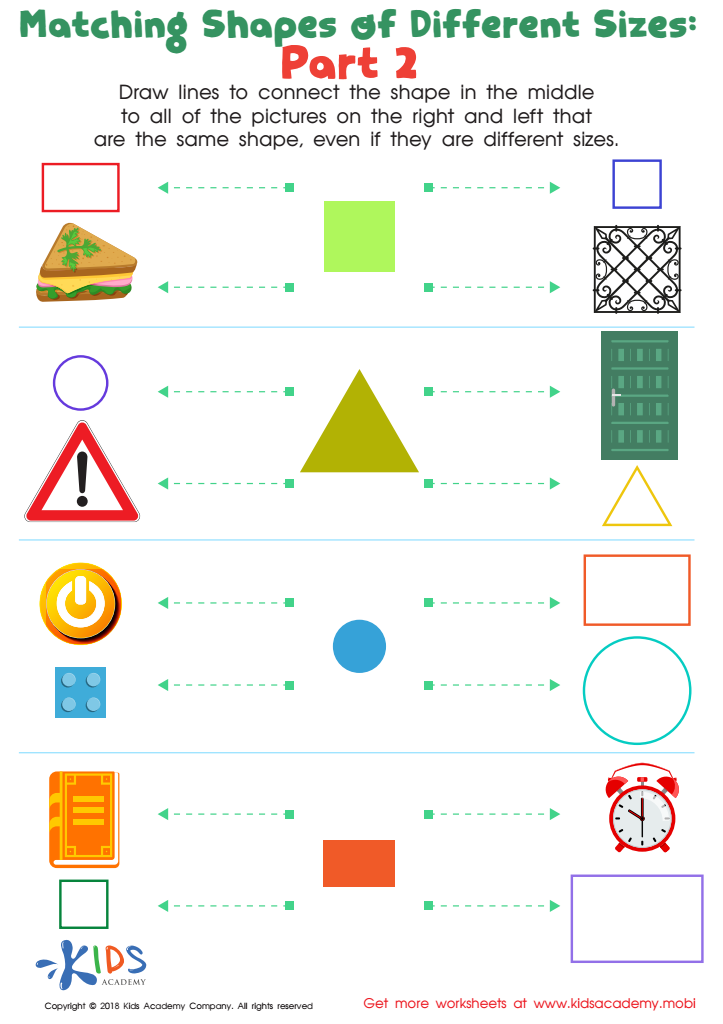
Geometry: Part 2 Worksheet
 Assign to My Students
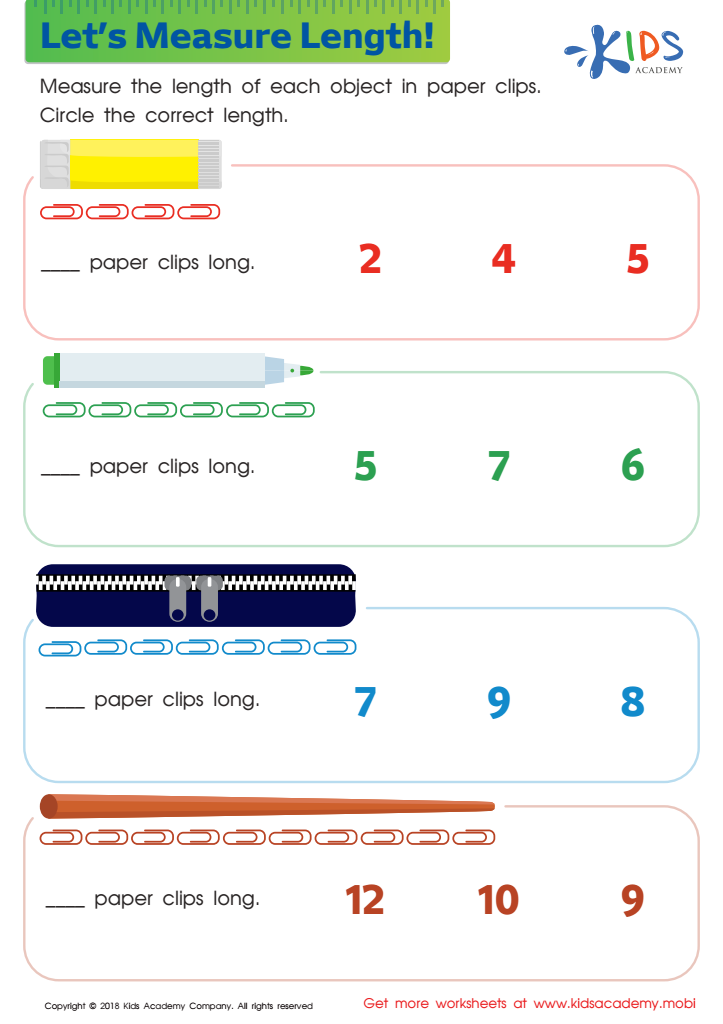
Lets Measure Length Worksheet
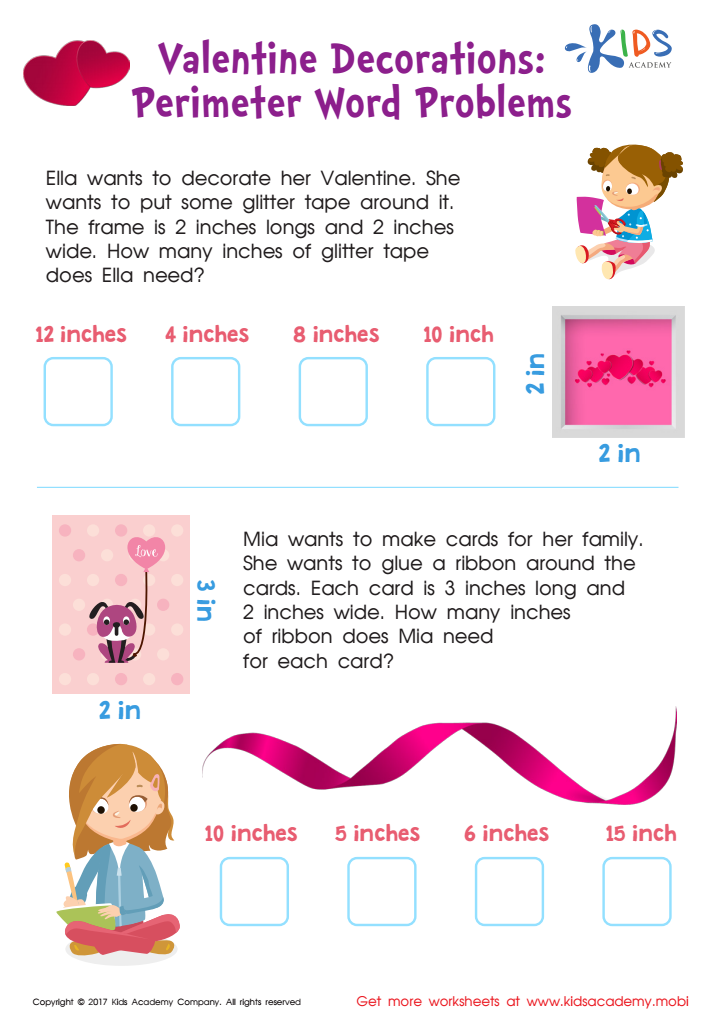
Perimeter Word Problems Worksheet







Applying math concepts for children aged 5-8 is crucial for developing foundational skills essential for future academic success and everyday life. At this age, children are naturally curious and begin to explore and make sense of the world around them. Introducing math concepts like counting, sorting, simple addition and subtraction, shapes, and patterns helps foster critical thinking and problem-solving abilities early on.
Firstly, basic math skills are the building blocks for more complex mathematical concepts. Establishing a solid understanding during these formative years makes it easier for children to grasp advanced topics as they progress in school. Additionally, early math proficiency is linked to overall academic achievement. Studies have shown that kindergarten children with stronger math skills tend to perform better in reading and other academic areas in later grades.
Secondly, applying math in everyday contexts helps make learning meaningful and relevant. When children recognize how math is used in daily activities, such as measuring ingredients for a recipe, telling time, or organizing their toys, they better appreciate its importance and utility.
Moreover, engaging with math can boost children’s confidence. When young learners successfully solve mathematical problems, it enhances their self-esteem and encourages a positive attitude toward learning.
Finally, nurturing an early interest and competence in math paves the way for the development of STEM skills that are increasingly vital in our technology-driven world. Parents and teachers play a key role in this developmental stage, creating a supportive environment that encourages curiosity, exploration, and a love for mathematics.








