Basic geometry knowledge Math Worksheets for Ages 5-8
4 filtered results
-
From - To
Explore our engaging Basic Geometry Math Worksheets designed for children ages 5-8! These worksheets provide a fun and interactive way to help young learners develop essential geometry skills. From identifying shapes and understanding spatial relationships to measuring angles and recognizing symmetry, our activities promote critical thinking and foundational math concepts. With colorful illustrations and easy-to-follow instructions, these worksheets make geometry accessible and enjoyable. Perfect for classroom use or at-home learning, our resources support early math literacy. Download, print, and watch your child build confidence in geometry while having a blast! Ideal for parents and teachers alike.
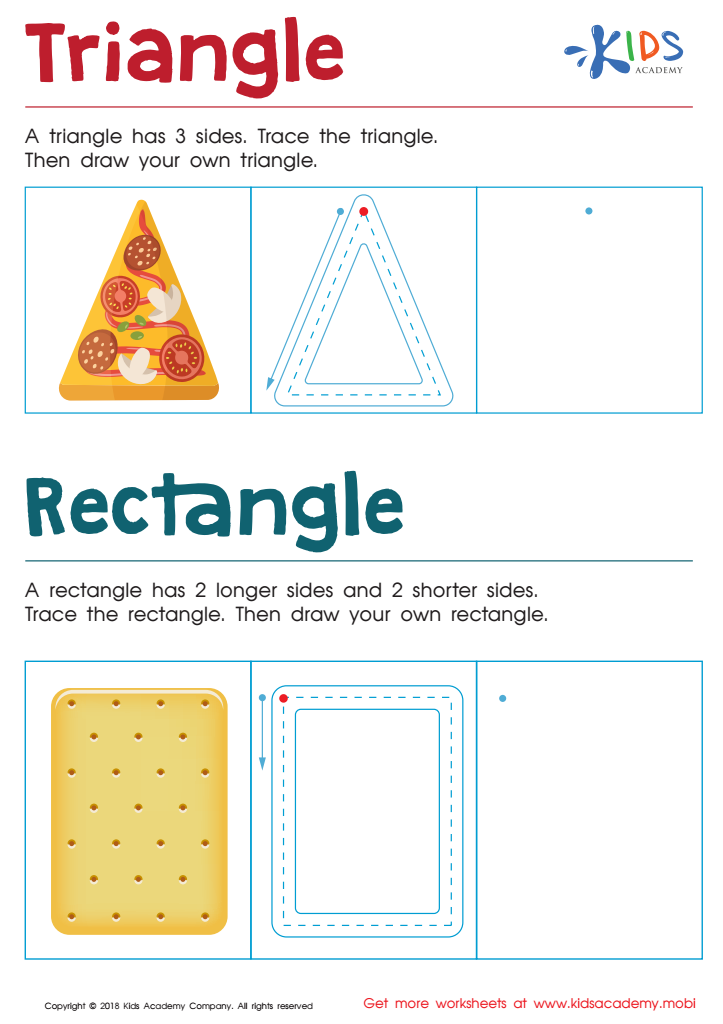
Triangle Rectangle Worksheet
 Assign to My Students
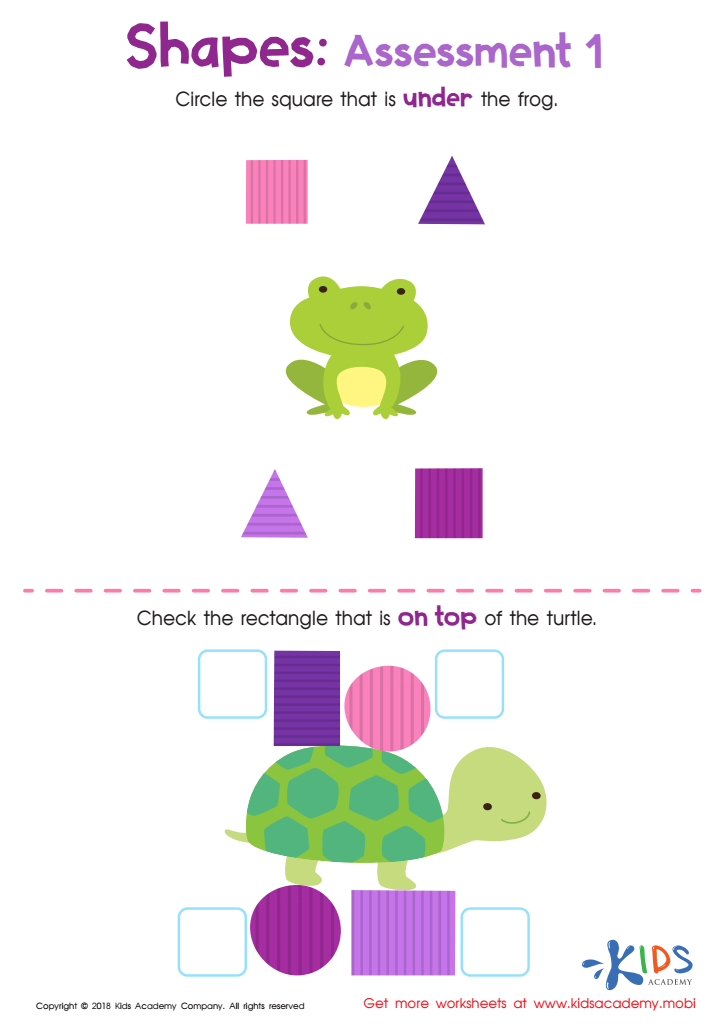
Geometry – Assessment 1 Worksheet
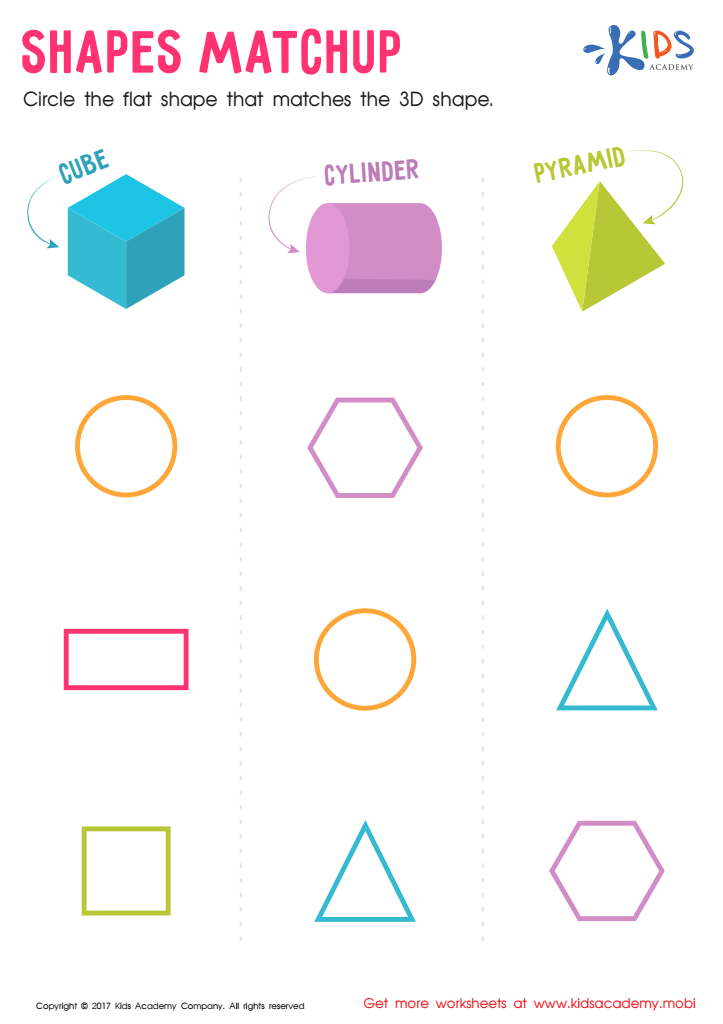
Shapes Matchup Worksheet






.jpg)
Basic geometry knowledge is crucial for children aged 5-8 as it lays the foundation for critical thinking and problem-solving skills. Understanding basic geometric concepts helps young learners recognize shapes, patterns, and spatial relationships, which are essential elements in early math development. Geometry encourages children to observe, categorize, and articulate their observations, fostering not only mathematical proficiency but also language and communication skills.
At this developmental stage, children’s explorations in geometry lead to enhanced cognitive abilities. Activities such as measuring, sorting, and creating shapes can be integrated into play, making learning enjoyable and interactive. When parents and teachers emphasize geometry, they help children develop an appreciation for mathematics in the world around them, from recognizing geometric shapes in buildings to understanding patterns in nature.
Additionally, early exposure to geometry supports future learning in mathematics and science, as higher-level concepts often build on basic shapes and spatial reasoning skills. By encouraging familiarity with basic geometry, parents and teachers equip children with tools they need for academic success and everyday problem-solving, promoting confidence and curiosity that will last a lifetime. In short, investing in geometry education at this age is pivotal for holistic development and lifelong learning.








