
Color matching Math Worksheets for Ages 5-8
3 filtered results
Difficulty Level
Grade
Age
-
From - To
Subject
Activity
Standards
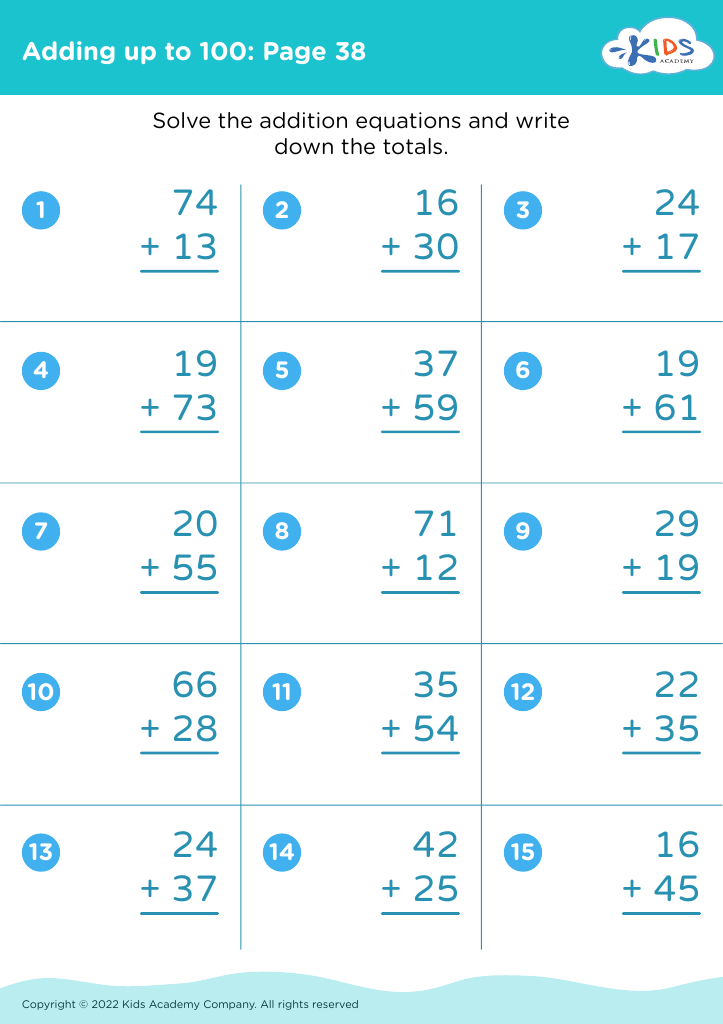
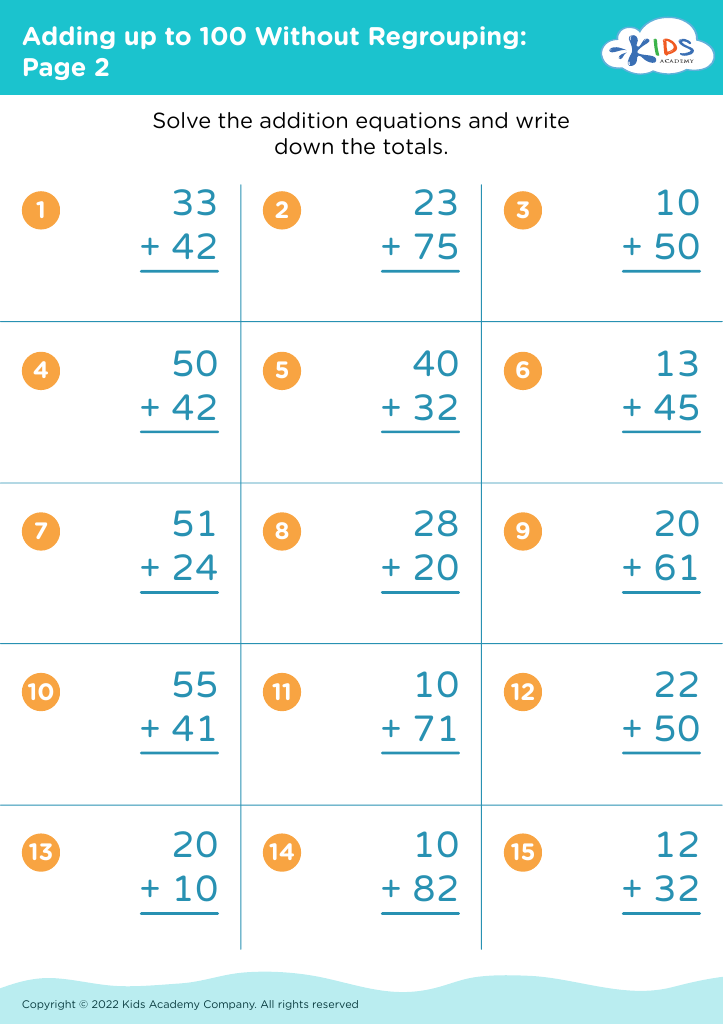
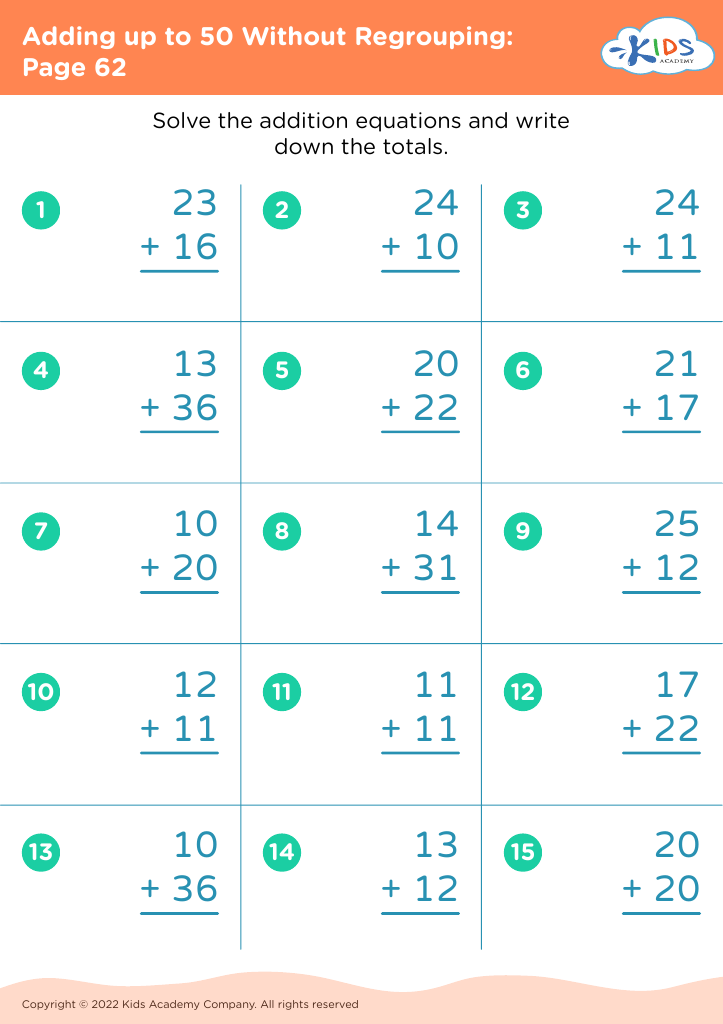
Discover our engaging Color Matching Math Worksheets for children aged 5-8. These fun and educational printables are expertly designed to develop your child's math and color recognition skills. Each worksheet takes kids on an exciting journey through counting, addition, shapes, and patterns, all while boosting their confidence and enthusiasm for learning. Perfect for home use or classroom activities, these worksheets offer interactive learning experience that makes math both enjoyable and accessible. Watch your child thrive as they match colors and solve problems, laying a strong foundation for future math success. Download and print today!
Favorites
With answer key
Interactive
Join Kids Academy for Free
Who is primarily going to use this learning content?








Color matching math for ages 5-8 is a powerful educational tool that parents and teachers should value highly. At this formative stage, children are naturally curious and visual learners, so integrating colors with math concepts can significantly enhance comprehension and retention. Colors provide a visual anchor, making abstract concepts like numbers and arithmetic more concrete and engaging. This dual coding stimulates both hemispheres of the brain, promoting better memory retention.
Moreover, color matching math activities aid in the development of cognitive skills like pattern recognition, sequencing, and logical reasoning. These skills are foundational, not only for advanced mathematical understanding but also for overall problem-solving abilities. Additionally, involving colors in math helps young learners associate learning with positive experiences, fostering an enjoyment for math instead of anxiety.
In social settings like classrooms, colored math activities encourage interaction and collaboration among peers, promoting not just academic skills but also social skills such as sharing and teamwork. Finally, parents and teachers can use these activities to identify any learning challenges early on, allowing for timely intervention and support.
Therefore, embracing color matching math can set the stage for a well-rounded educational experience, instilling both cognitive and emotional benefits that will support future academic success.








