Financial literacy Math Worksheets for Ages 5-8
4 filtered results
-
From - To
Boost your child's financial literacy with our engaging math worksheets designed for ages 5-8. Kids Academy offers printable activities that blend basic math skills with foundational money concepts, making learning both fun and practical. Our worksheets help young learners identify coins, understand their value, and introduce simple budgeting, paving the way for smart financial habits. Each activity is thoughtfully crafted to nurture curiosity and build confidence in managing money—a crucial life skill. Teach your child the fundamentals of finance and empower them with the knowledge to make informed decisions. Download now and set them on the path to financial success!
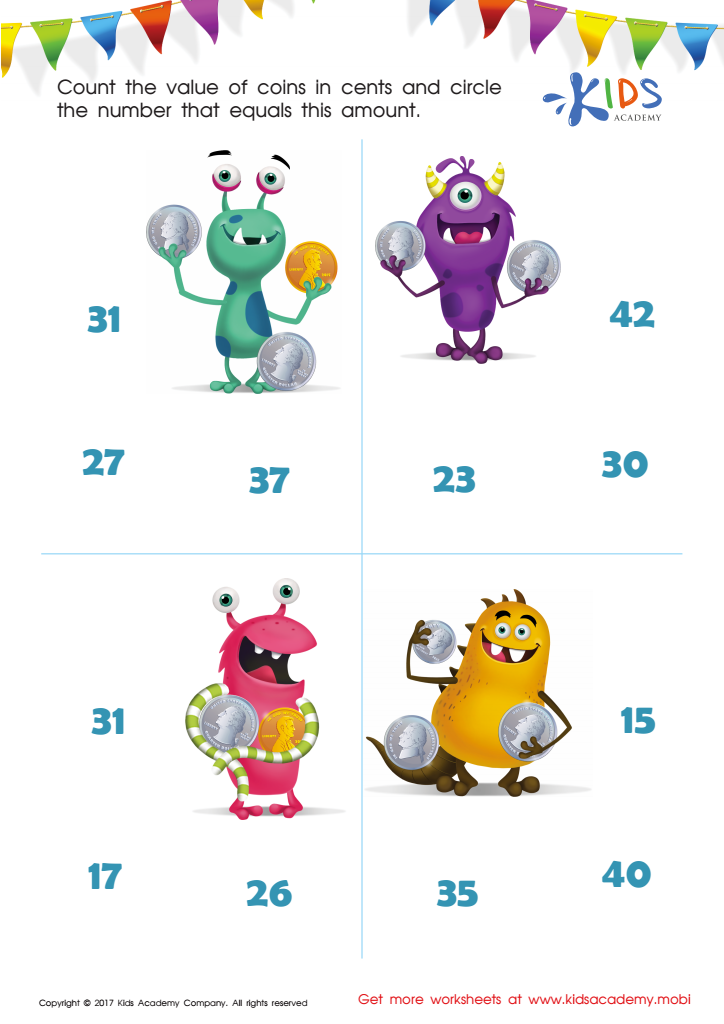
How Many Coins Money Worksheet
 Assign to My Students
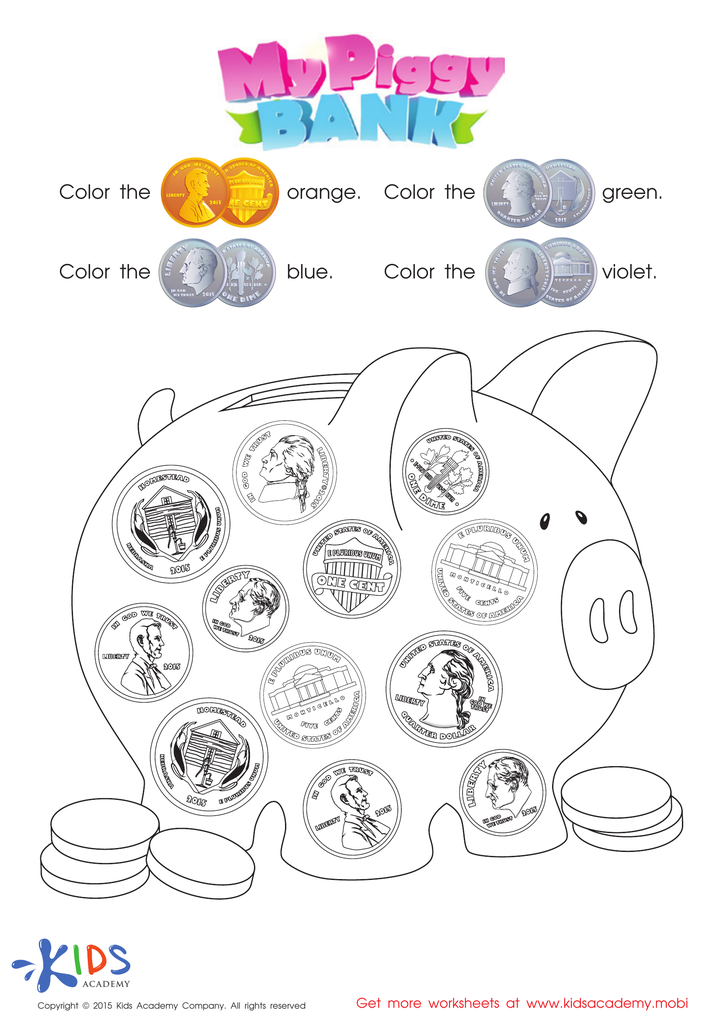
Recognizing Money Money Worksheet
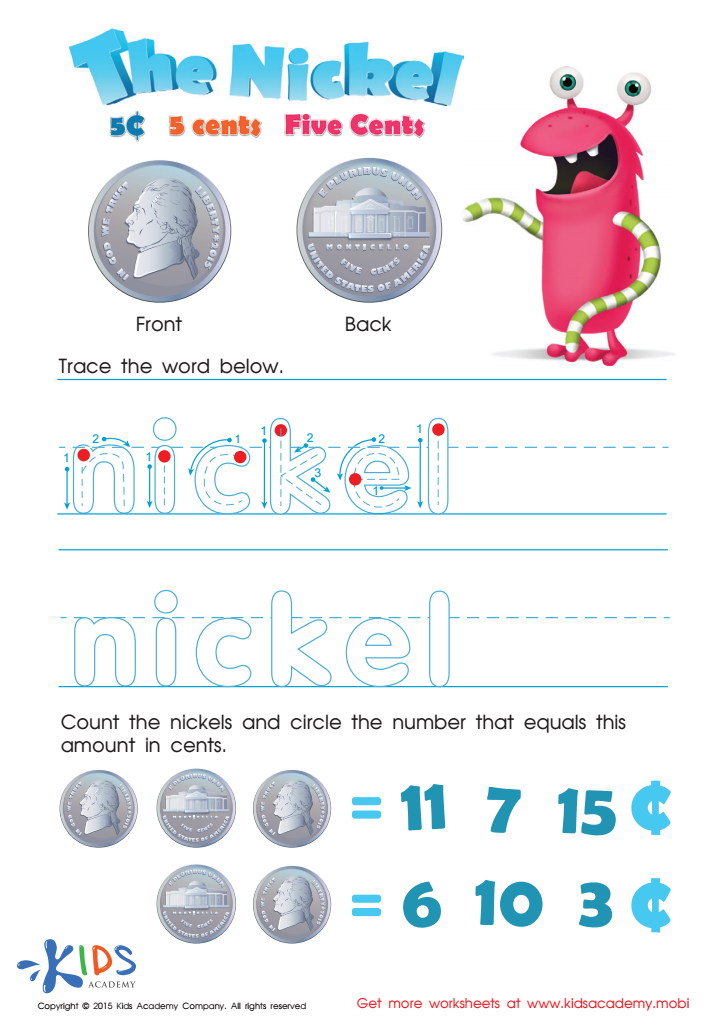
Five Cents or the Nickel Money Worksheet
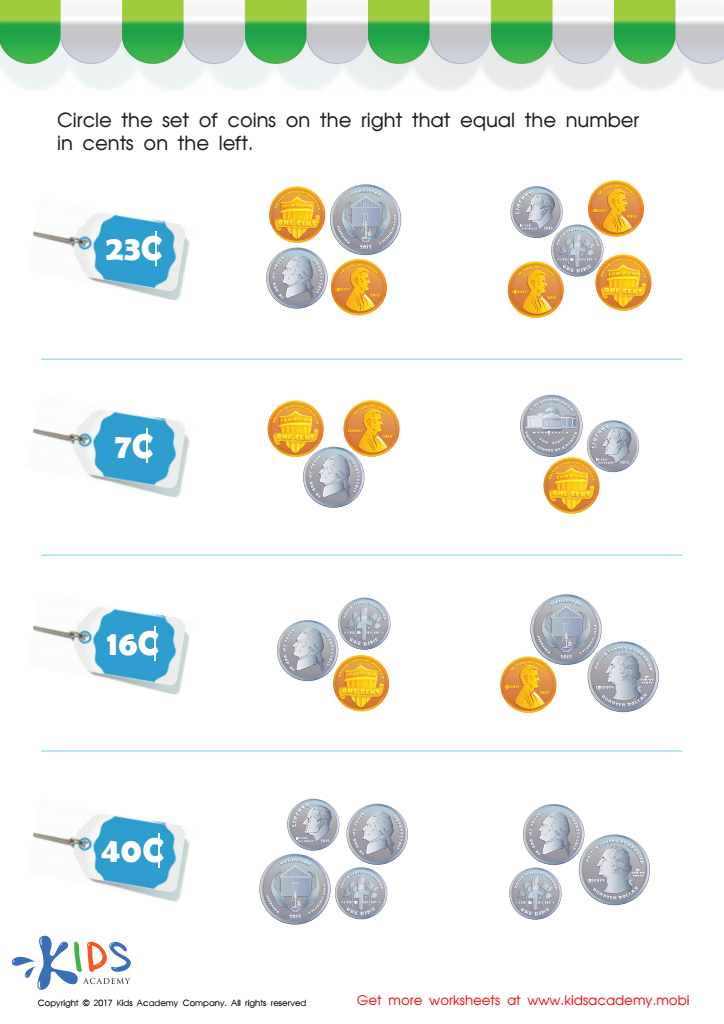
Picking the Coins You Need Money Worksheet








Introducing financial literacy math to children aged 5-8 is essential for several reasons. First, understanding basic financial concepts fosters a sense of responsibility and good habits early in life. Simple tasks, like counting money, identifying coins and bills, or understanding the concept of saving, can be fun and engaging ways to introduce children to financial principles. These basic skills set the foundation for more advanced financial understanding later on.
Another important aspect is that early exposure to financial literacy helps build confidence with money-related decisions. Children learn the value of money, the differences between needs and wants, and the importance of saving. This foundational understanding empowers them to make smarter economic choices as they grow older.
Moreover, integrating financial literacy with math enhances problem-solving and critical thinking skills. It offers practical applications for arithmetic operations like addition, subtraction, multiplication, and division, making math both fun and relevant.
Finally, financial literacy can also serve as an introduction to healthy communication about money within the family. When children observe and participate in financial discussions, they learn the importance of honesty and transparency about finances, creating open conversations as they grow.
By prioritizing financial literacy, parents and teachers are equipping children with essential life skills that build a framework for future financial stability and success.








