
Learning addition Math Worksheets for Ages 5-8
6 filtered results
Difficulty Level
Grade
Age
-
From - To
Subject
Activity
Standards
Discover a collection of engaging, printable addition math worksheets designed for children ages 5-8 at Kids Academy. Our worksheets simplify learning basic arithmetic through fun, interactive activities, from simple single-digit problems to more complex exercises. Perfect for classroom use or at-home practice, each worksheet nurtures foundational math skills, helps build confidence, and fosters a love for numbers. Tailored to young learners, our colorful and captivating designs make math learning an enjoyable adventure. Ideal for parents and teachers seeking quality resources to support early math education. Unlock your child's potential with Kids Academy's addition math worksheets!
Favorites
With answer key
Interactive
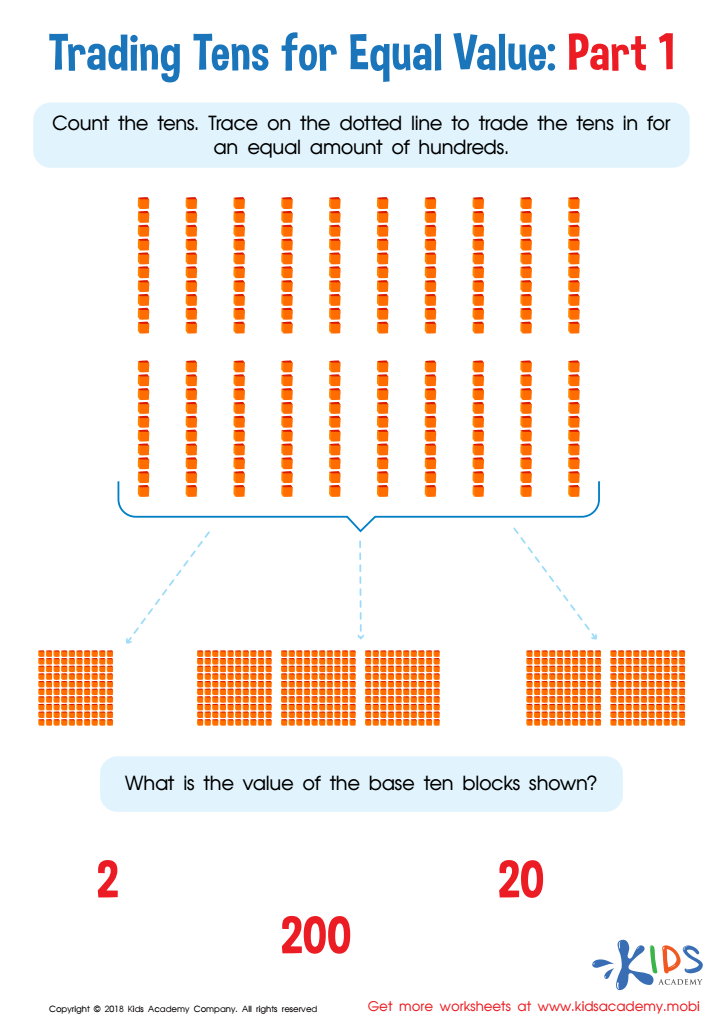
Trading Tens for Equal Value Worksheet: Part 1
This worksheet helps 3rd graders count large numbers and recognize base numbers. It lists 10 cubes and asks students to identify the hundreds, then circle the base blocks. This colorful pdf provides a fun, visual way to help students strengthen their math basics.
 Assign to My Students
Trading Tens for Equal Value Worksheet: Part 1
Worksheet
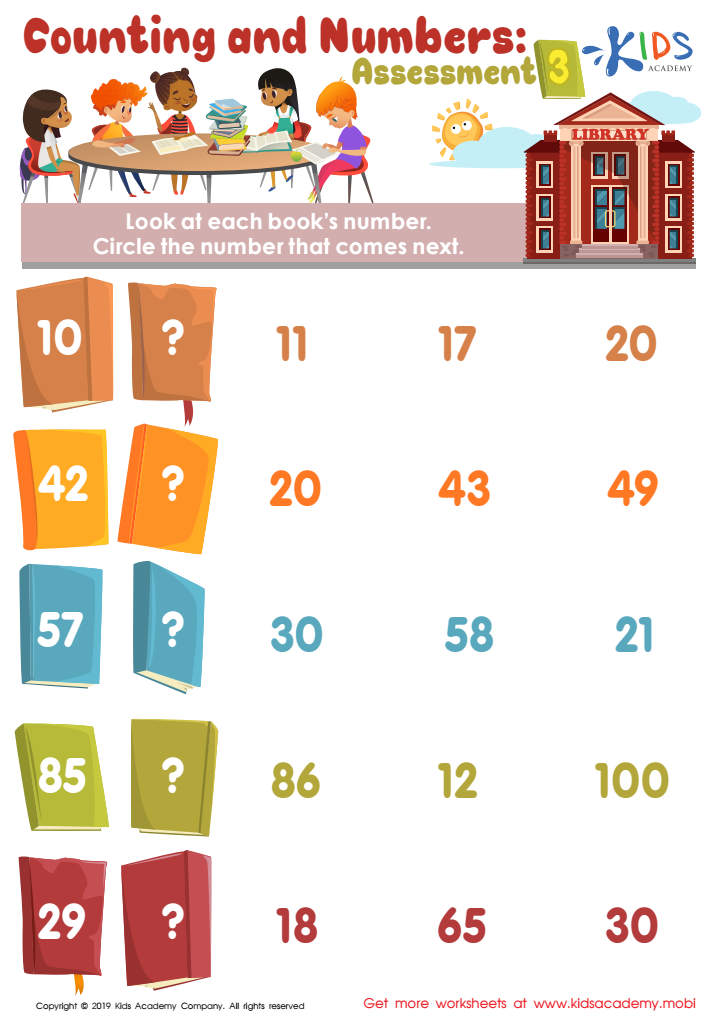
Counting and Numbers: Assessment Worksheet
Number line thinking is an essential math skill. Kids using this skill can compute math problems accurately and quickly. Our free assessment tests number line recognition; have your child pick the right number from the given options to follow the current number on the line. This assessment will give you an idea of their counting skills.
Counting and Numbers: Assessment Worksheet
Worksheet
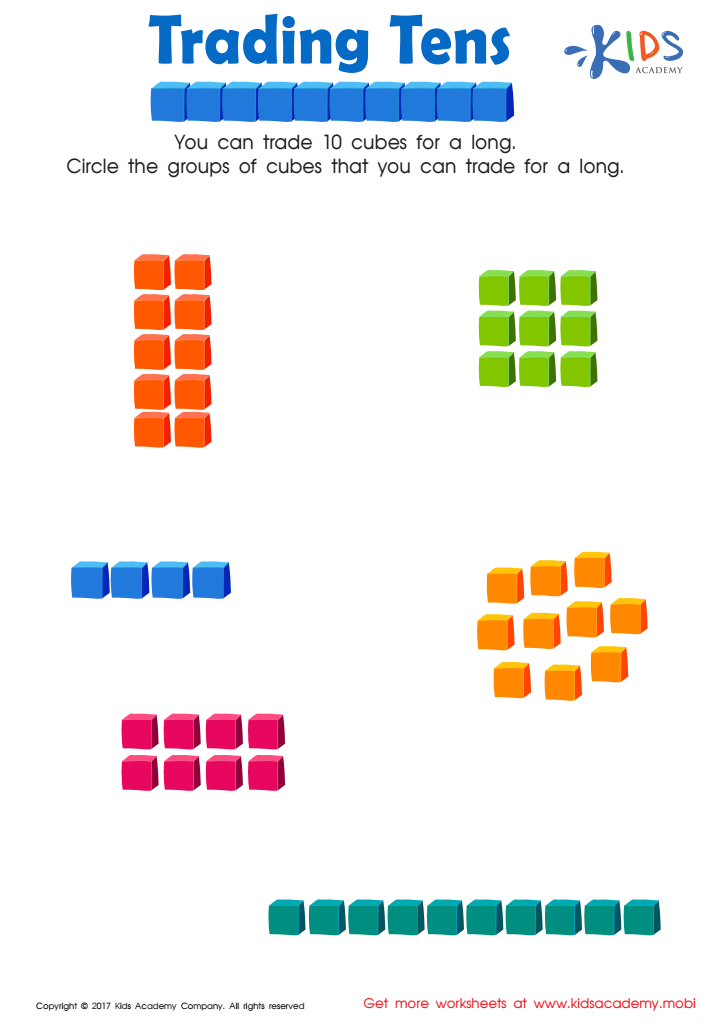
Trading Tens Worksheet
Students will hone their counting skills with this worksheet. They must identify groups of 10 cubes to trade for a long. The cubes are arranged in different ways, so students must rely on individual counting. Completing this printable pdf will help 1st graders develop problem-solving abilities and a better understanding of counting.
Trading Tens Worksheet
Worksheet
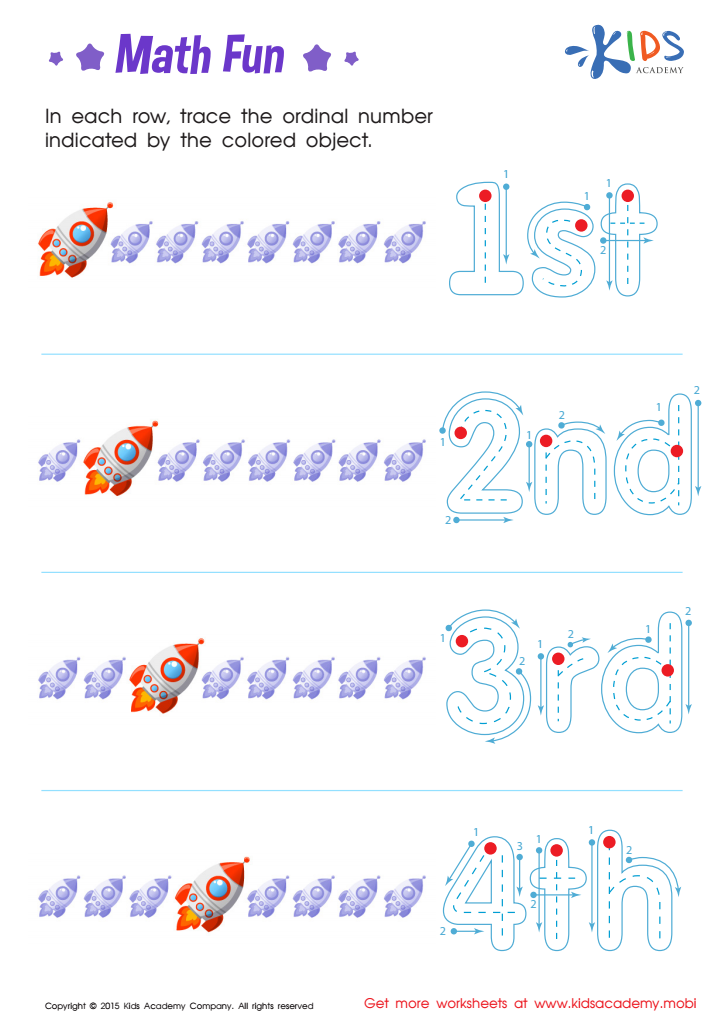
Ordinal Numbers: Math Fun Worksheet
Have fun learning ordinal numbers with our spaceship worksheet! Kids learn best while having fun and with repetition. Featuring vibrant spaceships, your child will understand placement, recognize and write ordinal numbers, and make connections. Understanding ordinal numbers leads to more advanced math concepts. Get your math whiz ready for preschool with our addition/subtraction worksheets! Have fun learning ordinal numbers and master them in no time!
Ordinal Numbers: Math Fun Worksheet
Worksheet
Join Kids Academy for Free
Who is primarily going to use this learning content?



.jpg)


Learning addition is a cornerstone of early mathematics education for children ages 5-8, establishing the foundational skills necessary for their academic journey and everyday life. Mastering addition builds essential numeric literacy which is crucial for understanding more complex mathematical operations. When children grasp addition, they develop problem-solving abilities that extend beyond the math class, fostering critical thinking and logic.
From a developmental perspective, learning addition during these formative years strengthens cognitive development and promotes mental discipline. These skills are transferable and help in areas such as reasoning and spatial awareness.
Equally important is the emotional aspect: success in addition fosters a sense of achievement and boosts self-confidence. This positive reinforcement encourages a continual interest in learning and helps children to tackle more challenging tasks with a positive attitude.
For parents and teachers, supporting early addition skills means providing children with tools for future success, both academically and in daily life scenarios like handling money or measuring ingredients in recipes. Encouraging math fluency through games, exercises, and practical scenarios ensures children view learning as engaging and relevant.
Ultimately, caring about early addition comprehension helps create a solid groundwork for academic success and practical problem-solving that benefits children throughout their lives.








