Math skills improvement Math Worksheets for Ages 5-8
7 filtered results
-
From - To
Boost your child’s math skills with our engaging and educational worksheets, designed specifically for ages 5-8. At Kids Academy, our Math Skills Improvement worksheets focus on building fundamental math abilities through fun and interactive exercises. Topics range from counting and addition to fractions and geometry, ensuring a comprehensive learning experience. Each worksheet is crafted by educational professionals to strengthen problem-solving and critical thinking skills. Perfect for at-home practice or classroom use, these printable resources help children achieve math fluency and confidence. Join us in making math an exciting adventure for your young learners!
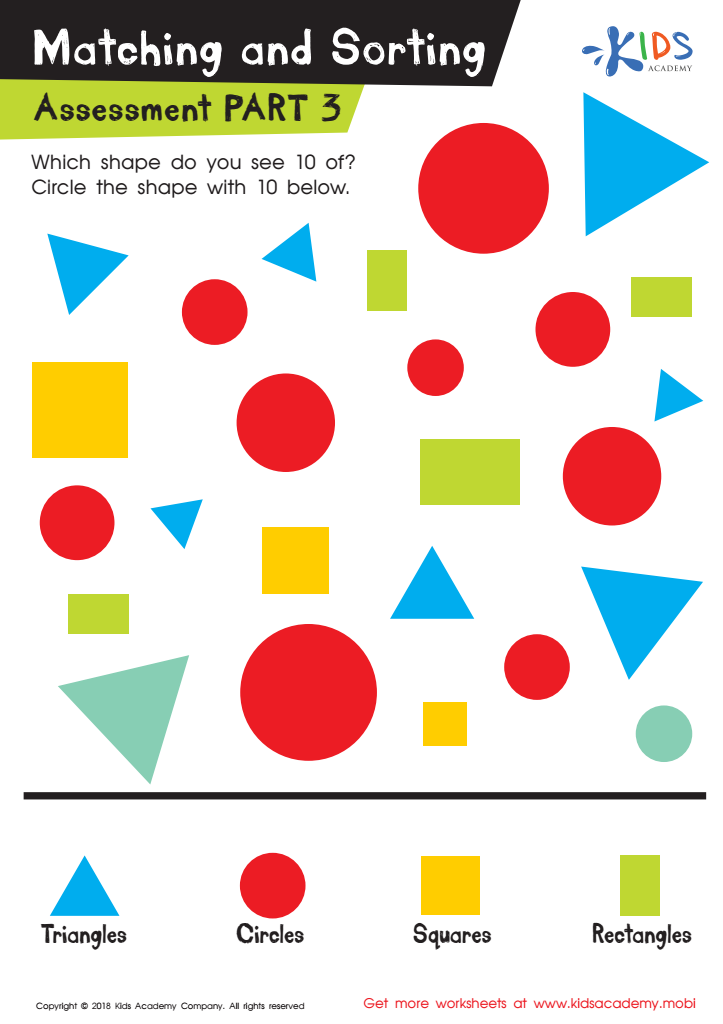
Matching and Sorting for Kindergarten: Assessment 3 Worksheet
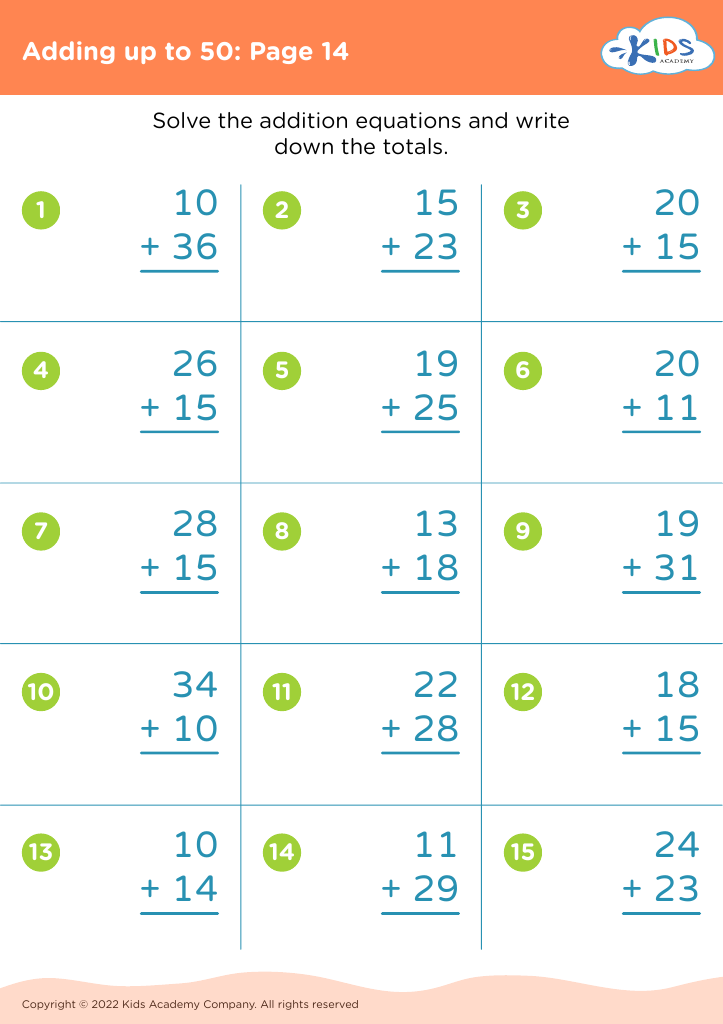
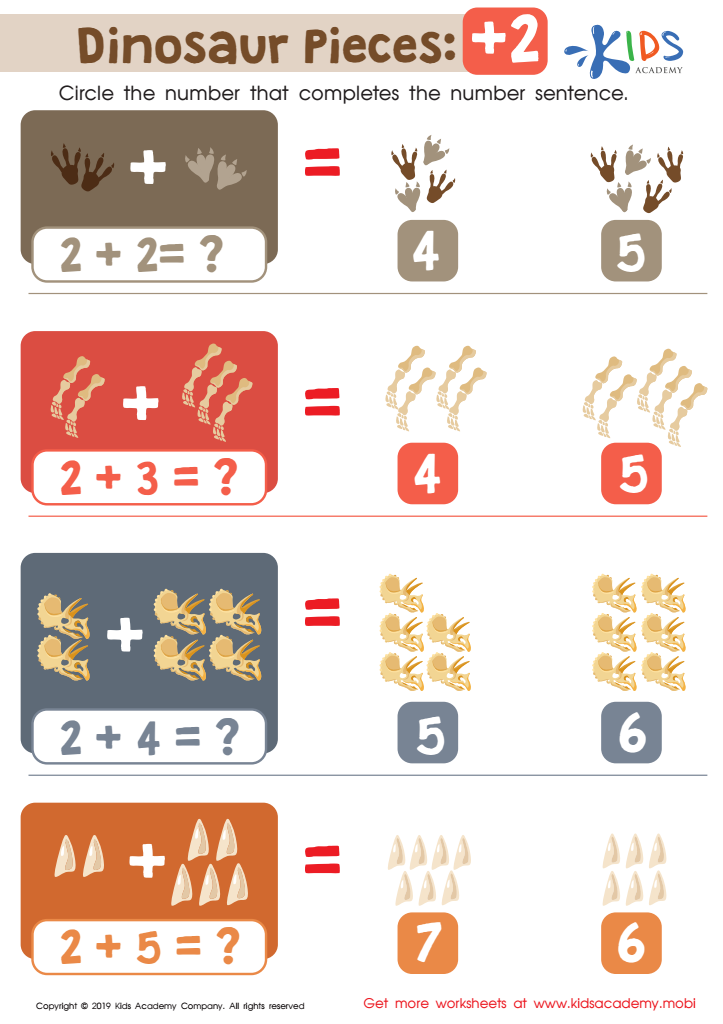
Dinosaur Pieces: +2 Worksheet
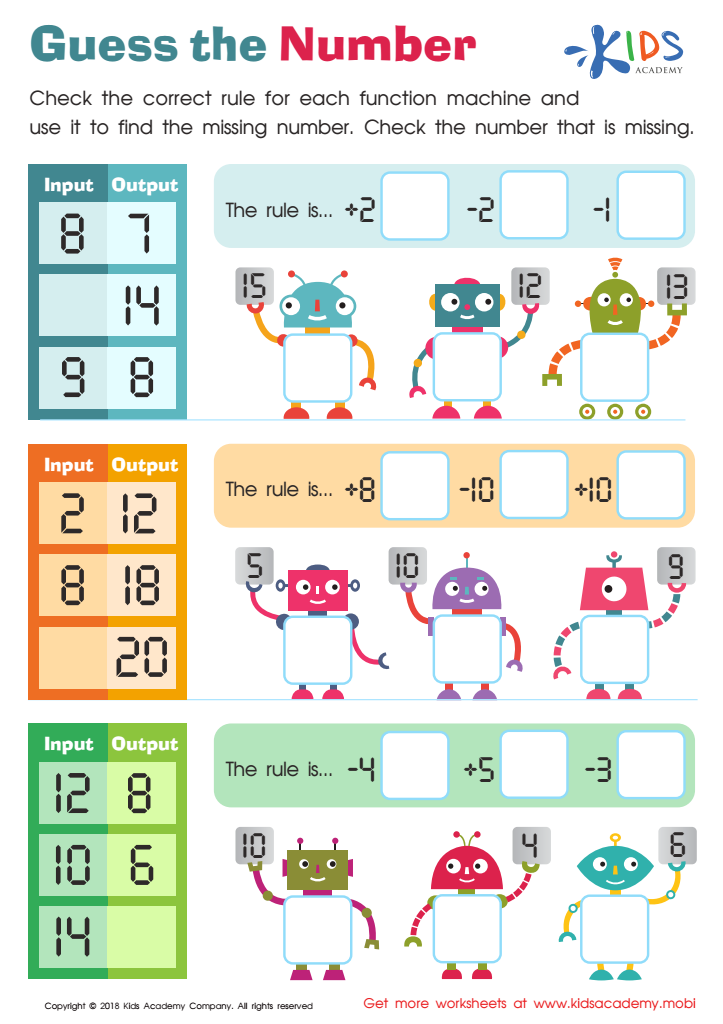
Guess the Number Worksheet
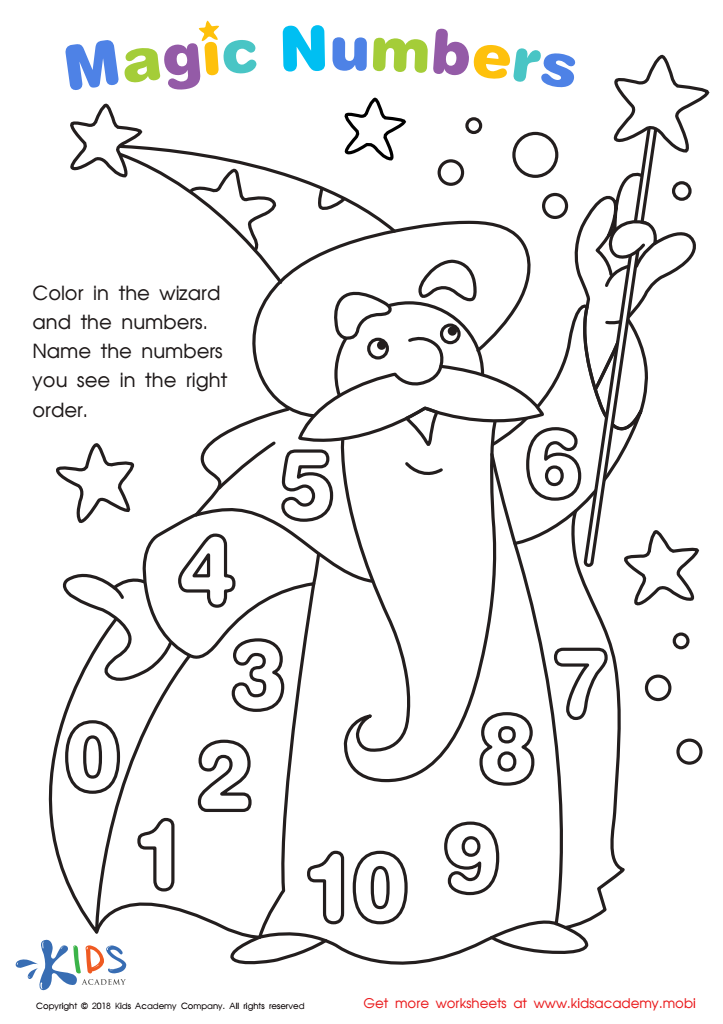
Magic Numbers Worksheet
 Assign to My Students
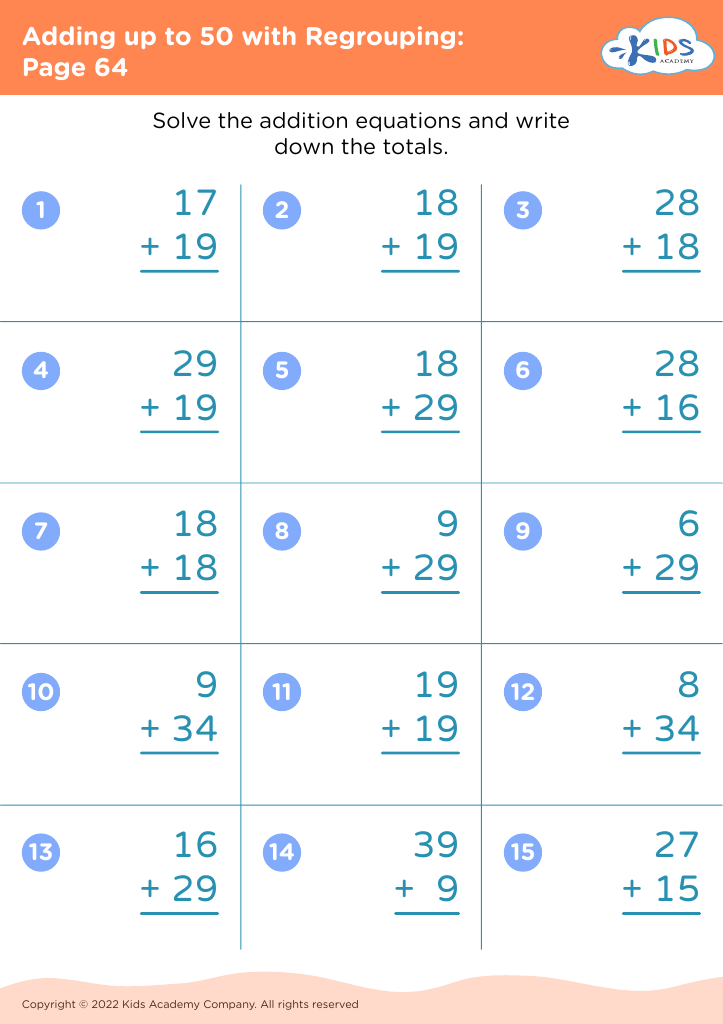
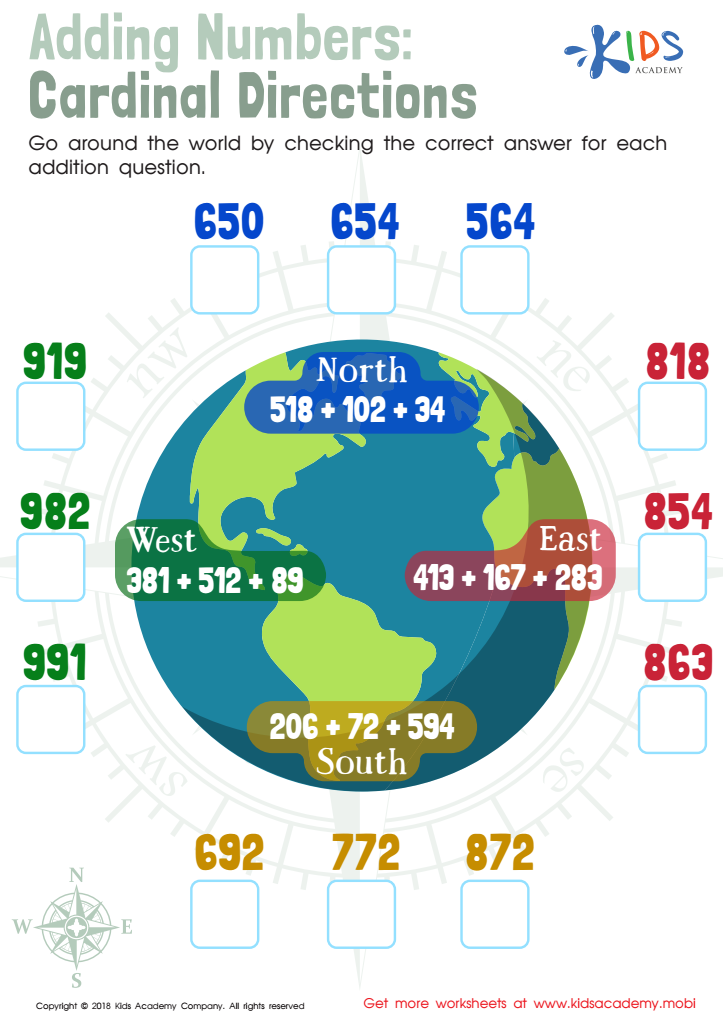
Adding Numbers: Cardinal Directions Worksheet





.jpg)
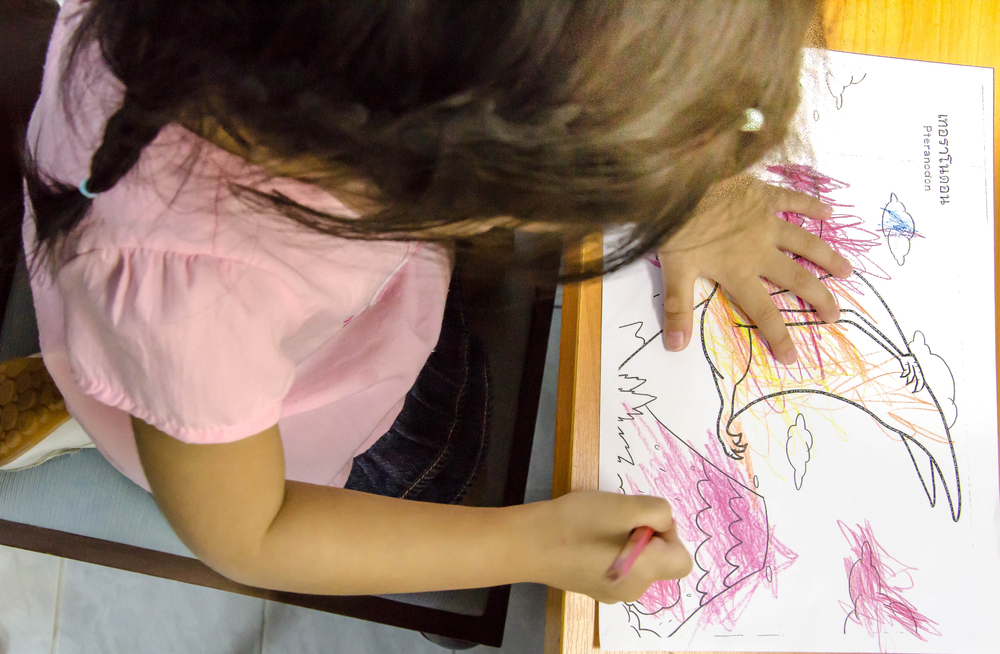
Parents and teachers should prioritize improving math skills in children aged 5-8 as a strong foundation in these early years sets the stage for future academic success and critical thinking development. At this age, children’s brains are particularly receptive to learning new concepts. Math skills foster logical reasoning, problem-solving abilities, and cognitive development, which are essential across various subjects beyond mathematics, such as science, technology, and even everyday decision-making.
Additionally, early math proficiency is closely linked to later academic achievement. Research shows that children who grasp basic math concepts early on tend to perform better in school overall. These children often exhibit higher confidence and a positive attitude towards learning, which can be pivotal in their long-term educational journey.
Furthermore, developing math skills at an early age helps children understand the world around them. They learn to recognize patterns, make sense of numbers, and understand spatial relationships, which are all practical skills applicable in daily life. Engaging and age-appropriate math activities thus also foster curiosity, creativity, and perseverance, setting a solid groundwork for lifelong learning.
Therefore, by focusing on math skills improvement for young learners, parents and teachers are investing in the child’s holistic development, ensuring they have the tools needed for future success and problem-solving in an increasingly complex world.








