Mathematics skills Math Worksheets for Ages 5-8
3 filtered results
-
From - To
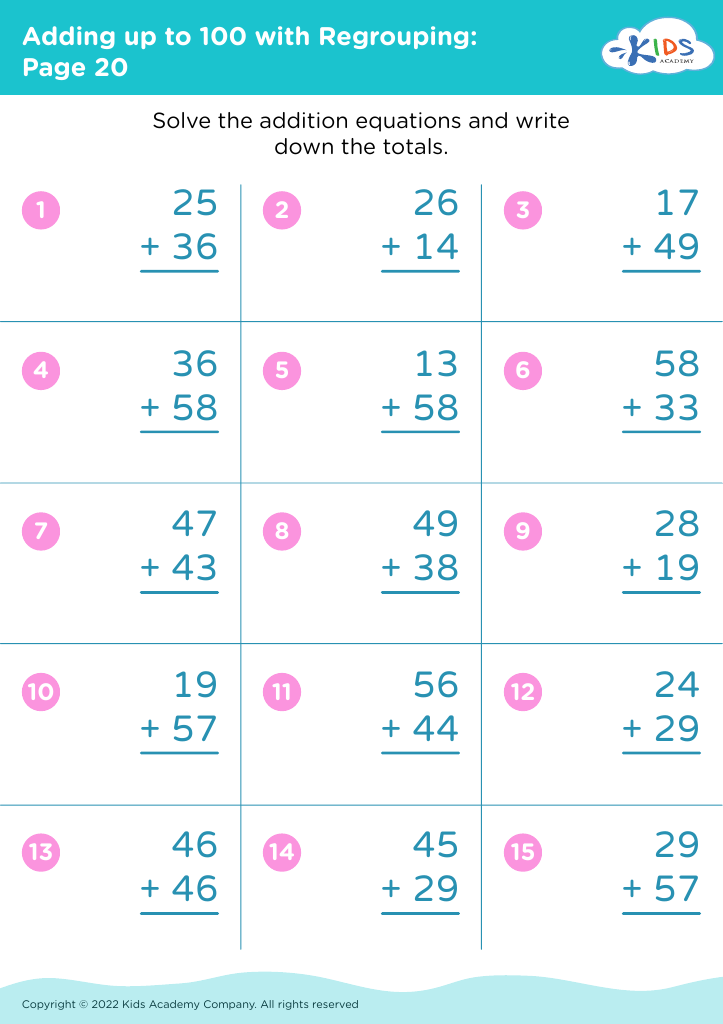
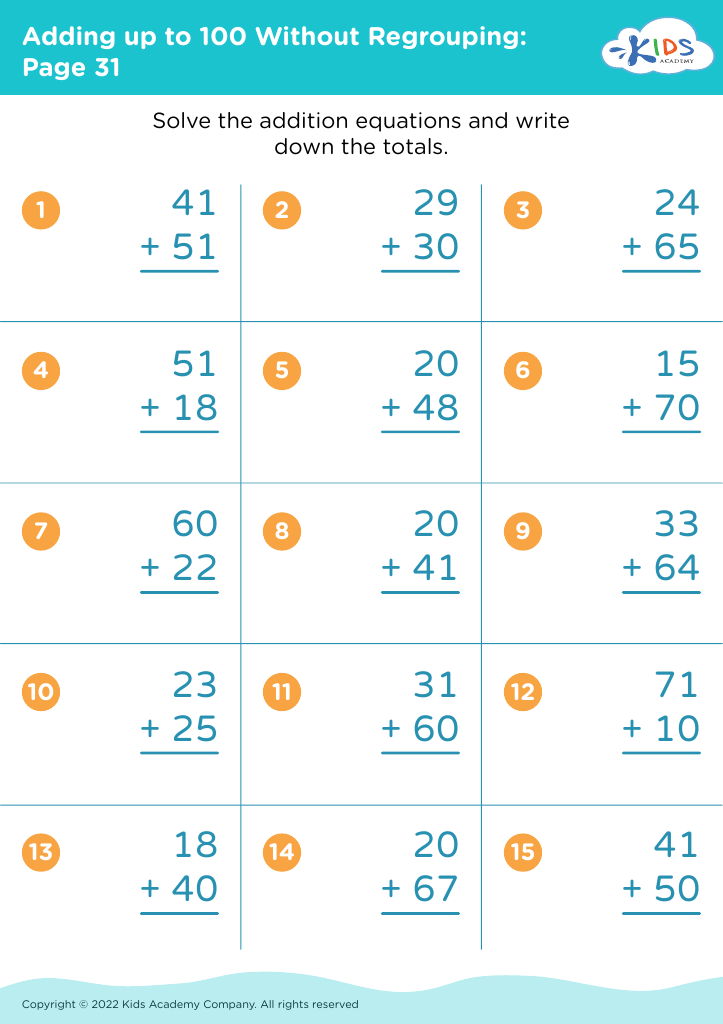
Discover our engaging Mathematics Skills Math Worksheets tailored specifically for children ages 5-8! Designed to enhance foundational math abilities, these worksheets cover essential concepts such as addition, subtraction, counting, and basic geometry. With colorful illustrations and interactive activities, young learners will find math fun and exciting. Perfect for parents and educators, our resources support at-home learning or classroom instruction, catering to various skill levels. Whether your child needs extra practice or is eager to explore new challenges, our worksheets are the ideal tool to foster a love for math. Start building confidence and skills today!
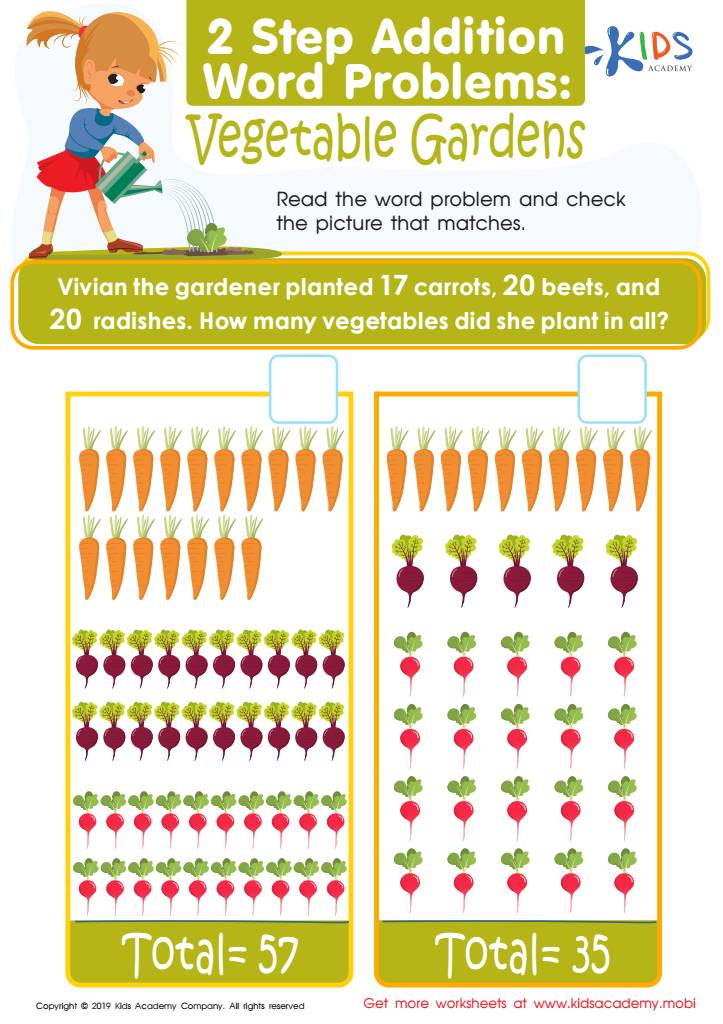
Vegetable Gardens Worksheet
 Assign to My Students








Mathematics skills for children aged 5-8 lay the foundation for their entire educational journey and are essential for overall development. At this stage, children are developing critical thinking, problem-solving, and logical reasoning abilities, which are crucial not just in math, but across all subjects. Early exposure to math concepts such as counting, basic arithmetic, patterns, and spatial awareness helps children understand the world around them and fosters a sense of curiosity.
Parents and teachers should care about these skills because they directly influence children’s confidence and enjoyment of learning. A strong grasp of foundational math concepts can lead to greater academic success in later years, encouraging a positive attitude towards STEM (science, technology, engineering, mathematics) fields. Furthermore, math skills are vital for practical daily activities, such as budgeting allowance, measuring ingredients for recipes, or understanding time, thus aiding in real-life problem-solving.
Additionally, fostering a supportive learning environment nurtures a child’s self-esteem and willingness to tackle challenges. As parents and educators engage with children in fun math-related activities, they can instill a love for math, encouraging lifelong learning and equipping them with essential skills for the future. Overall, nurturing math skills at a young age enhances children's cognitive development and prepares them for success in an increasingly complex world.








