
Reading clocks Math Worksheets for Ages 5-8
7 filtered results
Difficulty Level
Grade
Age
-
From - To
Subject
Activity
Standards
Introduce your child to the fascinating world of time with our engaging Reading Clocks Math Worksheets for Ages 5-8! Designed to support young learners, these worksheets provide interactive exercises that help children grasp the concept of reading analog and digital clocks. Through colorful visuals and easily understandable exercises, kids will practice telling time, understanding the hour and minute hands, and even solving simple time-based problems. Perfect for home or classroom use, these worksheets boost confidence and foster essential math skills in a fun and enjoyable way. Help your child master time-telling and build a strong math foundation today!
Favorites
With answer key
Interactive
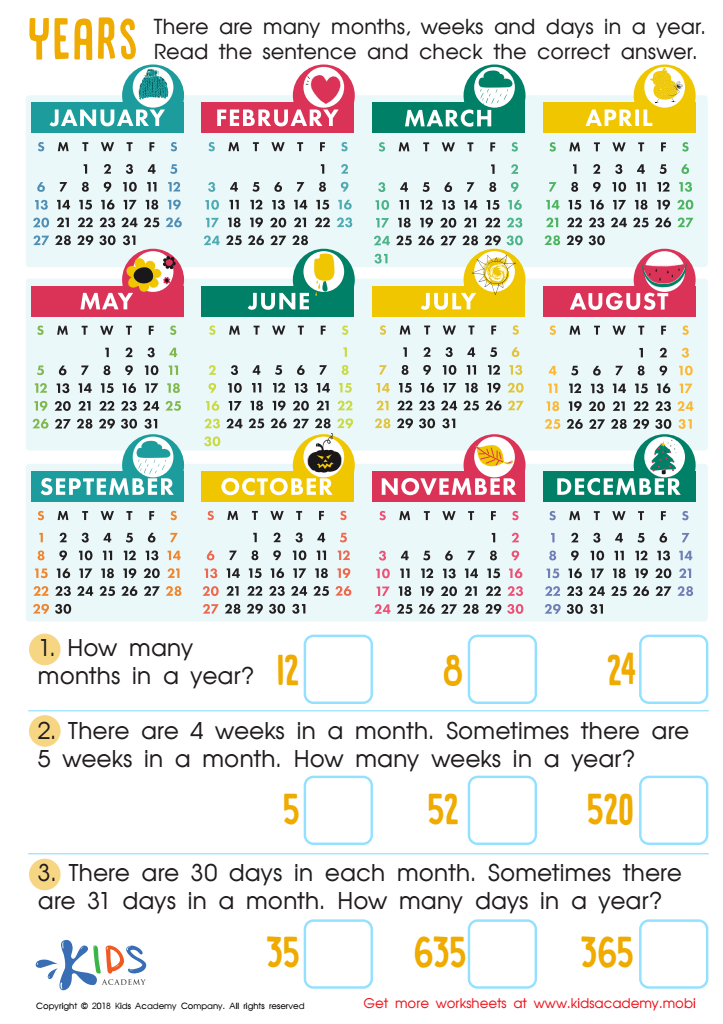
Years Worksheet
This worksheet is a great way to test your children's knowledge of the calendar. Ask them if they can name the days of the week and months in a year. Read and discuss the questions with them and help them find the right answers. Encourage them to check their answers.
 Assign to My Students
Years Worksheet
Worksheet
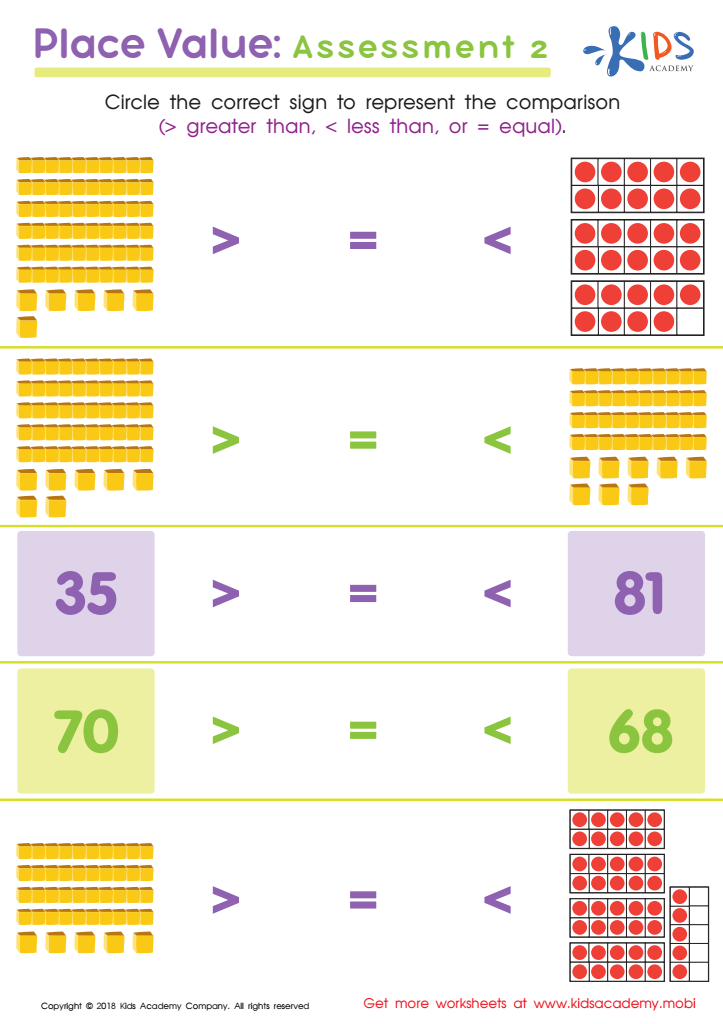
Place Value: Assessment 2 Worksheet
Children must learn to recognize the value of numbers and break them into chunks of ten. They must also be able to compare numbers to know if one is greater, less than or equal to another. The Place Value Assessment PDF is a great tool to assess their skills and identify what requires more practice.
Place Value: Assessment 2 Worksheet
Worksheet
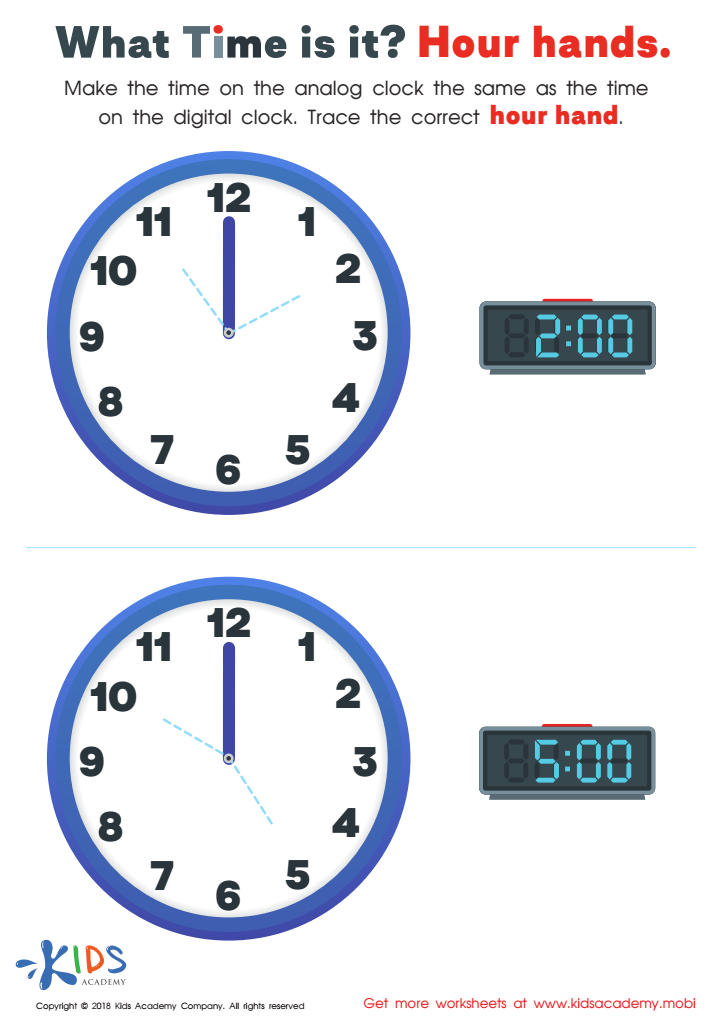
What Time Is it? Hour Hands Worksheet
Does your child know how to read analogue and digital clocks? This worksheet will help them learn. Trace the correct hour hand to match the time on a digital clock to the analogue clock. Help them read the time correctly, both on analogue and digital clocks.
What Time Is it? Hour Hands Worksheet
Worksheet
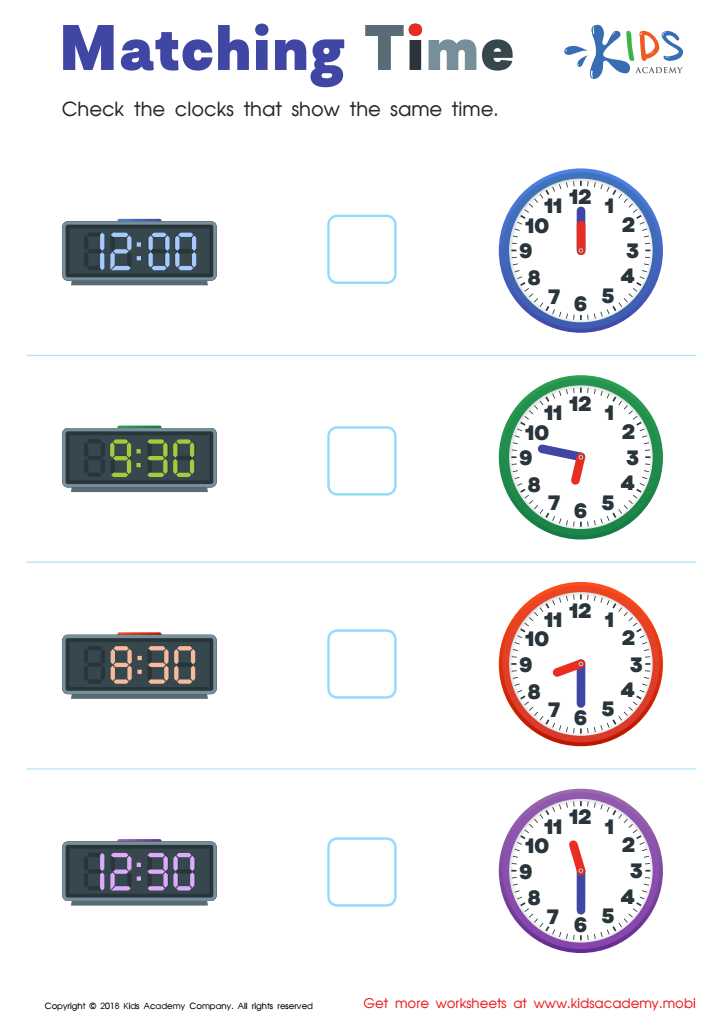
Matching Time Worksheet
Teach your child to read time in both digital and analog formats with this helpful printout. They'll identify clocks that match in both formats and check them off. Colorful and engaging, it's a great way to help your child understand the concept of time-telling.
Matching Time Worksheet
Worksheet
Join Kids Academy for Free
Who is primarily going to use this learning content?








Parents and teachers should prioritize teaching children ages 5-8 about reading clocks and understanding basic math concepts through time. This foundational skill not only enhances their numeracy but also fosters independence and responsibility. Clocks offer a tangible way to engage young learners in math; understanding time involves concepts of addition, subtraction, and even fractions, thus reinforcing their overall math literacy.
Moreover, mastering timekeeping helps children structure their daily routines and develop a sense of time management. As they progress through school, the ability to tell time will become increasingly important for transitioning between activities, following schedules, and preparing for future responsibilities. By engaging children in interactive methods—like using analog and digital clocks, playing time-related games, or integrating storytelling around daily routines—parents and teachers can make the learning process enjoyable and impactful.
Encouraging these skills early on not only prepares children for academic success but also equips them with essential life skills that contribute to their confidence and independence. By investing time in teaching children to read clocks, adults provide them with tools that will last a lifetime, boosting their numeracy skills while reinforcing their understanding of the world around them.








