Recognizing equal parts Math Worksheets for Ages 5-8
3 filtered results
-
From - To
Discover our engaging "Recognizing Equal Parts Math Worksheets" designed specifically for children aged 5-8! These interactive worksheets focus on introducing young learners to the concept of equal parts through fun, easy-to-understand activities. Students will enhance their understanding of fractions and divisions by exploring various shapes, cutting them into equal parts, and identifying halves, quarters, and more. With colorful illustrations and relatable examples, your child will enjoy practicing essential math skills while developing spatial awareness. Perfect for home or classroom use, these worksheets provide a solid foundation for future math learning. Help your child master equal parts today!
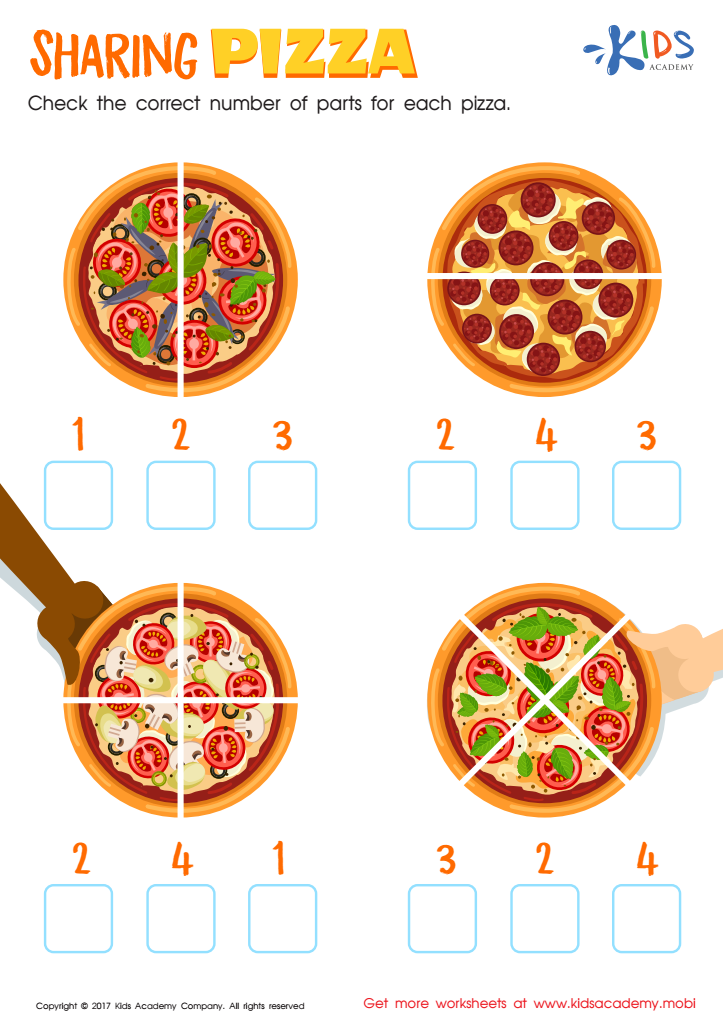
Sharing Pizza Worksheet
 Assign to My Students
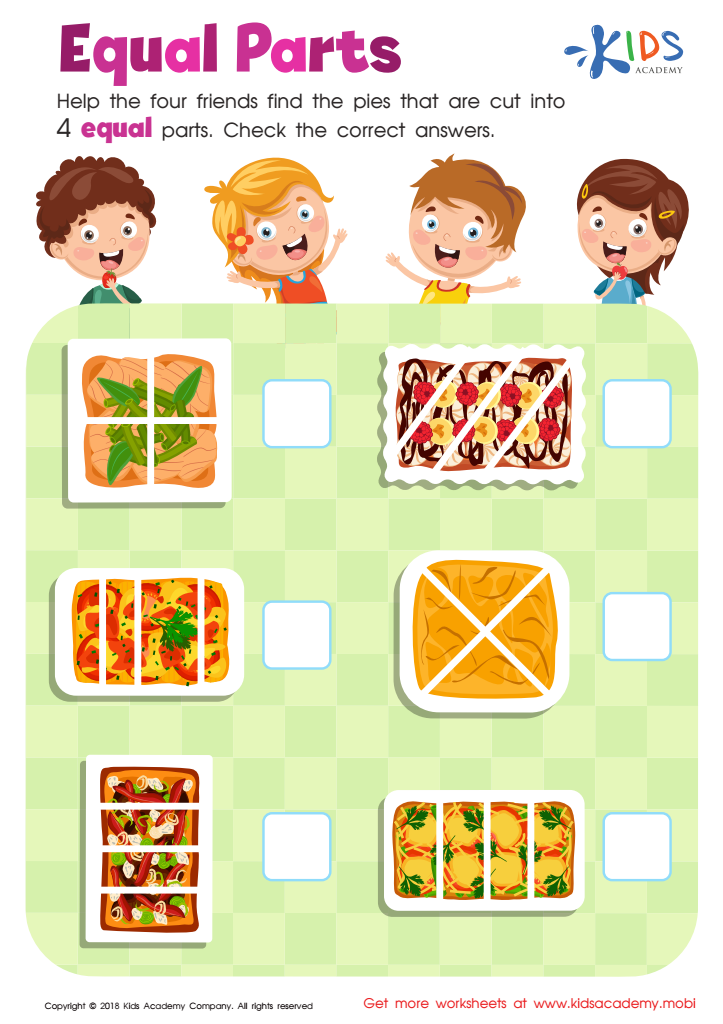
Equal Parts: Food Worksheet







Recognizing equal parts is a fundamental concept in mathematics that lays the groundwork for more advanced skills, making it vital for parents and teachers to prioritize this teaching in children aged 5-8. At this developmental stage, children start grasping the qualities of numbers and their relationships, essential for critical thinking and problem-solving.
Understanding equal parts helps children to see the world more spatially—whether they're splitting a pizza, sharing toys, or measuring ingredients for cooking. This knowledge fosters skills in fractions, ratios, and division, critical for their future in math. Furthermore, recognizing equal parts promotes essential social-emotional skills, such as cooperation and sharing, as children learn to evenly distribute items among peers.
Incorporating hands-on activities to identify equal parts—like cutting objects into halves or quarters—makes learning interactive and fun. When parents and teachers engage with children in this way, it strengthens their cognitive understanding and boosts confidence in math.
Ultimately, positive early experiences in recognizing equal parts set a strong foundation for continued math learning, promoting a lifelong appreciation of the subject and cultivating essential skills necessary for everyday life. Thus, understanding this concept should be a priority in the formative years of education.








