
Recognizing shapes Math Worksheets for Ages 5-8
35 filtered results
Difficulty Level
Grade
Age
-
From - To
Subject
Activity
Standards
Explore our engaging Recognizing Shapes Math Worksheets designed for children aged 5-8! These resources aim to make learning shape identification fun and interactive. Our diverse worksheets feature vibrant visuals and relatable examples to captivate young learners as they discover various shapes, including circles, squares, triangles, and more. Through exciting activities like coloring, matching, and tracing, students will enhance their critical thinking and visual recognition skills. Perfect for classroom or home practice, these worksheets support essential math skill development while nurturing creativity and a love for learning. Download and print these indispensable tools today to help your child master shapes with enjoyment!
Favorites
With answer key
Interactive
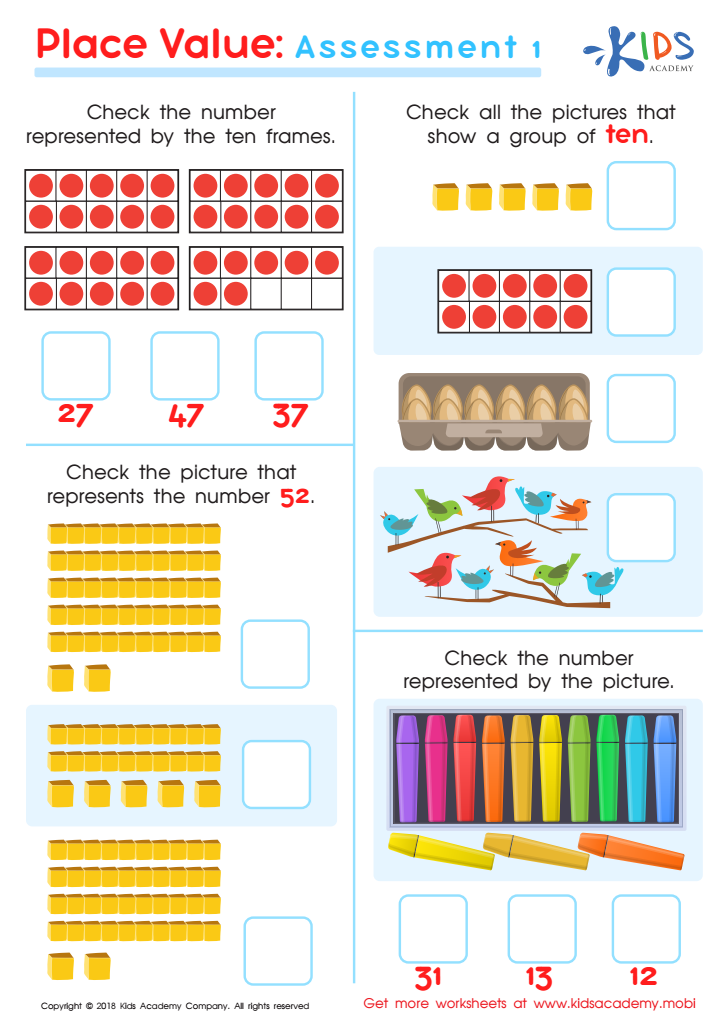
Place Value: Assessment 1 Worksheet
Assess your child's place value and number representation with this PDF worksheet. It lets them count and compare numbers and practice chiseling numbers into groups of ten. It's a great way to identify any concepts that need to be reinforced.
 Assign to My Students
Place Value: Assessment 1 Worksheet
Worksheet
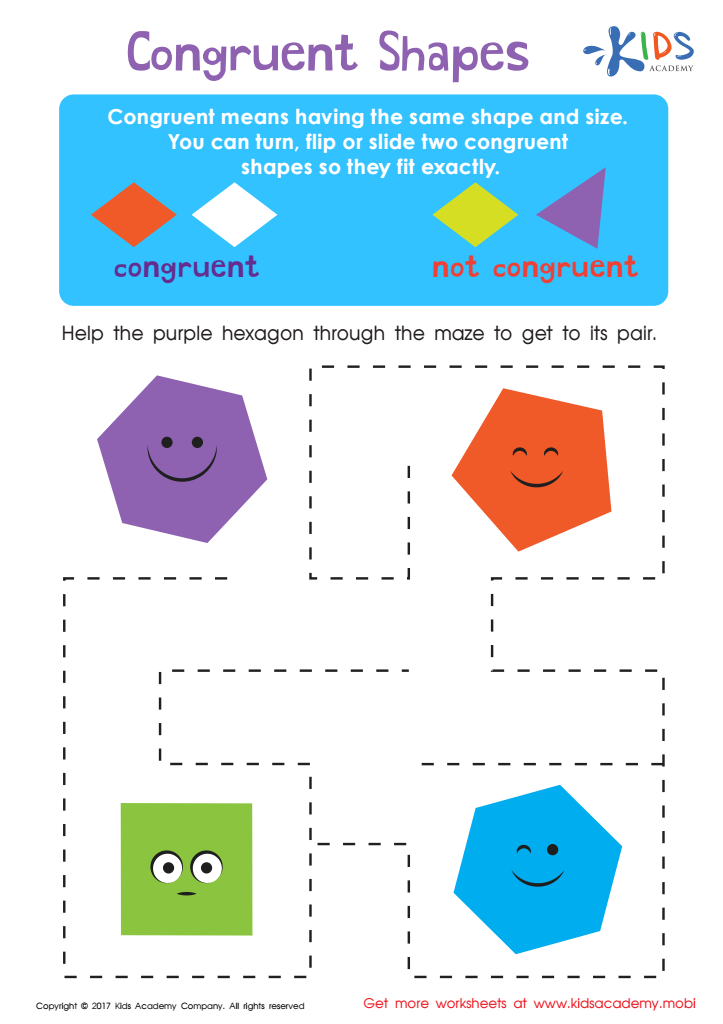
Congruent Shapes Worksheet
Help your child find the twin of the purple hexagon! This congruent shapes worksheet is great for increasing vocabulary while challenging mental rotation skills.
Congruent Shapes Worksheet
Worksheet
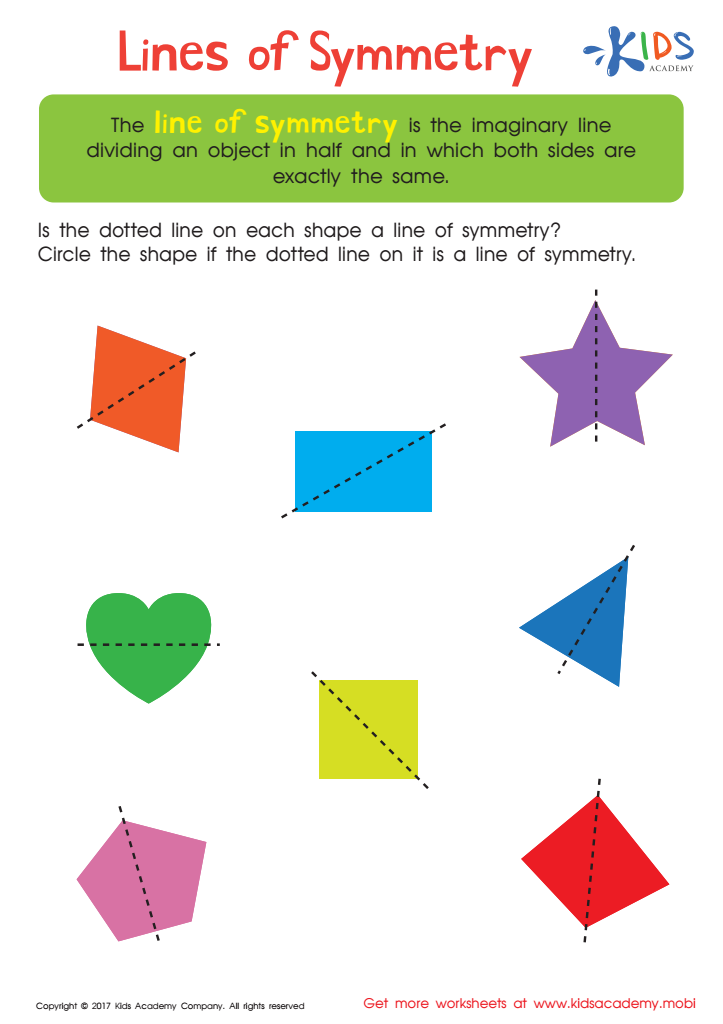
Lines of Symmetry Printable
Symmetry is a key math concept that kids must learn to develop their geometry skills. This fun worksheet helps build this skill, by encouraging kids to recognize symmetrical shapes and find equal parts.
Lines of Symmetry Printable
Worksheet
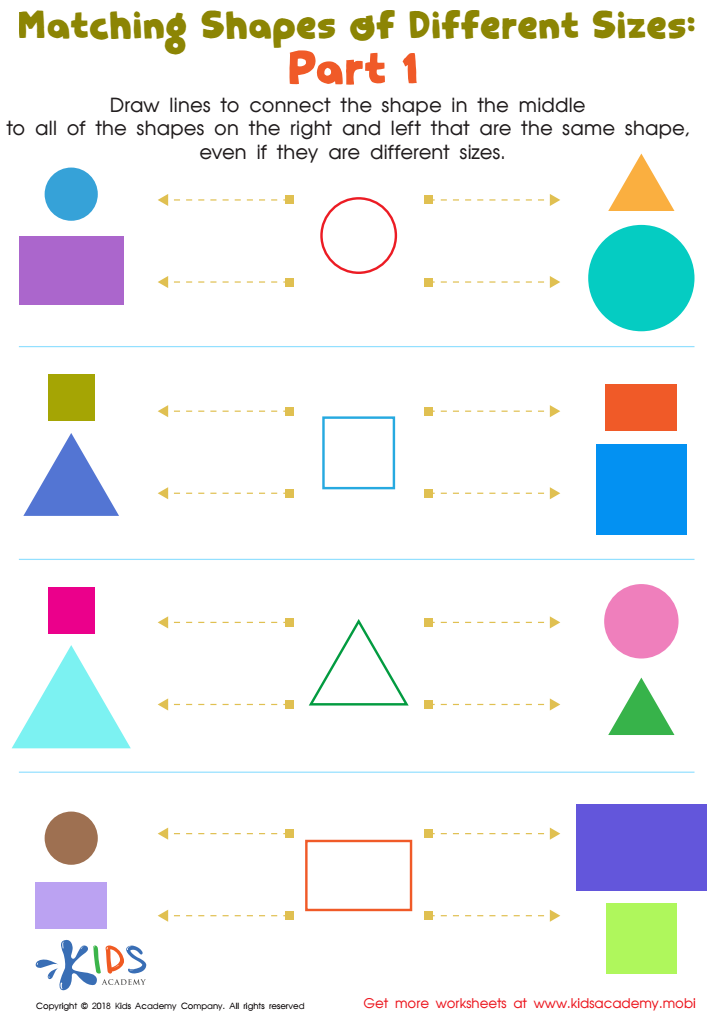
Geometry: part 1 Worksheet
Test your student's shape knowledge with this beginner-level geometry worksheet. This fun, challenging printable PDF will sharpen spacial recognition skills as they match shapes of different sizes. Get started now!
Geometry: part 1 Worksheet
Worksheet
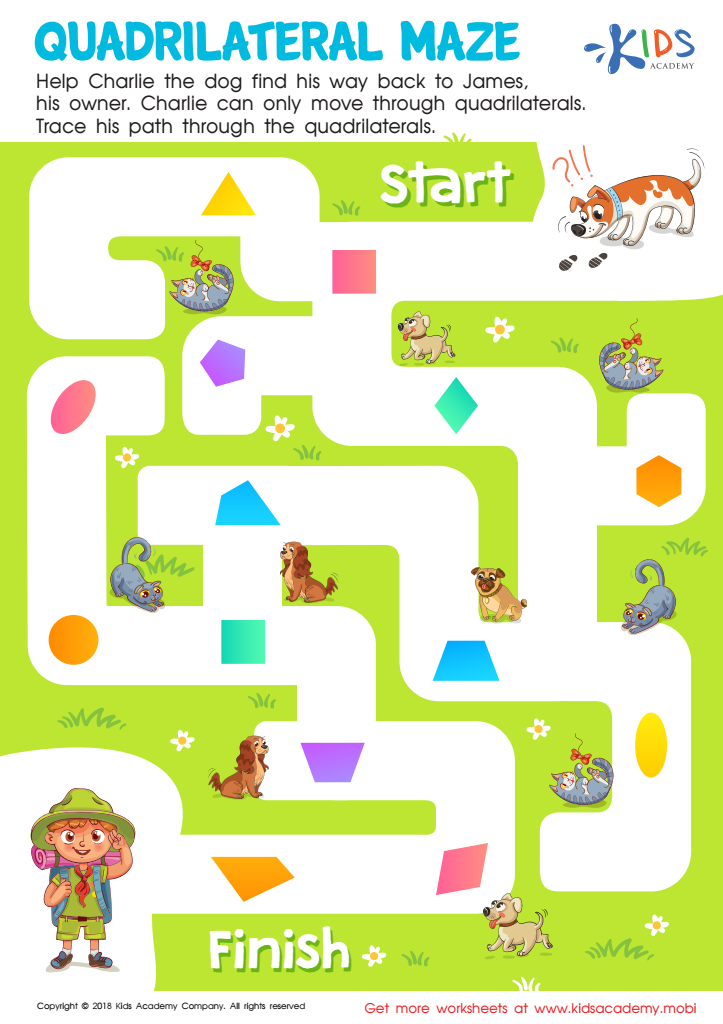
Quadrilateral Maze Worksheet
Does your kid love dogs? If so, this exercise is ideal for them! Help Charlie the pup find his way back to his owner, James, in the quadrilateral maze worksheet. Your child must trace Charlie's path only through squares and rhombuses in order to solve it. Careful planning is key!
Quadrilateral Maze Worksheet
Worksheet
Join Kids Academy for Free
Who is primarily going to use this learning content?








Recognizing shapes is a fundamental math skill for children aged 5-8 and lays the groundwork for their overall cognitive development. Understanding shapes teaches young learners to identify and categorize objects in their environment, which enhances their observation and critical thinking skills. This early mathematical concept builds their spatial reasoning, helping children grasp more complex topics such as geometry and measurement later on.
For parents and teachers, fostering shape recognition is essential in supporting children’s learning styles. It encourages hands-on exploration, creativity, and communication as kids describe and manipulate various shapes. Incorporating shape recognition into daily activities—from playing with building blocks to engaging in arts and crafts—makes learning enjoyable and meaningful.
Moreover, recognizing shapes is integral to developing problem-solving skills. When children learn to distinguish different shapes, they gain the ability to make connections and see patterns, fostering logical reasoning. Inclusive and interactive shape activities can nurture a child's confidence in math and enhance their engagement in the subject.
Supporting shape recognition is not just about math; it enhances observational skills and integrates various areas of learning, ultimately contributing to a well-rounded education. Ensuring children are comfortable with shapes prepares them for future academic success.








