Spatial Orientation Math Worksheets for Ages 5-8
4 filtered results
-
From - To
Discover our engaging Spatial Orientation Math Worksheets for Ages 5-8, designed to enhance young learners' understanding of spatial relationships and improve their mathematical skills. These thoughtfully crafted worksheets introduce essential concepts such as shapes, directions, and positioning through fun and interactive activities. Perfect for home or classroom use, our materials encourage creativity and critical thinking while aligning with early math standards. Kids will enjoy solving puzzles, identifying patterns, and exploring geometry in a playful way. Help your child develop a robust foundation in spatial reasoning that will support their future learning. Download your worksheets today and watch their confidence soar!
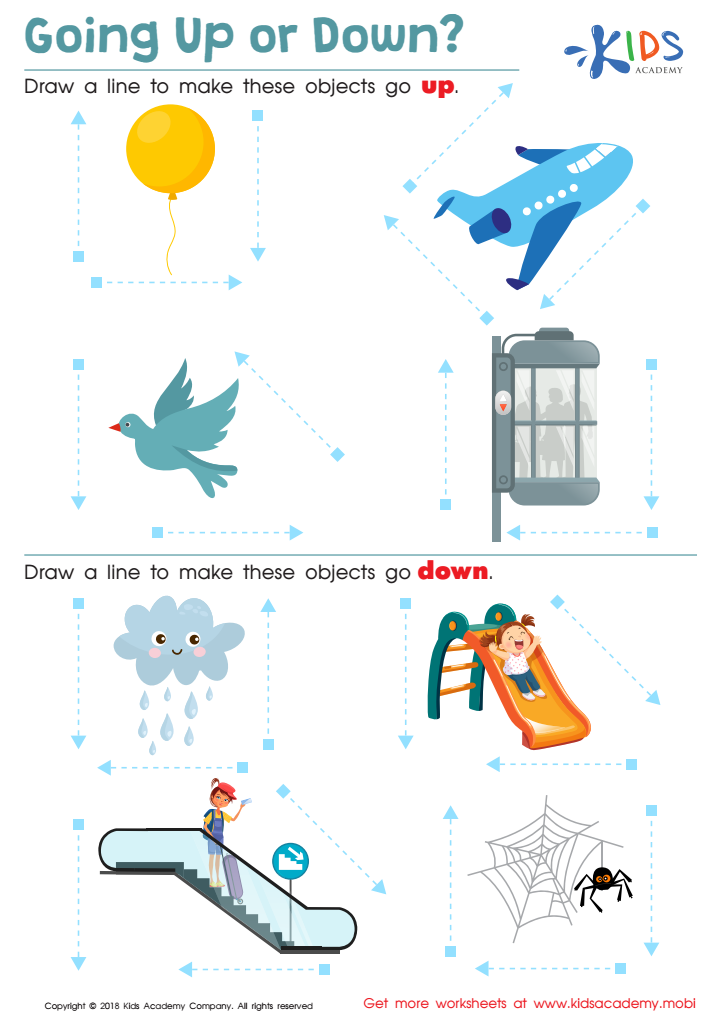
Going up or Down? Worksheet
 Assign to My Students
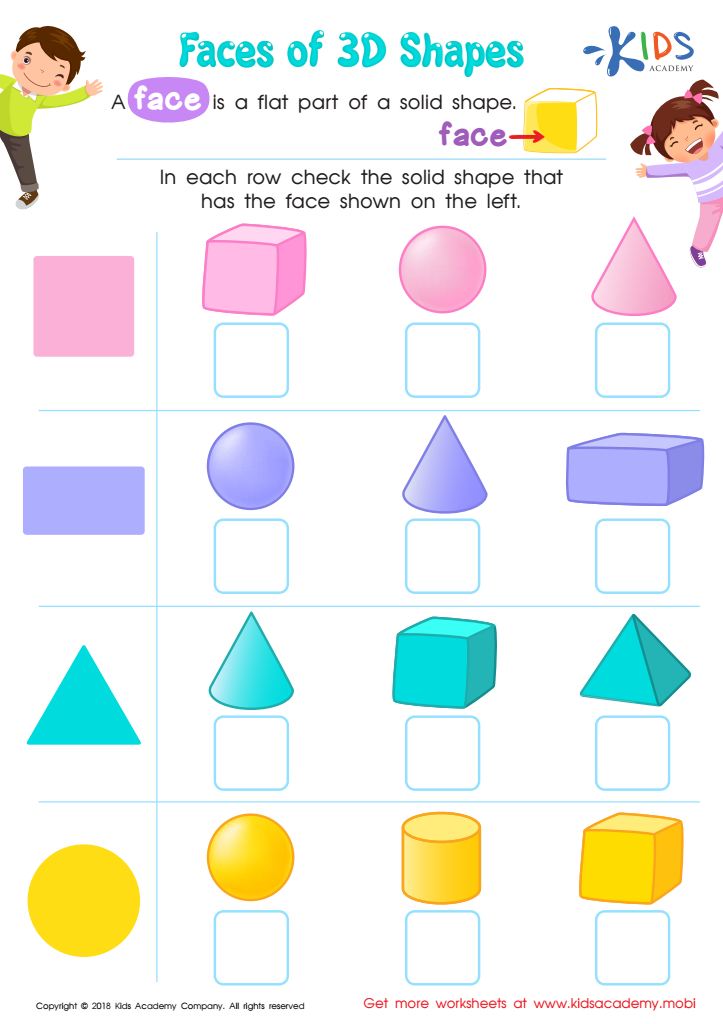
Faces of 3D Shapes Worksheet
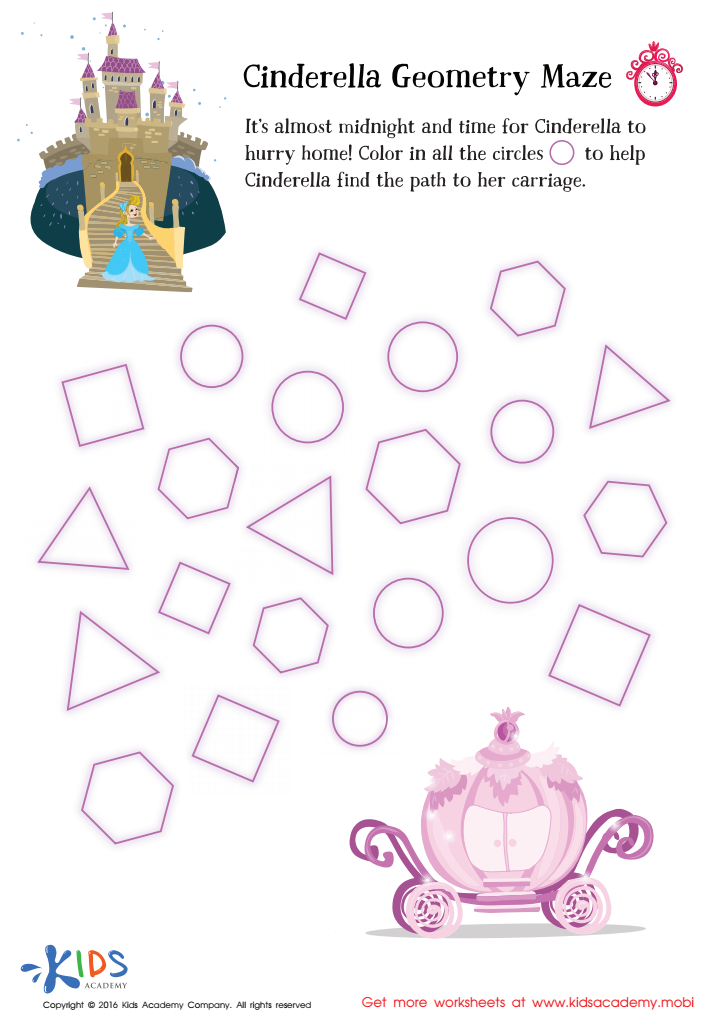
Cinderella Geometry Maze Worksheet






Spatial orientation math skills are essential for young learners aged 5-8 as they lay the foundation for critical thinking and problem-solving abilities. Understanding spatial concepts—such as shapes, directions, distances, and relationships between objects—enhances a child's ability to navigate their environment and comprehend mathematics in a broader context.
These skills are integral not only in math but also in fields like science, technology, engineering, and art (STEAM). By nurturing spatial orientation early on, parents and teachers can help children develop visualization skills critical for geometry and measurement, which are pivotal in later education.
Additionally, spatial orientation fosters cognitive development. Engaging in activities such as puzzles, map reading, and spatial games helps enhance memory, attention span, and the ability to process complex information. These skills encourage children to approach challenges creatively and work collaboratively with peers.
Moreover, fostering a strong spatial awareness can boost a child's confidence, allowing them to tackle more complex concepts as they progress in their education. Ultimately, prioritizing spatial orientation math equips children with the necessary skills to thrive academically and socially, setting them on a path to lifelong learning and success.








