Understanding equality Math Worksheets for Ages 5-8
7 filtered results
-
From - To
Discover our engaging "Understanding Equality Math Worksheets" designed for children aged 5-8! These interactive resources help young learners grasp the concept of equality through fun exercises and activities. Our worksheets focus on essential skills such as comparing quantities, recognizing equal groups, and solving basic equations. Each sheet encourages hands-on learning, making math enjoyable and accessible. Perfect for classroom use or at-home practice, these worksheets align with educational standards, ensuring your child builds a solid foundation in mathematics. Explore our collection now and watch your child's confidence and understanding of equality grow as they solve problems with ease!
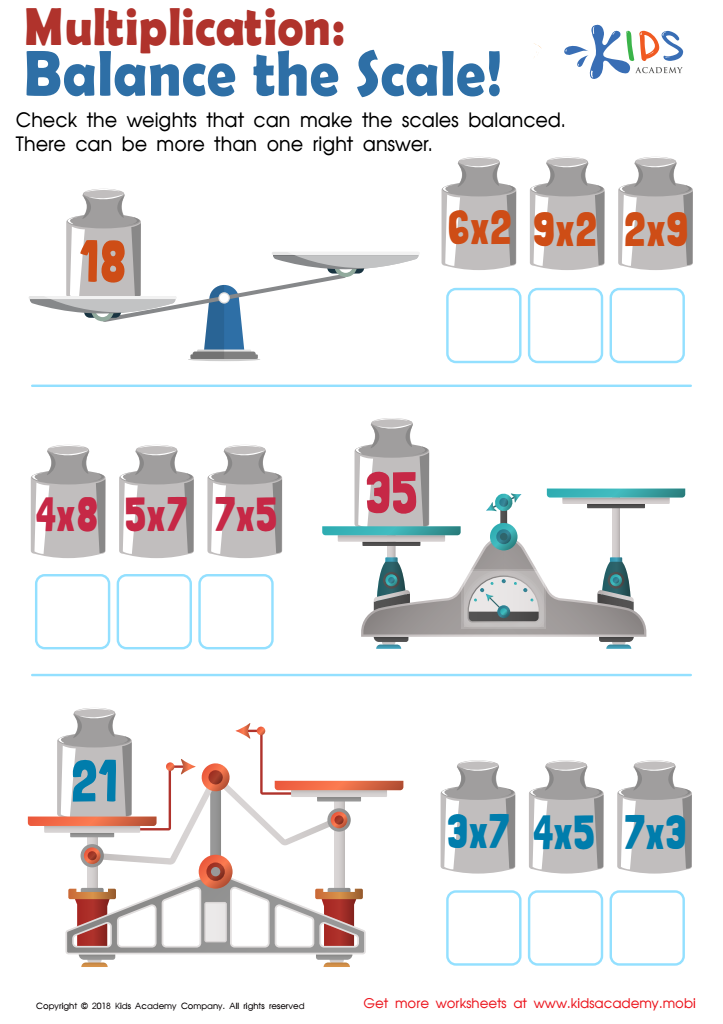
Balance the Scales Multiplication Worksheet
 Assign to My Students
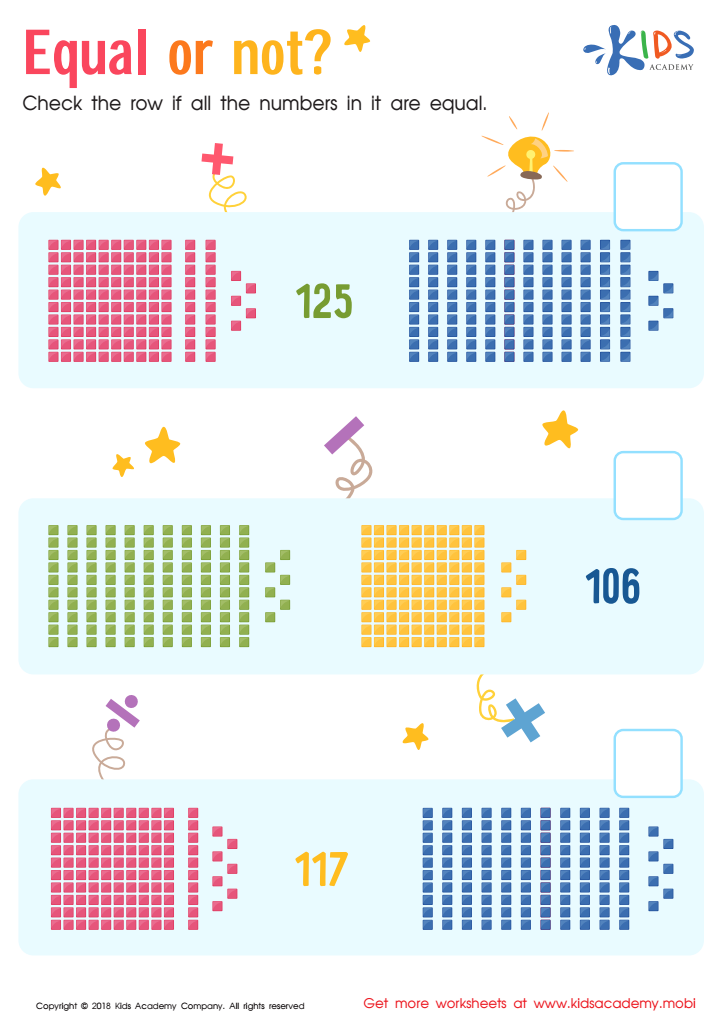
Equal or not Worksheet
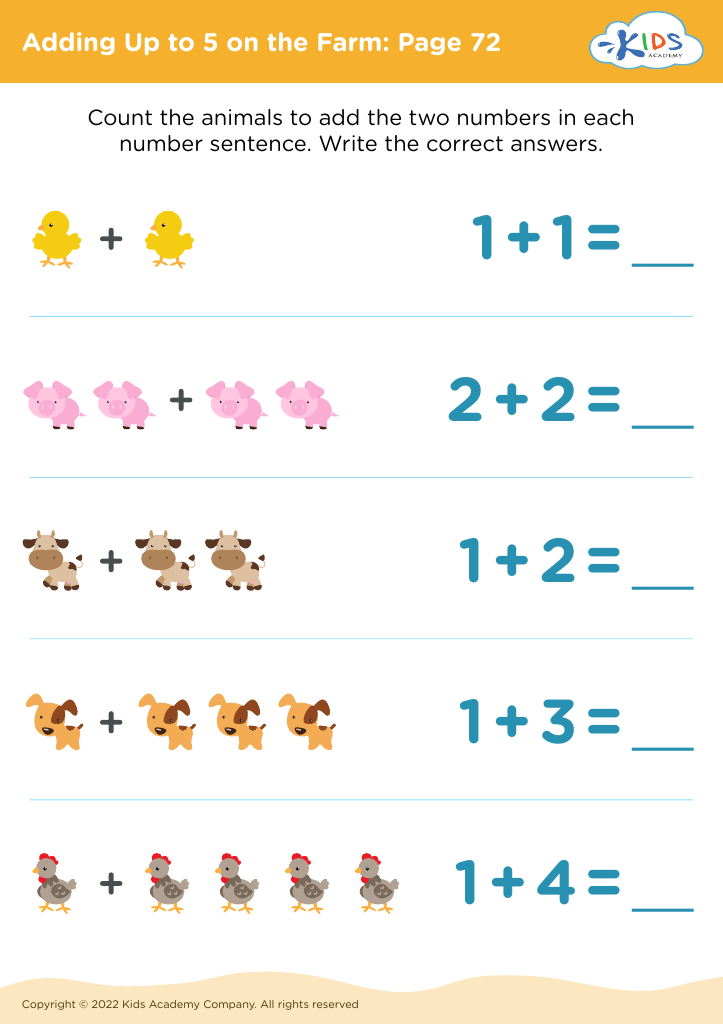
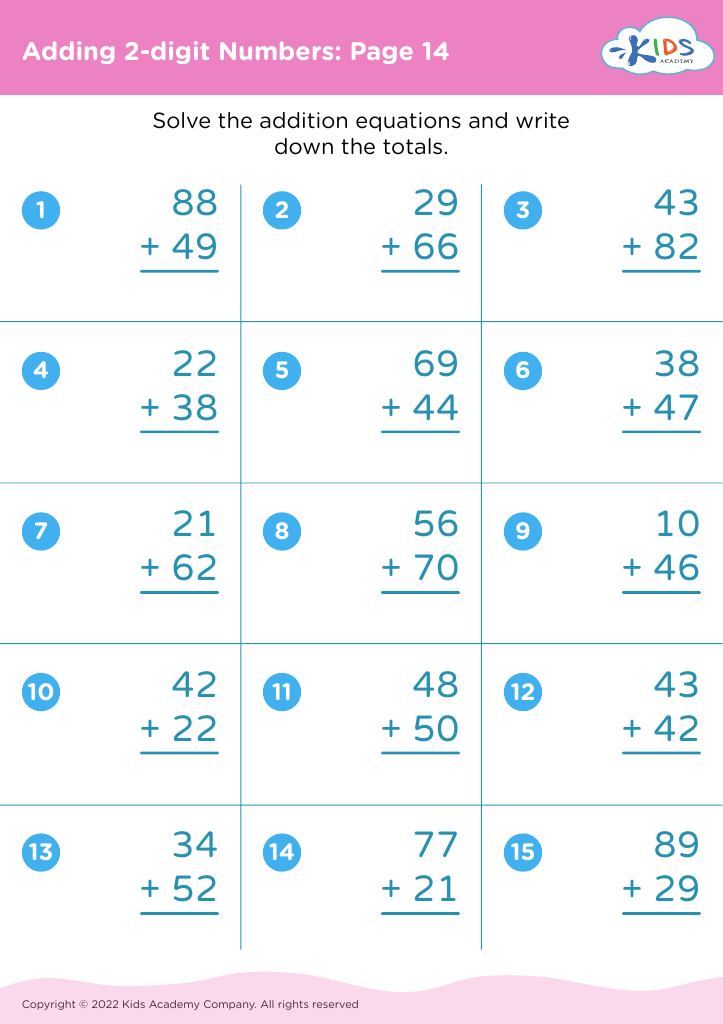
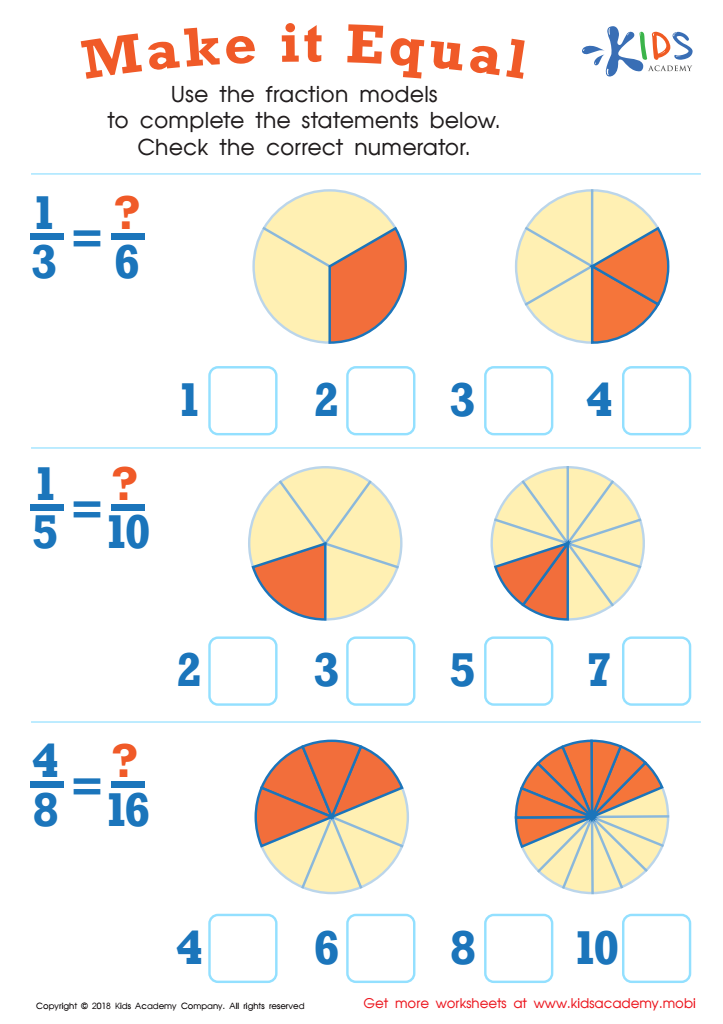
Make It Equal Worksheet
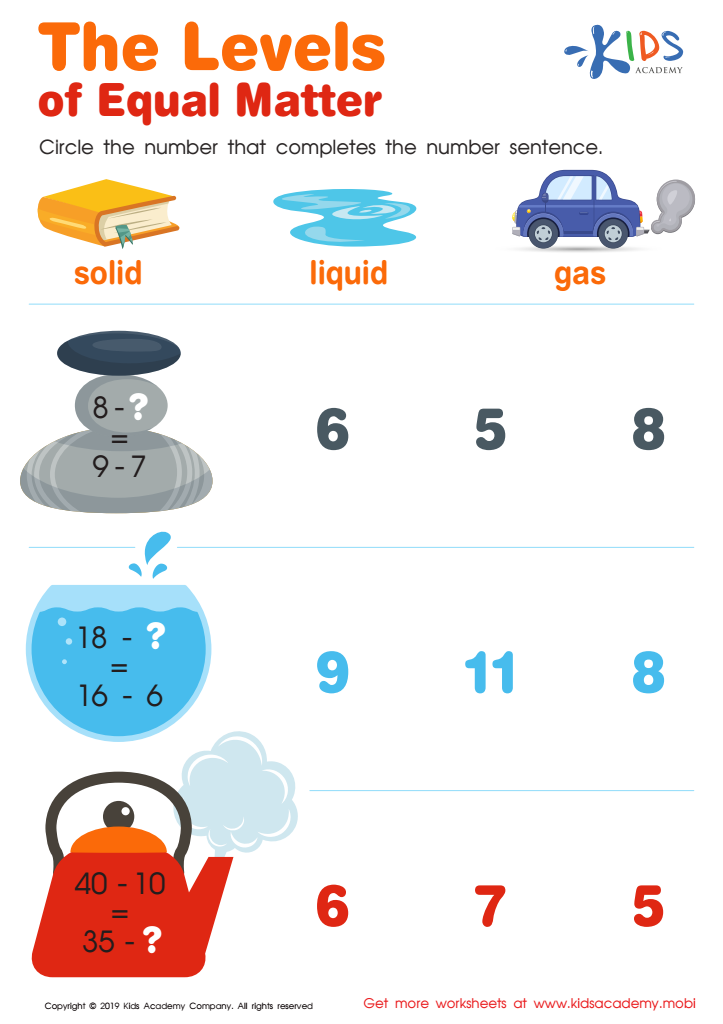
The Levels of Equal Matter Worksheet
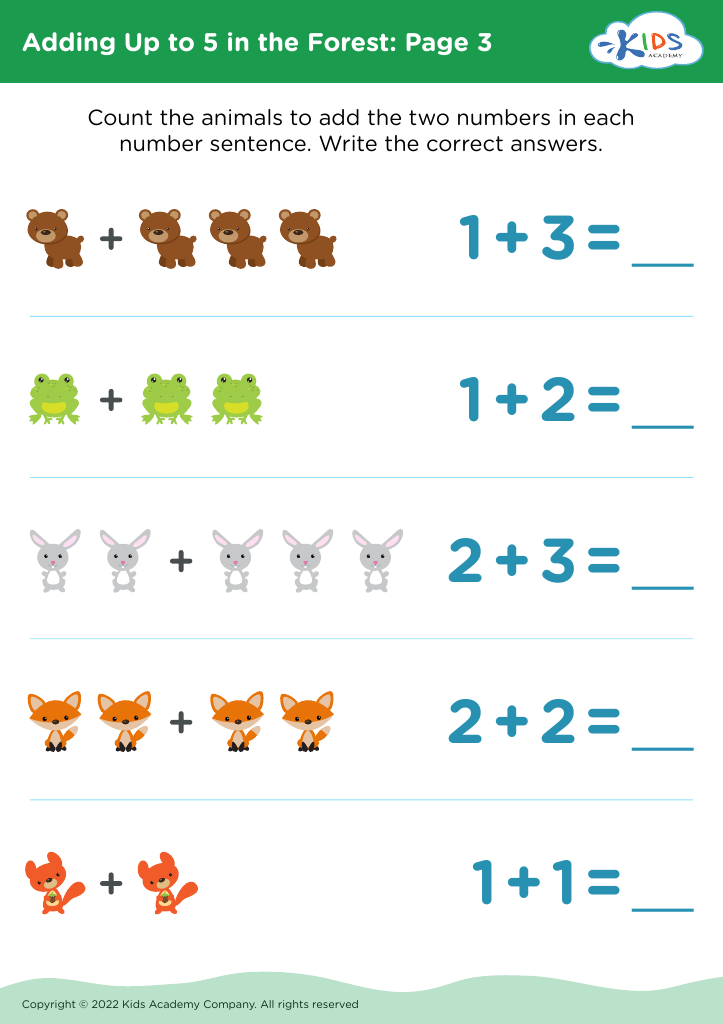







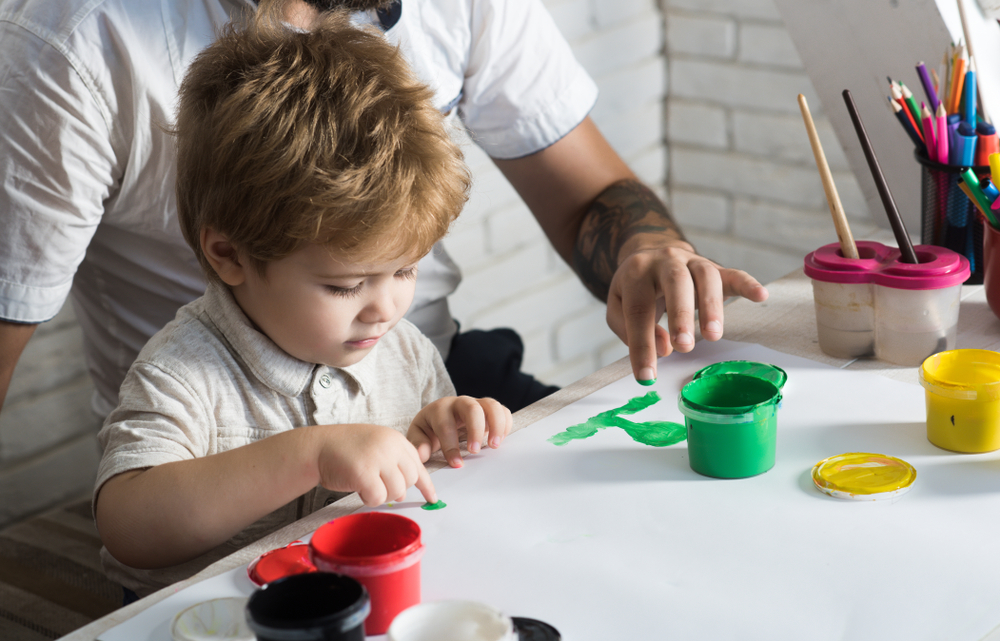
Understanding equality in math is fundamental for children aged 5 to 8, as it lays a strong foundation for their mathematical knowledge and critical thinking skills. At this stage, students begin to grasp basic mathematical concepts, and recognizing equality helps them develop an understanding of balance and relationships between numbers.
When children learn about equality, they engage with essential operations like addition and subtraction, fostering their ability to manipulate numbers confidently. This early interaction with concepts such as equations, where both sides must balance, can make more complex topics, like algebra, more approachable in later years.
Moreover, teaching kids about equality encourages problem-solving skills and logical reasoning. It opens up discussions about fairness and balance—not just in math, but in life. Parents and teachers can use everyday examples to show children how these concepts apply beyond the classroom, promoting a broader understanding of equality in various contexts.
By prioritizing a solid understanding of equality, parents and teachers help cultivate a sense of curiosity and competence in mathematics, equipping children with the tools they need for future learning and fostering a lifelong appreciation for the subject.








