Understanding number sequences Math Worksheets for Ages 5-8
7 filtered results
-
From - To
Discover our engaging "Understanding Number Sequences Math Worksheets" designed specifically for children ages 5-8. These expertly crafted resources help young learners grasp the concept of number sequences through fun and interactive activities. As youngsters explore patterns and relationships in numbers, they develop critical thinking and foundational math skills. Our worksheets feature vibrant illustrations and age-appropriate exercises, making learning enjoyable and effective. Encourage your child’s confidence in math as they practice filling in missing numbers, identifying sequences, and solving fun puzzles. Start their mathematical journey today by downloading our worksheets and watch them excel in understanding number sequences with ease and excitement!
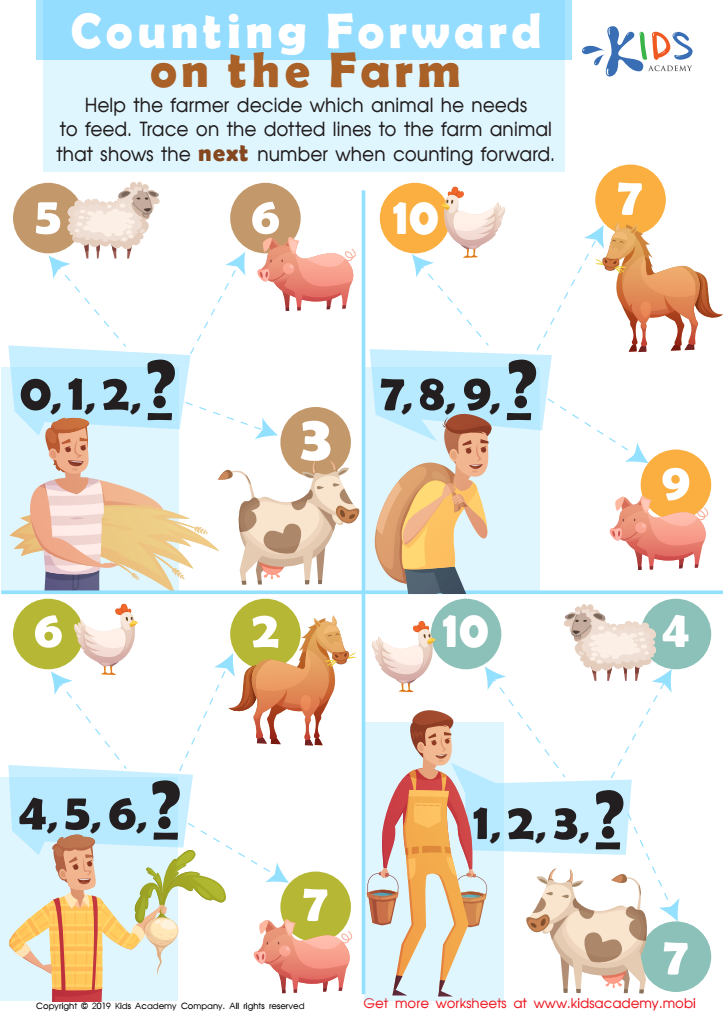
Counting Forward On the Farm Worksheet
 Assign to My Students
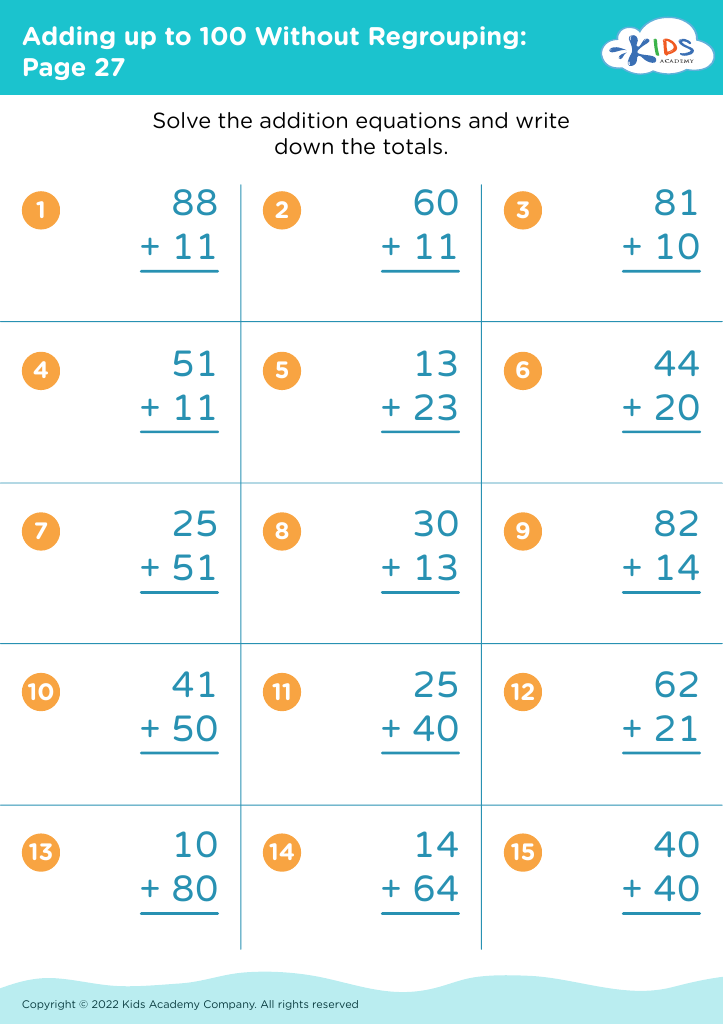
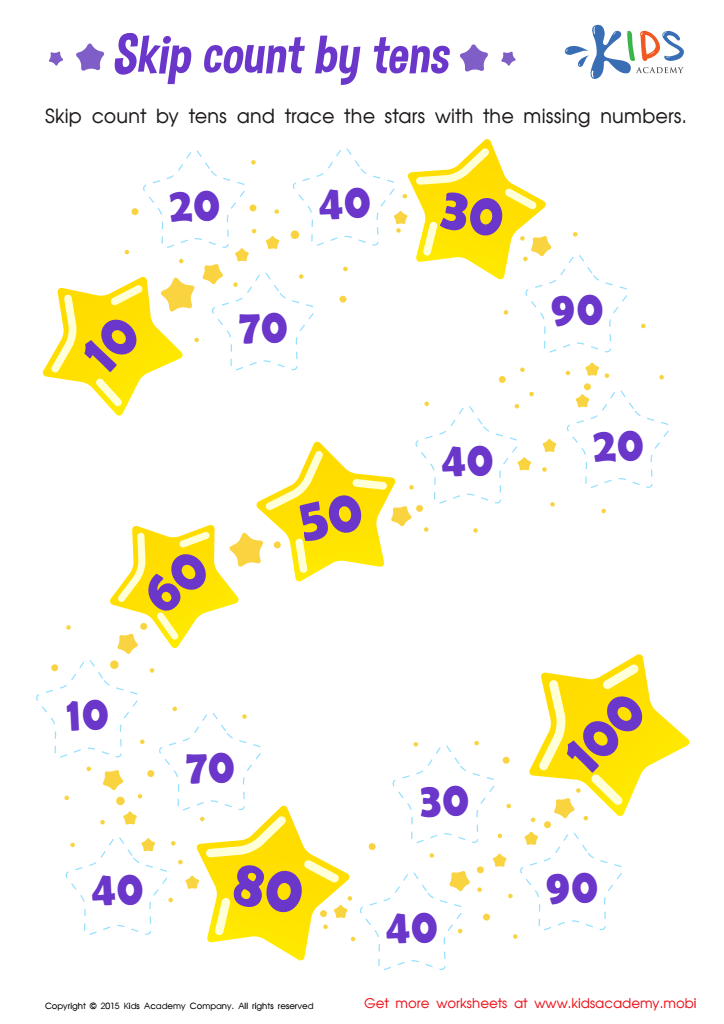
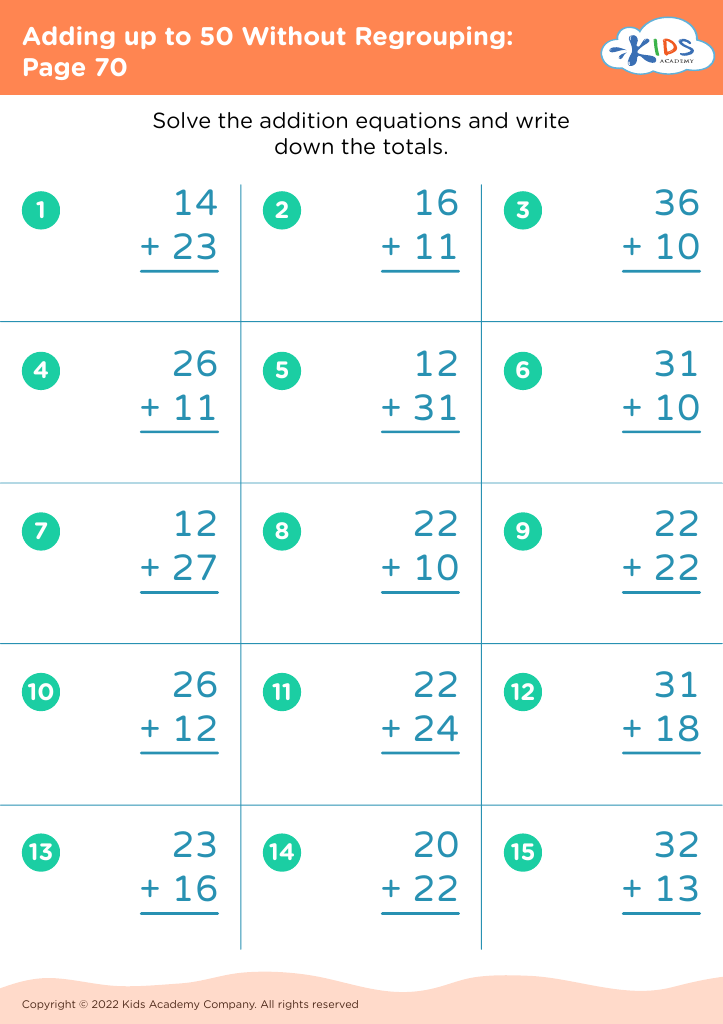
Learn dozens: Skip Count by Tens Printable
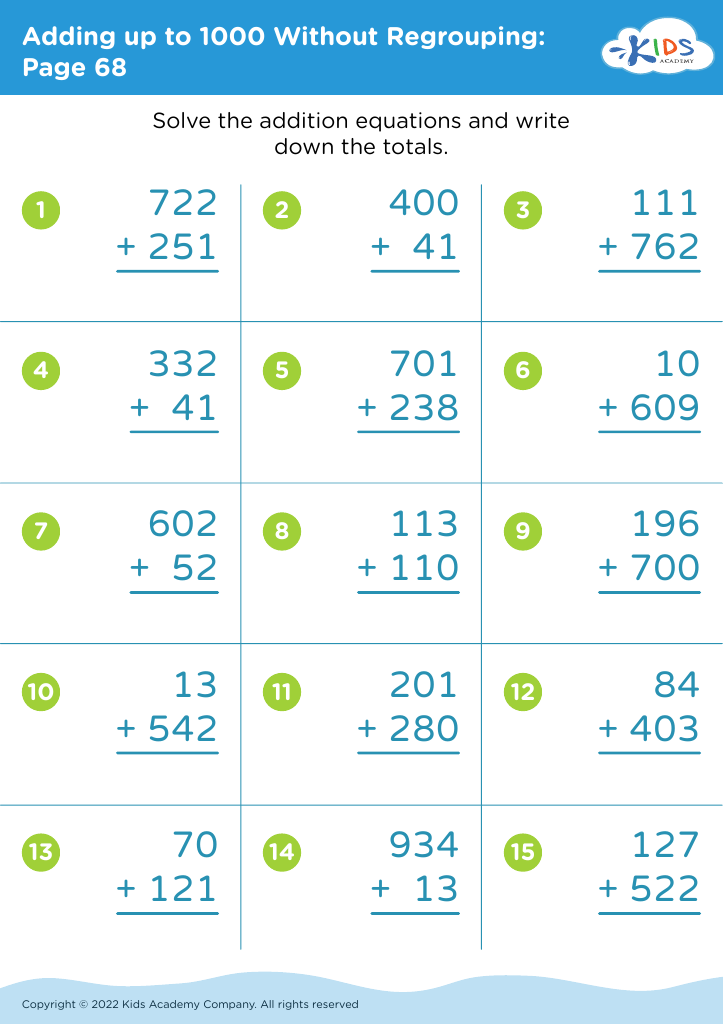
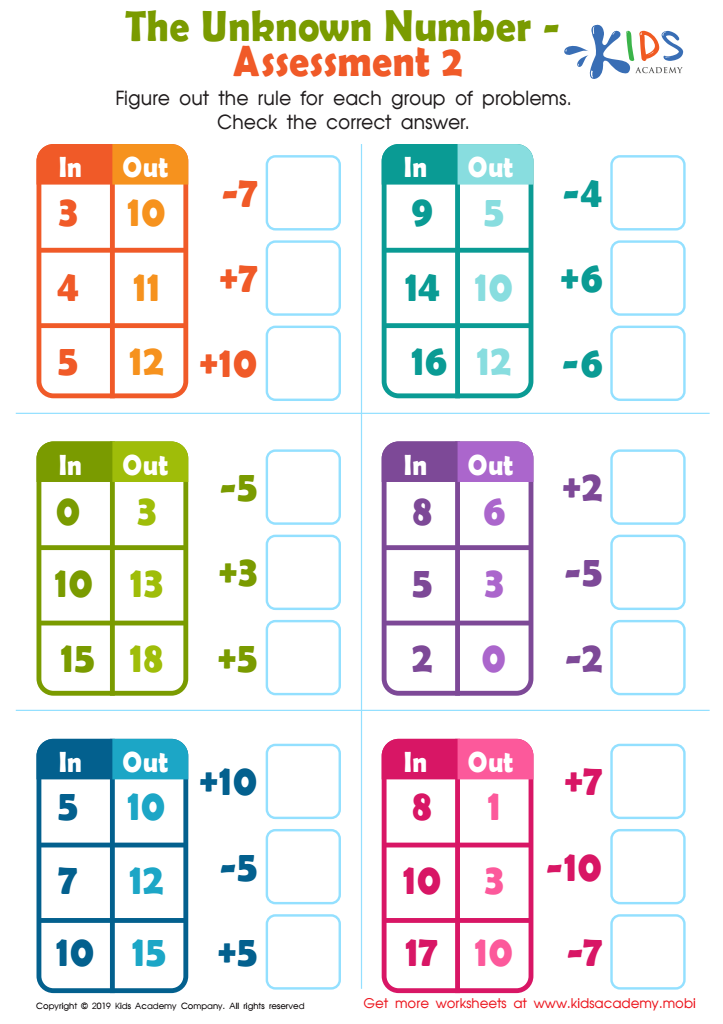
The Unknown Number - Assessment 2 Worksheet
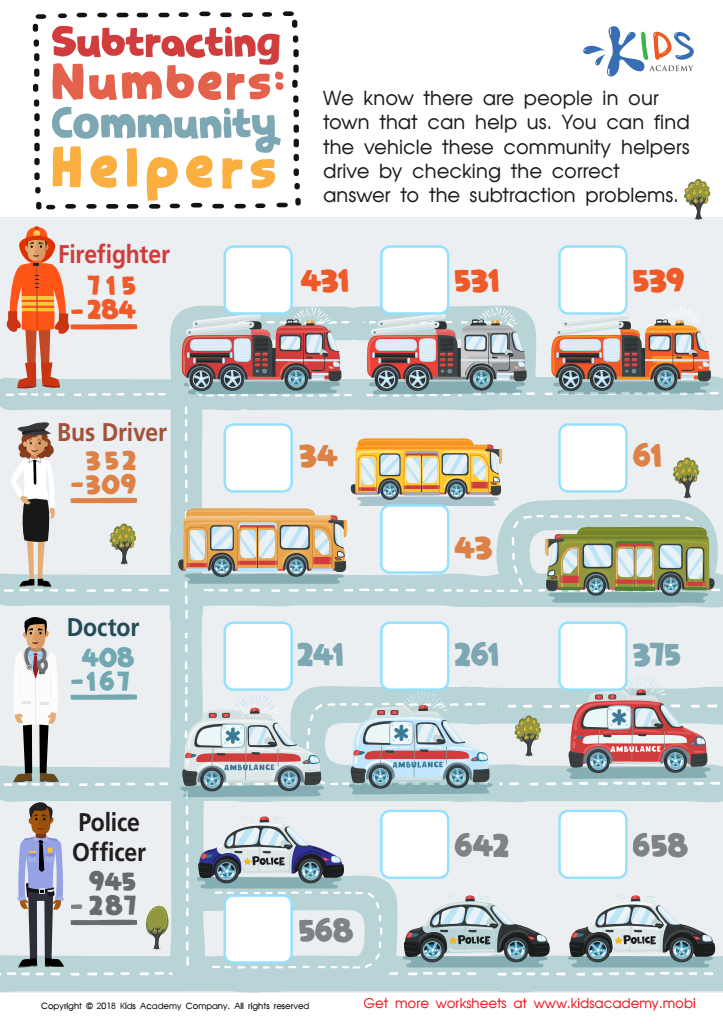
Subtracting Numbers: Community Helpers Worksheet







Understanding number sequences is crucial for children aged 5-8, as it lays the groundwork for their mathematical development. For parents and teachers, recognizing the significance of this concept means supporting essential skills that contribute to a child's overall numeracy.
Firstly, grasping number sequences helps young learners understand patterns and relationships among numbers, leading to improved problem-solving abilities. This foundational skill is vital for more advanced concepts such as addition, subtraction, multiplication, and division. Moreover, number sequences also enhance a child's ability to organize information and think critically.
Additionally, number sequences play a key role in developing a strong number sense, which can boost a child's confidence in handling arithmetic tasks. Children who are comfortable with sequences are more likely to engage enthusiastically with math and persist in challenging problems.
By prioritizing understanding number sequences, parents and teachers create a solid mathematical foundation for students, preparing them for success in future coursework and daily life tasks. Ultimately, fostering these early skills encourages a positive attitude toward math, transforming it from a daunting subject into a fun and engaging experience. A strong start in mathematics can spark lifelong interest and pave the way for future academic achievement.








