Understanding opposites Math Worksheets for Ages 5-8
4 filtered results
-
From - To
Discover the joy of learning with our "Understanding Opposites Math Worksheets for Ages 5-8." These engaging worksheets introduce young learners to basic math concepts and help build critical thinking skills. Featuring a variety of fun, interactive activities tailored to young minds, our worksheets make mastering opposites an enjoyable experience. Perfect for reinforcing classroom learning or for extra practice at home, they encourage kids to explore and understand mathematical relationships in an accessible and playful manner. Boost your child's confidence in math with resources designed specifically for their developmental stage. Let’s make learning exciting and effective!
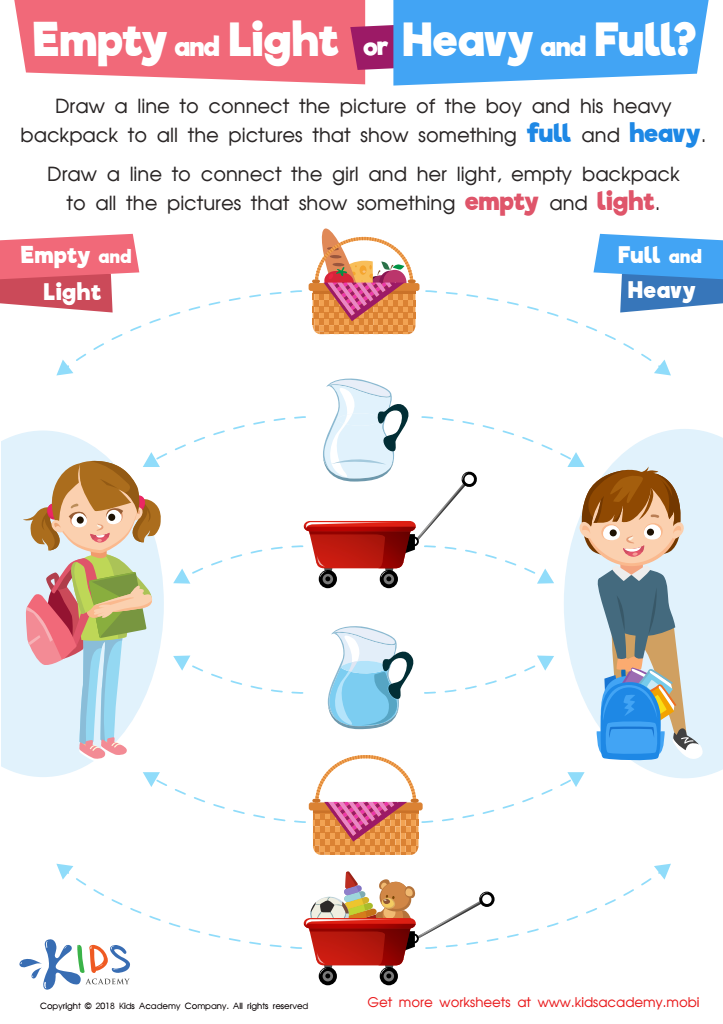
Empty and Light or Heavy and Full? Worksheet
 Assign to My Students
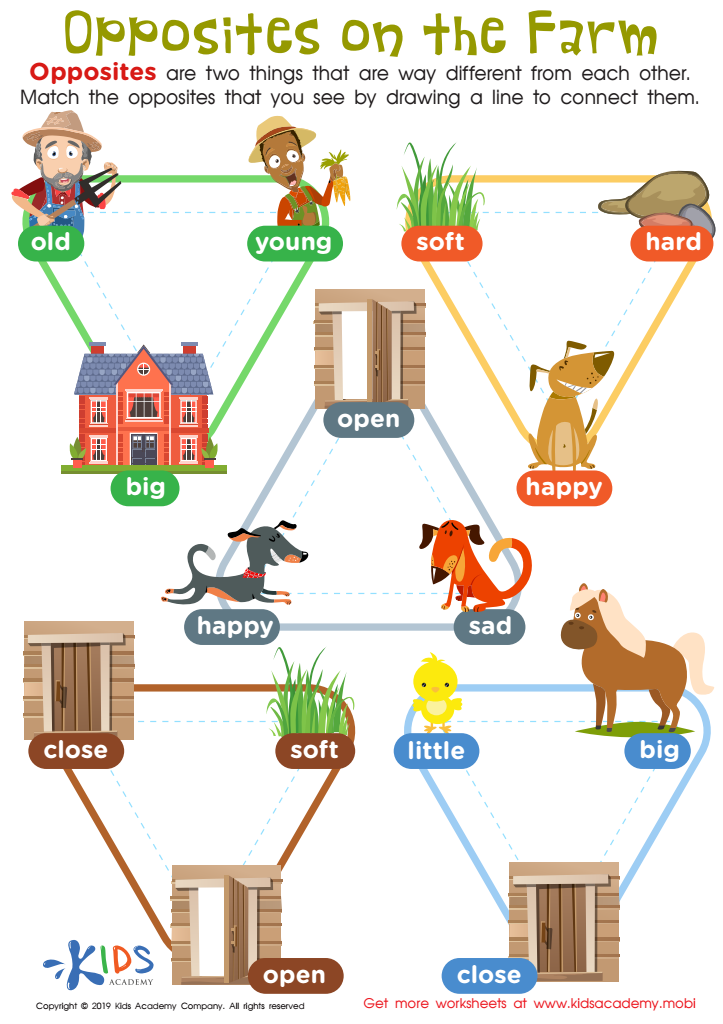
Opposites on the Farm Worksheet
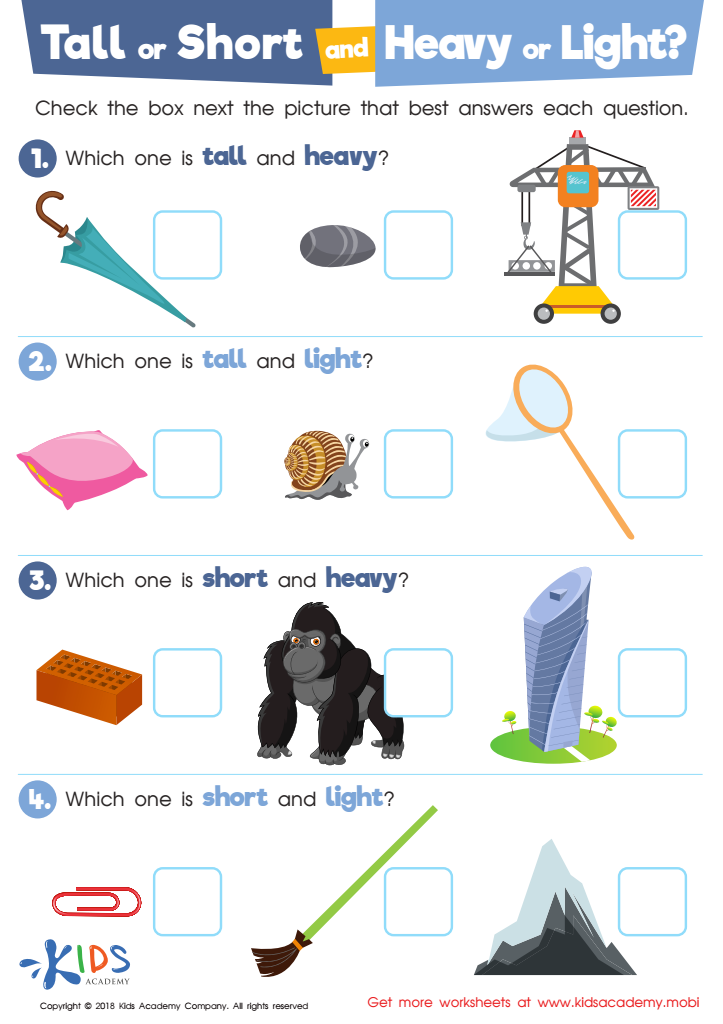
Tall or Short and Heavy or Light? Worksheet
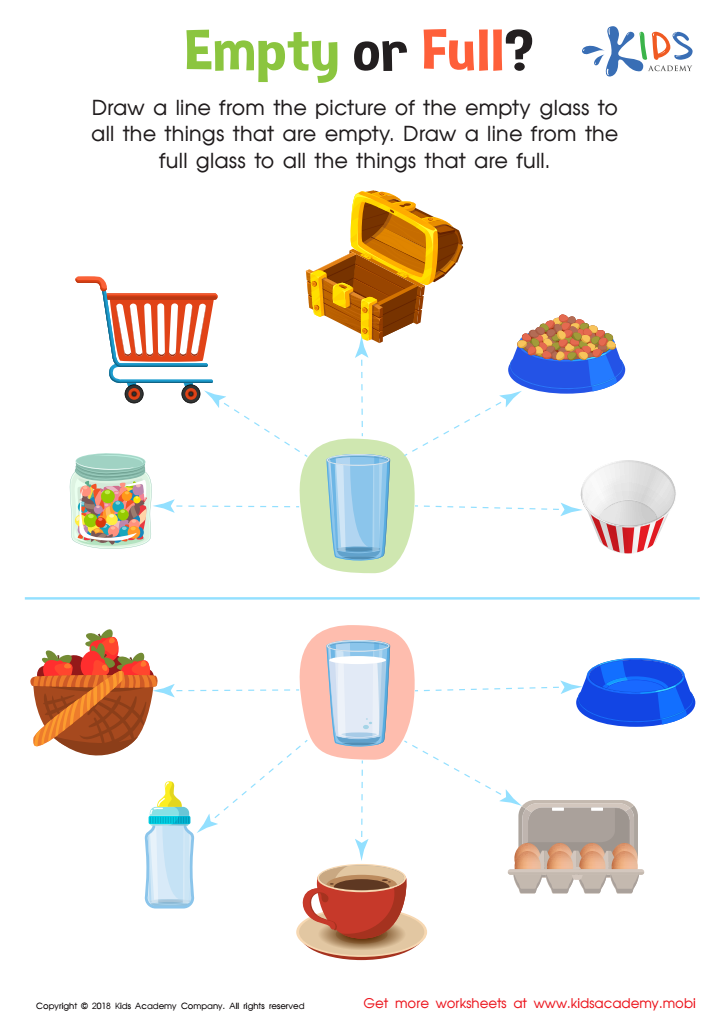
Empty or Full? Worksheet







Understanding opposites in math, such as addition and subtraction or understanding the concept of big vs. small, is crucial for children aged 5-8 as it lays the foundation for more complex mathematical thinking. For parents and teachers, it’s vital to emphasize these concepts to enhance a child's cognitive development.
Firstly, learning opposites fosters critical thinking and problem-solving skills. When children understand that subtraction is the opposite of addition, they grasp how numbers interact and can begin to manipulate them more fluidly. This understanding is fundamental in advanced math, where the relationship between operations becomes more intricate.
Secondly, this concept aids in the development of logical reasoning. As children make connections between opposites, like recognizing that getting fewer means taking away and getting more means adding, they start to categorize and systematize their thinking. This progression is essential for success not only in math but in other subjects that require analytical thinking.
Lastly, recognizing opposites in math enhances language skills and comprehension. Terms like "more" and "less" become part of their vocabulary, improving their ability to follow instructions and understand everyday tasks involving these concepts. Encouraging this understanding in a supportive way at an early age ensures that children build a strong, confident, and intuitive mathematical foundation.








