Understanding patterns Math Worksheets for Ages 5-8 - Page 3
52 filtered results
-
From - To
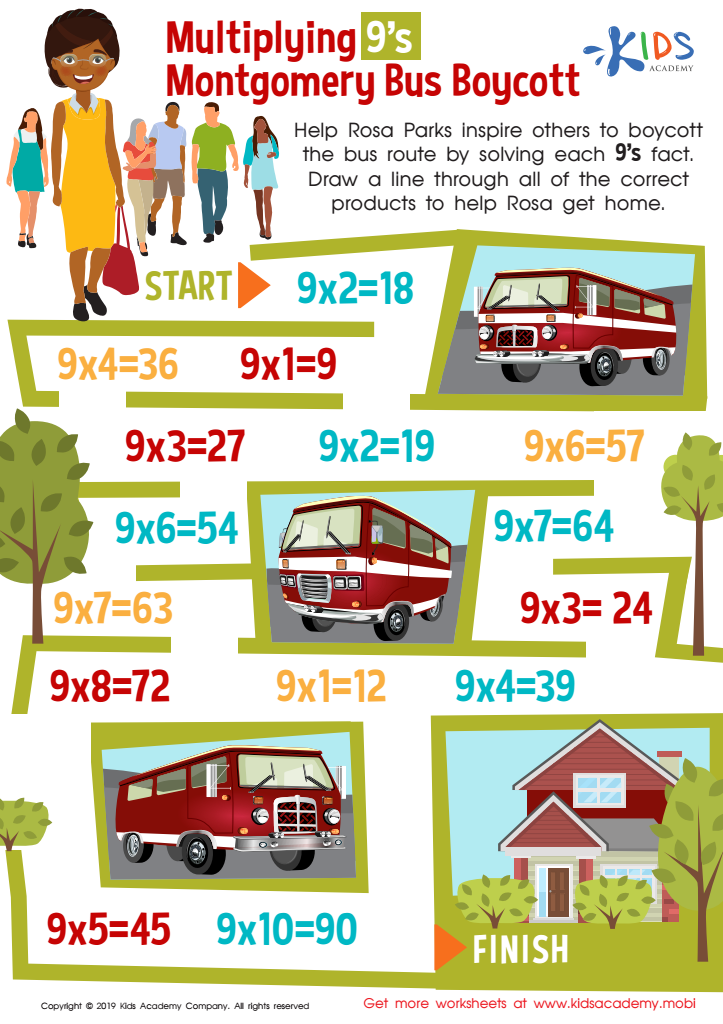
Multiplying 9’s Montgomery Bus Boycott Worksheet
 Assign to My Students
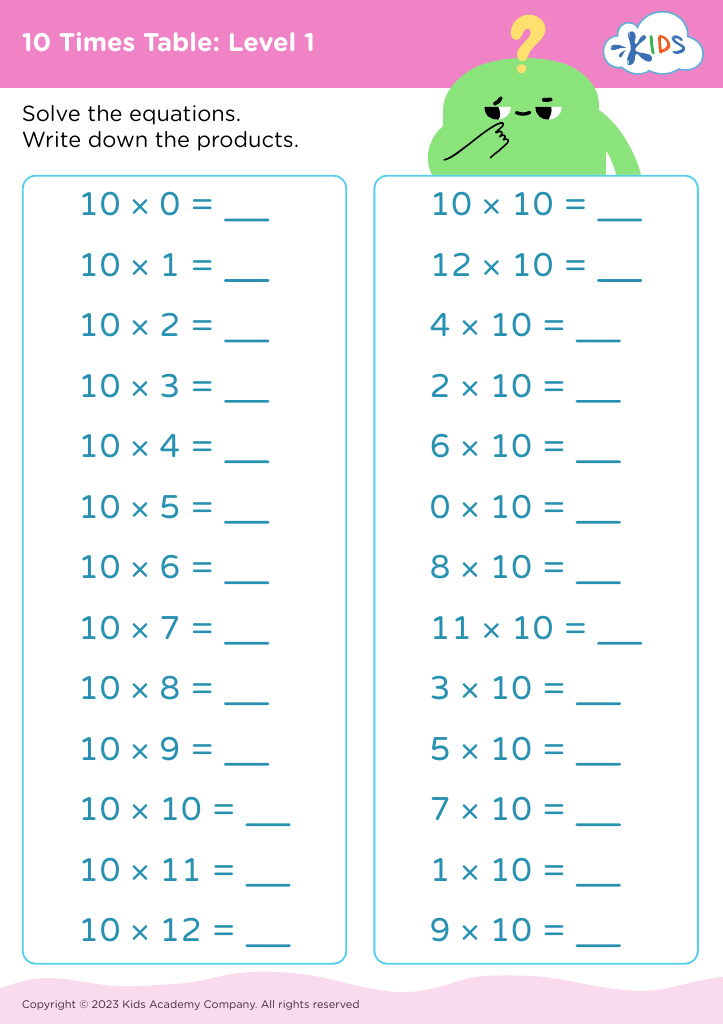
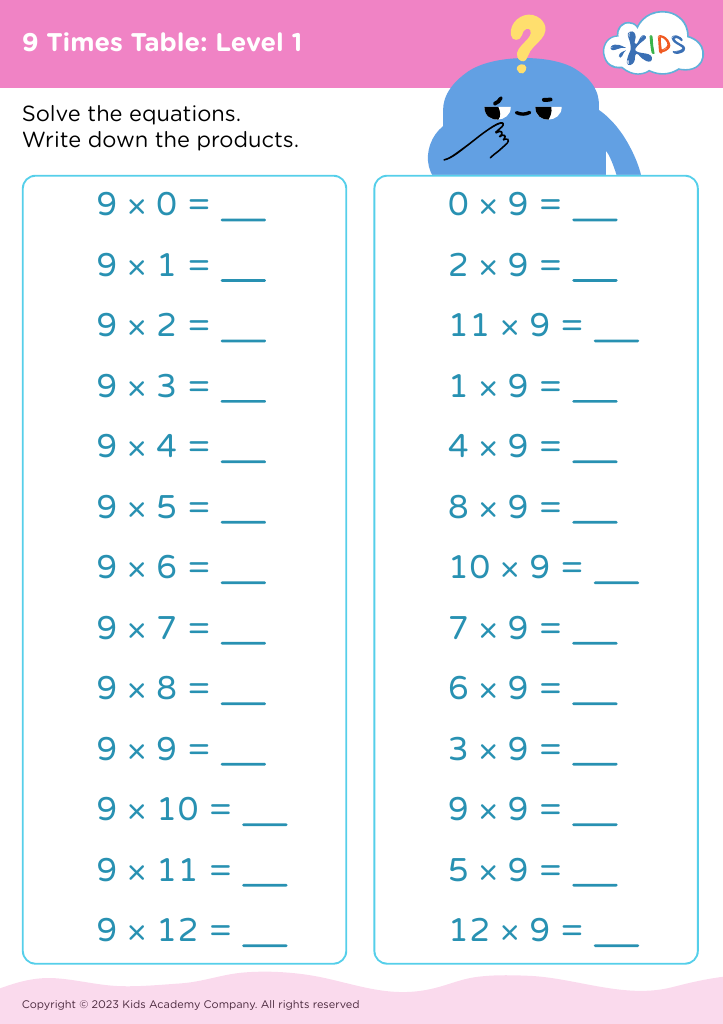
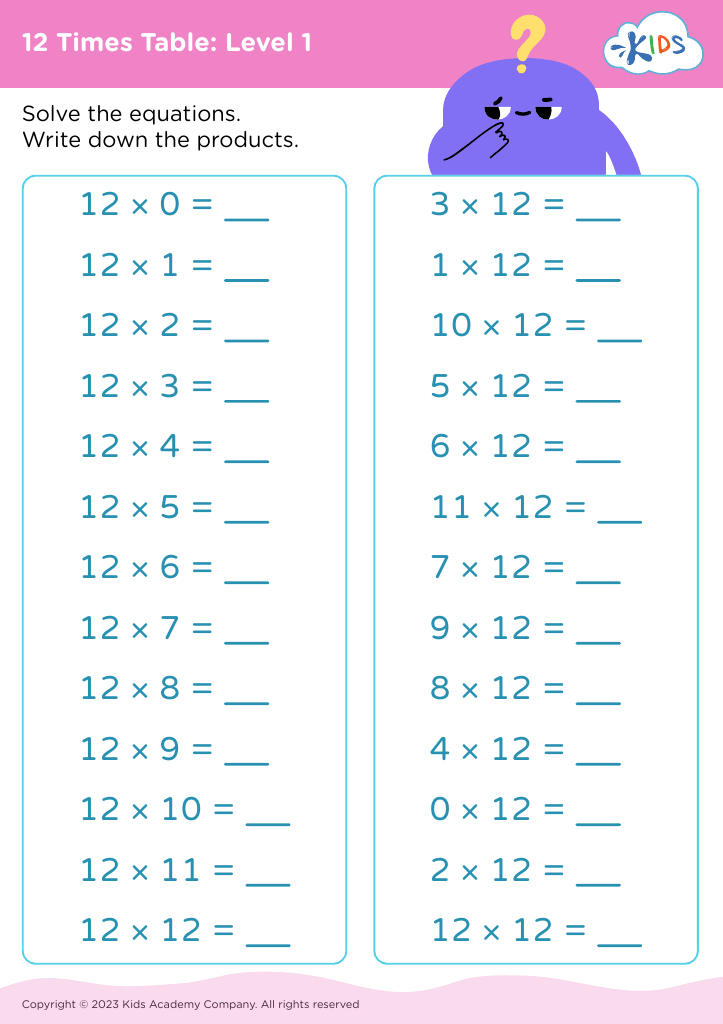








Understanding patterns in math is crucial for young learners aged 5-8 as it lays the foundation for advanced mathematical concepts and everyday problem-solving skills. Patterns help children recognize order and predictability in their world, which enhances critical thinking and logical reasoning abilities.
By identifying and creating patterns, children develop their cognitive skills. For instance, understanding sequences and repeating patterns aids in grasping addition, multiplication, and eventually more complex algebraic concepts. These skills are essential, not only for math but across all STEM (Science, Technology, Engineering, and Mathematics) disciplines.
Patterns also cultivate spatial awareness and fine motor skills by engaging kids in hands-on activities like arranging objects in a specific order or coloring shapes following a set sequence. This kinesthetic learning approach makes abstract math concepts concrete and accessible. Furthermore, exploring patterns nurtures creativity and artistic expression, contributing to a well-rounded education.
Finally, pattern recognition collaborates with language development and coding skills by structuring thoughts and events logically. For instance, recognizing story patterns aids reading comprehension, while breaking down coding problems into manageable sequences forms the backbone of computational thinking.
Investing time in understanding patterns ensures children build a robust mathematical foundation, enhancing both their academic performance and their ability to navigate everyday life.








