
Underwater animal identification Math Worksheets for Ages 5-8
3 filtered results
Difficulty Level
Grade
Age
-
From - To
Subject
Activity
Standards
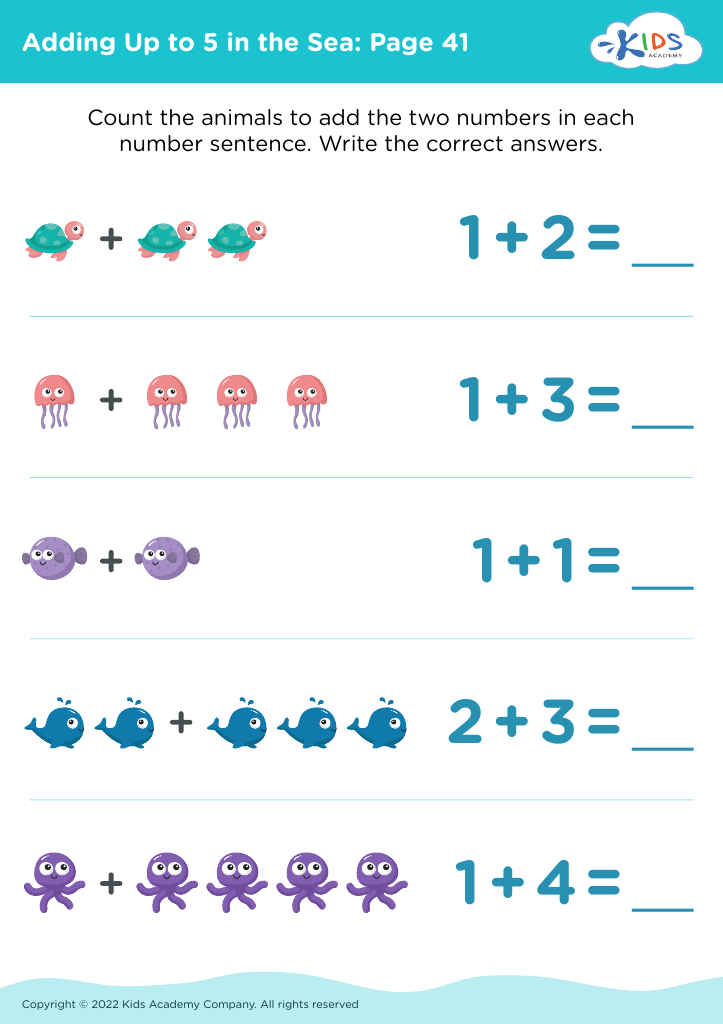
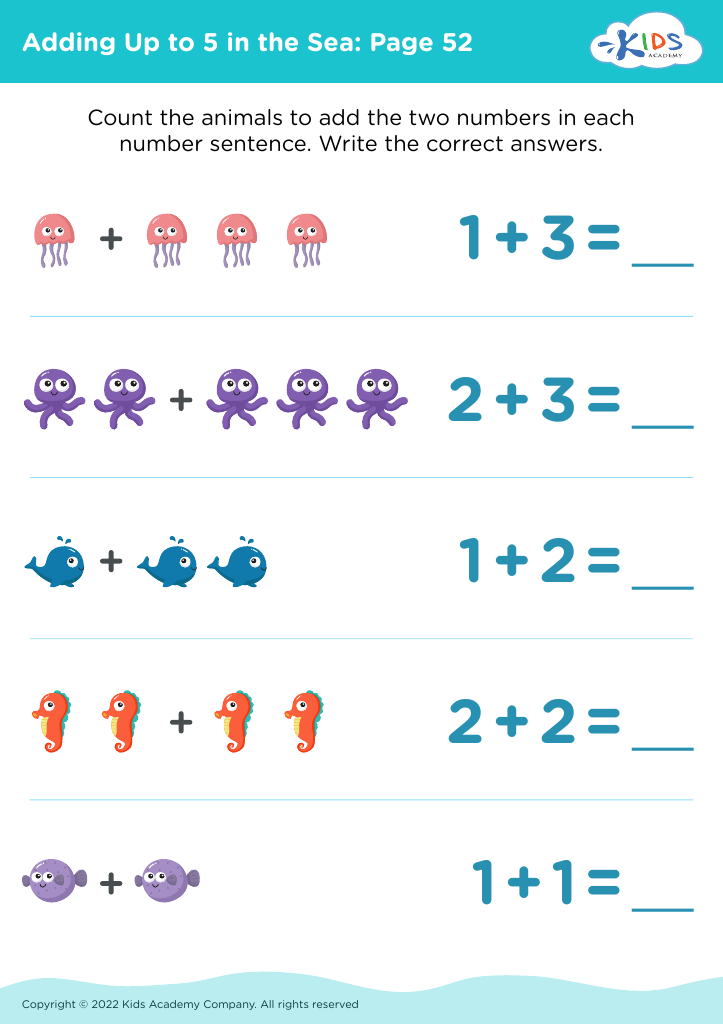
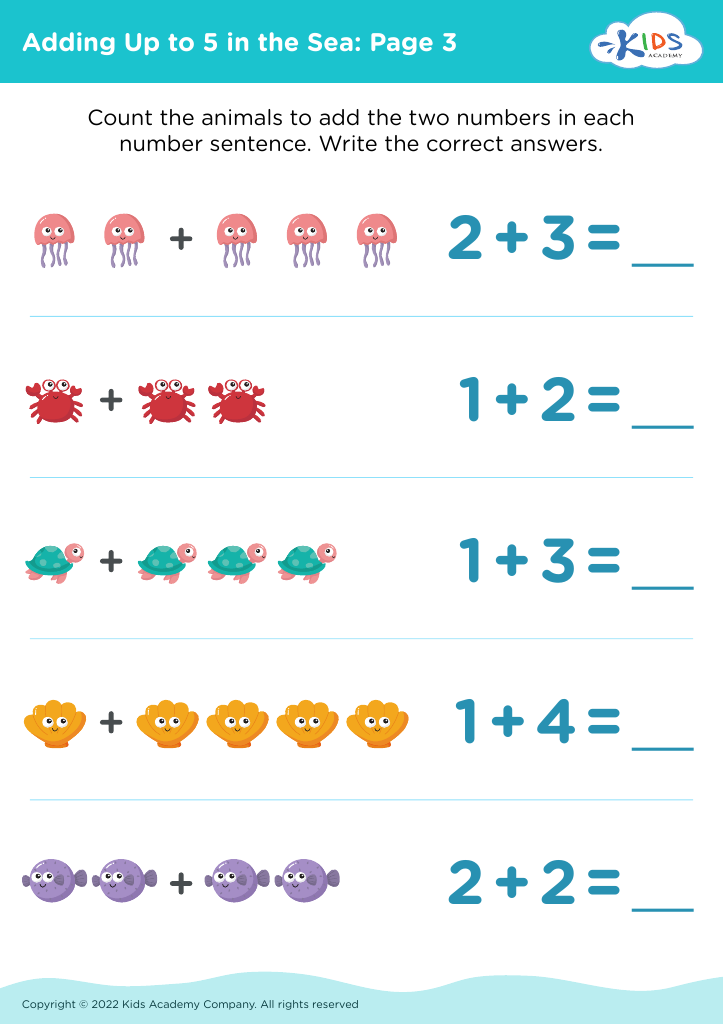
Dive into learning with our "Underwater Animal Identification Math Worksheets" designed for children ages 5-8! These engaging worksheets blend mathematics and marine biology, helping young learners practice counting, addition, and subtraction while identifying and coloring various underwater creatures. Each activity promotes problem-solving and critical thinking skills in a fun and interactive way. Perfect for both classroom and at-home learning, our printable worksheets offer a captivating educational experience, fostering a lifelong love for math and the ocean. Discover a creative approach to math with our underwater-themed resources and watch your child's skills flourish!
Favorites
With answer key
Interactive
Join Kids Academy for Free
Who is primarily going to use this learning content?








Introducing underwater animal identification math to children aged 5-8 intrigues young minds and blends STEM learning in an engaging way. First, it instills an early appreciation for marine biology, fostering a sense of environmental stewardship by helping kids understand and care about the ocean and its inhabitants. Children are naturally curious, and combining math with the excitement of discovering underwater creatures makes learning more dynamic and enjoyable.
From a mathematical perspective, identifying and categorizing marine animals requires children to use critical thinking and pattern recognition skills. Counting fins, legs, or distinguishing colors and shapes develops their numerical and geometric understanding, key foundational skills in early math education.
Moreover, this interdisciplinary activity enhances problem-solving abilities and boosts memory retention. When kids connect math problems to real-world scenarios, especially ones as fascinating as the underwater world, they are more likely to stay engaged and retain the information. These formative experiences shape a positive attitude towards learning and build confidence in their cognitive abilities.
Finally, it encourages perseverance and patience by teaching kids that figuring out puzzles or identifying complex patterns takes time and effort. Parents and teachers should care about this holistic educational approach as it nurtures well-rounded development, balancing cognitive skills with creativity and environmental awareness.








