
Color Identification Matching Worksheets for Ages 5-8
3 filtered results
Difficulty Level
Grade
Age
-
From - To
Subject
Activity
Standards
Discover engaging Color Identification Matching Worksheets designed for ages 5-8 at Kids Academy. These printable worksheets help children enhance their color recognition and matching skills through fun, interactive activities. Perfect for early learners, our resources blend education with play, making learning enjoyable and effective. Your child will have a blast identifying, matching, and differentiating between vibrant colors, boosting their cognitive development and fine motor skills. Support your child’s growth in a creative and entertaining way by exploring our extensive collection of color identification matching worksheets, tailored specifically for young minds. Start your educational journey today!
Favorites
With answer key
Interactive
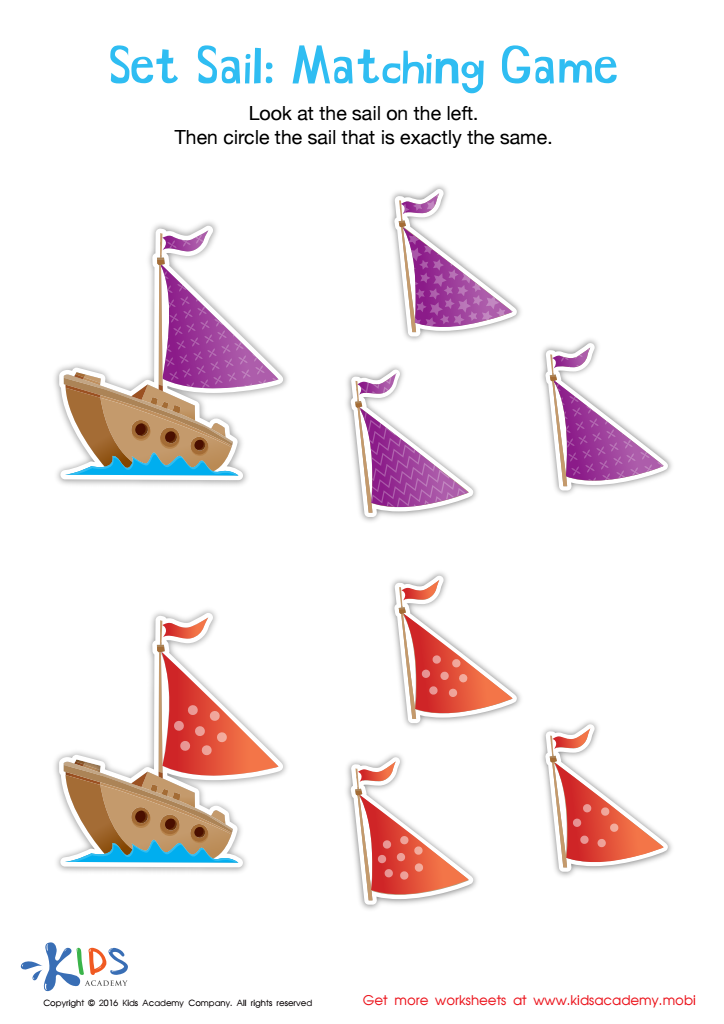
Set Sail Worksheet
Set sail with this fun matching game for toddlers! Kids will love finding the same pattern on the sails, improving their problem-solving and counting skills. Enjoy this bright and engaging worksheet!
 Assign to My Students
Set Sail Worksheet
Worksheet
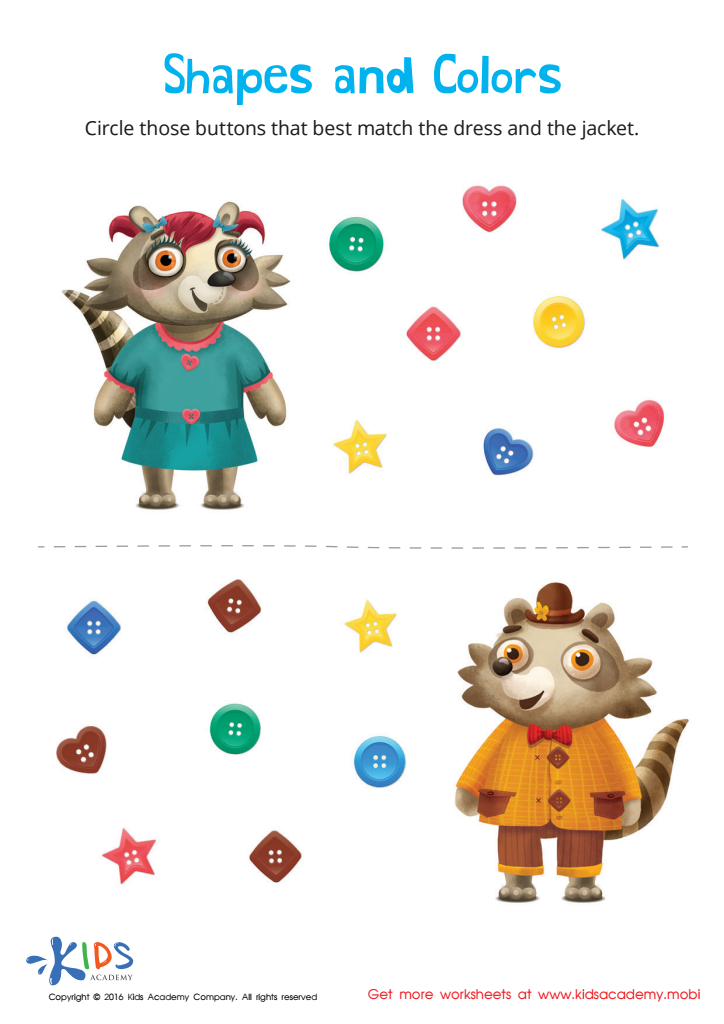
Matching: Shapes and Colors Worksheet
Help Mr. and Mrs. Raccoon find the right buttons to match their shirts! Kids will identify shapes and colors and learn to match them correctly.
Matching: Shapes and Colors Worksheet
Worksheet
Join Kids Academy for Free
Who is primarily going to use this learning content?







Color identification and matching are crucial developmental skills for children aged 5-8, contributing significantly to their cognitive, social, and emotional growth. First and foremost, color recognition enhances cognitive development by improving memory, attention, and the ability to categorize and differentiate between items. When children identify and match colors, they hone their problem-solving and critical thinking skills.
Moreover, these activities can also support the development of language skills. As children learn to name and describe colors, their vocabulary expands, and their ability to articulate their thoughts improves. This becomes a foundation for effective communication.
Socially, engaging in color matching tasks can foster collaboration and teamwork among children. They often participate in group activities where they must communicate and cooperate, which nurtures social skills and builds camaraderie.
Emotionally, success in color identification boosts confidence and self-esteem. Children feel a sense of accomplishment when they correctly identify and match colors, encouraging a positive attitude towards learning more complex tasks in the future.
Finally, color identification is a practical skill used in everyday life, from understanding traffic signals to choosing appropriate clothing. Investing effort in teaching these skills early on lays a foundation for academic success and daily life proficiency. Overall, color identification is a fundamental aspect of early childhood education that significantly shapes a child's growth into a well-rounded individual.








