
Hand-eye Coordination Matching Worksheets for Ages 5-8
3 filtered results
Difficulty Level
Grade
Age
-
From - To
Subject
Activity
Standards
Enhance your child's essential hand-eye coordination skills with our engaging Hand-eye Coordination Matching Worksheets, designed specifically for ages 5-8. These fun and interactive worksheets provide a variety of matching activities that challenge young learners to connect images, shapes, and objects, promoting fine motor skills while reinforcing cognitive development. Ideal for classroom settings or at-home learning, these worksheets foster concentration, attention to detail, and memory retention. Perfect for reinforcing foundational skills in a playful manner, our collection offers a blend of creativity and education, ensuring your child develops confidence while mastering hand-eye coordination through enjoyable and effective exercises. Access the worksheets today!
Favorites
With answer key
Interactive
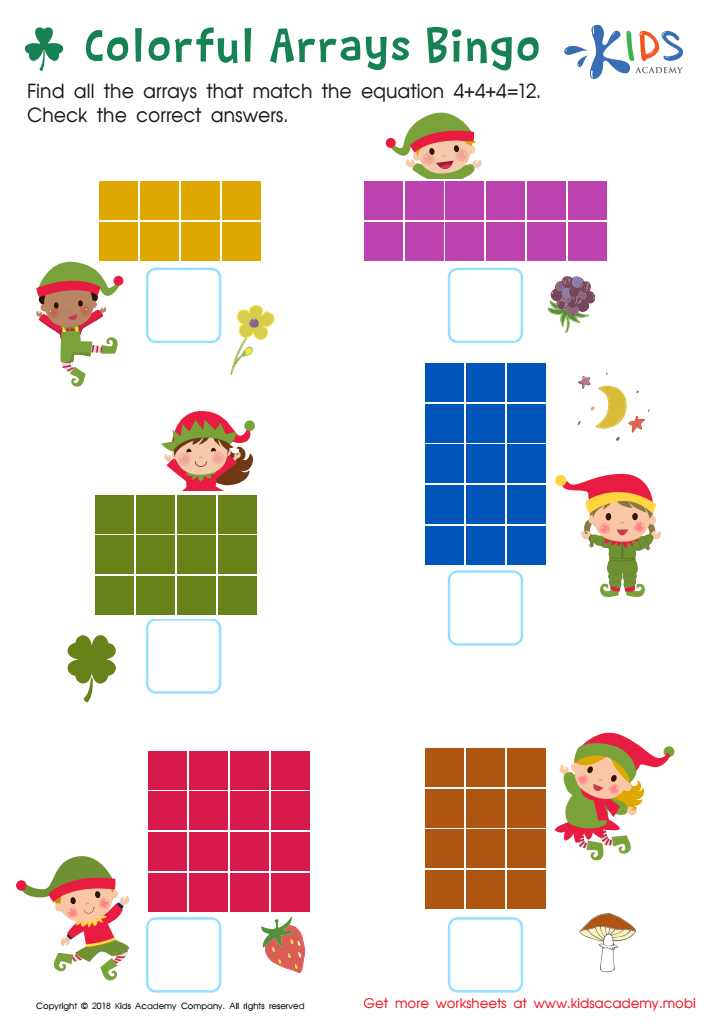
Colorful Arrays Bingo Worksheet
This worksheet stimulates thinking about arrays and how to represent them. Instruct students to count the 6 arrays and find which ones sum up to 12. Ask them to check the answers for accuracy.
 Assign to My Students
Colorful Arrays Bingo Worksheet
Worksheet
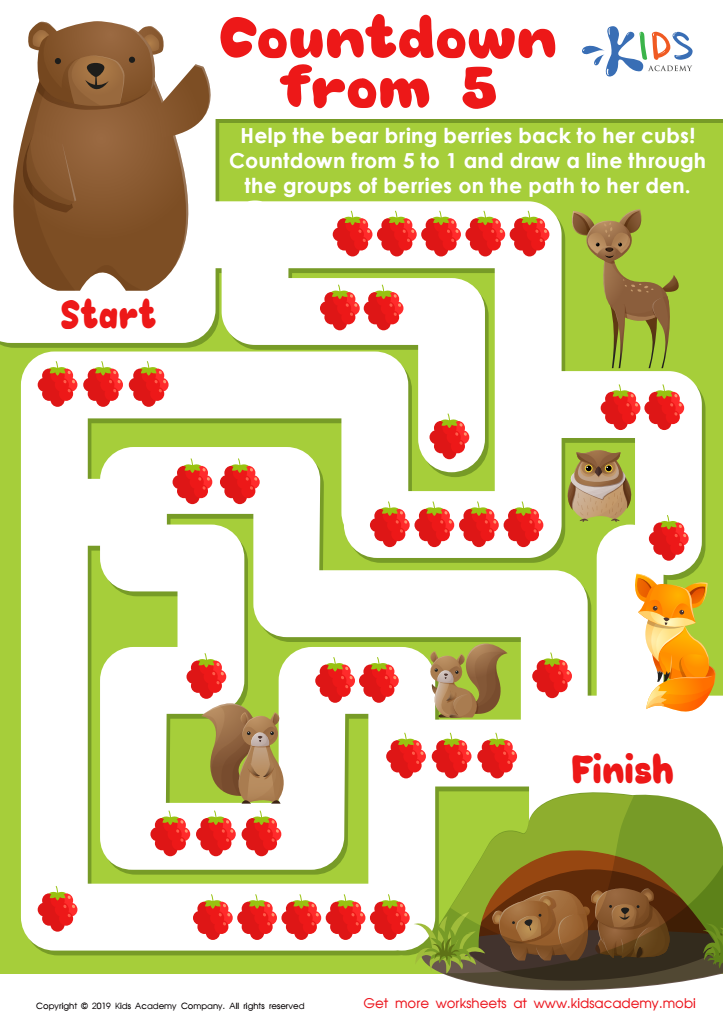
Countdown from 5 Worksheet
Encourage your kids to help Mama Bear find her way to her den! Ask them to count down from 5 to 1 and draw a line through the groups of berries on the path. Point them to the picture of the friendly bears. A fun and safe way to enjoy these cute animals!
Countdown from 5 Worksheet
Worksheet
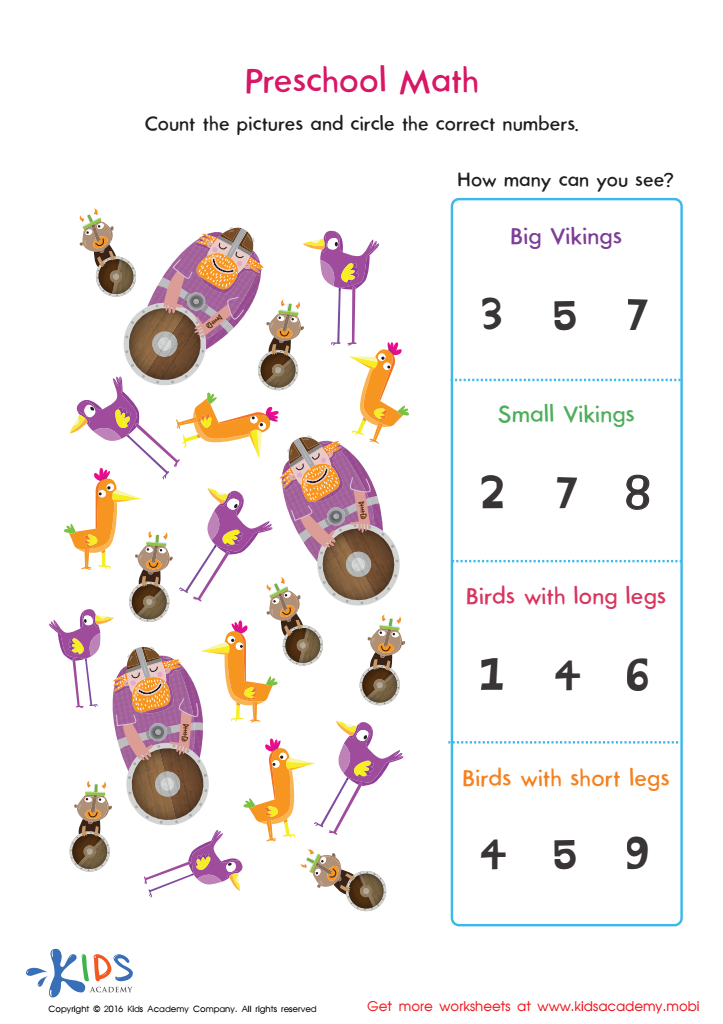
Counting Worksheet: Preschool Math
Worksheet
Join Kids Academy for Free
Who is primarily going to use this learning content?








Hand-eye coordination is a crucial developmental skill for children aged 5-8, as it significantly impacts their ability to perform daily tasks and succeed in various activities. As children interact with their environment, they need to coordinate their visual perception with motor functions to navigate and manipulate objects effectively. For instance, activities like writing, drawing, playing sports, and even simple tasks such as buttoning shirts or tying shoelaces rely on well-developed hand-eye coordination.
Parents and teachers should prioritize hand-eye coordination for several reasons. First, strong coordination fosters independence, empowering children to manage their daily routines with confidence. Additionally, it enhances academic performance—in particular, skills in writing and mathematics, where precision and control are essential. Engaging in activities that promote this coordination, such as puzzles, arts and crafts, or sports, also supports socialization and increases physical activity, which is vital for overall health.
Moreover, developing these skills can lead to higher self-esteem, as children successfully complete tasks they previously found challenging. Ultimately, investing time and resources into enhancing hand-eye coordination can contribute not only to academic success but also to a child's overall development and well-being, making it a priority for both parents and teachers.








