Comparing numbers Measurement Worksheets for Ages 5-8
3 filtered results
-
From - To
Explore our engaging "Comparing Numbers Measurement Worksheets" designed for children aged 5-8. These interactive worksheets provide a fun and effective way for young learners to develop their understanding of number concepts and measurement skills. Students will practice comparing quantities, identifying larger or smaller values, and mastering the fundamentals of basic math through varying exercises. Our worksheets are visually stimulating and cater to diverse learning styles, ensuring every child stays motivated while honing their skills. Perfect for classroom or home use, these resources support early education and stimulate a love for math. Start your child's journey with numbers today!
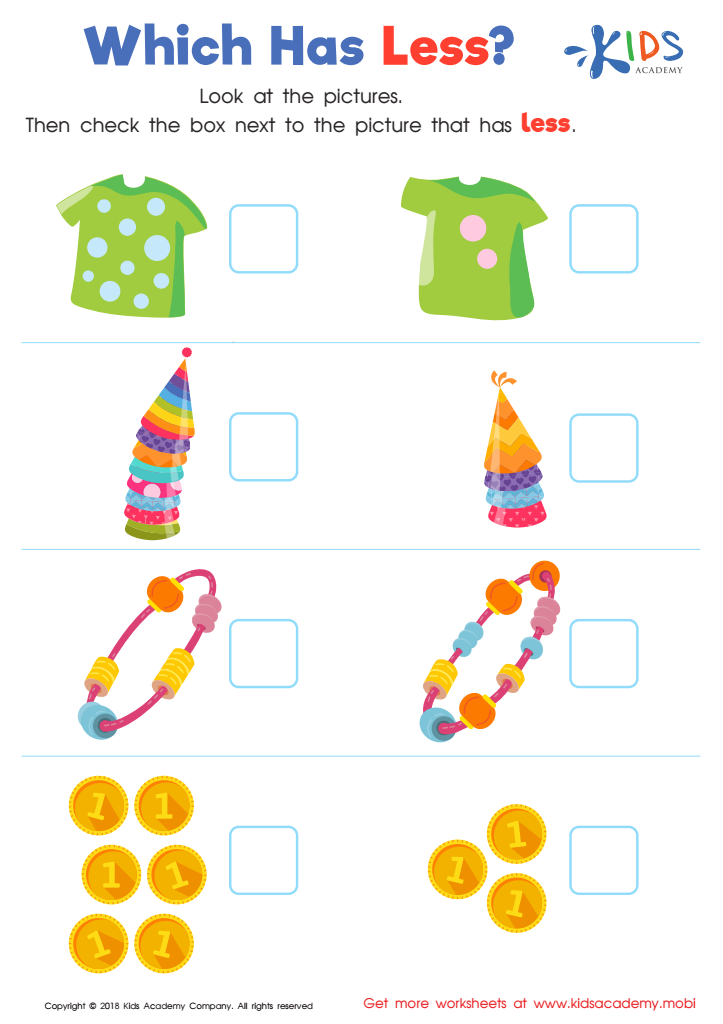
Which Has Less? Worksheet
 Assign to My Students
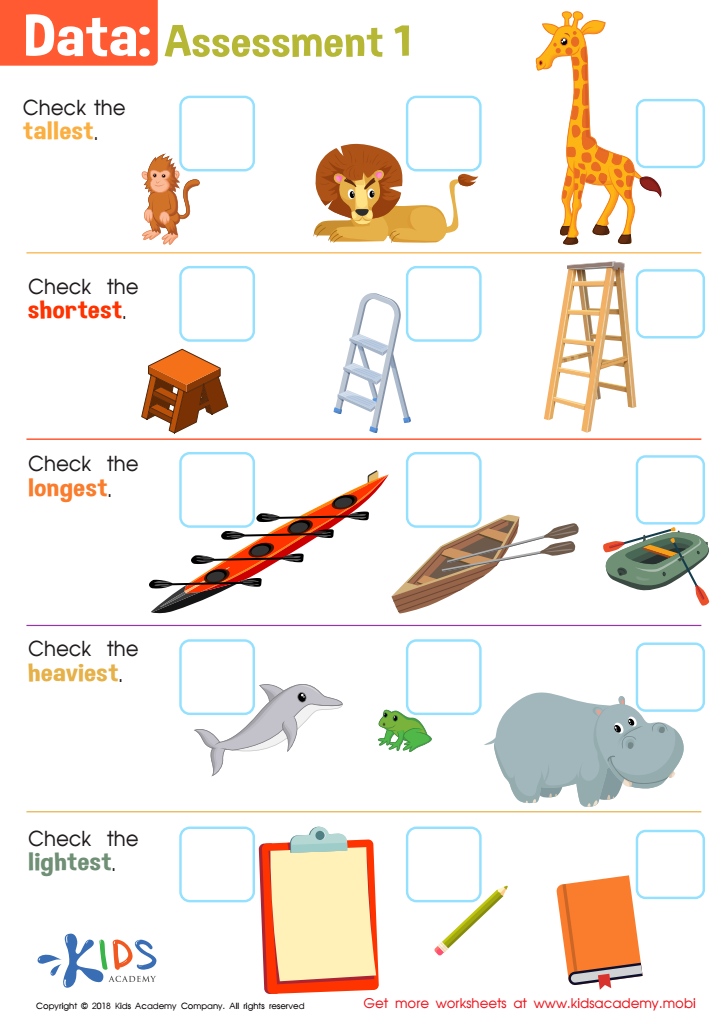
Data: Assessment 1 Worksheet
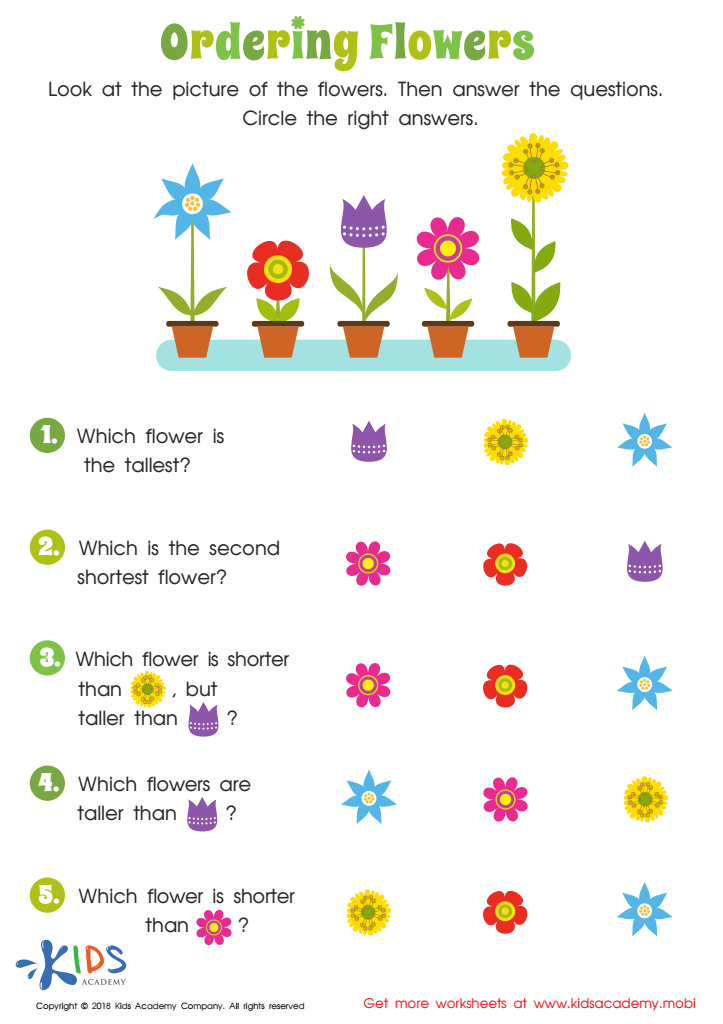
Ordering Flowers Worksheet








Comparing numbers and understanding measurement are crucial foundational skills for children aged 5-8, impacting their overall academic and life success. Mastering these concepts fosters critical thinking and problem-solving abilities. When children are taught to compare numbers—understanding greater than, less than, and equal—they build their ability to analyze and make sense of the world around them. This skill is essential in various real-life situations, from budgeting their allowance to making decisions based on data.
Measurement introduces children to the physical qualities of their environment, enhancing sensory experiences and spatial awareness. Whether they are measuring ingredients while cooking or determining the height of a plant, these activities promote hands-on learning and curiosity.
Moreover, understanding these mathematical concepts is vital for later subjects like science, technology, engineering, and math (STEM). By nurturing a strong foundation in comparing numbers and measurement, parents and teachers equip children with tools to interact confidently with quantitative information throughout their education.
Ultimately, encouraging numerical comparison and measurement lays the groundwork for future academic endeavors, empowering children to engage with the world creatively and analytically.








