Spatial awareness Measurement Worksheets for Ages 5-8
3 filtered results
-
From - To
Enhance your child's spatial awareness with our engaging Spatial Awareness Measurement Worksheets designed for ages 5-8. These printable resources focus on developing critical skills through fun and interactive activities. Kids will learn to visualize, manipulate, and understand the relationship between objects in space, boosting their mathematical abilities and problem-solving confidence. Each worksheet incorporates vibrant illustrations and age-appropriate challenges, making learning enjoyable and effective. Perfect for classrooms or home practice, these worksheets support foundational skills in geometry and measurement. Help your child navigate their world with clarity and creativity—download now to enrich their learning journey!
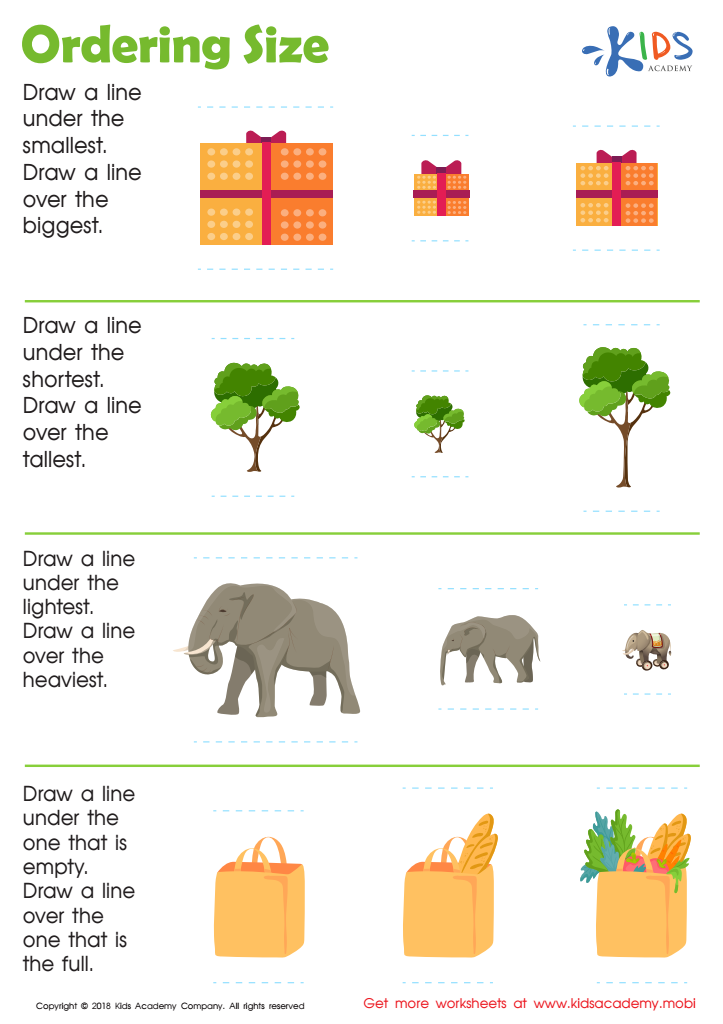
Ordering Size Worksheet
 Assign to My Students
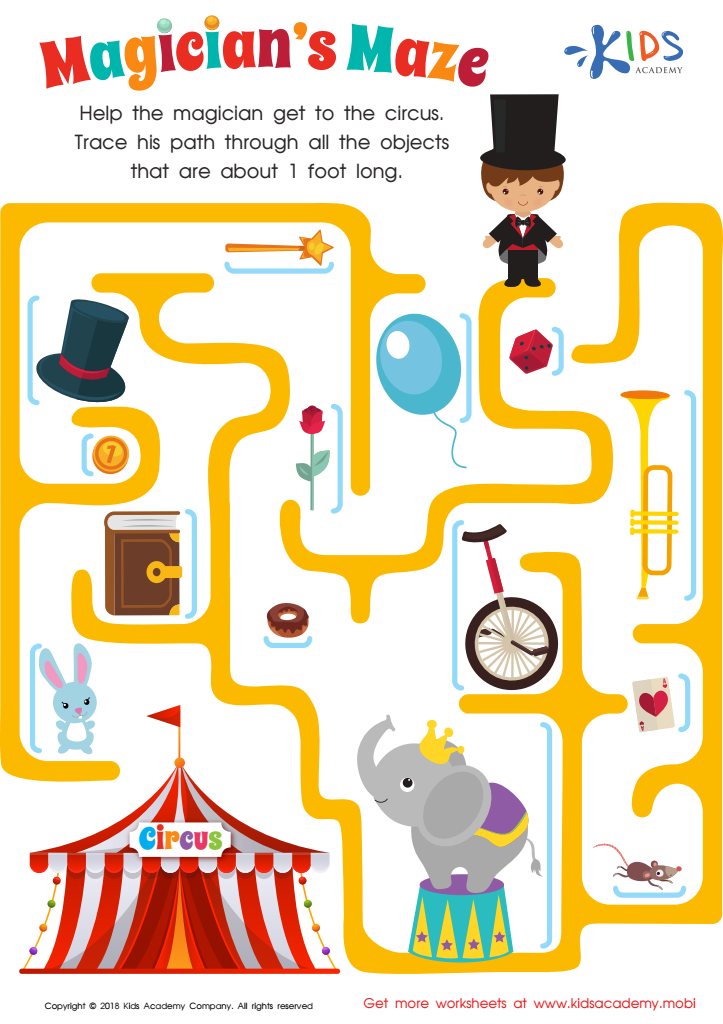
Estimating Length: Magician's Maze Worksheet
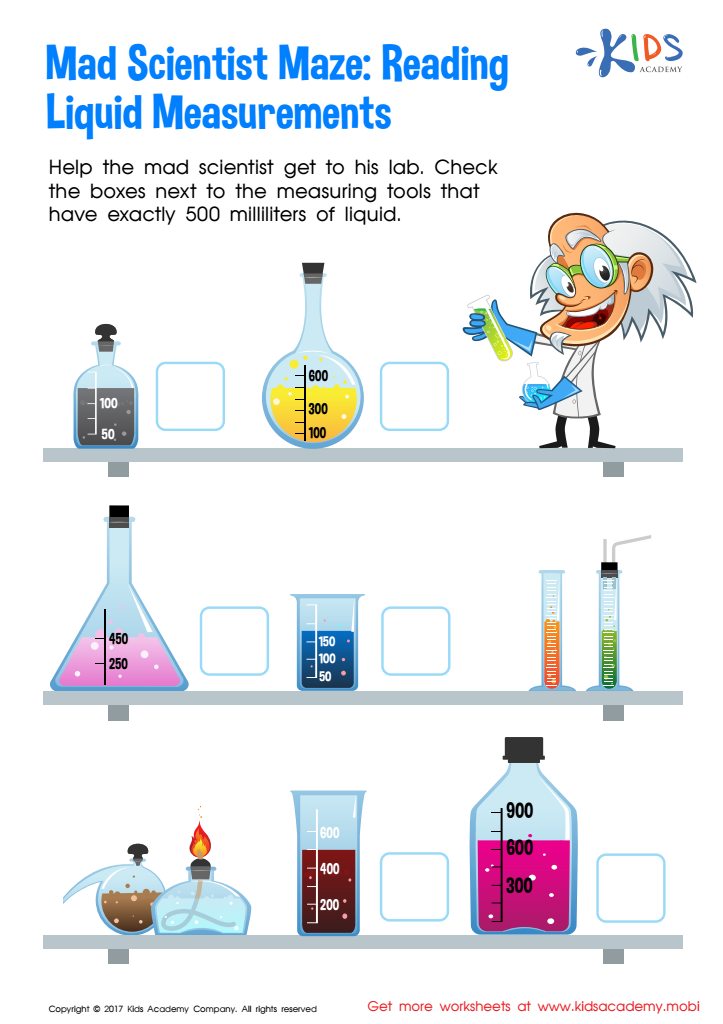
Reading Liquid Measurement Worksheet








Spatial awareness is a crucial cognitive skill that allows children to understand and navigate the world around them. For children aged 5-8, developing spatial awareness enhances their ability to visualize space, distances, and relationships between objects—skills essential for problem-solving and comprehension in various subjects, particularly STEM.
Teachers and parents should prioritize spatial awareness measurement as it provides insights into a child's cognitive development and educational readiness. By assessing spatial skills, educators can tailor teaching strategies to address individual learning needs, ensuring that each child can thrive. Spatial awareness is not only linked to mathematics and science but also plays a significant role in reading comprehension and social skills.
Moreover, children with strong spatial awareness tend to demonstrate better performance in activities like art, sports, and even music, where recognizing patterns and dimensions is key. This foundational skill can significantly benefit their academic trajectory, potentially leading to enhanced self-esteem and motivation.
Involvement in measurement activities also offers an opportunity for parents and teachers to engage collaboratively, fostering a supportive community focused on holistic child development. Ultimately, nurturing spatial awareness lays the groundwork for lifelong learning and adaptability.








