Fine Motor Skills Multiplication Worksheets for Ages 5-8
3 filtered results
-
From - To
Welcome to our Fine Motor Skills Multiplication Worksheets for ages 5-8! These engaging worksheets combine essential multiplication practice with stimulating fine motor activities designed to enhance dexterity and hand-eye coordination. Each sheet features fun, interactive exercises that allow young learners to explore multiplication concepts while refining their motor skills through tracing, coloring, and cutting tasks. By using these worksheets, children will not only improve their math fluency but also strengthen their ability to manipulate tools and materials. Perfect for classroom use or at-home learning, our fine motor skills worksheets make learning multiplication enjoyable and effective! Discover the joy of math today!
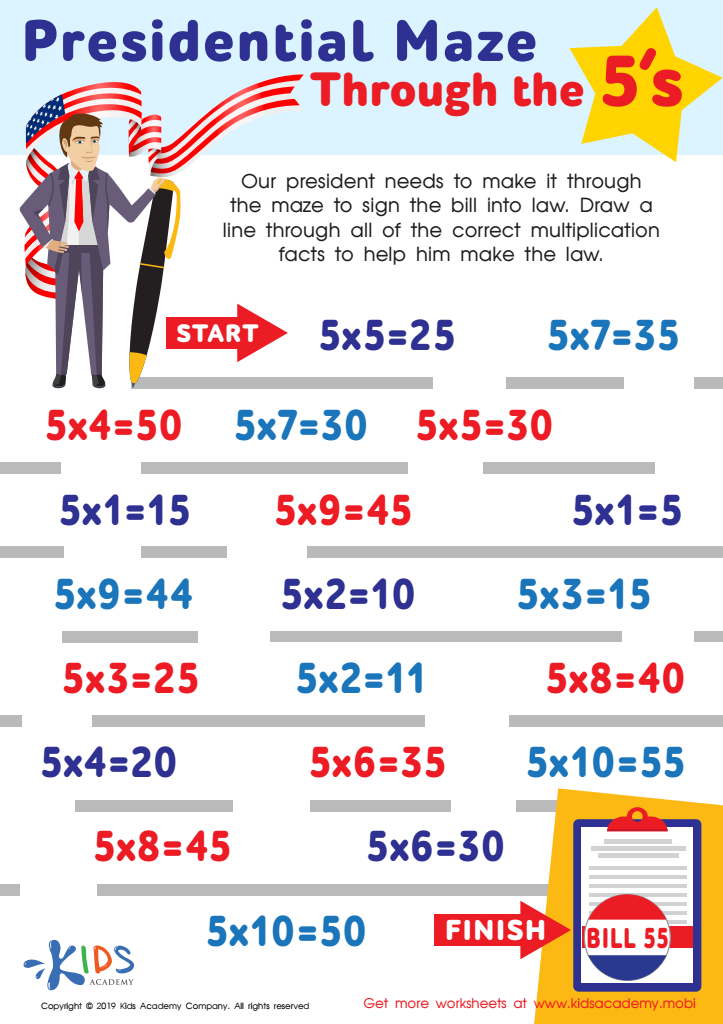
Presidential Maze Through the 5’s Worksheet
 Assign to My Students
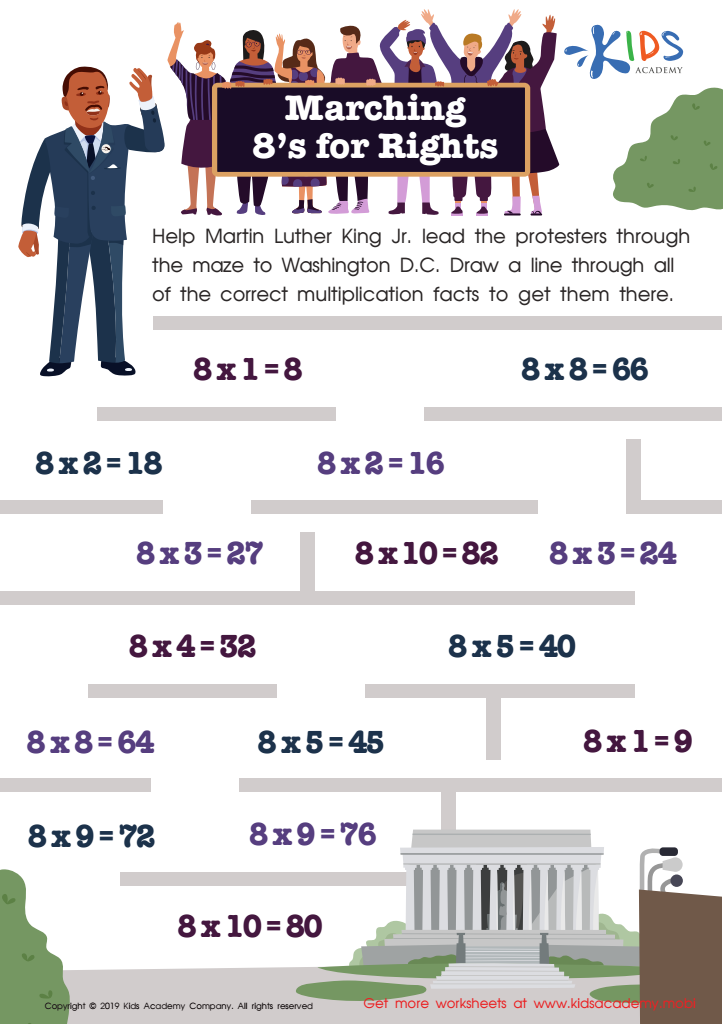
Marching 8’s for Rights Worksheet
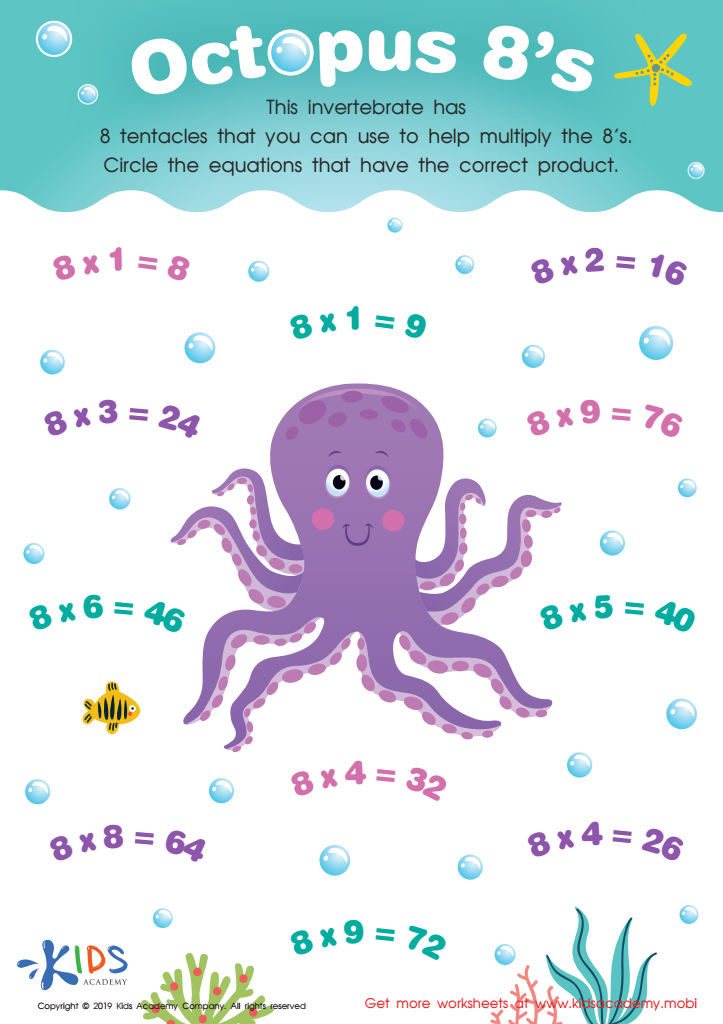
Octopus 8’s Worksheet








Fine motor skills play a crucial role in a child's overall development, particularly in the early grades where foundational skills are established. For children aged 5-8, engaging with activities that enhance fine motor skills directly supports their ability to grasp essential academic concepts like multiplication. These skills are critical for tasks such as writing, drawing, and using classroom tools, directly influencing a child's performance in math.
When children practice fine motor tasks like manipulating small objects or using scissors, they develop better hand-eye coordination and dexterity. This, in turn, translates into improved precision when drawing mathematical symbols, writing numbers, and solving problems on paper. As kids practice creating arrays or grouping objects in visual multiplication activities, they not only build a basic understanding of multiplication but also strengthen the fine motor skills that will be necessary for advanced math.
When parents and teachers prioritize fine motor skill development, they set children up for success in both academic and daily tasks. By creating opportunities for hands-on learning and playful activities, adults can nurture a child's confidence and engagement in mathematics, laying a strong foundation for lifelong learning. Thus, investing in fine motor skills in early education benefits children significantly in their mathematical journey.








