Addition Practice Numbers up to 100 Worksheets for Ages 5-8
4 filtered results
-
From - To
Enhance your child’s math skills with our "Addition Practice Numbers up to 100 Worksheets," designed specifically for ages 5-8! These engaging and educational worksheets focus on cultivating a strong foundation in addition, helping young learners confidently solve problems with numbers up to 100. Each sheet provides fun and interactive activities that make math practice enjoyable, while reinforcing critical thinking and problem-solving abilities. Perfect for classroom use or at-home learning, our expertly crafted worksheets guide children through the exciting world of addition. Download now to empower your child with essential math capabilities and boost their computational confidence today!
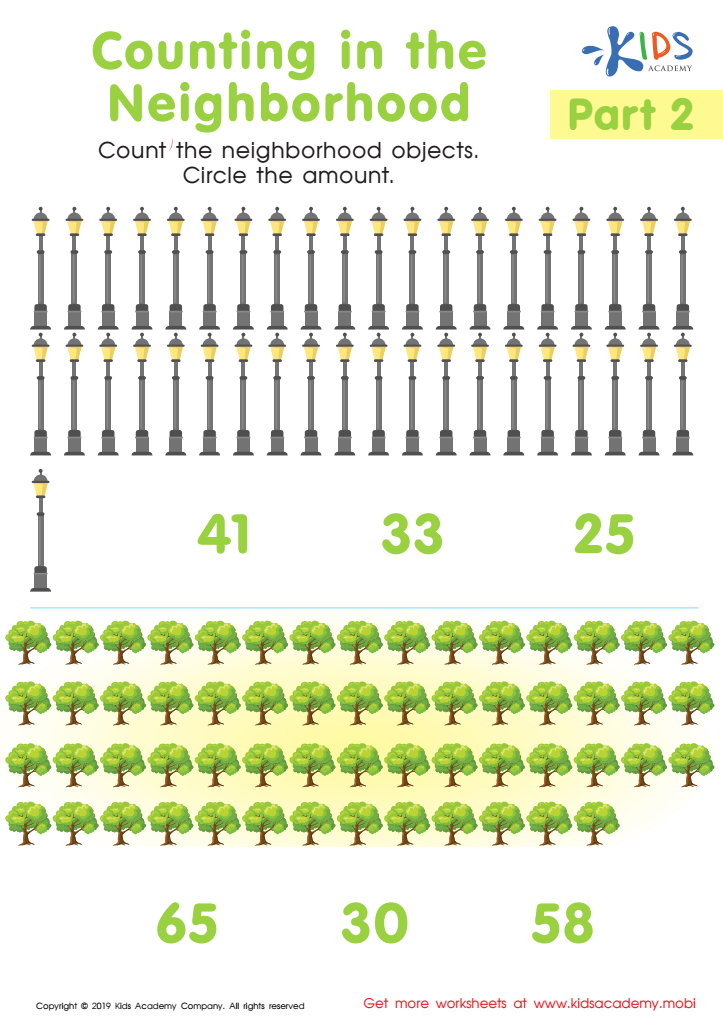
Counting In The Neighborhood Part 2 Worksheet
 Assign to My Students
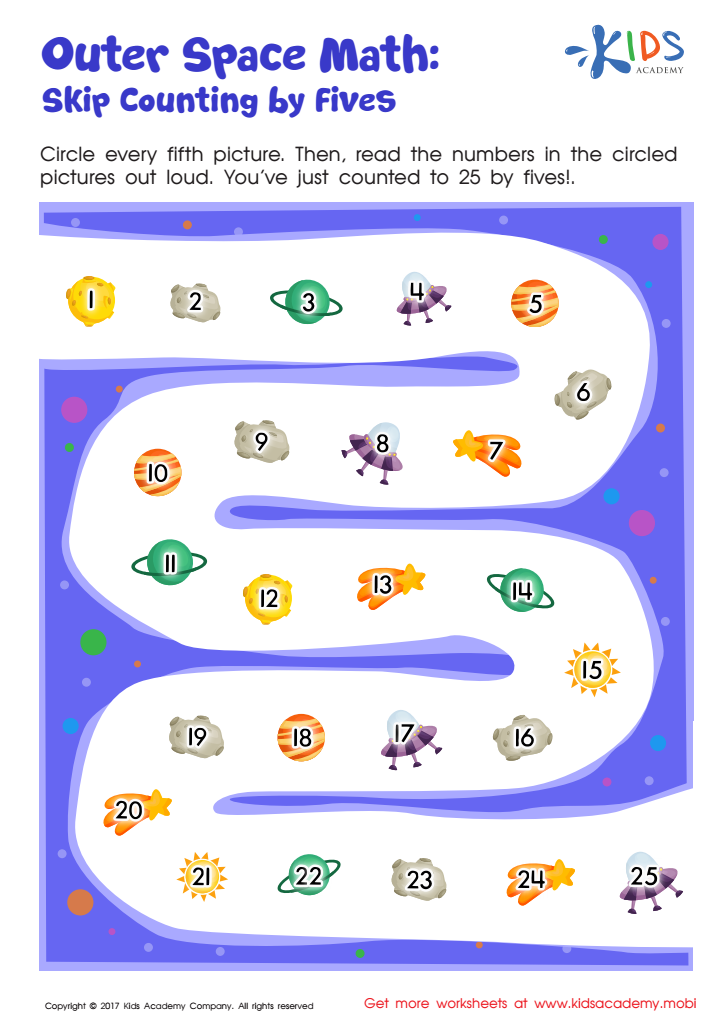
Skip Counting by 5s: Outer Space Math Printable
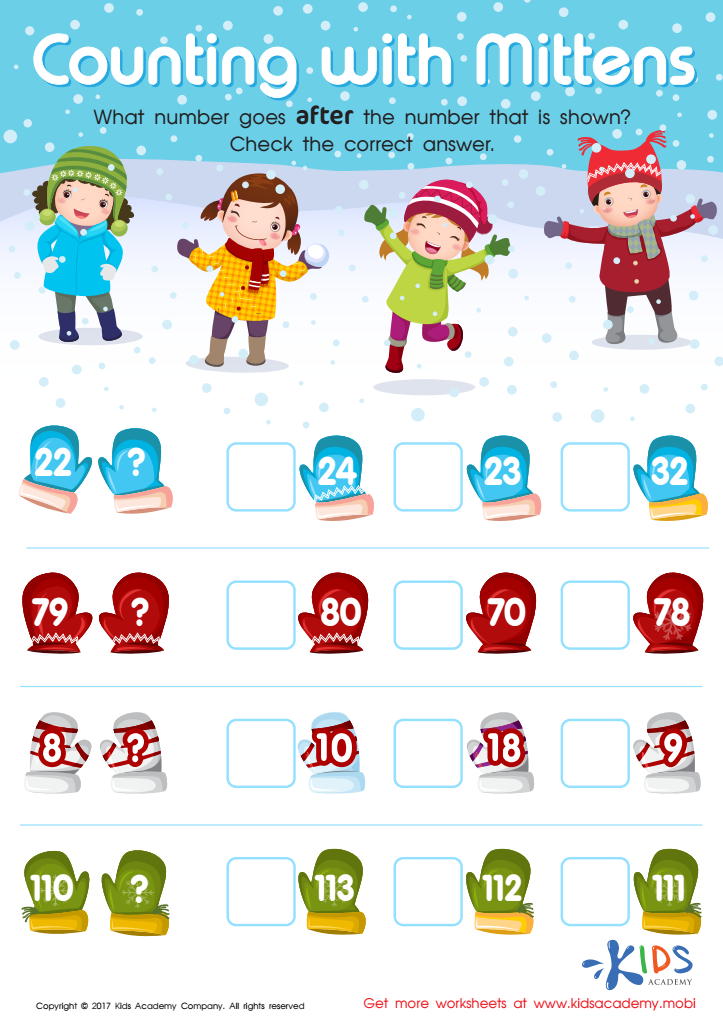
Counting with Mittens Worksheet
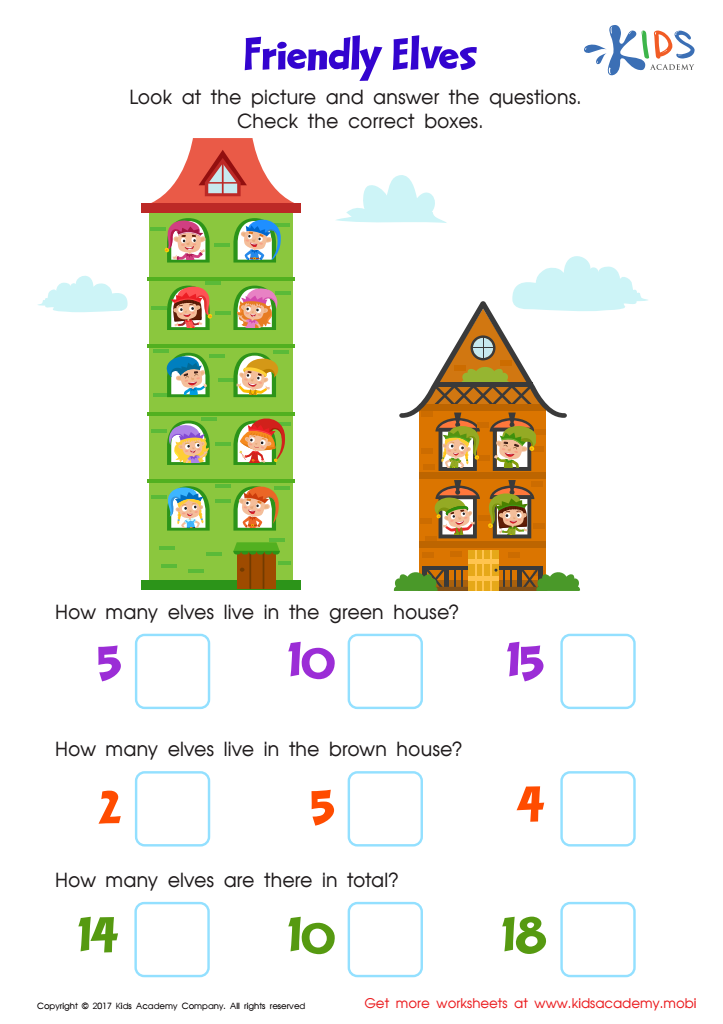
Place Value: Friendly Elves Worksheet







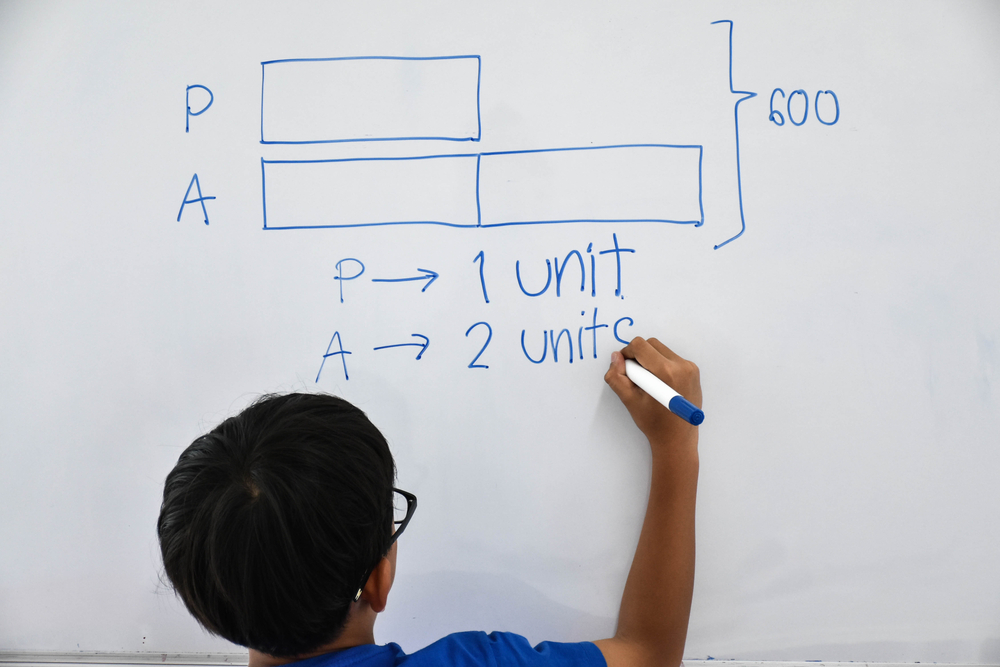
Parents and teachers should prioritize addition practice for numbers up to 100 for ages 5-8 as it establishes a critical foundation for more complex mathematical concepts and problem-solving skills. Mastery of basic addition helps children build confidence and competence in handling everyday math tasks, fostering a positive attitude towards the subject. At this developmental stage, young learners' brains are highly receptive to new information, making it the optimal time for instilling these essential skills.
Practicing addition up to 100 enhances cognitive abilities, including memory, attention, and reasoning. It supports the understanding of number relationships and patterns, vital for grasping advanced arithmetic operations such as subtraction, multiplication, and division. Furthermore, this practice develops the ability to perform mental calculations, a crucial skill for everyday activities like shopping, cooking, or planning.
For teachers, incorporating addition exercises in the curriculum ensures alignment with educational standards, promoting academic success. For parents, encouraging addition practice at home fosters a supportive learning environment, bridging the gap between school and home education. This combined effort nurtures a child's mathematical literacy, setting the stage for future academic and real-life achievements. Therefore, concerted focus on addition practice from an early age yields long-term benefits, fostering academic and personal growth.