Number Recognition Skip Counting Worksheets for Ages 5-8
3 filtered results
-
From - To
Welcome to our Number Recognition Skip Counting Worksheets, designed for children ages 5-8! These engaging and colorful worksheets help young learners enhance their number recognition skills while mastering the concept of skip counting. Skip counting, which involves counting forward or backward in a specific number pattern, lays a strong foundation for addition, subtraction, and multiplication. Our carefully crafted activities are tailor-made to suit various learning levels, making math fun and approachable. Whether used in the classroom or at home, these worksheets encourage practice and mastery, fostering confidence in early math skills. Download them today to support your child's learning journey!
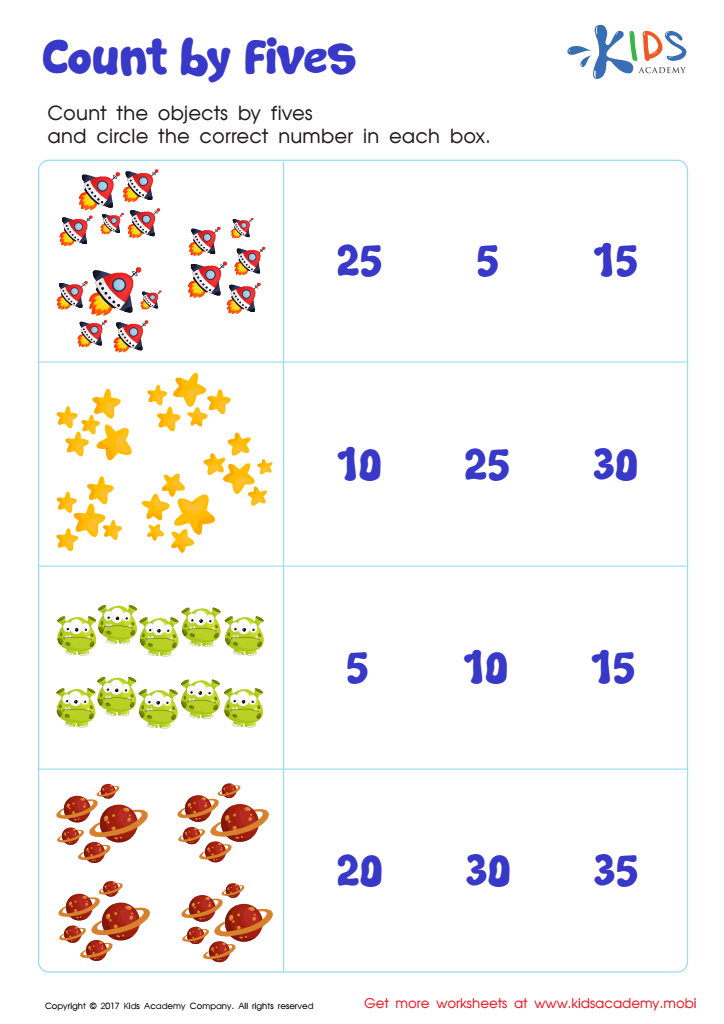
Skip Counting by 5s: Space Math Printable
 Assign to My Students
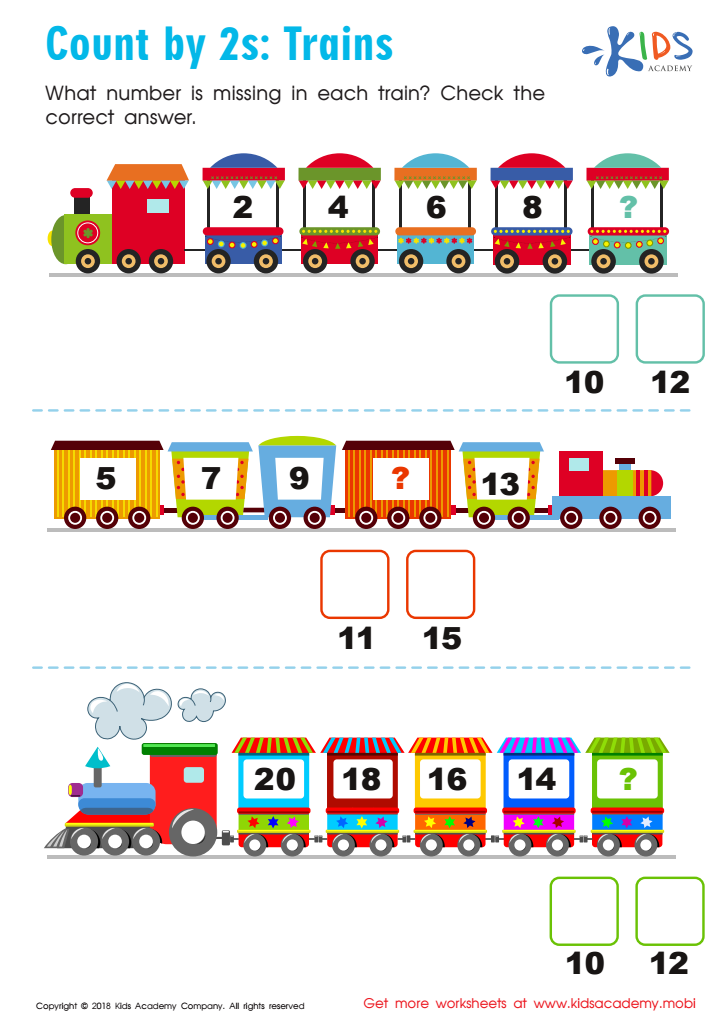
Count by 2's: Trains Worksheet
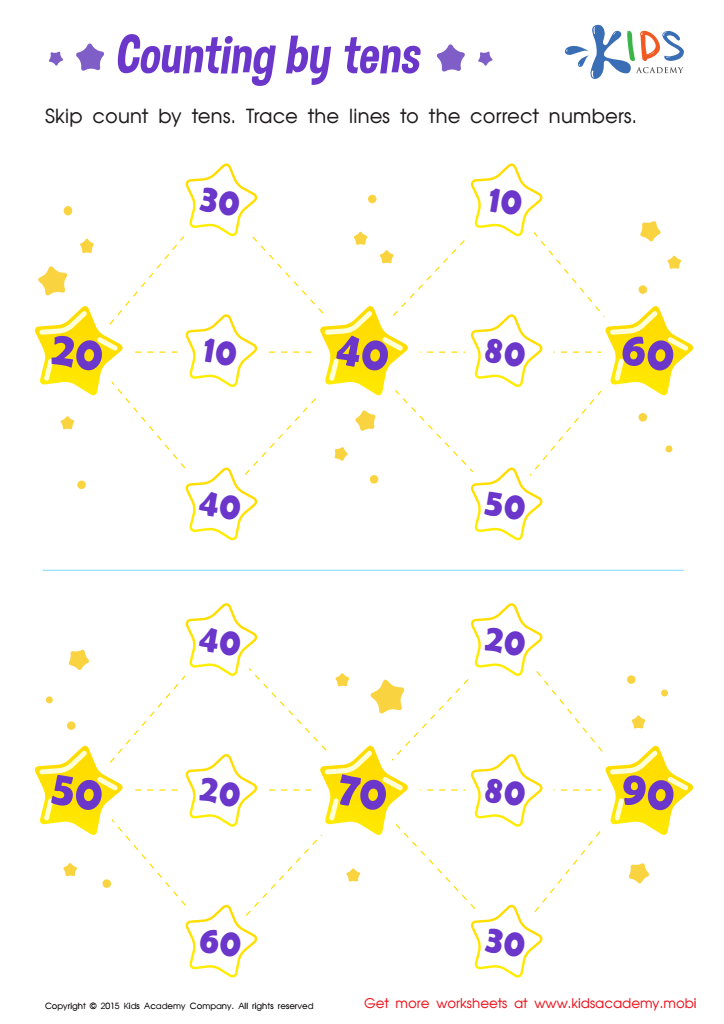
Learn Dozens: Counting by Tens Printable








Number recognition and skip counting are foundational skills essential for young learners aged 5-8. Parents and teachers should prioritize these skills as they serve as the building blocks for more complex mathematical concepts and foster a child’s confidence in their numerical abilities.
Number recognition enables children to identify, read, and write numbers, paving the way for basic arithmetic operations. It helps them recognize quantities in their environment, enhancing their understanding of the world around them. When children can easily identify numbers, they are more likely to engage with mathematical tasks and develop a positive attitude toward math.
Skip counting, or counting by multiples (like 2s, 5s, or 10s), is equally crucial. It not only strengthens mental math skills but also introduces concepts of pattern recognition, addition, and multiplication. Skip counting helps children understand the relationship between numbers, enhances their ability to solve problems, and sets a strong groundwork for understanding skip counting principles in science and everyday contexts.
Incorporating number recognition and skip counting into daily activities and educational programs will empower children, making math a more enjoyable and integral part of their learning journey. Engaging with these skills early on cultivates a solid mathematical foundation that resonates throughout their educational experience.








