
Basic Math Skills Sorting Worksheets for Ages 5-8
4 filtered results
Difficulty Level
Grade
Age
-
From - To
Subject
Activity
Standards
Discover our Basic Math Skills Sorting Worksheets designed for ages 5-8! These engaging and educational printables are perfect for young learners to enhance their skills in categorizing and organizing objects. Our worksheets promote critical thinking and improve foundational math concepts such as counting, comparing, and pattern recognition. Each activity is crafted to be fun and interactive, keeping kids interested while they learn. Ideal for both classroom and home use, these worksheets support early math success and build a strong mathematical foundation. Visit Kids Academy now to explore our wide variety of resources and help your child excel in math!
Favorites
With answer key
Interactive
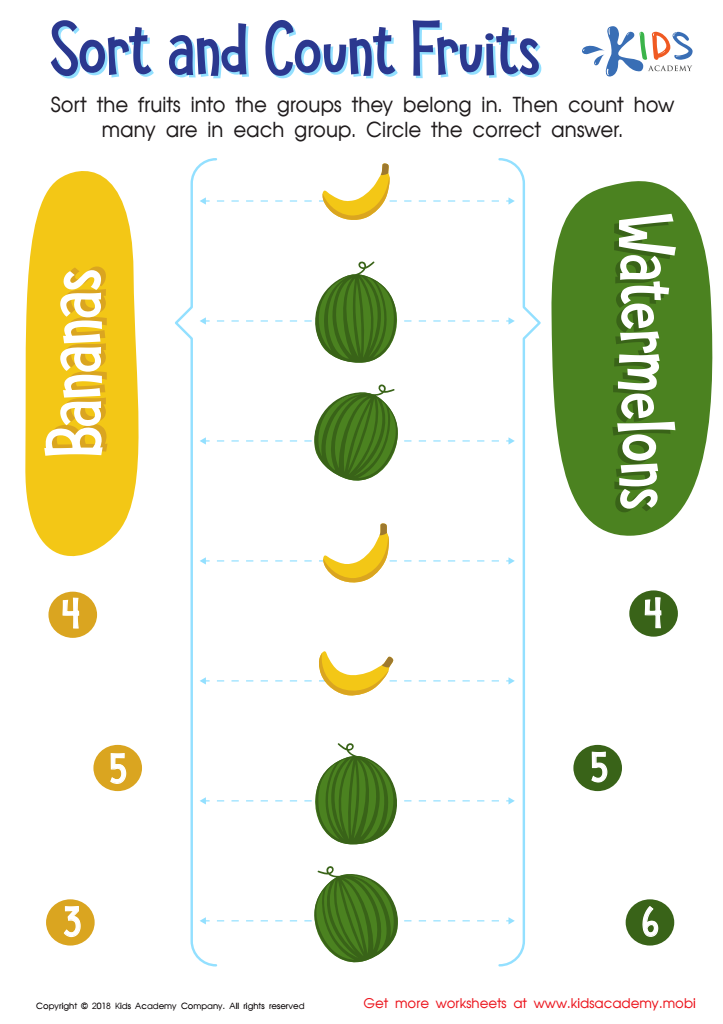
Sort and Count Fruits Worksheet
Allow your children to hone their critical thinking and number reasoning skills with this free worksheet. They'll sort, count, and trace fruits while learning basic number sense. A fun, delicious learning experience with familiar pictures they'll love.
 Assign to My Students
Sort and Count Fruits Worksheet
Worksheet
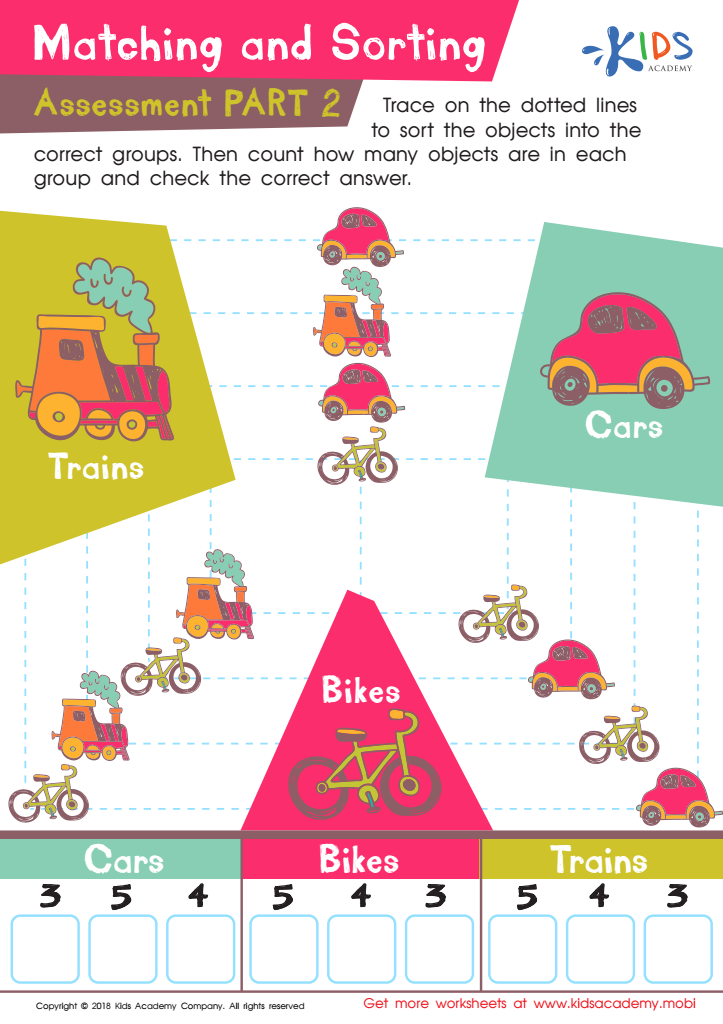
Matching and Sorting for Kindergarten: Assessment 2 Worksheet
This assessment tests matching, sorting and fine motor skills. It challenges kids to identify properties and attributes of pictures, trace guidelines and count the types of vehicles. It's a great way to practice basic number sense and hone in on important foundational skills.
Matching and Sorting for Kindergarten: Assessment 2 Worksheet
Worksheet
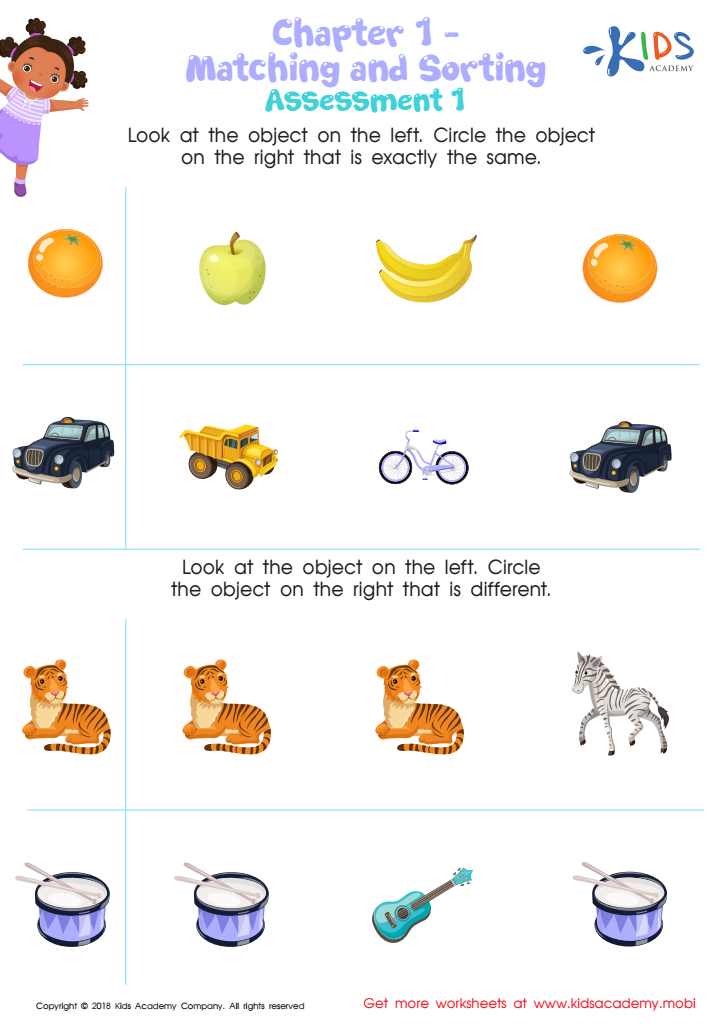
Matching and Sorting for Preschool: Assessment 1 Worksheet
Test your child's matching skills with this worksheet! Ask them to name each of the objects pictured, then circle the ones that are the same. Repeat for the second task. It's a great way to assess their skills and have fun at the same time!
Matching and Sorting for Preschool: Assessment 1 Worksheet
Worksheet
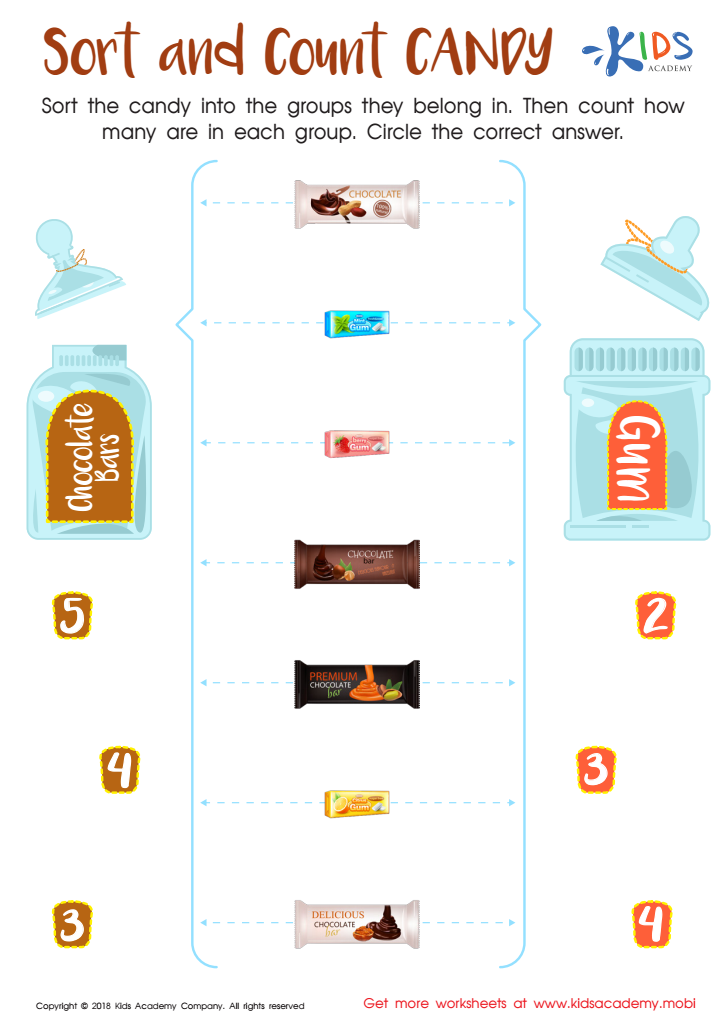
Sort and Count Candy Worksheet
Sort chocolate and candy with your kids! Help them use recognizable items and pictures to sort, practice counting with one-to-one representation, and develop their fine motor skills with the traceable lines. Download this free worksheet to get started. Yum!
Sort and Count Candy Worksheet
Worksheet
Join Kids Academy for Free
Who is primarily going to use this learning content?








Basic Math Skills Sorting is essential for children aged 5-8 because it builds the foundational understanding necessary for more complex mathematical concepts. By engaging in sorting activities, children learn to categorize objects based on attributes such as size, color, and shape. This process enhances their ability to recognize patterns, make comparisons, and develop critical thinking skills.
Early math sorting activities also promote cognitive development. When children sort objects, they practice skills like classification, sequencing, and logical reasoning. These are crucial for their overall academic growth and are applied in multiple subjects beyond math.
Moreover, sorting enhances fine motor skills. Handling and organizing small objects boosts hand-eye coordination, which is beneficial for other tasks like writing. Additionally, sorting exercises can improve a child's ability to focus and follow directions, contributing to better classroom behavior and learning habits.
Incorporating sorting in early education paves the way for a positive relationship with math. When children view mathematics as a fun and integral part of their daily activities, it builds their confidence. This positive attitude reduces math anxiety and promotes a lifelong interest in learning. For these reasons, parents and teachers should prioritize basic math skills sorting during the critical early years of development.








