Cognitive Development Subtraction Worksheets for Ages 5-8
5 filtered results
-
From - To
Enhance your child's cognitive development with our engaging subtraction worksheets tailored for ages 5-8. Designed to foster critical thinking and problem-solving skills, these worksheets make learning fun and interactive. Children will explore subtraction concepts through colorful visuals and relatable scenarios, promoting a deeper understanding of mathematics. With a variety of exercises, including visual aids and storytelling elements, your little learners can practice their subtraction skills at their own pace. Our resources aim to support young minds in building a solid foundation for future math success. Discover the joy of learning with our cognitive development subtraction worksheets today!
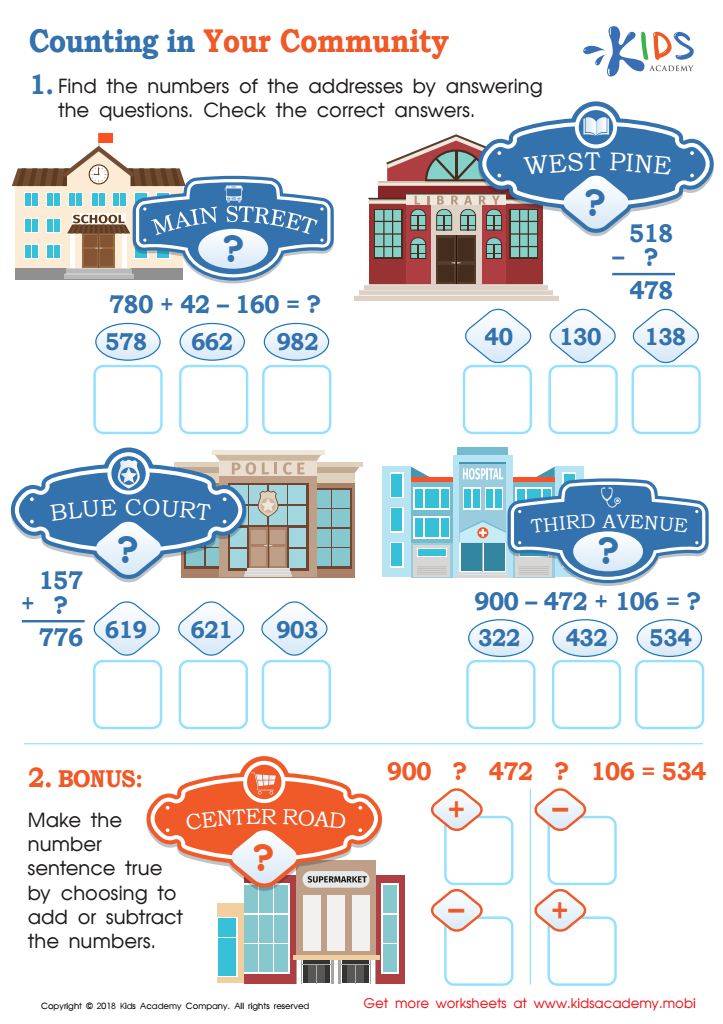
Counting in Your Community Worksheet
 Assign to My Students
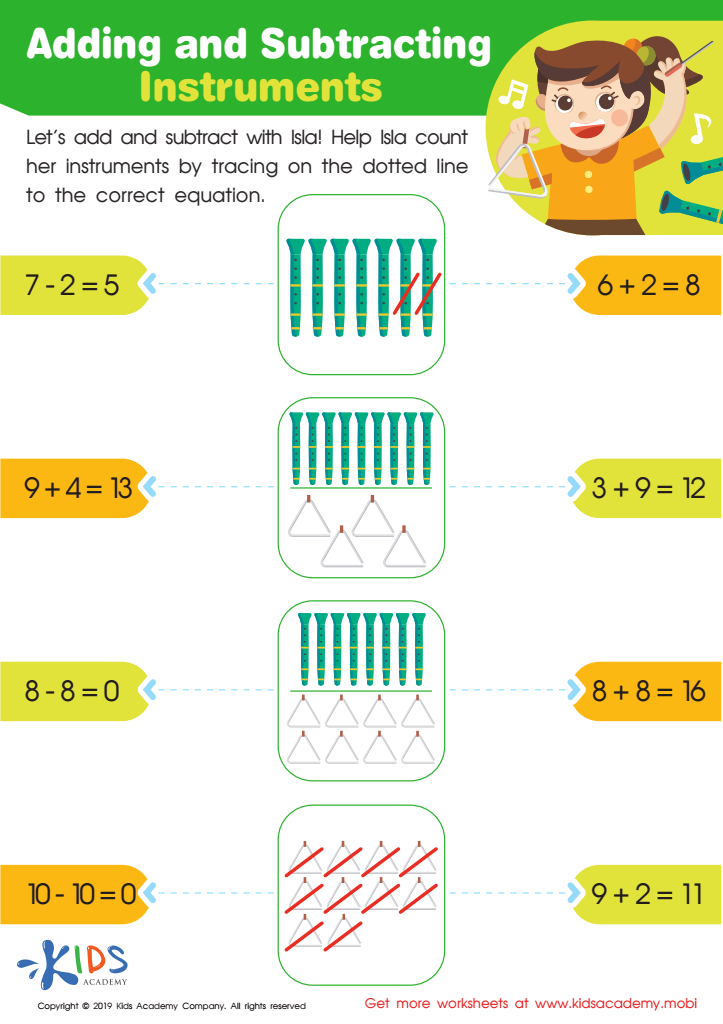
Adding and Subtracting: Instruments Worksheet
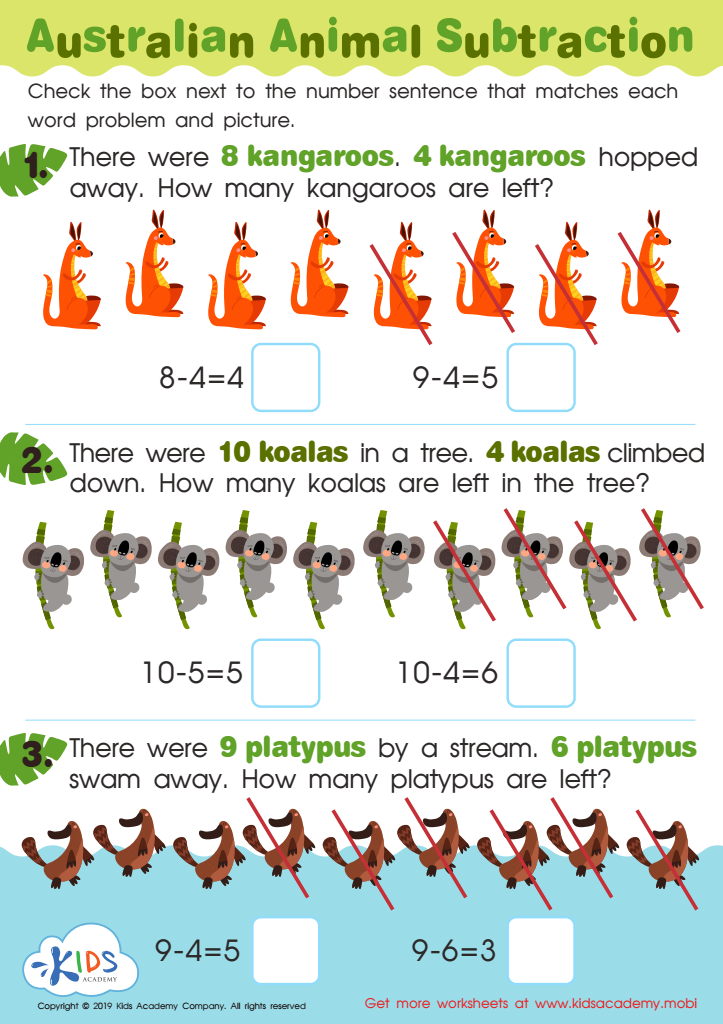
Australian Animal Subtraction Worksheet
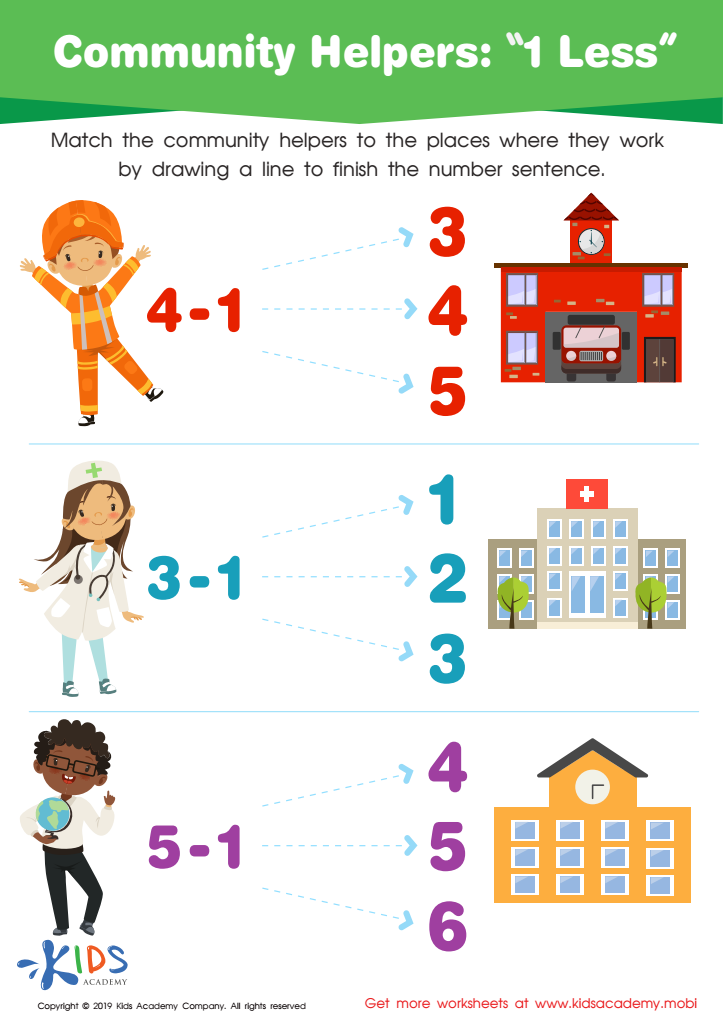
Community Helpers: 1 less Worksheet
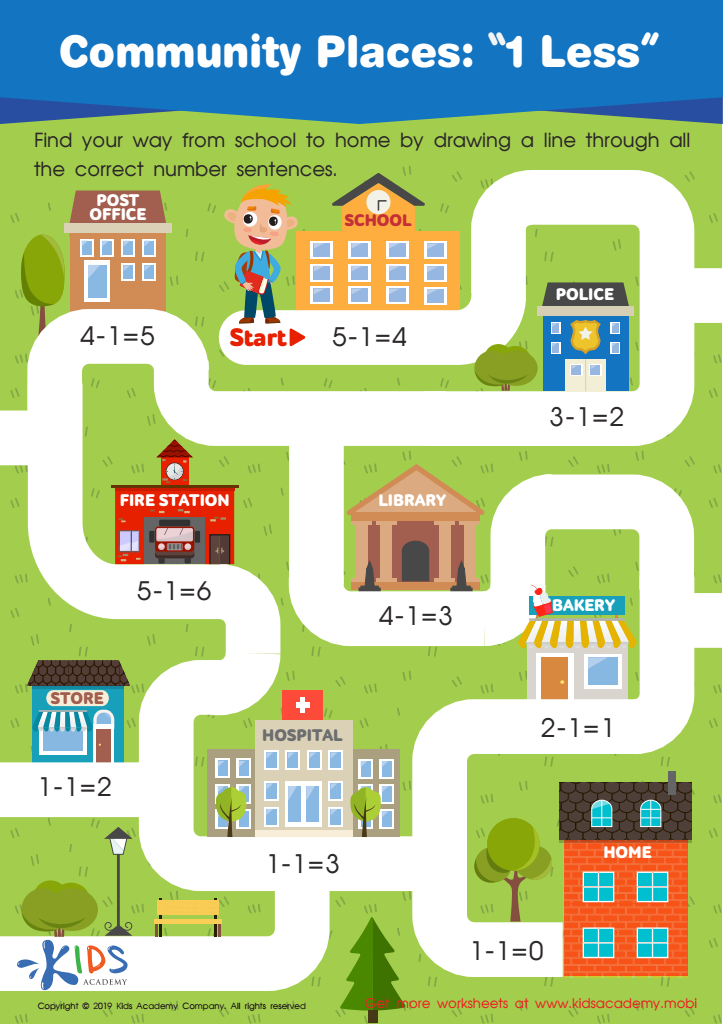
Community Places: 1 Less Worksheet








Cognitive development in children aged 5-8 is critical as it lays the foundation for future learning, particularly in mathematics. Subtraction, as a fundamental arithmetic skill, plays a significant role in enhancing children’s problem-solving abilities and critical thinking. By understanding subtraction, children learn not only how to take away quantities but also develop a sense of numbers, relationships among them, and the concept of “what remains.”
Parents and teachers should focus on this area because cognitive development in this stage influences children's self-esteem and confidence when approaching complex topics later in life. Proficient subtraction skills foster a growth mindset, encouraging children to embrace challenges rather than shy away from them. Furthermore, engaging children in activities that involve subtraction enhances their ability to work independently and cooperatively with peers.
Additionally, making subtraction relatable and fun through real-world applications, games, and stories can motivate children, making learning meaningful. By supporting cognitive development in subtraction, parents and teachers are not just improving mathematical skills but also cultivating critical life skills such as resilience, adaptability, and logical reasoning. These tools are essential for academic success and daily decision-making throughout a child's development.








