Multiplication practice Times Tables Worksheets for Ages 5-8 - Page 2
33 filtered results
-
From - To
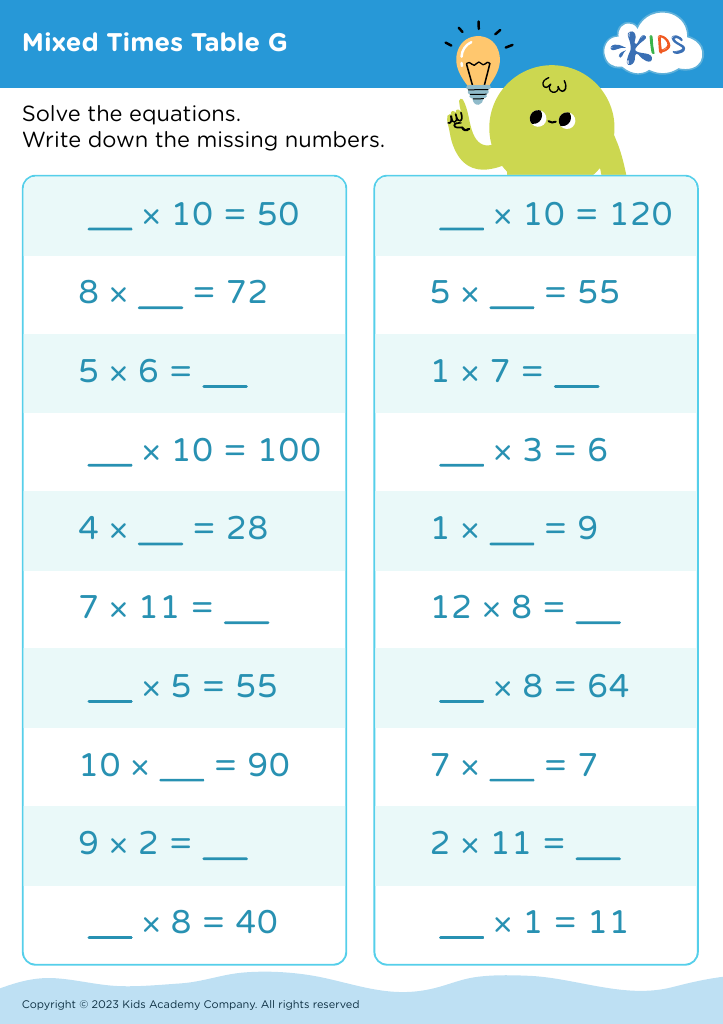
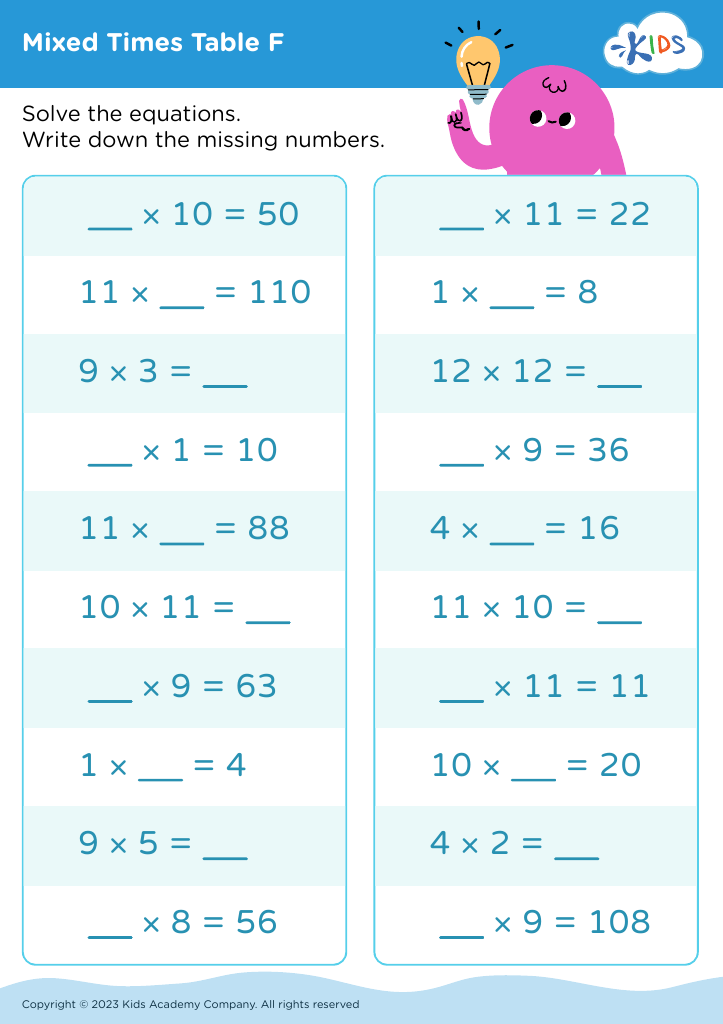
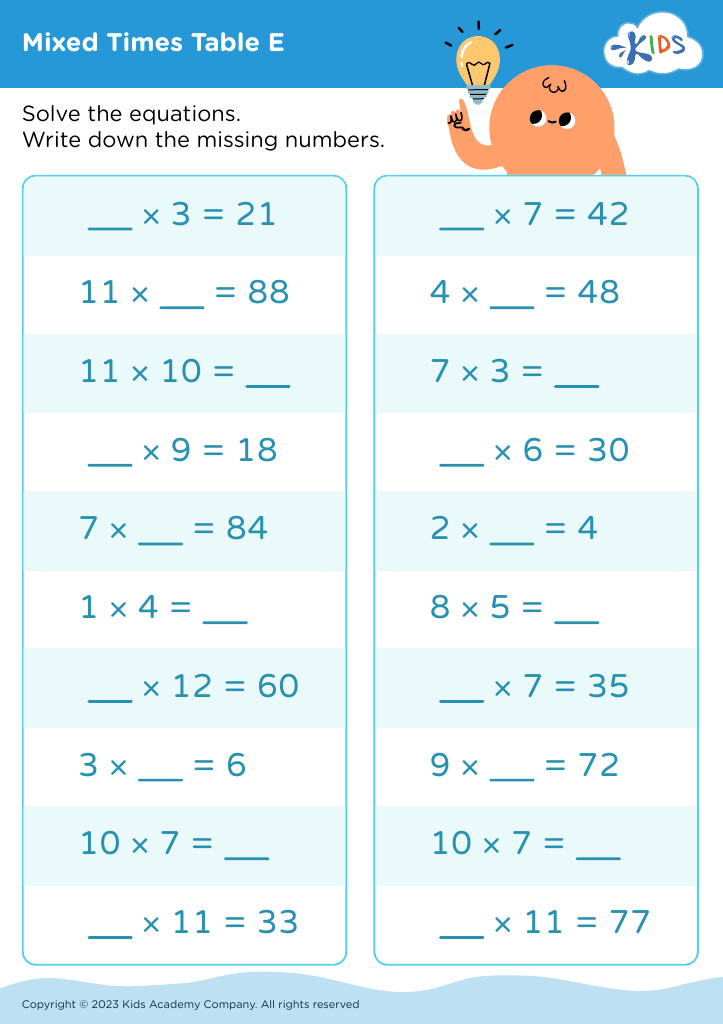
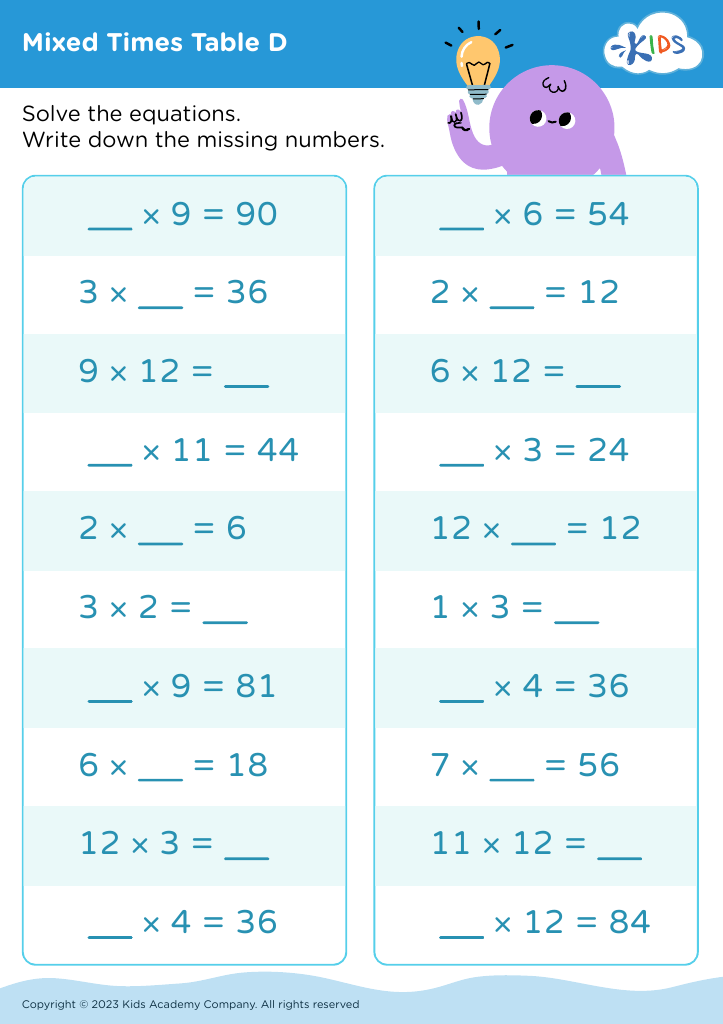
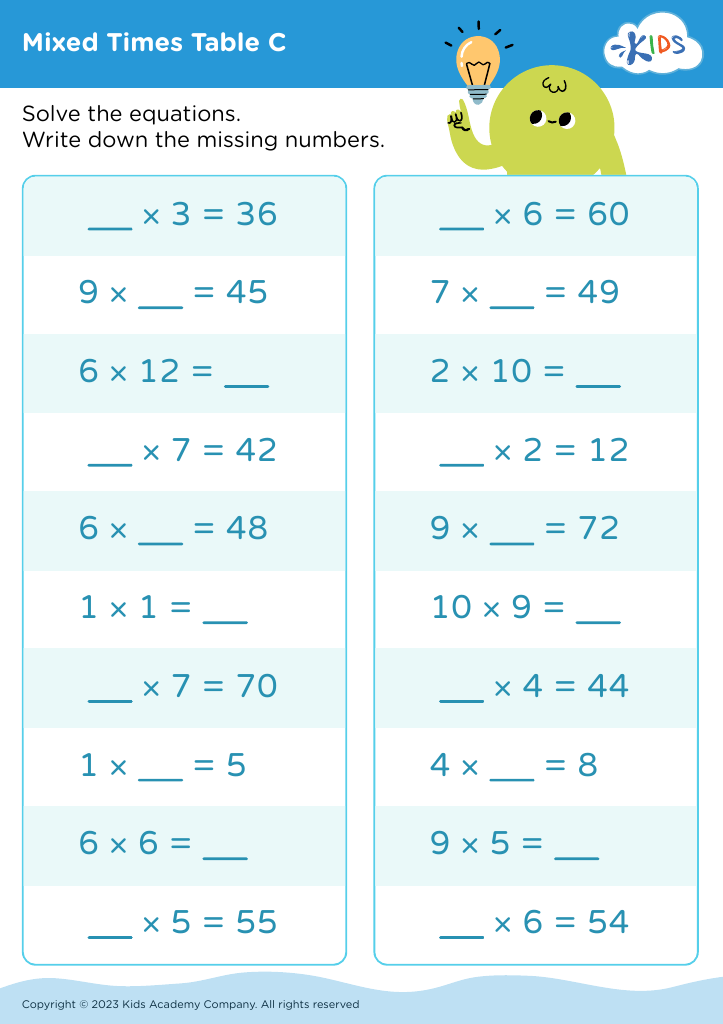
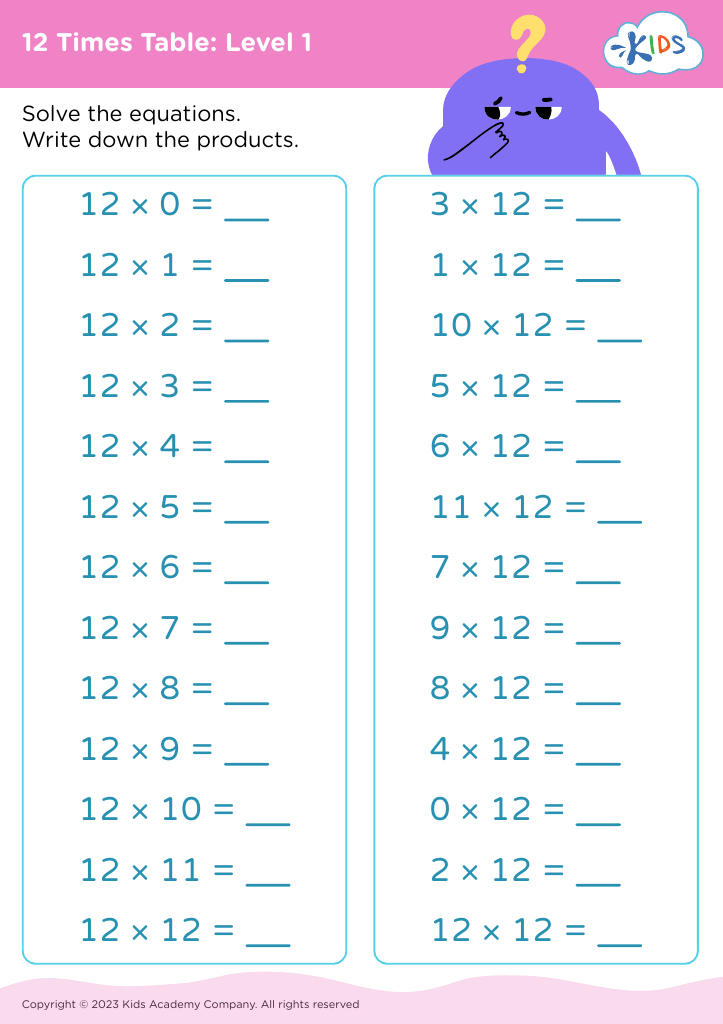
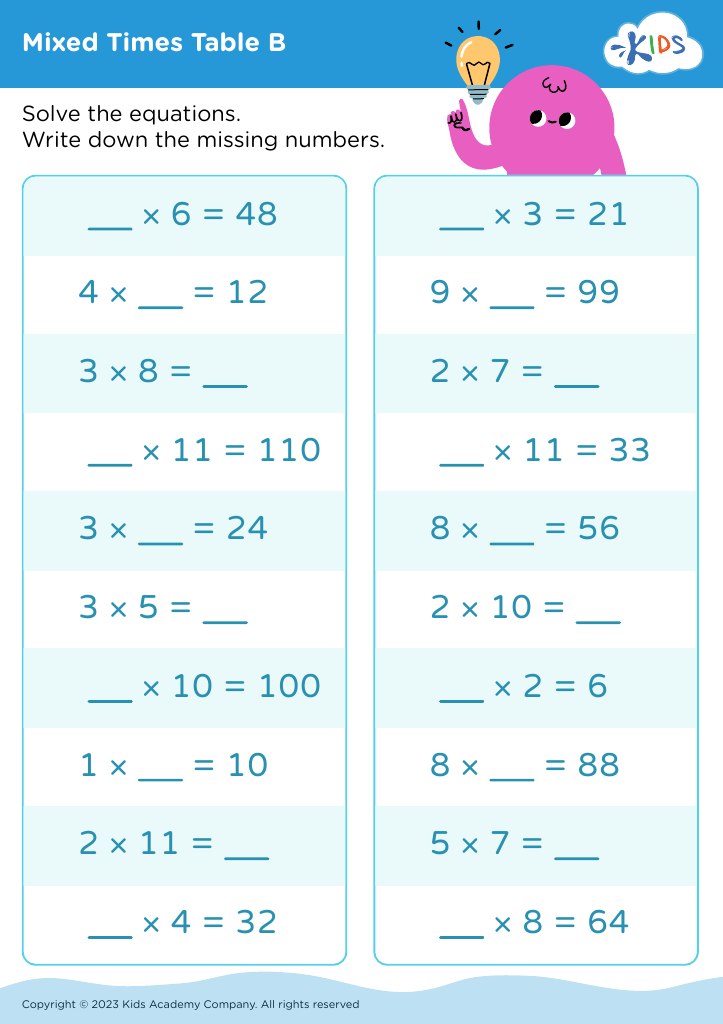
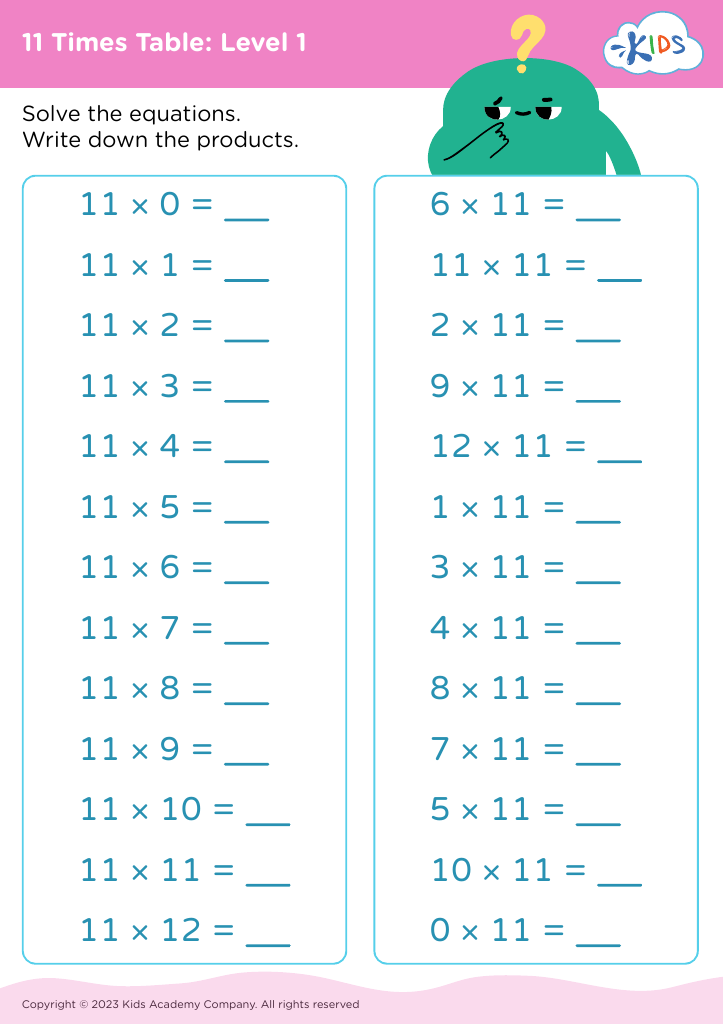
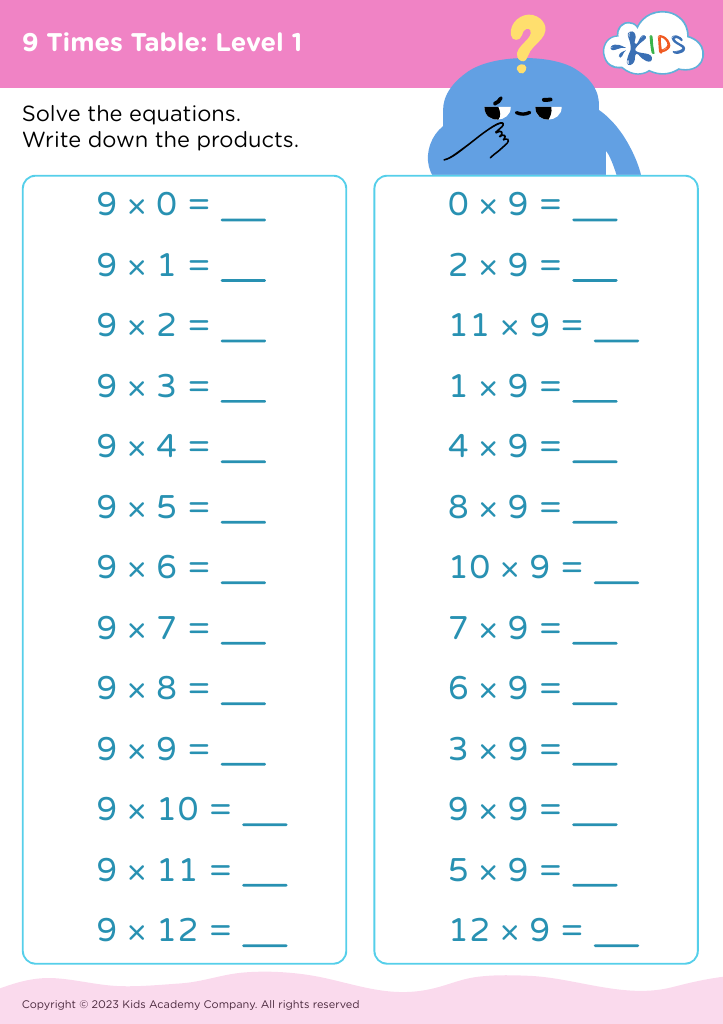





Multiplication practice and mastering times tables are crucial for children aged 5-8 as they serve as foundational skills in mathematics. This age group is generally learning basic multiplication concepts, and solidifying these skills can provide several advantages.
Firstly, early mastery of times tables enhances children's confidence in their math abilities. It fosters a positive attitude towards math, making students more willing to engage with more complex mathematical concepts in the future. Knowing their multiplication tables by heart helps children during problem-solving, as quick recall allows them to focus on understanding rather than computation.
Moreover, multiplication is a key component of many daily tasks, from managing finances to cooking. By practicing multiplication, children not only build a vital life skill but also gain confidence in dealing with real-world problems.
Additionally, fluency in multiplication sets the stage for more advanced math topics—such as division, fractions, and algebra—which are introduced in later grades. Teachers and parents should, therefore, integrate fun and engaging multiplication practice into their routines through games, songs, or visual aids. By doing so, they help pave the way for a stronger mathematical foundation, which is essential for overall academic success.








