Division practice Word Problems Worksheets for Ages 5-8
5 filtered results
-
From - To
Enhance your child’s math skills with our engaging Division Practice Word Problems Worksheets, designed specifically for ages 5-8. These worksheets provide a fun and interactive way for young learners to grasp the concept of division through relatable scenarios and challenges. By solving these age-appropriate problems, students will learn to break down numbers and develop critical thinking skills. Each worksheet promotes confidence and fluency in division while encouraging problem-solving and comprehension. Perfect for classroom use or at-home practice, these resources make learning math enjoyable and effective. Start your child’s division journey today with our exciting and educational worksheets!
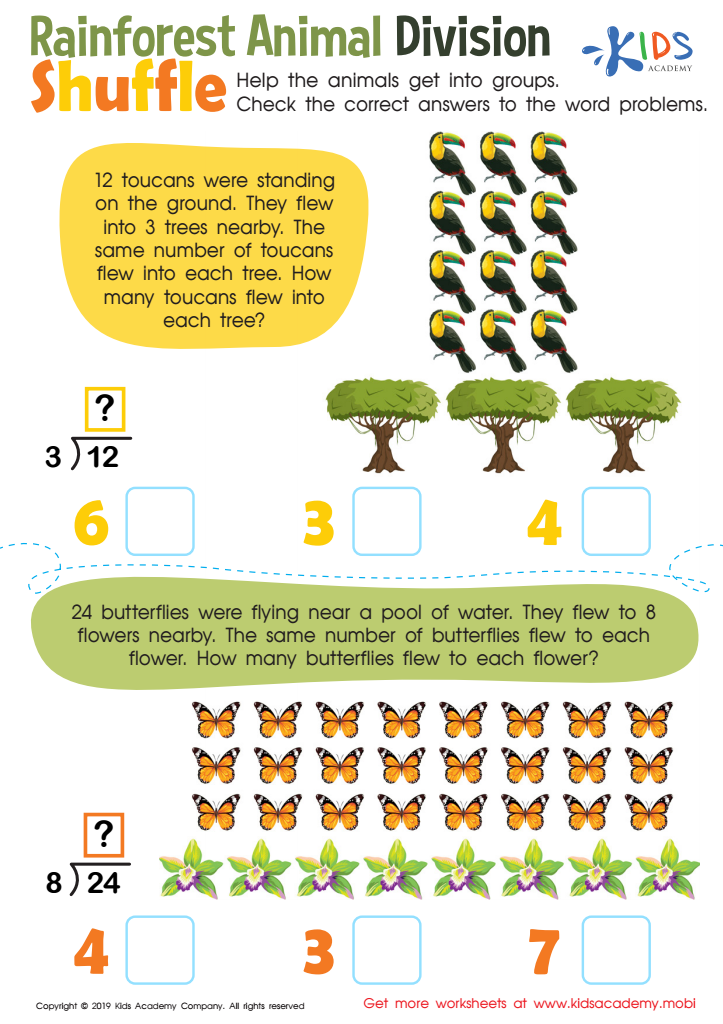
Rainforest Animal Division Worksheet
 Assign to My Students
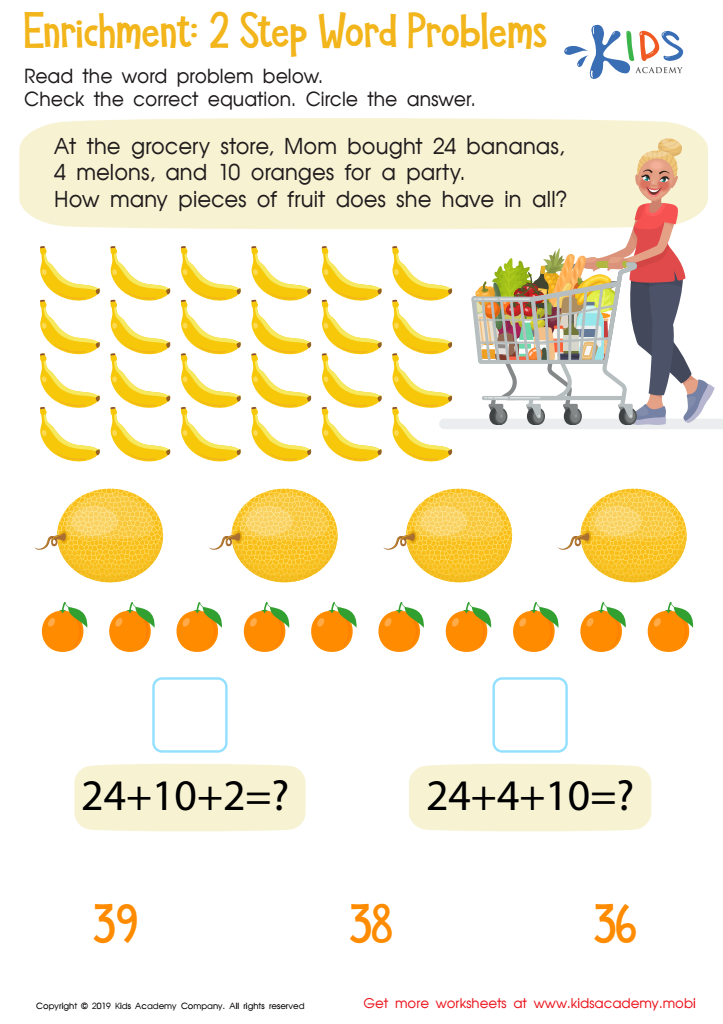
Enrichment -2 Step Word Problems Worksheet
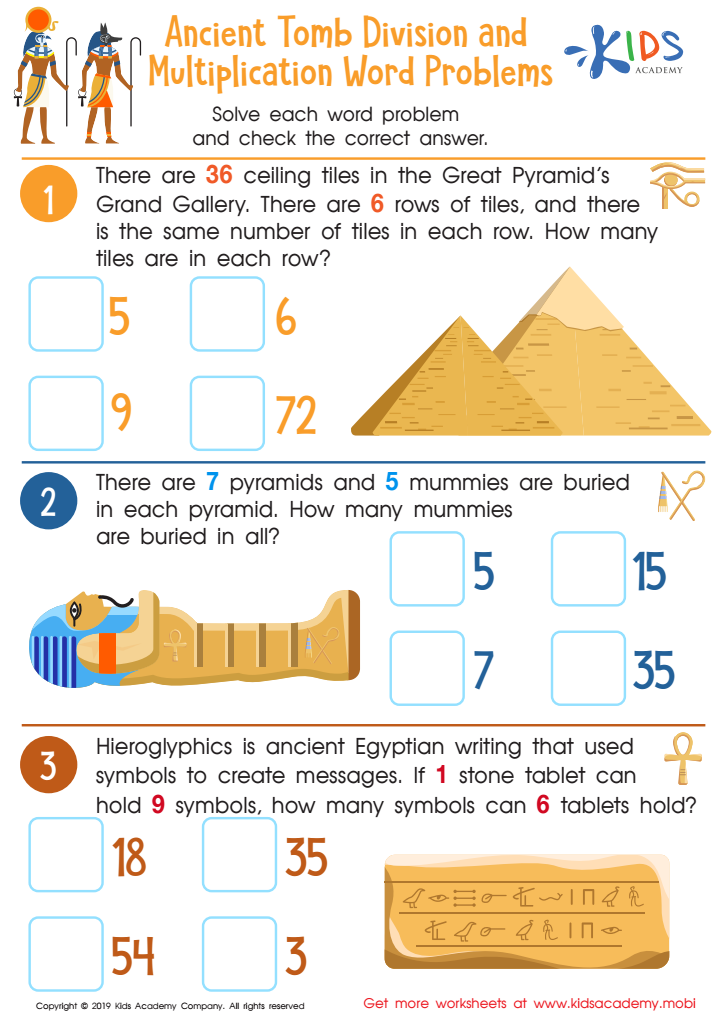
Ancient Tomb Division and Multiplication Word Problems Worksheet
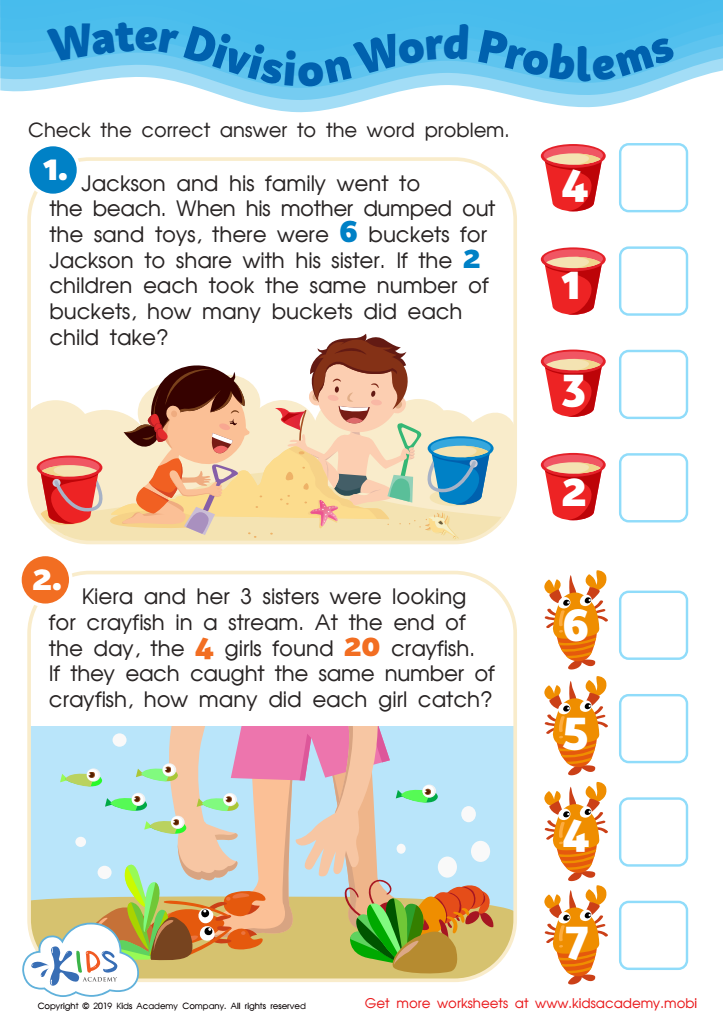
Water Division Word Problems Worksheet
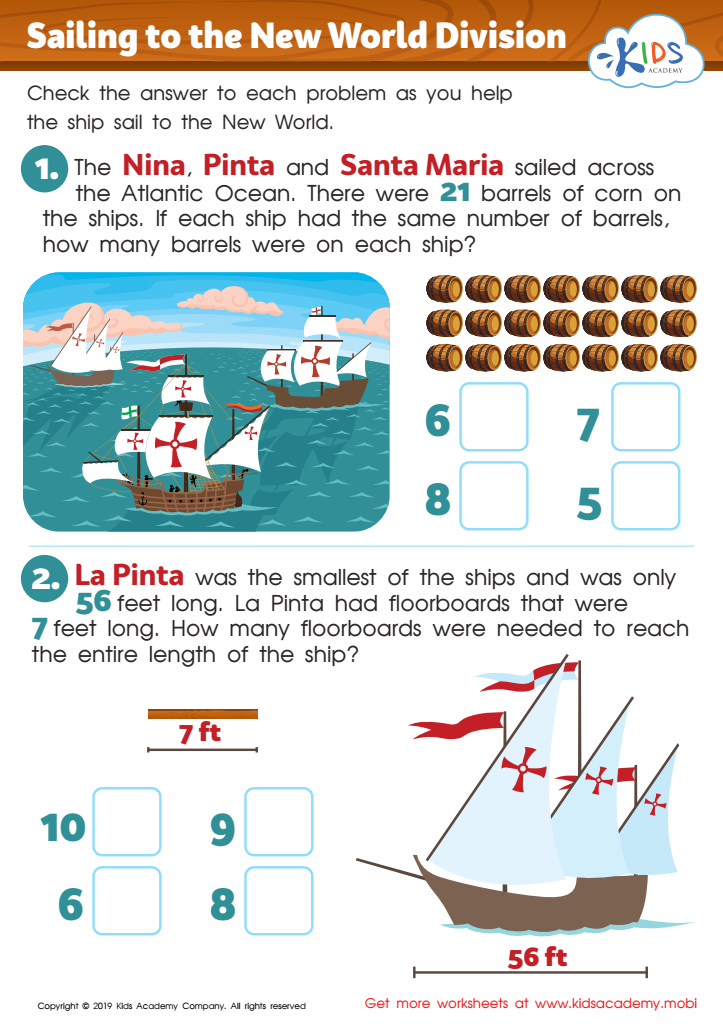
Sailing to the New World Division Worksheet







.jpg)
Division practice through word problems is essential for children aged 5-8 as it builds foundational math skills while enhancing critical thinking and problem-solving abilities. At this early age, children are developing an understanding of numbers and operations, and word problems help contextualize division in real-life situations, making the concept more relatable and easier to grasp.
Engaging with word problems encourages children to dissect situations, identify relevant information, and formulate solutions, fostering essential cognitive skills. Moreover, this practice reinforces literacy by blending reading comprehension with mathematical reasoning, ensuring children learn to interpret and analyze information effectively.
For parents and teachers, promoting division word problems also aids in identifying students' understanding and areas requiring additional support. It creates opportunities for collaborative learning and discussions, allowing caregivers to engage with children’s thought processes and reinforce lessons at home. As students solve these problems, they gain confidence in their mathematical abilities, creating a positive attitude towards learning. Ultimately, investing time in division word problems sets a solid foundation for more advanced mathematical concepts, paving the way for success in future academic endeavors. Encouraging this practice lays the groundwork for both numerical literacy and a love for math.








