Enhancing Counting Skills Word Problems Worksheets for Ages 5-8
3 filtered results
-
From - To
Our "Enhancing Counting Skills Word Problems Worksheets" are designed for children aged 5-8, making math both fun and engaging! These worksheets feature relatable word problems that inspire young learners to apply their counting skills in real-world scenarios. Each worksheet progressively challenges kids, helping them to develop critical thinking and problem-solving abilities. With vibrant illustrations and varied contexts, students will improve their numerical proficiency while enjoying the learning process. Perfect for home or classroom use, these resources aim to make mathematics a positive experience for every child, building a solid foundation for their future academic success. Download yours today!
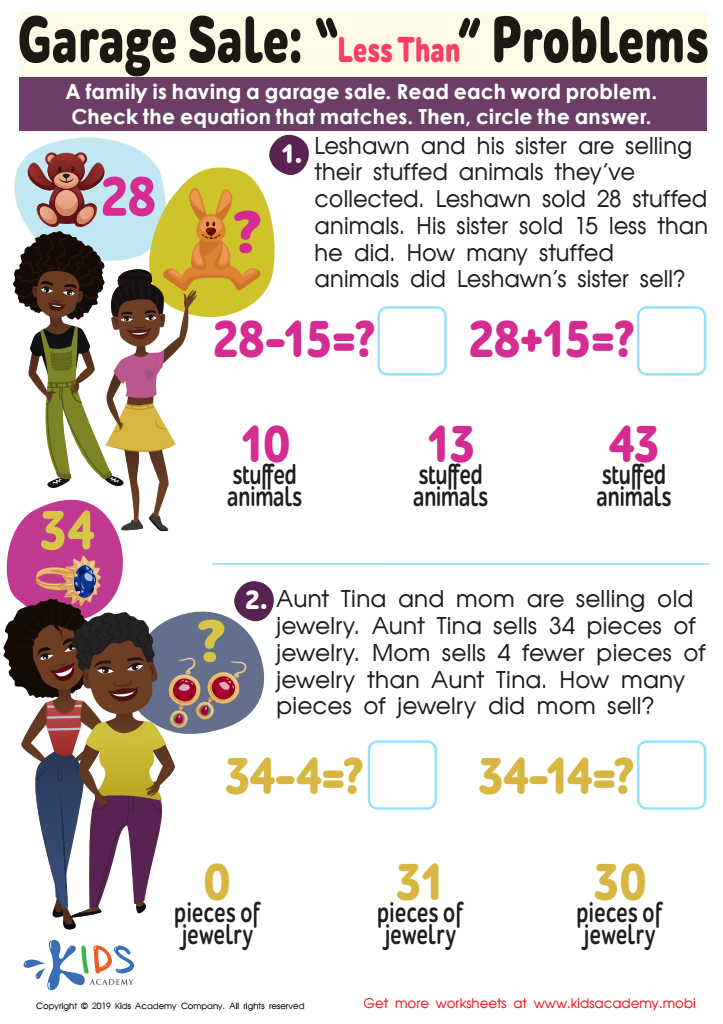
Garage Sale Less Than Worksheet
 Assign to My Students
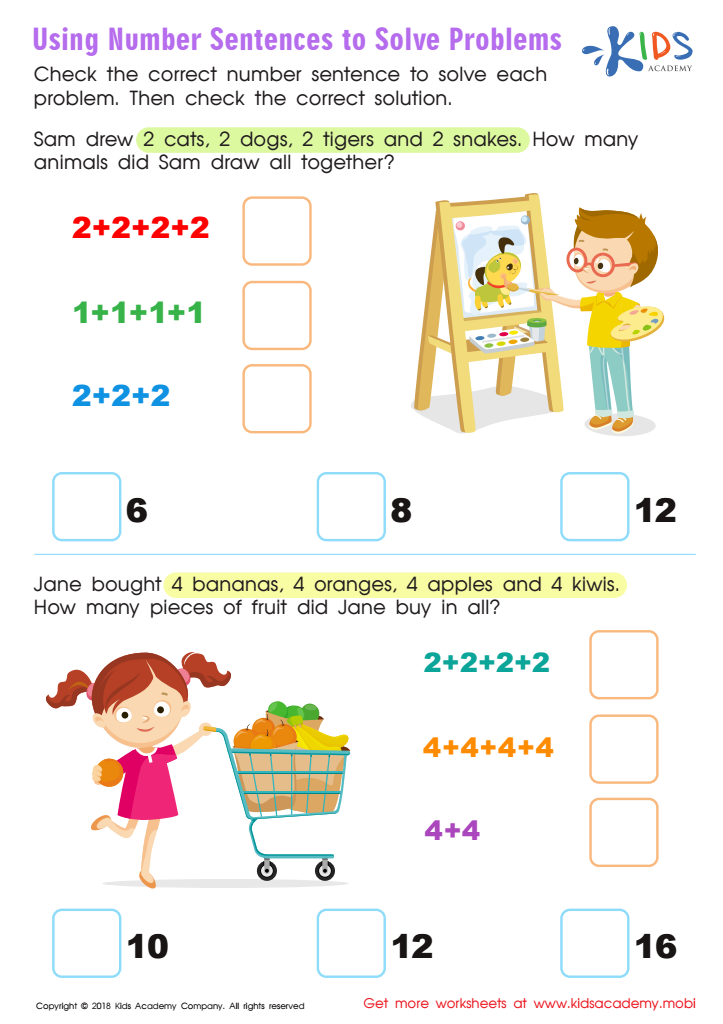
Using Number Sentences to Solve Problems Worksheet
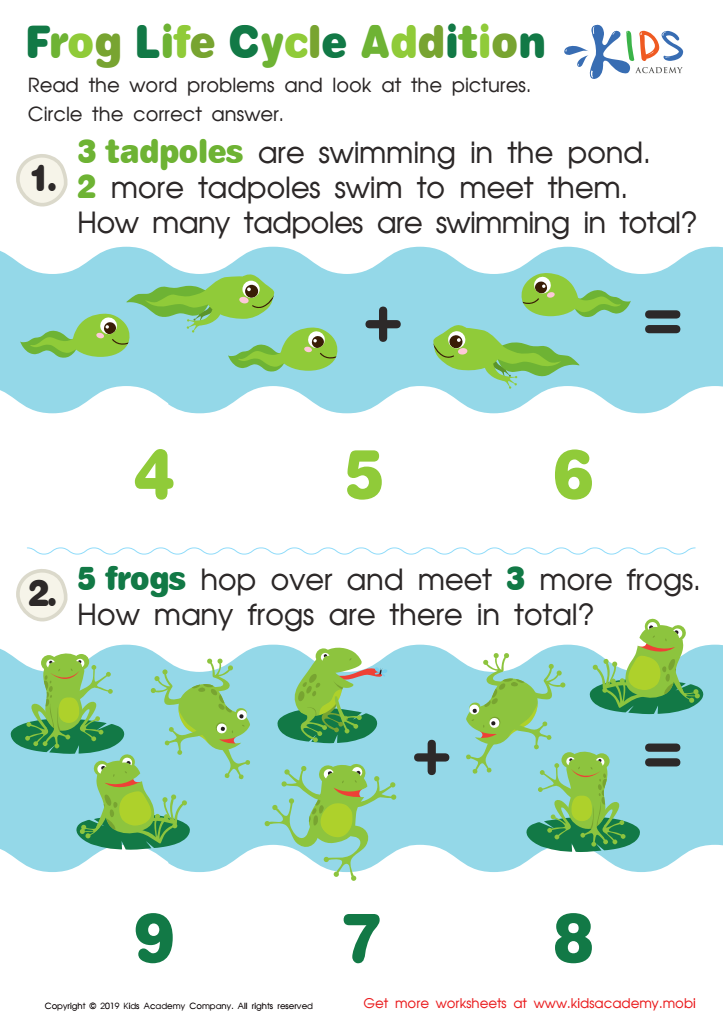
Frog Life Cycle Addition Worksheet








Enhancing counting skills through word problems for children aged 5-8 is vital for their cognitive and academic development. At this age, children are forming foundational mathematical understanding, including concepts like addition, subtraction, and basic reasoning. Engaging with word problems allows them to apply their counting skills in real-world contexts, fostering critical thinking.
Parents and teachers should care because these word problems encourage children to manipulate numbers and understand relationships between quantities. This not only aids in developing math fluency but also enhances their problem-solving skills and boosts confidence in handling mathematical challenges. When children learn to interpret and solve word problems, they become better prepared for more complex equations in the future.
Furthermore, these skills support overall literacy as children learn to decode language and understand context clues. Collaborative discussions about word problems can also foster communication skills and enhance social interactions when kids work together to solve them.
By prioritizing counting word problems, adults can cultivate a love for learning in children, encouraging a positive attitude toward math. Ultimately, these skills have far-reaching implications for academic success, emotional development, and practical life skills, making it essential for parents and teachers to engage in this critical learning process.








