Visual Learning Word Problems Worksheets for Ages 5-8
5 filtered results
-
From - To
Discover our Visual Learning Word Problems Worksheets tailored for ages 5-8! These engaging worksheets combine visual aids with word problems to foster critical thinking and problem-solving skills in young learners. Each worksheet features colorful illustrations and simple scenarios that make math fun and understandable. Designed to align with educational standards, our materials help children grasp concepts like addition, subtraction, and basic geometry through interactive and relatable exercises. Perfect for classroom use or home practice, Kids Academy ensures your child builds a strong mathematical foundation while enjoying the learning process. Visit us today to unlock a world of visual learning!
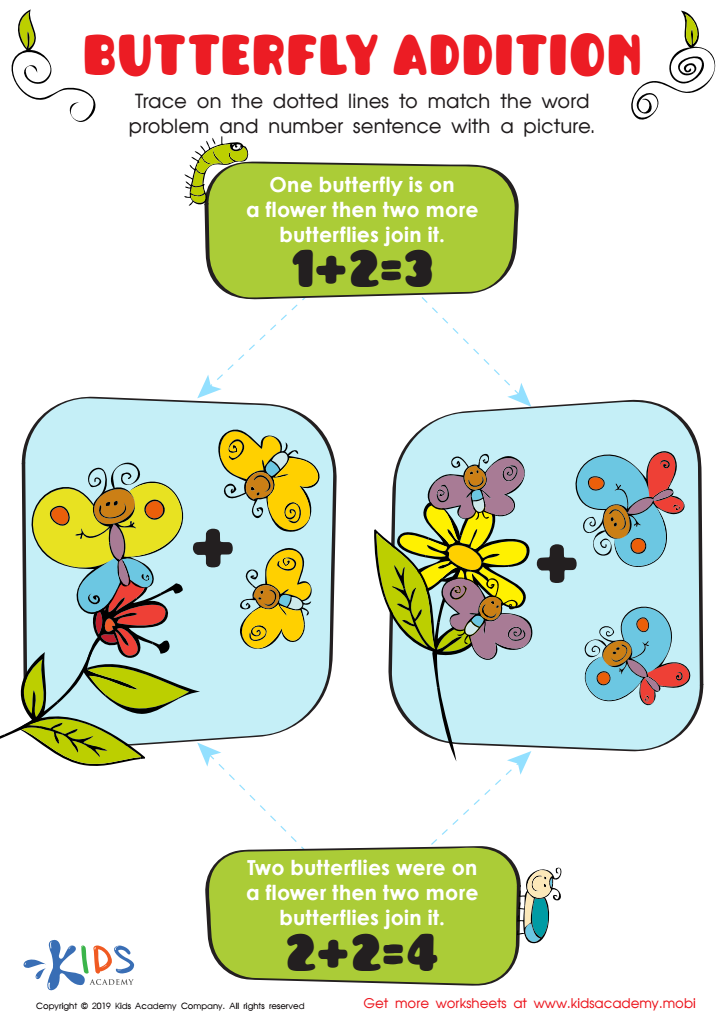
Butterfly Addition Worksheet
 Assign to My Students
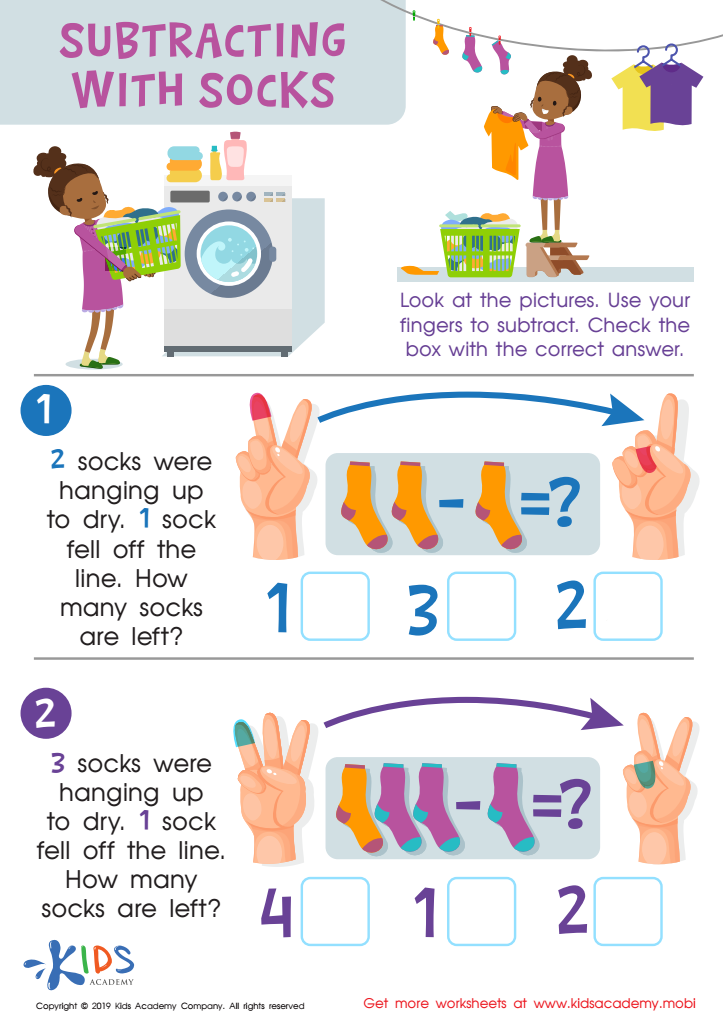
Subtracting Socks Worksheet
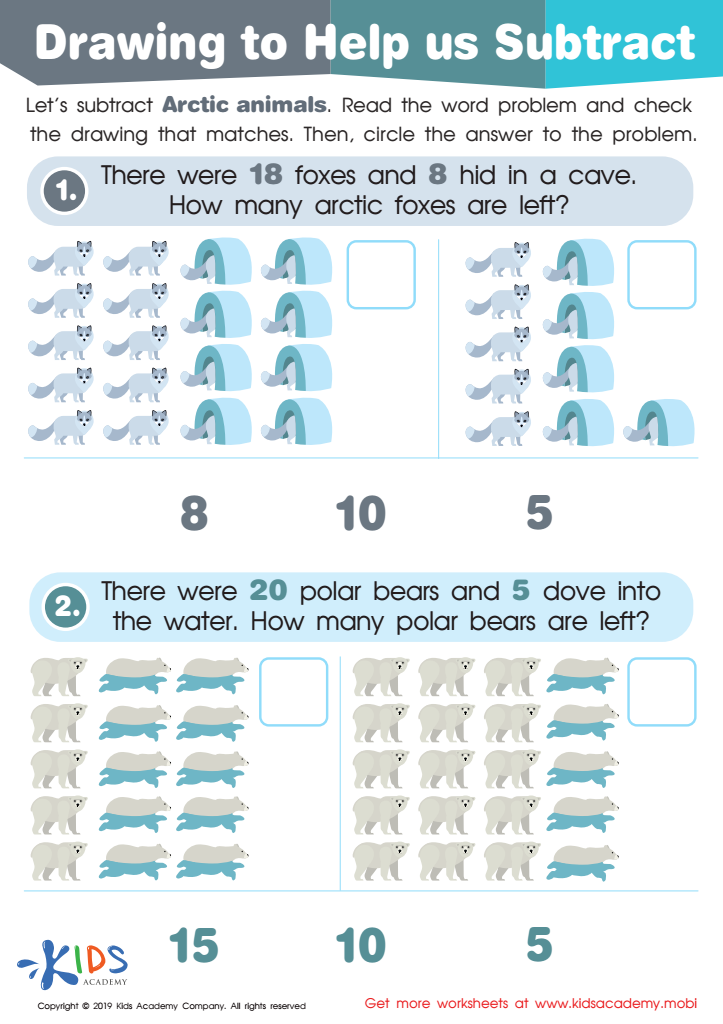
Drawing to Help Us Subtract Worksheet
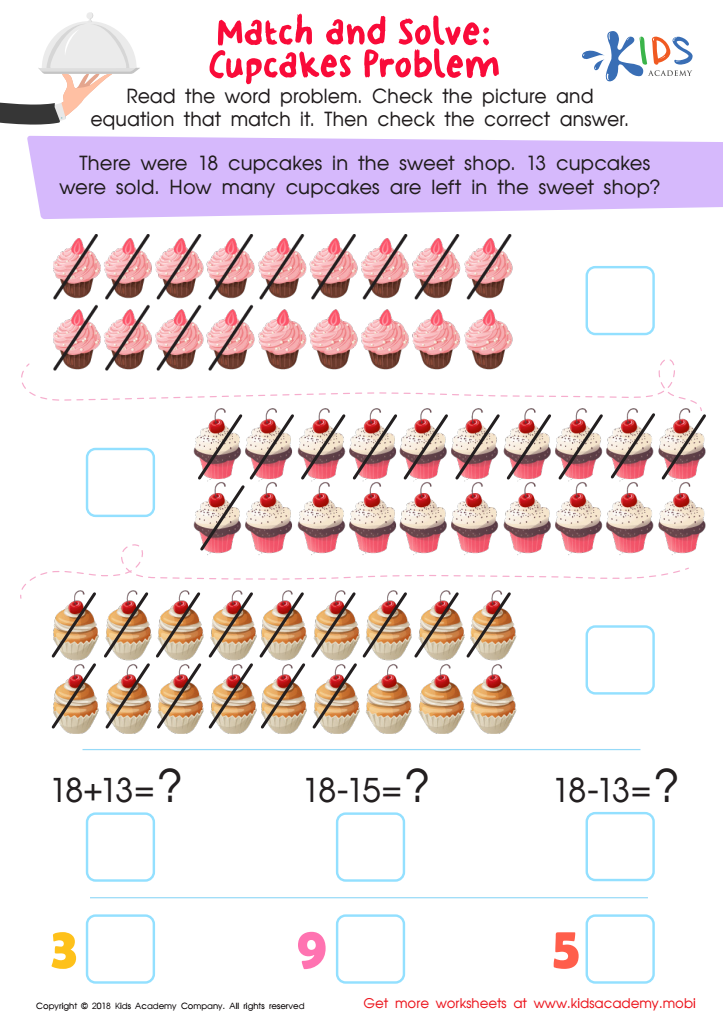
Match and Solve: Cupcakes Problem Worksheet
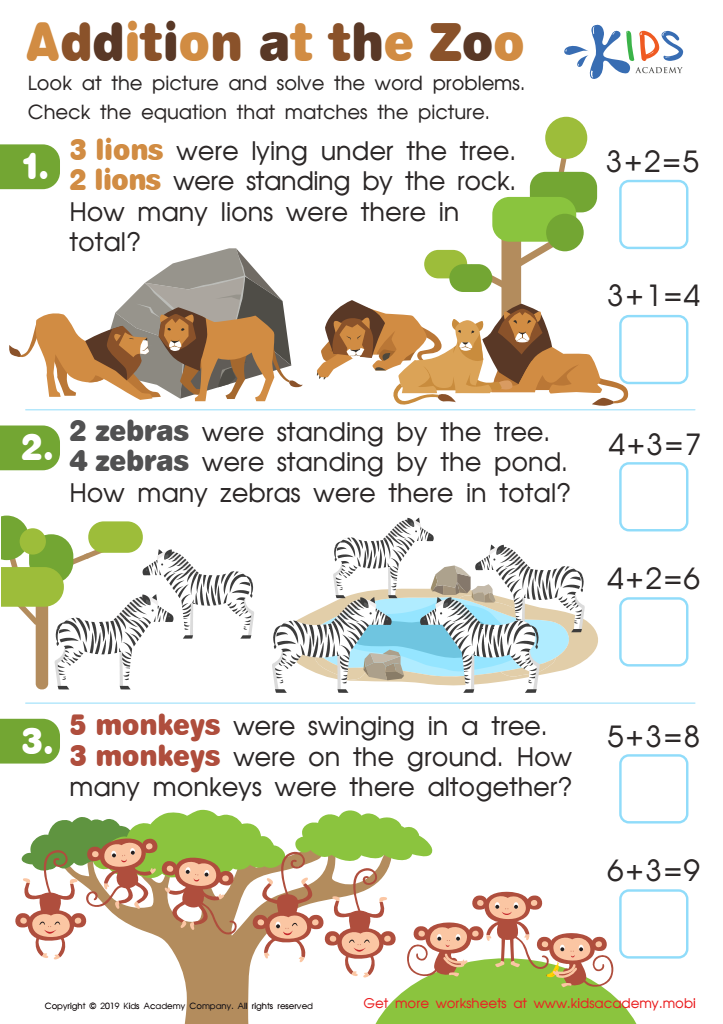
Addition at the Zoo Worksheet








Visual learning word problems are a crucial educational tool for children aged 5-8 because they align with the developmental needs and cognitive abilities of early learners. At this stage, children are transitioning from concrete to more abstract forms of thinking. Visual aids, such as pictures and diagrams, help bridge this gap by offering a tangible representation of mathematical concepts, making them easier to understand.
Firstly, these visual tools engage students by making learning more interactive and less intimidating. Young children are naturally more receptive to images and colors, which can capture their attention better than plain text. This increased engagement can foster a more positive attitude towards learning math, which is crucial for their ongoing education.
Secondly, visual learning enhances comprehension and retention. When children can see a problem laid out visually, it becomes easier for them to grasp complex ideas like addition, subtraction, or even basic geometry. They can better observe relationships and patterns, which builds a stronger conceptual foundation.
Lastly, visual learning word problems support differentiated learning by catering to various skill levels and learning styles. While some children may excel with numerical data alone, others benefit greatly from pictorial representations, thus providing equitable learning opportunities within the classroom.
In summary, visual learning word problems are an essential part of early education, promoting engagement, improving comprehension, and supporting diverse learning needs, all of which are foundational to a child’s academic success.








