
Logical thinking Building Vocabulary Worksheets for Ages 5-8
5 filtered results
Difficulty Level
Grade
Age
-
From - To
Subject
Activity
Standards
Enhance your child's vocabulary while boosting their logical thinking skills with our engaging worksheets designed for ages 5-8. These thoughtfully crafted activities encourage young learners to make connections, solve problems, and express their ideas clearly. Each worksheet supports not only vocabulary development but also critical thinking and reasoning abilities through fun exercises. Our user-friendly format makes it easy for educators and parents to facilitate learning at home or in the classroom. Spark curiosity, promote retention, and foster a love for language with our Logical Thinking Building Vocabulary Worksheets today! Ideal for early grade students, these resources guarantee a fun learning adventure.
Favorites
With answer key
Interactive
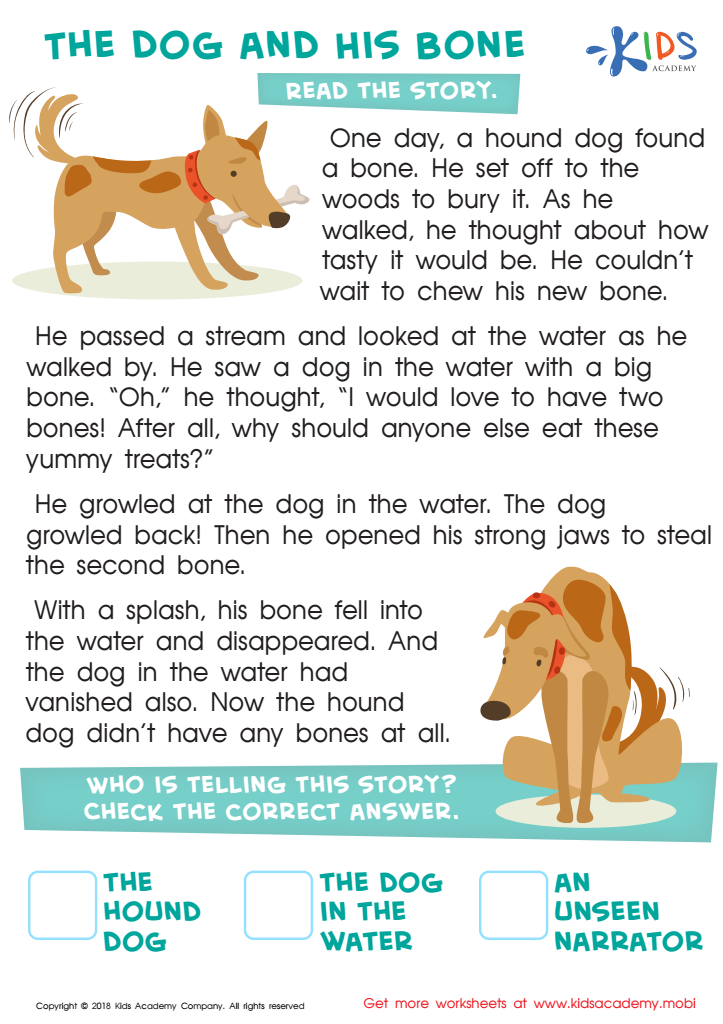
The Dog and His Bone Worksheet
Read the story of The Dog and His Bone to your kids, making sure they take in the details. Ask them the questions in this worksheet and help them check the answers. Encourage them to think carefully.
 Assign to My Students
The Dog and His Bone Worksheet
Worksheet











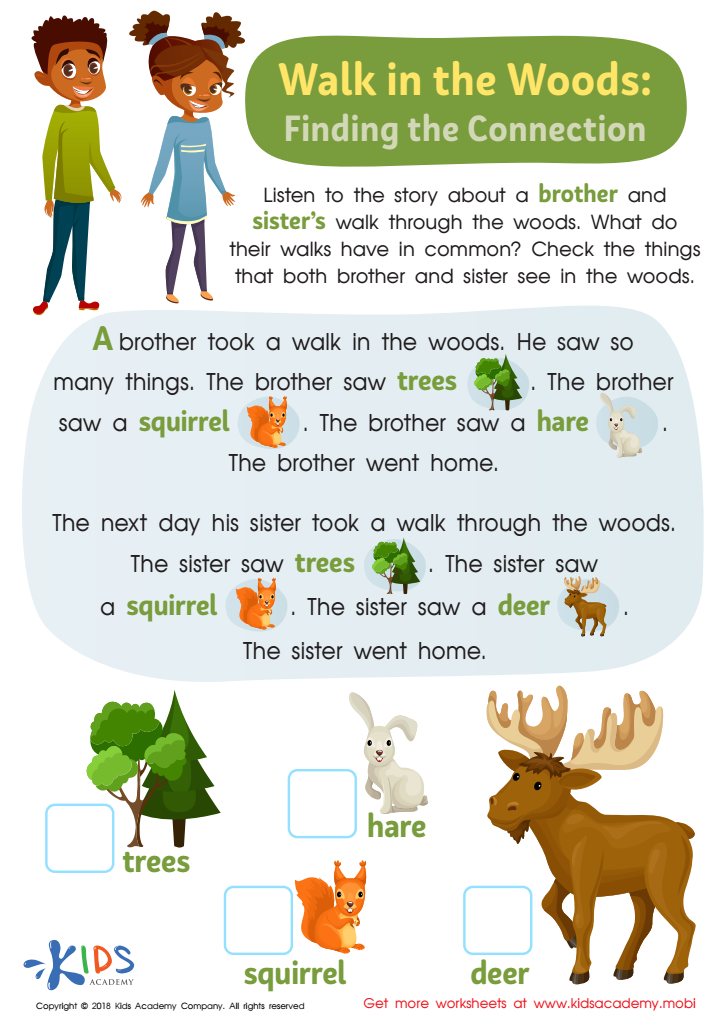
Walk In the Woods: Finding Connections Worksheet
Brother and sister took a walk in the woods to connect with nature and get some exercise. As they went, they noted different things like birds and plants, which they share in this story. Read it to your little ones, and help them check off the items the two saw. It's a great way to learn about nature and enjoy the outdoors.
Walk In the Woods: Finding Connections Worksheet
Worksheet
Join Kids Academy for Free
Who is primarily going to use this learning content?


.jpg)



.jpg)

Logical thinking and vocabulary development are crucial for children aged 5-8, as they serve as foundational skills that shape their overall learning trajectories. At this age, children are developing critical cognitive skills that underpin their ability to solve problems, make connections, and articulate their thoughts clearly.
Logical thinking fosters analytical skills, enabling children to approach problems systematically and make reasoned decisions. These skills will benefit them in academics and daily life, helping them to understand concepts in math, science, and reading. When children engage in activities that enhance their logical thinking, such as puzzles or pattern recognition games, they learn to think critically and creatively.
Building vocabulary is equally important. A rich vocabulary enhances a child's comprehension and communication skills, allowing them to express their ideas and emotions more effectively. Vocabulary development at this stage also correlates with academic success as it strengthens reading proficiency and writing skills.
Parents and teachers should prioritize logical thinking and vocabulary-building activities because they are interconnected. Strong vocabulary aids in logical reasoning, while logical tasks encourage the use and comprehension of language. Cultivating these skills in young children not only equips them for academic challenges but also prepares them for complex thinking and social interactions in the future.








