Verb identification Building Vocabulary Worksheets for Ages 5-8
3 filtered results
-
From - To
Enhance your child's vocabulary and language skills with our engaging Verb Identification Building Vocabulary Worksheets designed for ages 5-8. These worksheets provide fun and interactive activities that make learning verbs enjoyable. By identifying verbs in sentences and participating in various context-driven exercises, young learners will sharpen their reading comprehension and expand their vocabulary. Perfect for homeschooling or classroom use, our worksheets encourage creativity and critical thinking while aligning with educational standards. Give your child the tools they need to succeed in language arts with this essential resource that promises both learning and fun! Explore our collection and watch their confidence blossom!
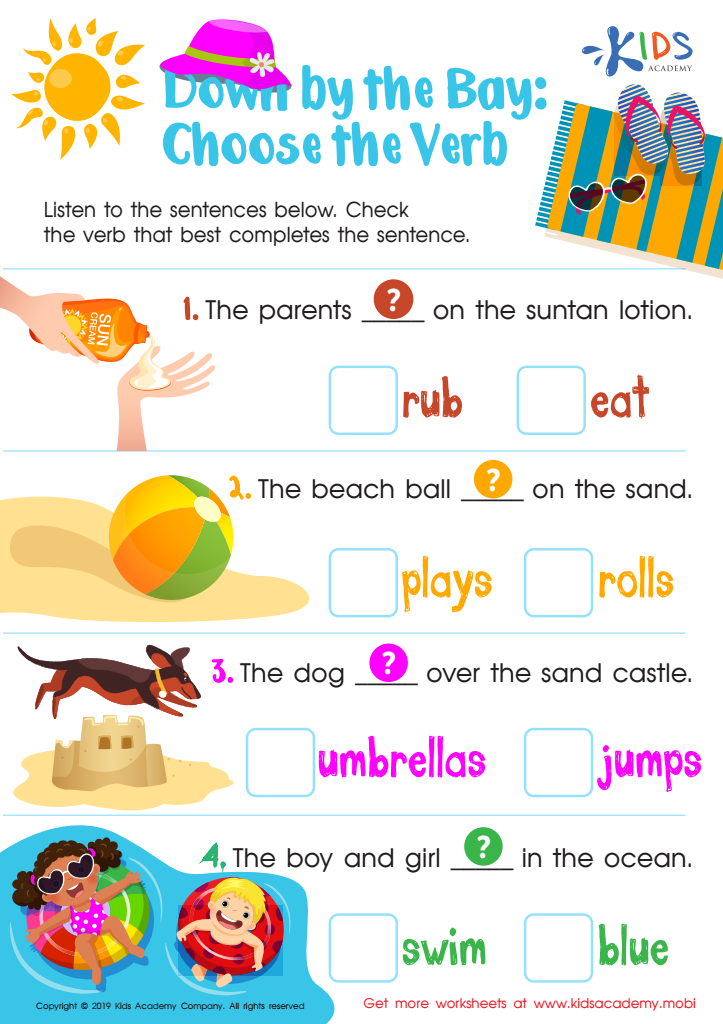
Down by the Bay: Choose the Verb Worksheet
 Assign to My Students











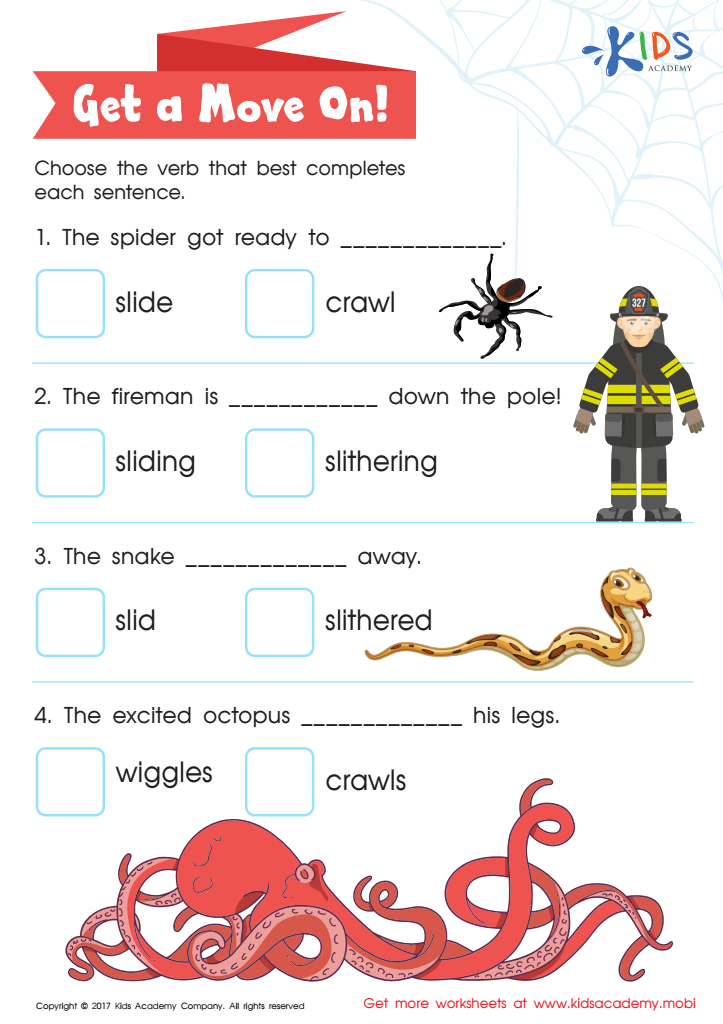
Verb Worksheet
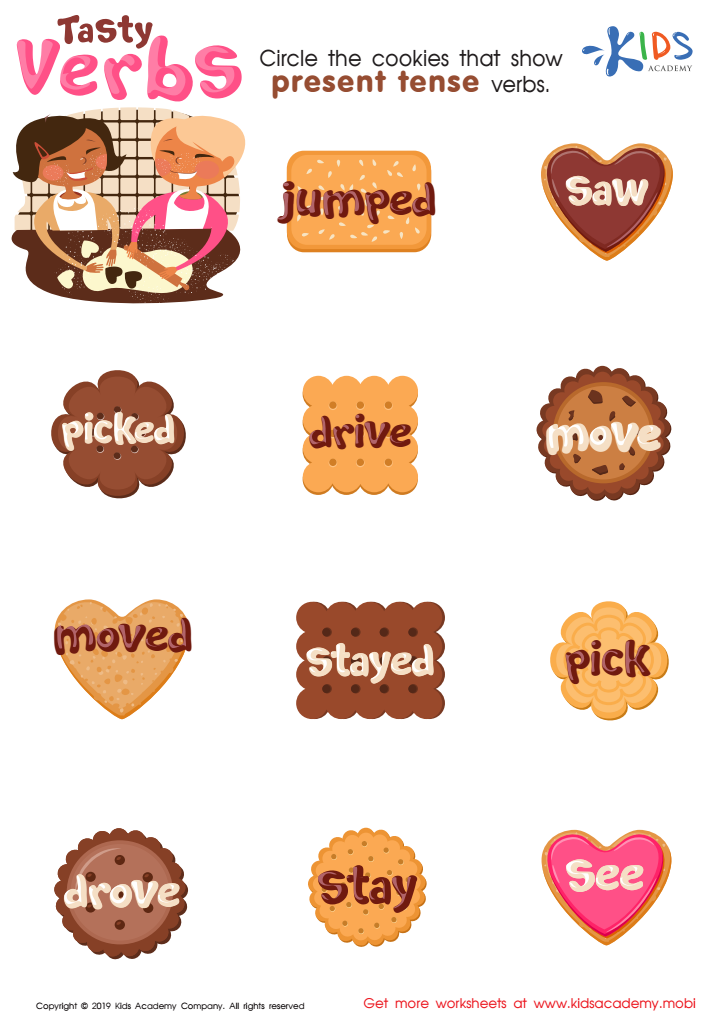
Tasty Verbs Worksheet






.jpg)

Verb identification and vocabulary building are crucial elements in early education, particularly for children aged 5-8. At this age, children's language skills develop rapidly, and a strong vocabulary lays the groundwork for reading fluency, comprehension, and effective communication. By focusing on verbs, teachers and parents can help children understand action words, which are fundamental for expressing thoughts, feelings, and interactions.
Identifying verbs not only enhances a child’s ability to construct sentences but also fosters improved listening and reading skills. When children learn to recognize verbs, they gain tools to more effectively describe actions in stories, enhancing their comprehension and engagement with texts. Moreover, a robust vocabulary helps children express themselves more clearly and confidently, encouraging effective communication with peers and adults.
Moreover, activities centered around verbs can be fun and interactive, promoting a love for language through games, songs, and creative storytelling. Early exposure to diverse vocabulary boosts cognitive skills and nurtures critical thinking. As children build their vocabulary, they prepare for academic success and social interactions beyond the classroom, making verb identification an essential focus for parents and educators alike. In short, nurturing vocabulary and verb recognition today sets the stage for lifelong communication skills and literacy.








