Word identification Building Vocabulary Worksheets for Ages 5-8
5 filtered results
-
From - To
Enhance your child's reading skills with our "Word Identification Building Vocabulary Worksheets" designed for ages 5-8. These engaging printable worksheets focus on expanding vocabulary and improving word recognition through fun activities. Tailored to young learners, they cover essential reading standards and help children identify, read, and understand new words. Perfect for at-home practice or classroom use, our carefully crafted worksheets support literacy development, boost confidence, and make learning an enjoyable experience. Turn word identification into an exciting adventure and watch your child thrive on their reading journey. Start building a strong vocabulary foundation today!
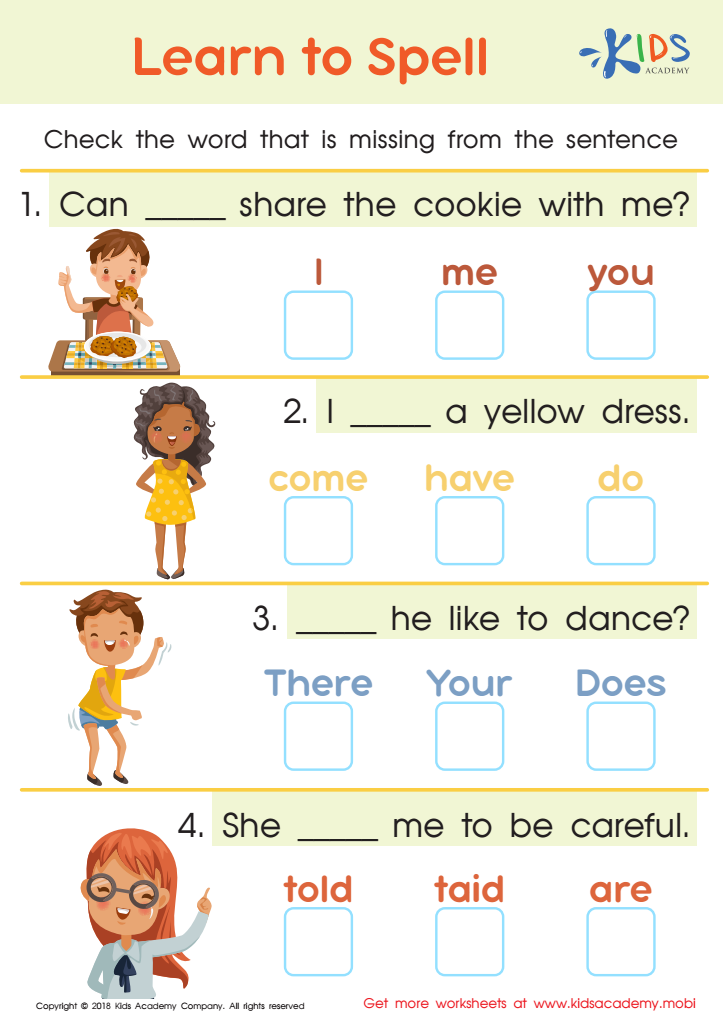
Learn to Spell Worksheet
 Assign to My Students











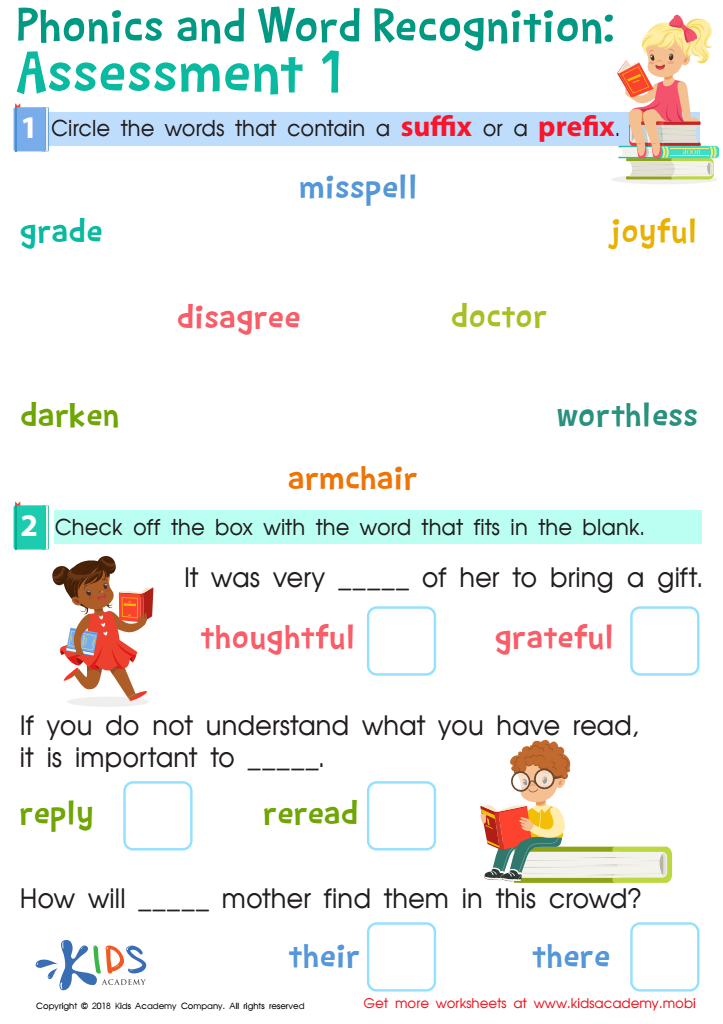
Phonics and Word Recognition: Assessment 1 Worksheet
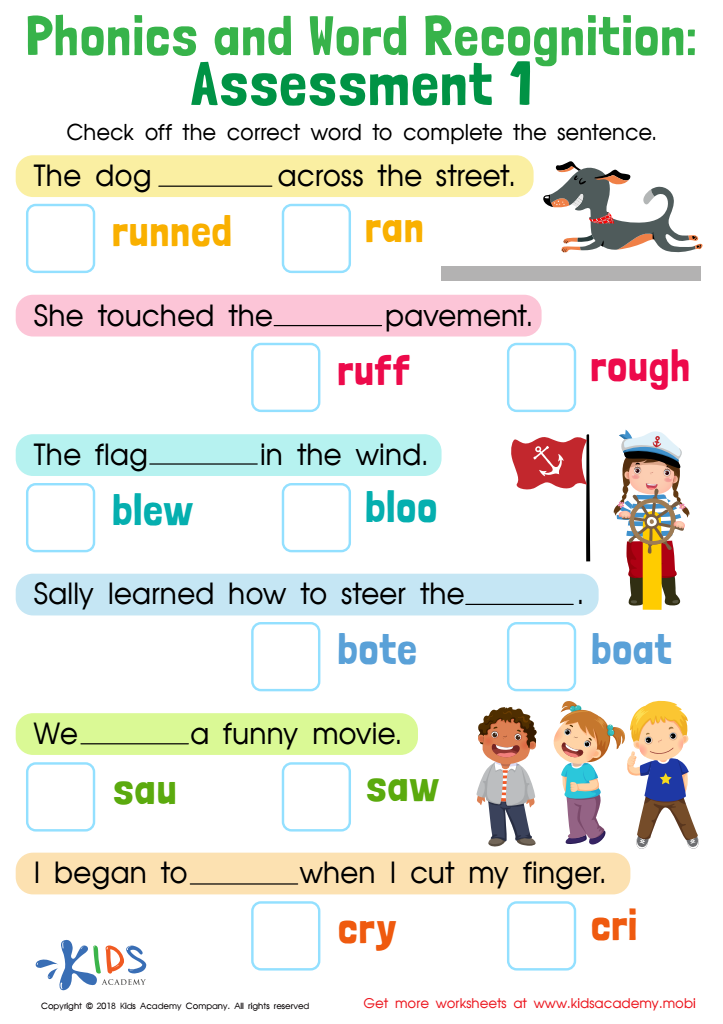
Phonics and Word Recognition: Assessment 1 Worksheet
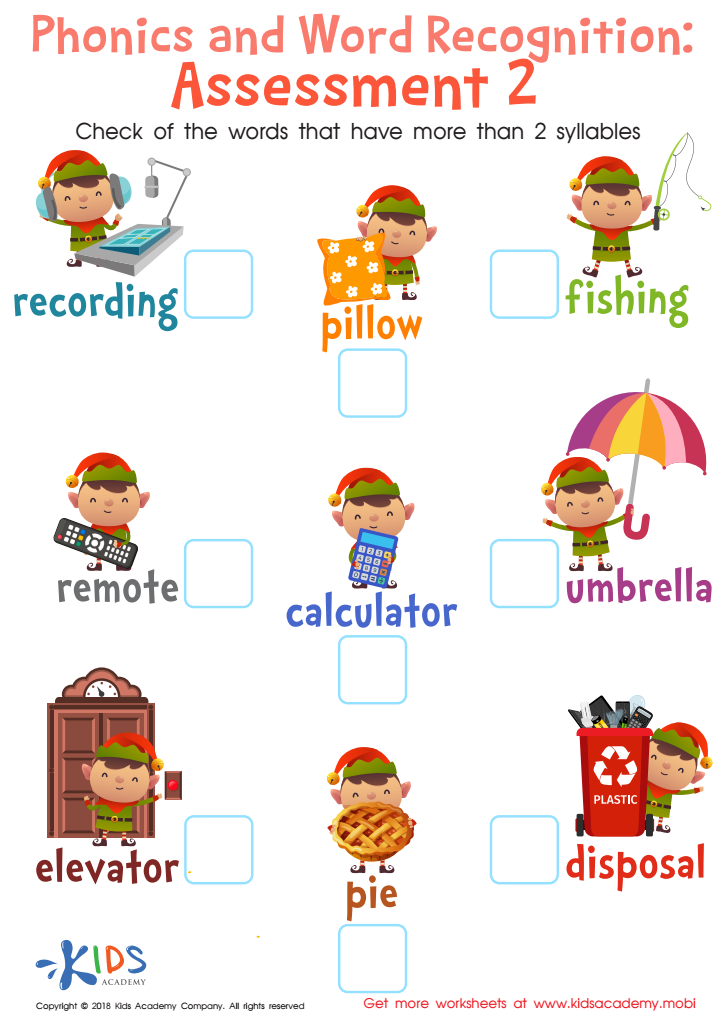
Phonics and Word Recognition: Assessment 2 Worksheet
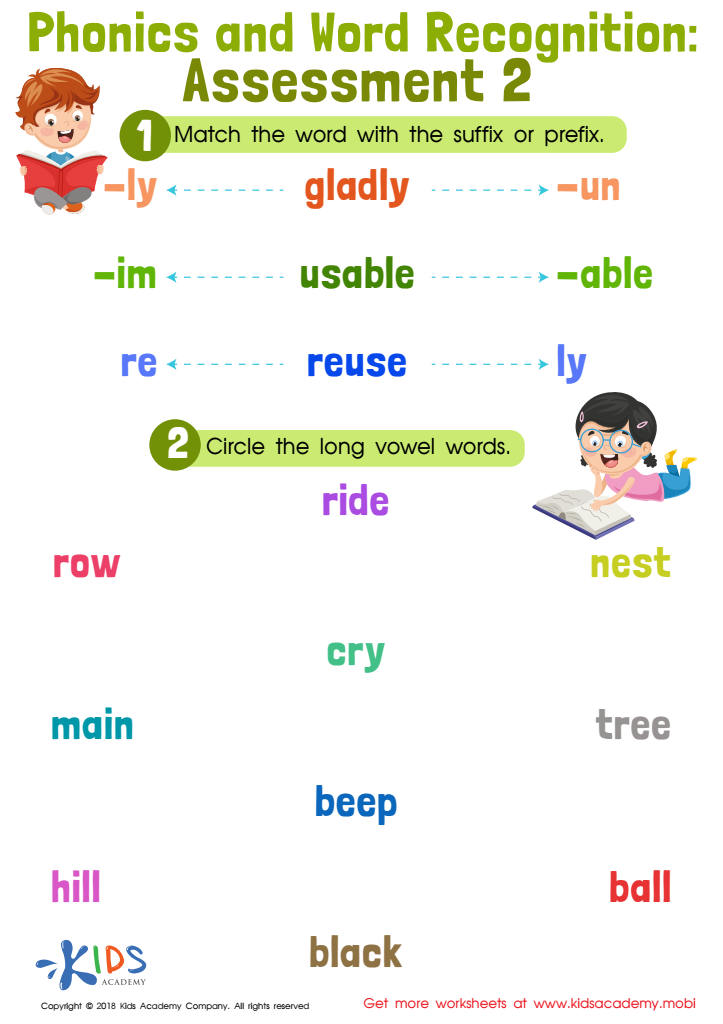
Phonics and Word Recognition: Assessment 2



.jpg)




Parents and teachers should prioritize word identification and vocabulary building for children aged 5-8 because these foundational skills are crucial for reading development and overall academic success. At this age, children are transitioning from recognizing letters and sounds to understanding and comprehending entire words. Strong word identification skills enable children to decode and read more confidently, which is essential for fluency. Moreover, a rich vocabulary allows children to better understand stories, instructions, and explanations, enhancing their overall communication abilities.
Vocabulary knowledge is directly linked to improved reading comprehension and general cognitive development. Children who have a robust vocabulary are better equipped to understand new concepts, ask insightful questions, and engage in classroom discussions. This not only improves their learning experience but also boosts their self-esteem and motivation to learn more. Furthermore, early vocabulary acquisition sets the stage for later success in more complex literacy and academic tasks, such as writing essays and conducting research.
Investing time in building these skills through reading aloud, interactive games, and everyday conversations provides long-term academic and cognitive benefits. By focusing on word identification and vocabulary, parents and teachers can help create a strong educational foundation, fostering a lifelong love of reading and learning in young children.








