Addition skills Reading Worksheets for Ages 5-8
3 filtered results
-
From - To
Discover our collection of Addition Skills Reading Worksheets tailored for children ages 5-8. These engaging, printable worksheets from Kids Academy blend math with reading to reinforce essential addition skills. Featuring fun themes, clear instructions, and vibrant images, they make learning an enjoyable experience. Each worksheet is designed to improve your child's math proficiency and reading comprehension through interactive exercises. Perfect for classroom or home use, these resources support foundational skills that pave the way for future academic success. Help your child build confidence and a love for math with Kids Academy’s expertly crafted materials.
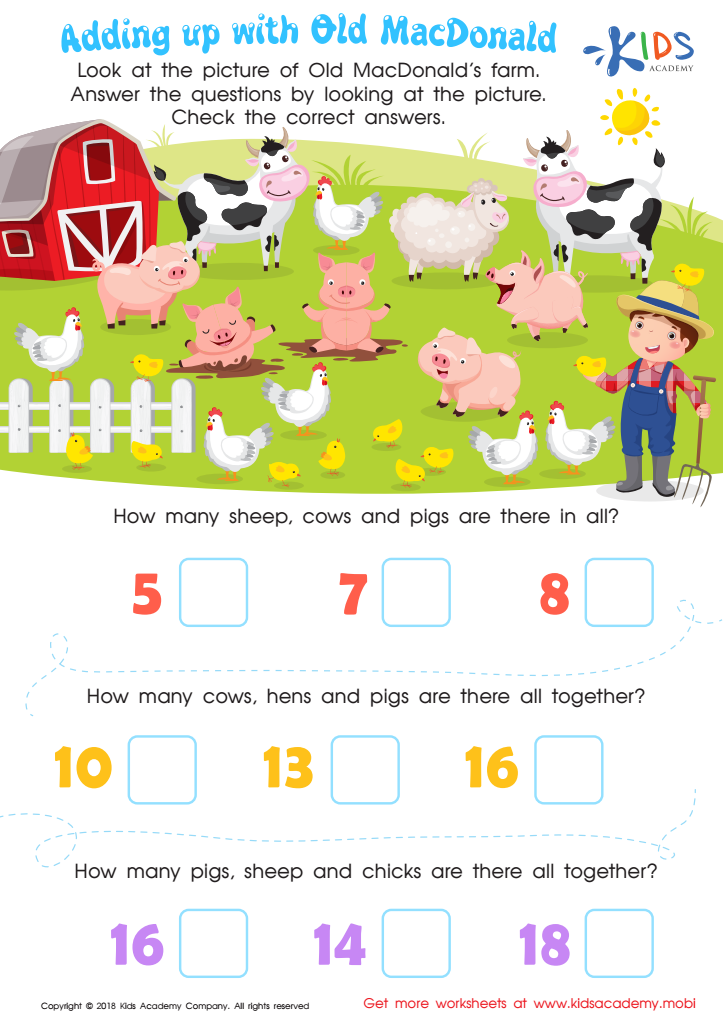
Adding Up with Old MacDonald Worksheet
 Assign to My Students
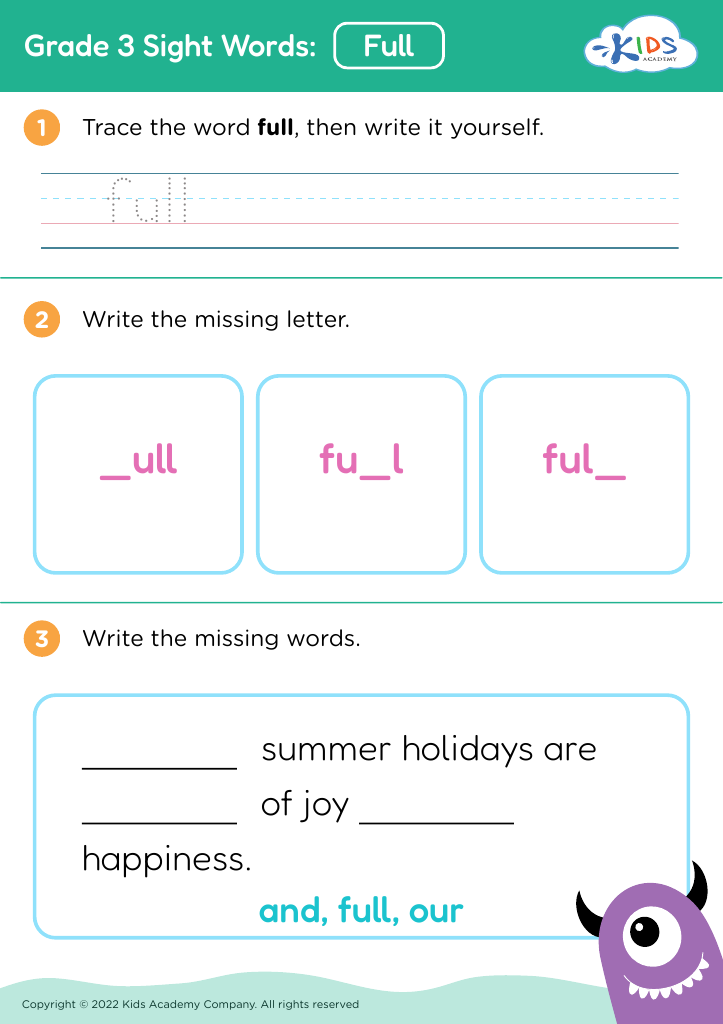
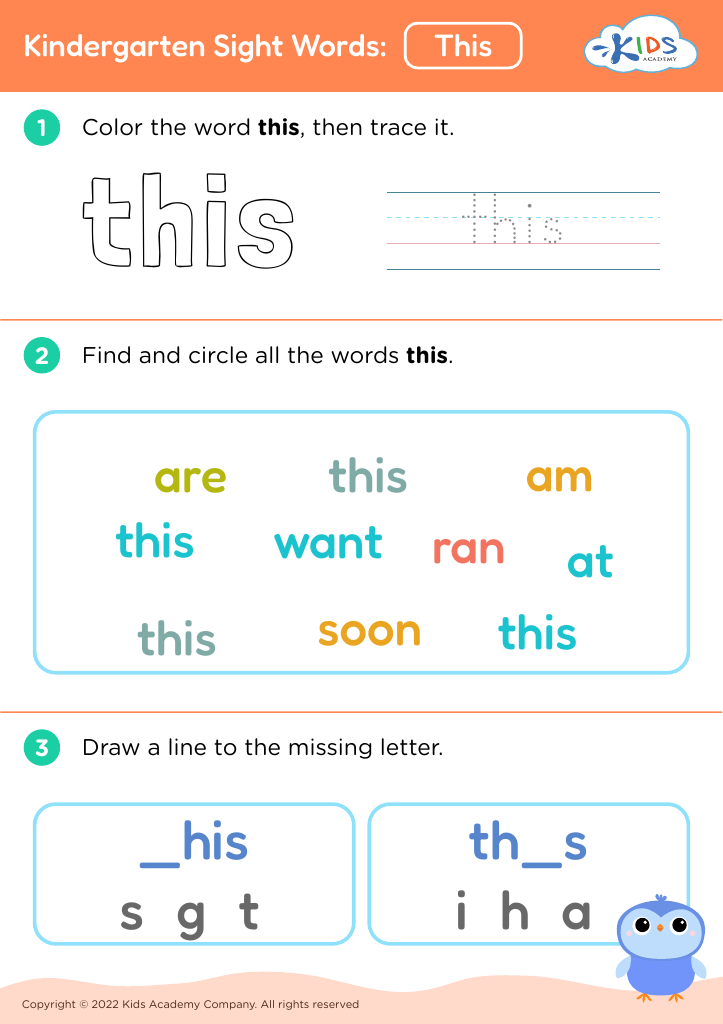








Addition skills are crucial for young children aged 5-8 as they form the foundation for all future mathematical learning. At this age, children are beginning to understand numbers and their relationships. Mastery of addition helps them develop problem-solving skills and logical thinking, which are essential for daily life and advanced mathematical concepts like multiplication and division.
Moreover, developing strong addition skills enhances a child's confidence and motivation in their academic journey. It empowers them with the ability to perform basic arithmetic operations that are necessary not only in school exercises but also in real-world scenarios, such as counting money or measuring ingredients while cooking. This means that children can see the relevance of math in their everyday lives.
Equally important is the impact of reading on a child's overall learning development, including math. Proficiency in reading allows children to comprehend word problems and instructions better, making it easier for them to tackle mathematical concepts. Combining addition skills with reading practice at this developmental stage can enhance a child's cognitive abilities, ensuring they don't just memorize numbers but actually understand the operations behind them.
By nurturing these skills early, parents and teachers equip children with the tools they need for academic success and every aspect of life. Therefore, focusing on both addition skills and reading abilities in early education sets a robust groundwork for more complex learning in the future.








