Critical thinking development Reading Worksheets for Ages 5-8
5 filtered results
-
From - To
Enhance your child’s critical thinking skills with our engaging reading worksheets designed for ages 5-8! Our resources seamlessly blend fun and learning, helping young readers develop essential thinking skills while exploring captivating stories and informative texts. These worksheets encourage analysis, evaluation, and interpretation, fostering a deeper understanding of the material. With varied activities, including comprehension questions and discussion prompts, kids will strengthen their abilities to reason and connect ideas. Set your child on the path to becoming a confident thinker and reader. Discover the power of critical thinking through our interactive reading worksheets today!
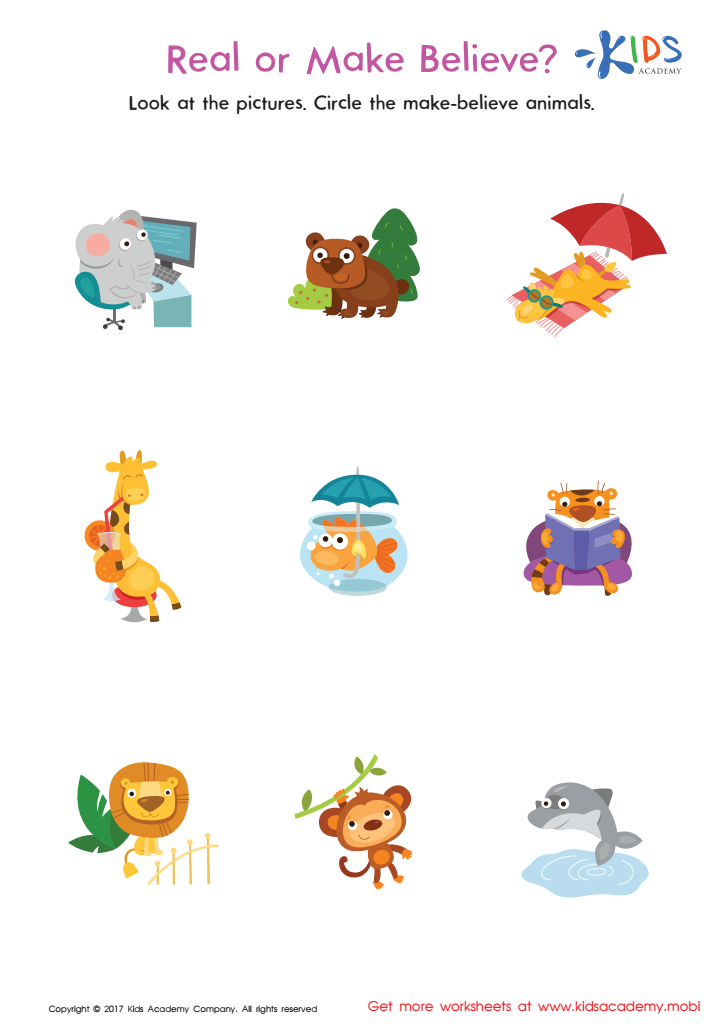
Fact or Make Believe Worksheet
 Assign to My Students
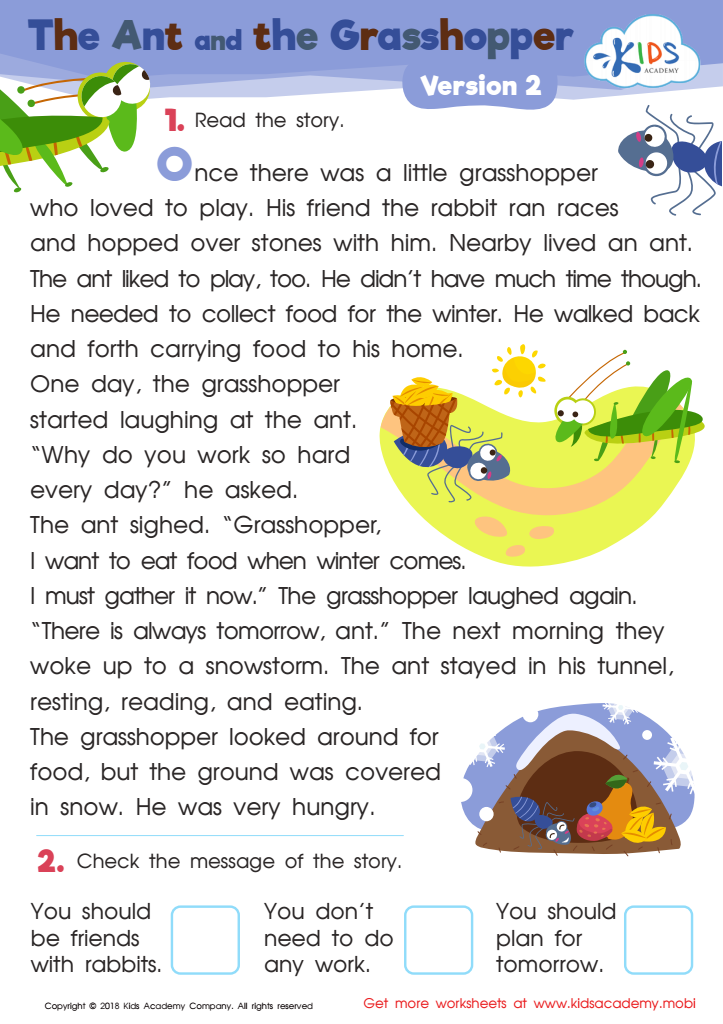
The Ant and The Grasshopper Version 2 Worksheet
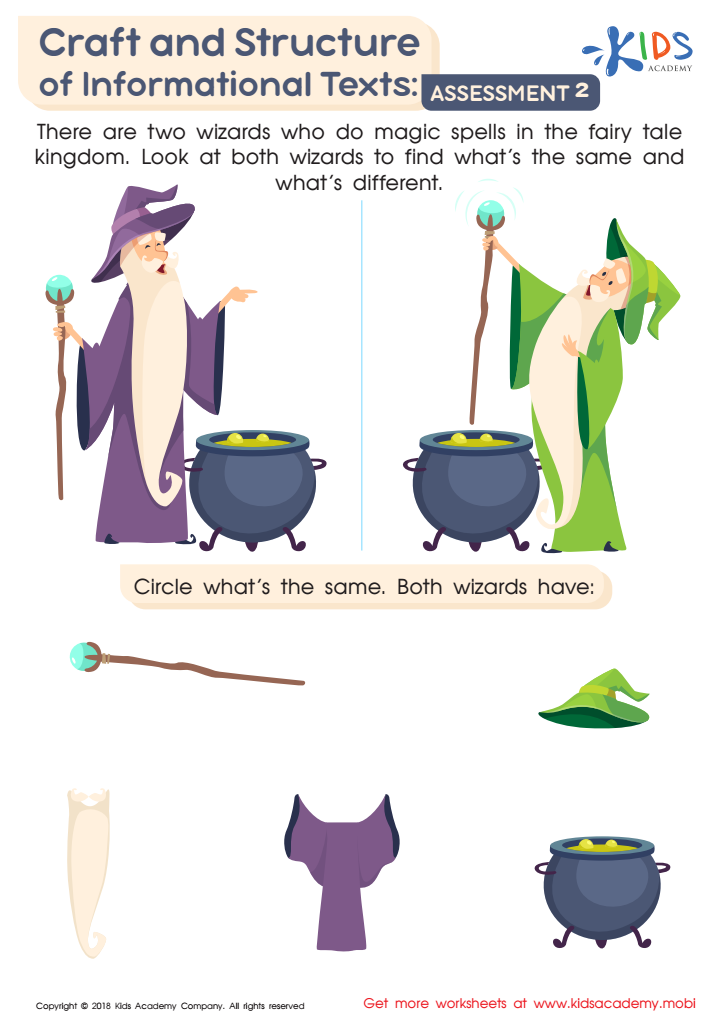
Craft and Structure of Informational Texts: Assessment 2 Worksheet
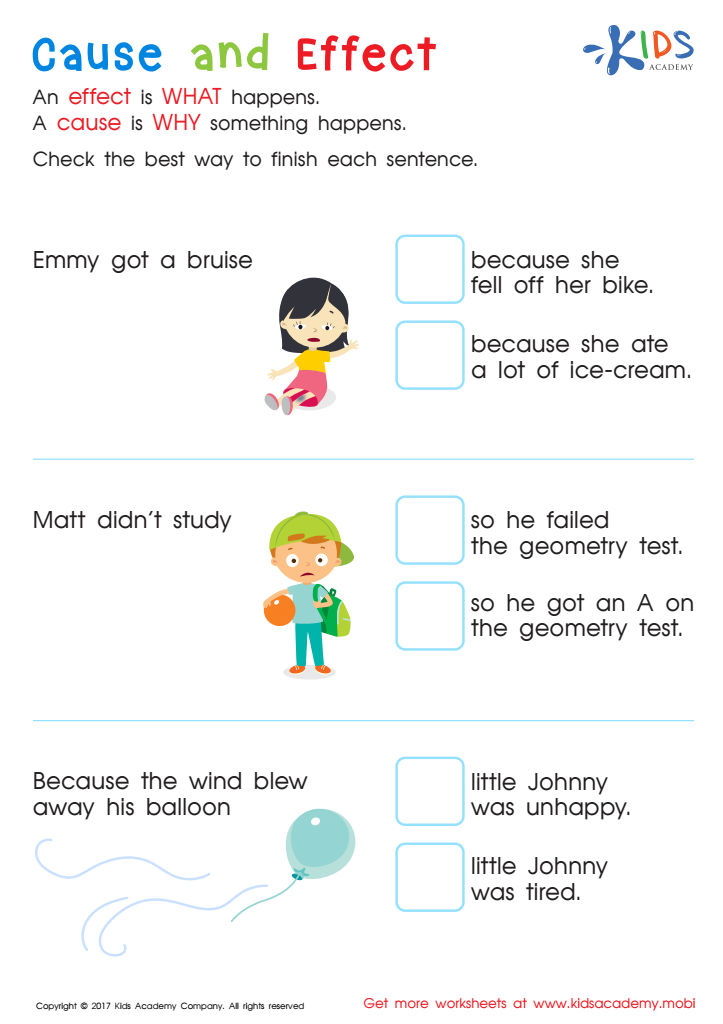
Cause and Effect Worksheet
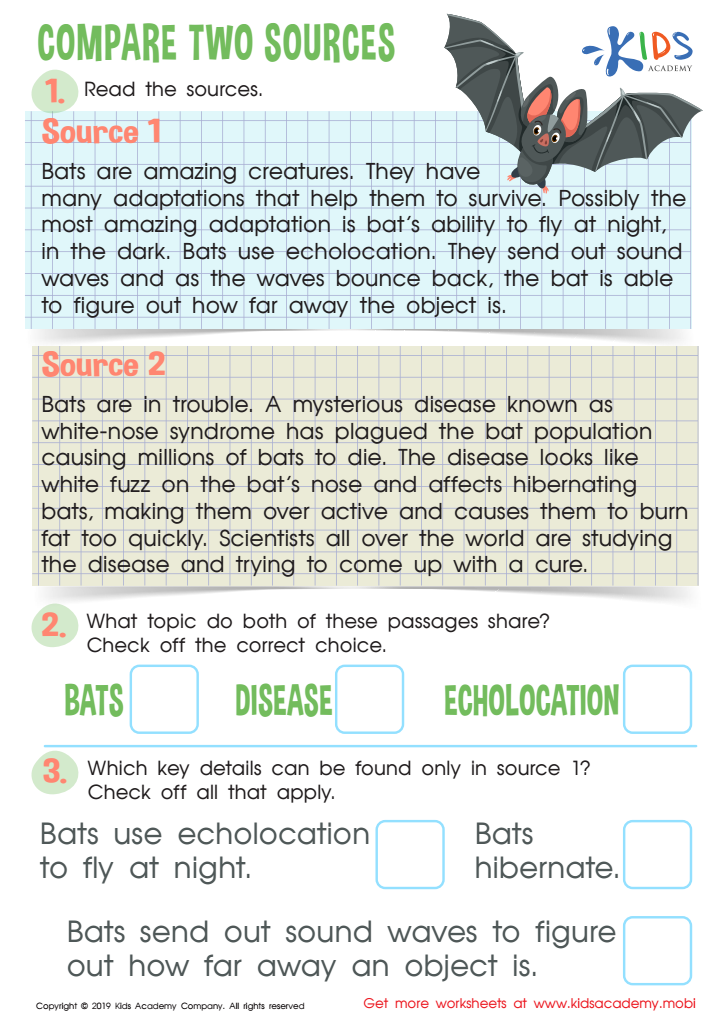
Compare Two Sources Worksheet








Critical thinking development through reading is crucial for children ages 5-8, as it lays the foundation for lifelong learning and problem-solving skills. During these formative years, children are naturally curious and eager to explore their world. Encouraging critical thinking while they read fosters their ability to analyze information, ask questions, and make connections. This process helps children not only to better understand the stories they encounter but also to relate them to their own experiences and the world around them.
Furthermore, critical thinking enhances comprehension skills. As children engage with texts, they learn to evaluate the credibility of information and differentiate between fact and opinion. This skill is essential in our information-rich society, where they will encounter various viewpoints. Developing critical thinking also boosts creativity, as children learn to envision alternative endings or imagine different character motivations.
For parents and teachers, nurturing these skills promotes a love for reading and learning, empowering children to become independent thinkers. By fostering critical thinking in reading, adults are equipping children with the tools needed to navigate complex situations and make informed decisions as they grow, ultimately shaping compassionate and engaged members of society.








