Reading Improvement Reading Worksheets for Ages 5-8
5 filtered results
-
From - To
Enhance your child's reading skills with our engaging Reading Improvement Worksheets designed for ages 5-8. These printable resources, available at Kids Academy, focus on key reading skills such as phonics, comprehension, and vocabulary. Each worksheet is crafted to make learning fun and interactive, encouraging children to practice at their own pace. With colorful illustrations and age-appropriate exercises, kids will build confidence and become passionate readers. Perfect for homeschooling, extra practice, or classroom use, our worksheets provide a solid foundation for literacy development. Explore the joy of reading improvement today and watch your child thrive!
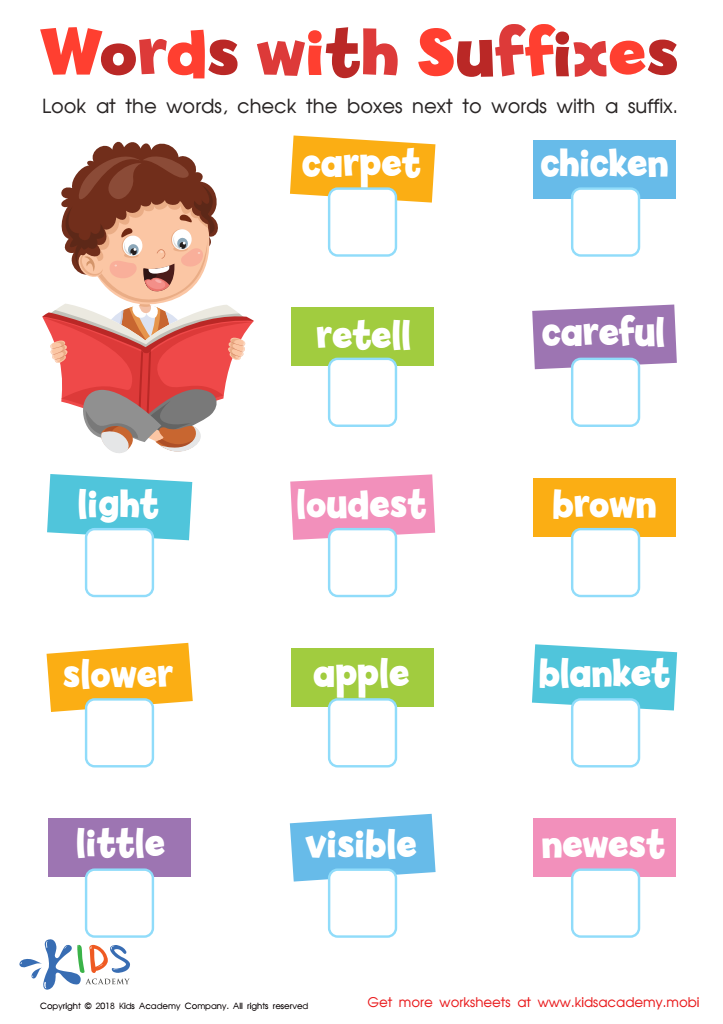
Reading: Words With Suffixes Worksheet
 Assign to My Students
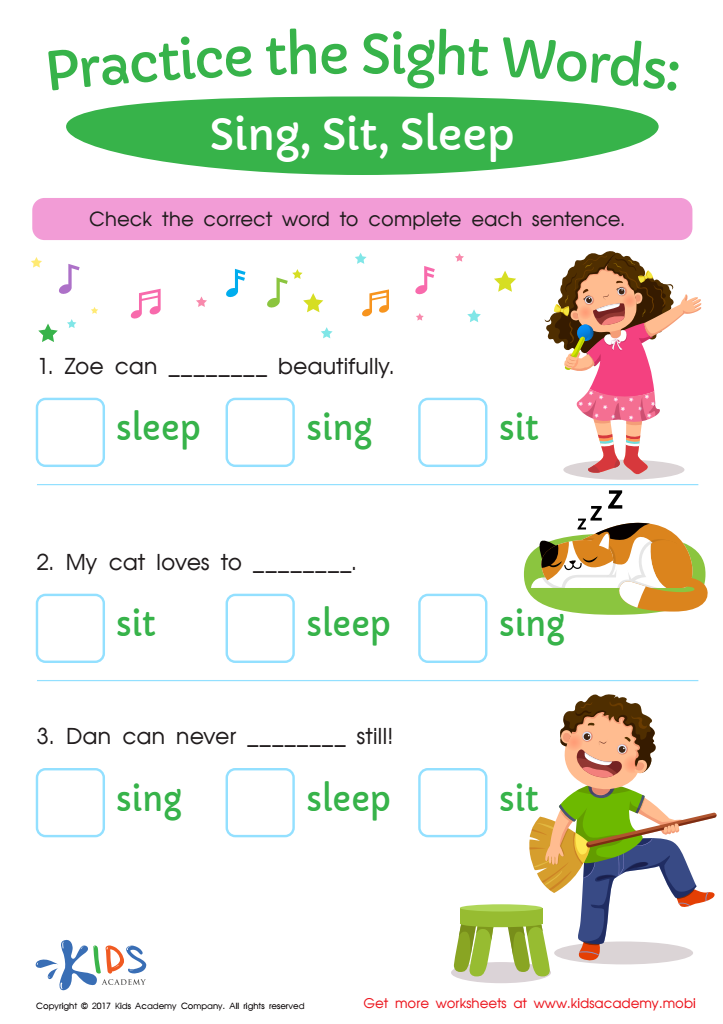
Sing, Sit, Sleep Sight Words Worksheet
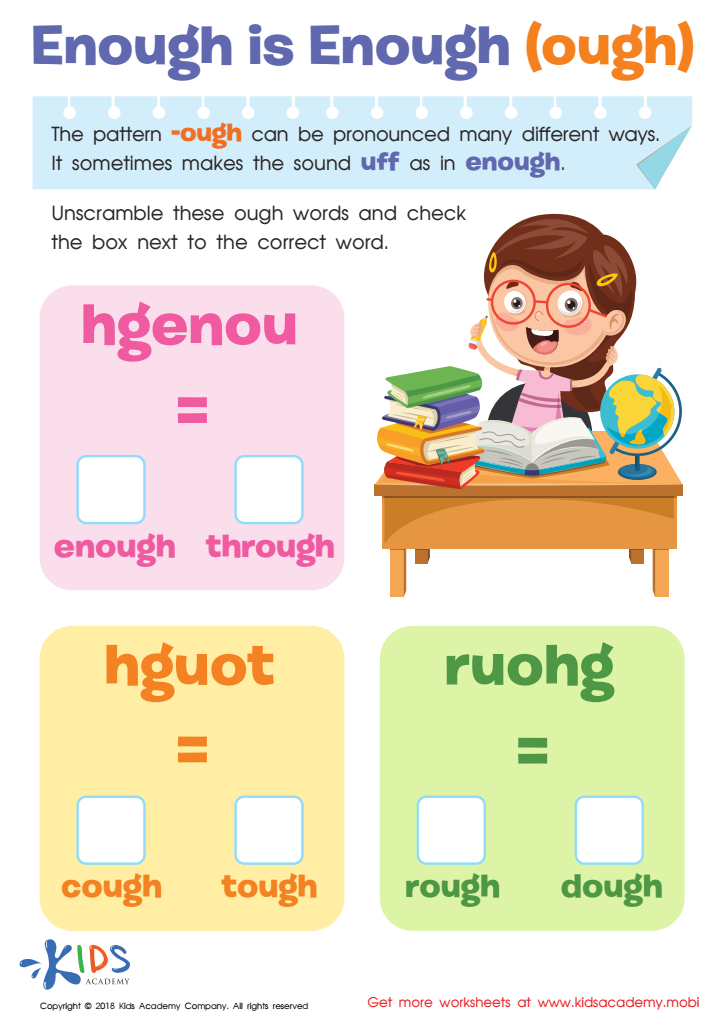
Enough Is Enough (ough) Worksheet
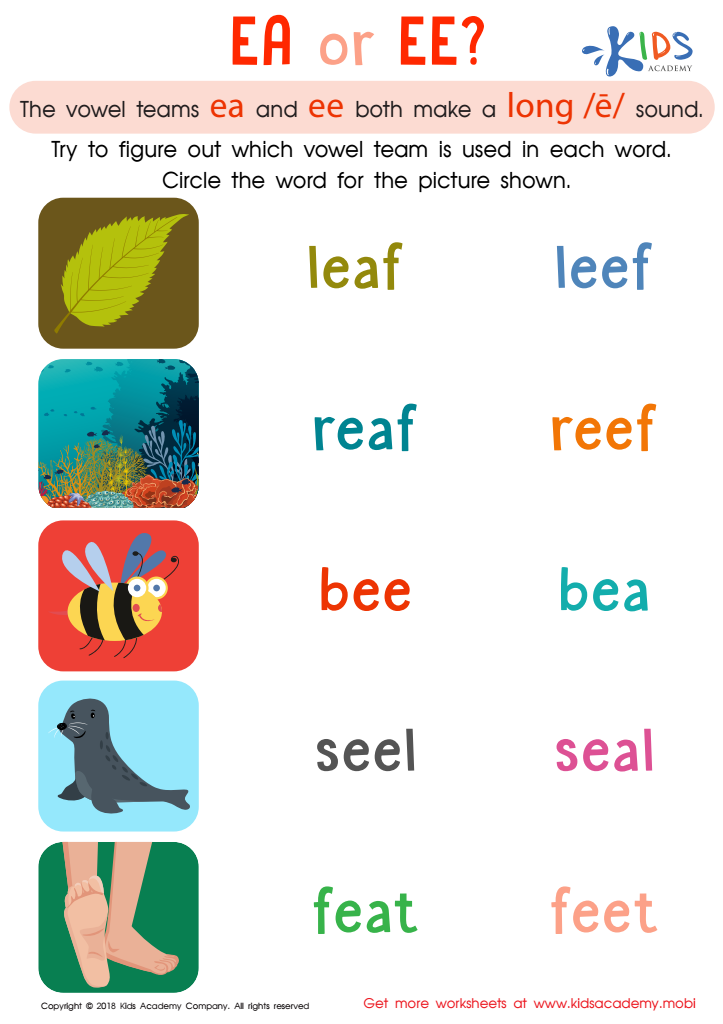
Reading: EA and EE Worksheet
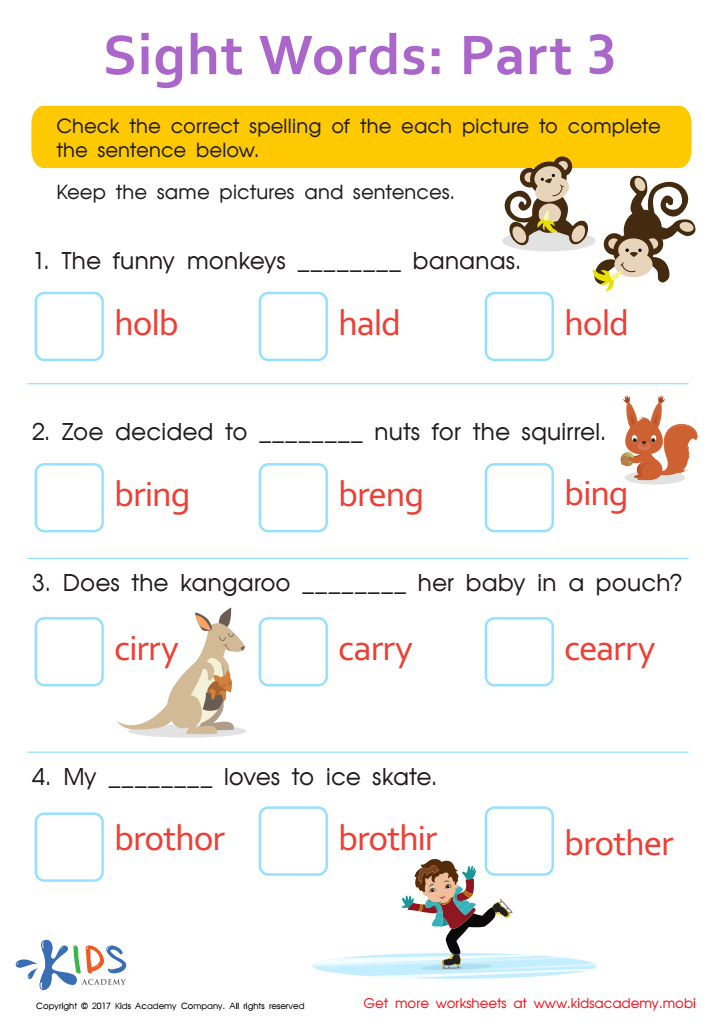
Hold, Bring, Carry, Brother Sight Words Worksheet








Parents and teachers should be highly invested in reading improvement for children aged 5-8, as this stage is critical for literacy development. Early reading skills create a solid foundation for all future learning. Research shows that children who can read proficiently by third grade are more likely to succeed academically and achieve higher educational levels later in life.
During these formative years, children develop phonemic awareness, vocabulary, and comprehension skills. Supporting reading improvement fosters not only cognitive development but also enhances social skills and boosts self-esteem. Engaging with stories and texts helps children connect with the world around them, encourages creativity, and strengthens critical thinking abilities.
Moreover, with the digital age's distractions, fostering a love for reading loses significance unless parents and teachers actively encourage it. Active participation through reading with children, helping them select appropriate materials, and introducing fun literacy activities are essential strategies to nurture their reading skills.
Lastly, reading aptitudes correlate with long-term academic performance which directly impacts career opportunities and personal growth. Parents and educators play a crucial role in ensuring children develop a lifelong love for reading that will empower them throughout their education and beyond. Hence, prioritizing reading improvement is a shared responsibility that can shape future generations.








