
Spatial awareness Reading Worksheets for Ages 5-8
5 filtered results
Difficulty Level
Grade
Age
-
From - To
Subject
Activity
Standards
Unlock the world of spatial awareness with our engaging Reading Worksheets for ages 5-8! These expertly designed printables help children develop crucial spatial skills by connecting fun stories and activities. Young learners will enjoy interactive tasks that teach them how to understand directions, recognize patterns, and grasp the relationship between objects. Perfect for both classroom use and at-home practice, our worksheets are tailored to spark curiosity while building cognitive and reading abilities. Foster your child’s confidence and bring learning to life with easy-to-use resources that suit their developmental needs. Explore, learn, and grow with our Spatial Awareness Reading Worksheets!
Favorites
With answer key
Interactive
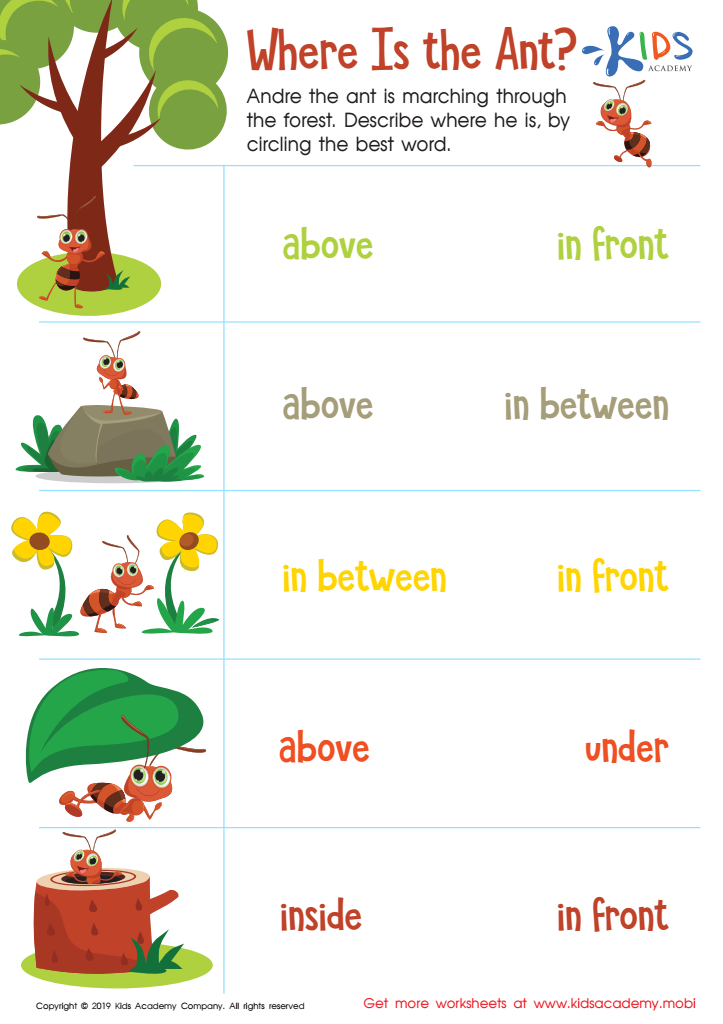
Where Is the Ant? Worksheet
Kids are captivated by ants. Andre is a busy ant, marching through the forest. Help your child circle the best word that best describes what he's doing in each picture. This colorful printout will show them the way.
 Assign to My Students
Where Is the Ant? Worksheet
Worksheet
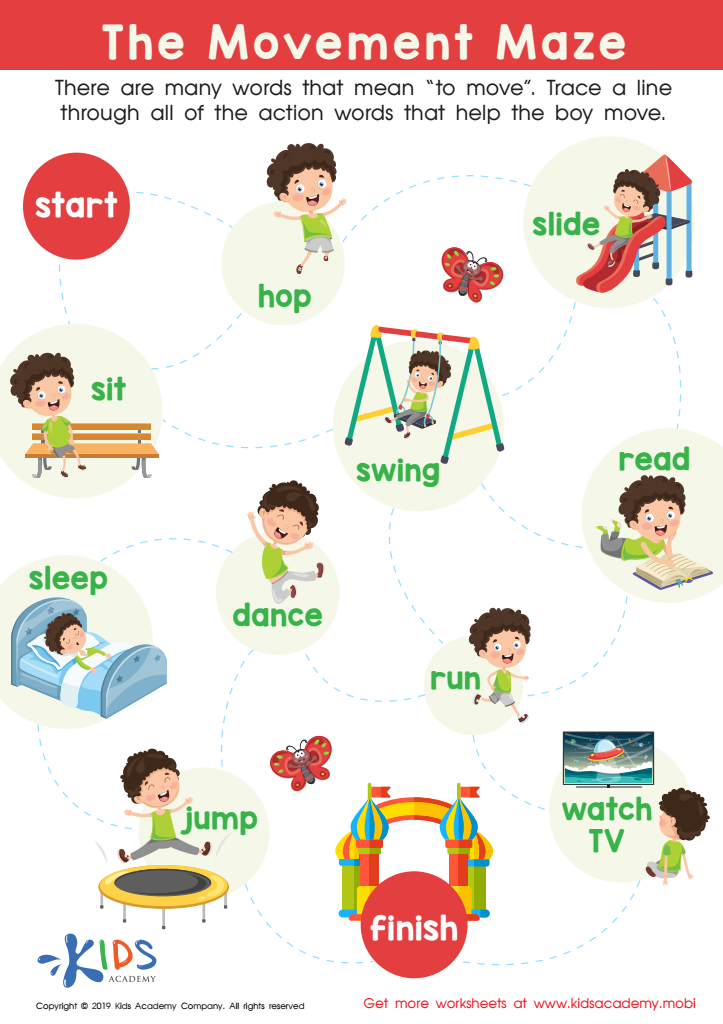
The Movement Maze Worksheet
Let your child have fun with this interactive PDF download. Kids will learn movement words with cute pictures, plus practice fine motor skills as they trace. A fun way to reinforce vocabulary. Jump, hop and sit – it's all here!
The Movement Maze Worksheet
Worksheet
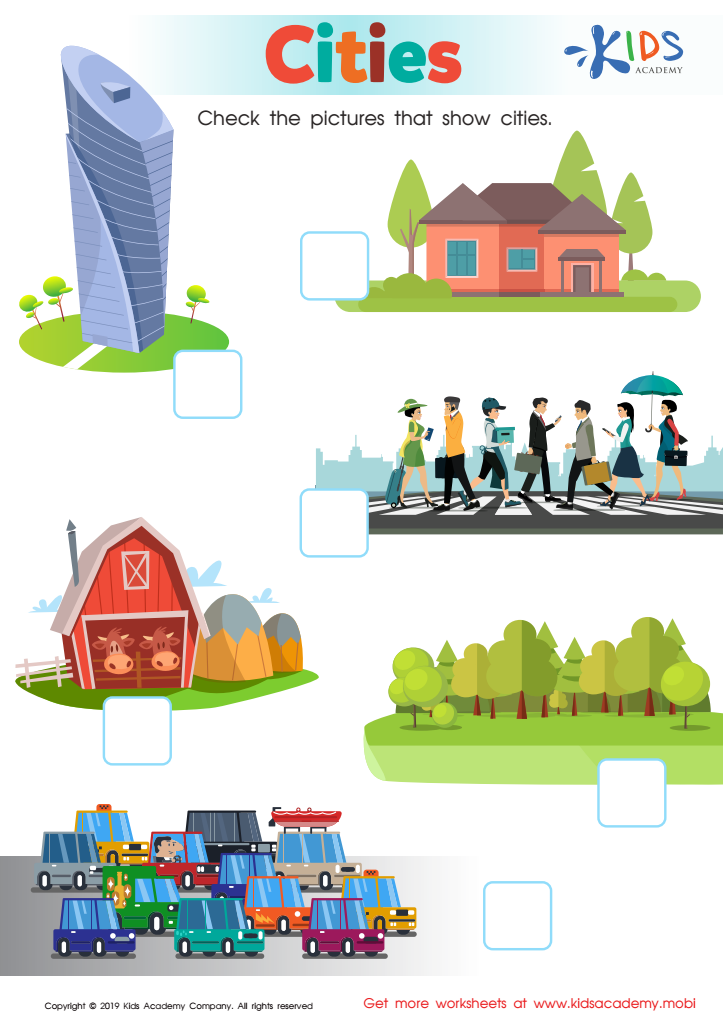
Cities Worksheet
This social studies PDF introduces kids to the differences between cities and towns. Colorful imagery helps them to distinguish between the two; for example, cities have traffic, business people and skyscrapers, while suburbs and rural areas do not. This allows children to have a reference point for what makes cities unique.
Cities Worksheet
Worksheet
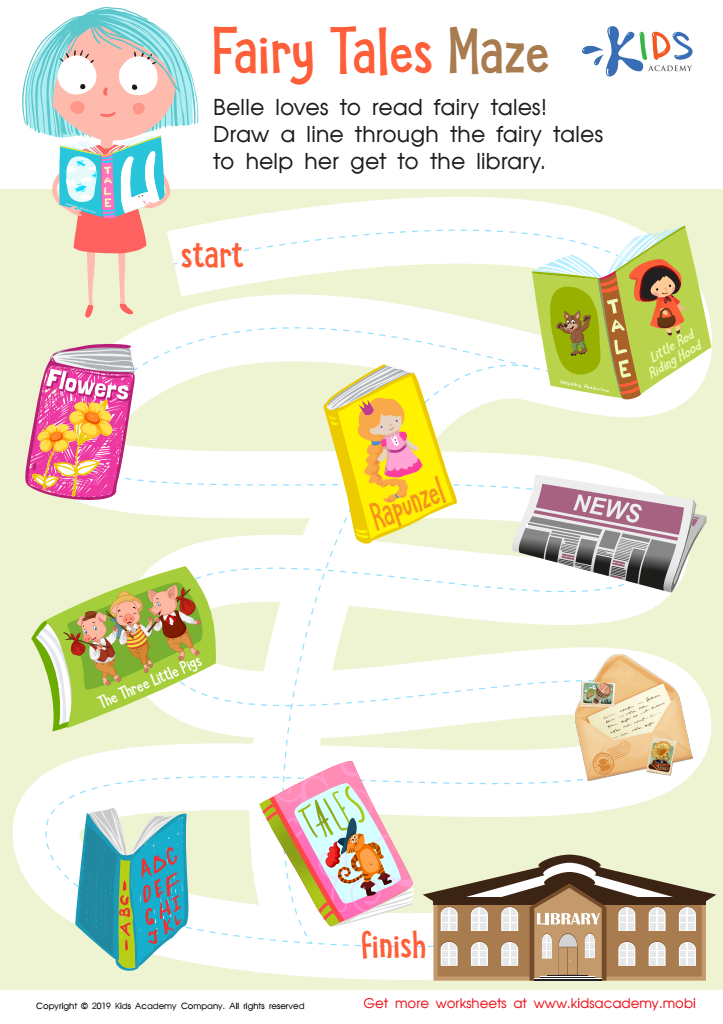
Fairy Tales Maze Worksheet
Kids love mazes and fairy tales, so this free worksheet is a great way to help teach young readers about familiar topics. They'll join Bella and use the traceable lines to travel through different reading genres, and find their way to the library for a nice reward!
Fairy Tales Maze Worksheet
Worksheet
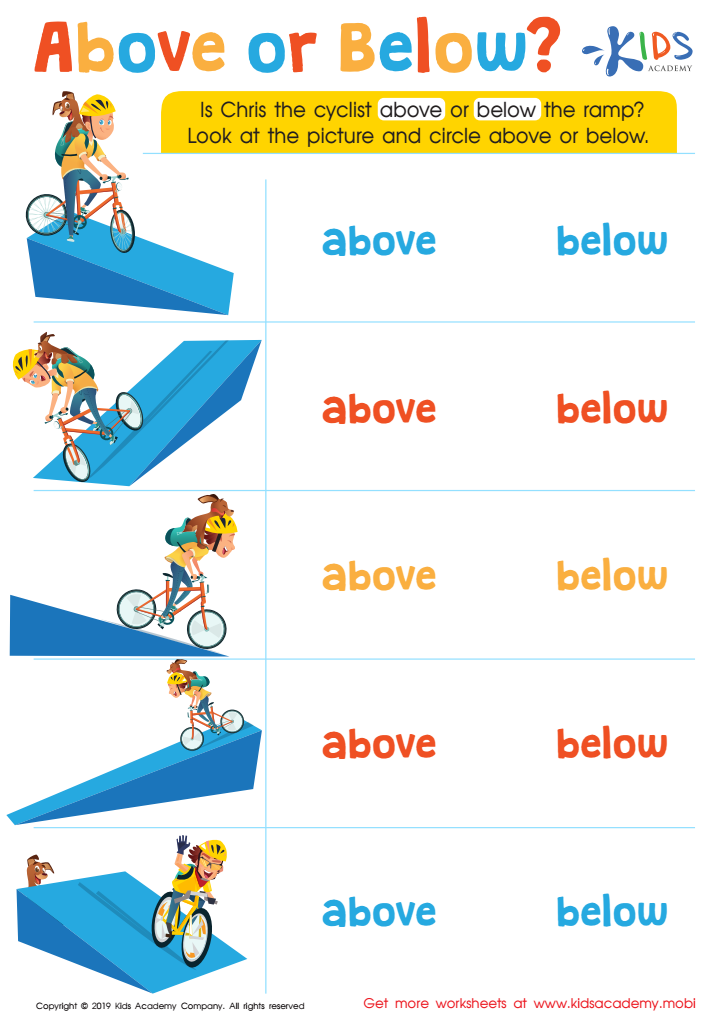
Above or Below? Worksheet
Do your kids cycle? Chris is a cyclist practicing on a ramp. Look at the pictures with them and decide if Chris is above or below the ramp. It's an important skill to help your kids become fluent speakers and writers - using the right words to describe something. Cycling is a fun sporting event.
Above or Below? Worksheet
Worksheet
Join Kids Academy for Free
Who is primarily going to use this learning content?








Spatial awareness is a fundamental skill for children aged 5-8, as it affects various aspects of their learning and development. Parents and teachers should emphasize spatial awareness in reading because it lays the groundwork for many critical competencies.
Firstly, spatial awareness helps children understand the orientation of letters and words on a page, which is crucial for reading fluency. Recognizing letters in different orientations and configurations reduces errors and boosts reading confidence. Knowing where to start reading and following text from left to right and top to bottom requires spatial skills. Children who develop strong spatial awareness are better equipped to follow the logical sequence of written information.
Secondly, these skills are integral to math learning. Understanding concepts like size, distance, and position enhances children's ability to grasp mathematical principles such as geometry, measurement, and number line placement. Success in early math builds a positive attitude toward the subject and encourages continued learning.
Lastly, spatial skills translate into real-world tasks. From navigating their environment to engaging in everyday activities like tying shoes or assembling puzzles, children with good spatial awareness are more competent and confident. Ensuring that children develop these skills fosters their academic success and day-to-day problem-solving abilities.
By nurturing spatial awareness in reading at a young age, we set children on a path to become proficient readers, capable mathematicians, and adept problem-solvers.








