Understanding habitats Reading Worksheets for Ages 5-8
3 filtered results
-
From - To
Discover our "Understanding Habitats Reading Worksheets" designed for children ages 5-8. These engaging and educational worksheets aim to introduce young learners to the amazing world of habitats. Filled with colorful illustrations and age-appropriate texts, each worksheet helps kids comprehend various habitats, such as forests, deserts, and oceans. Our exercises encourage reading proficiency while expanding their understanding of different animal homes and ecosystems. Perfect for both classroom use and homeschooling, these worksheets foster curiosity about the natural world, improve reading skills, and promote critical thinking. Explore our collection today to make learning about habitats fun and informative!
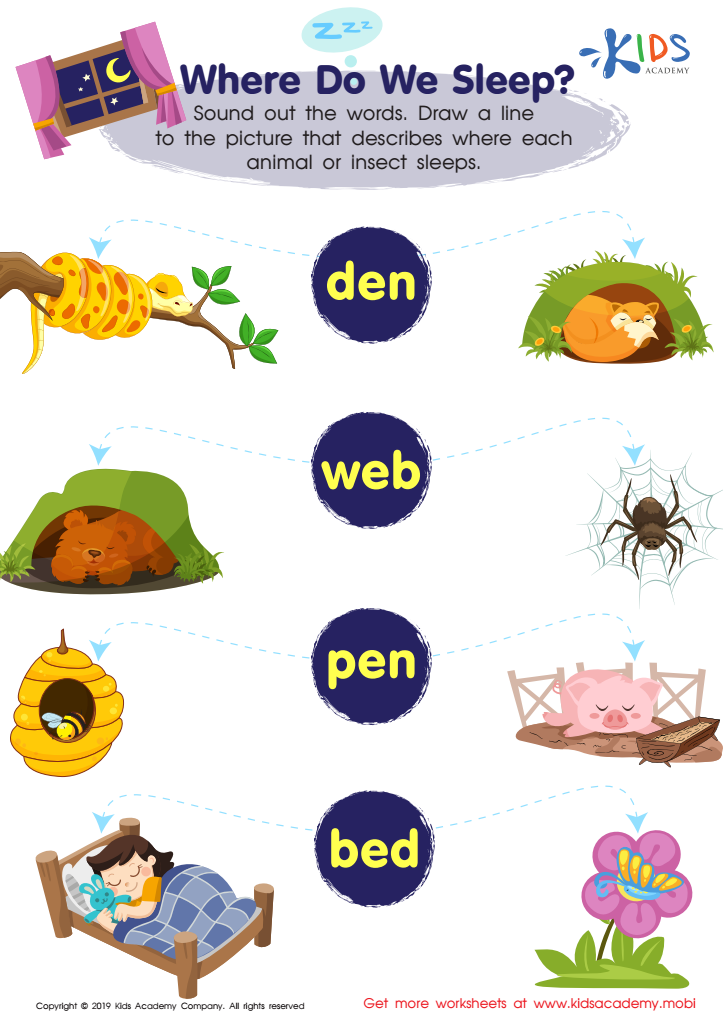
Where Do We Sleep Worksheet
 Assign to My Students
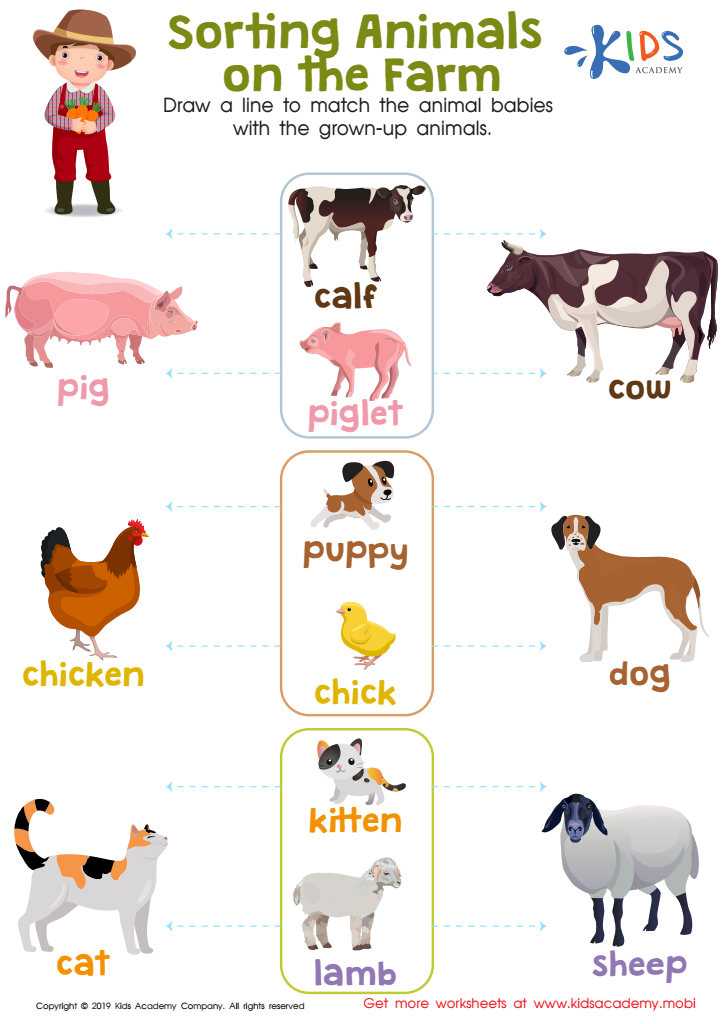
Sorting Animals on the Farm Worksheet







Supporting young children in understanding habitats is essential for several key reasons. Firstly, it nurtures their curiosity about the natural world, enabling them to build a sense of wonder and respect for various living environments—deserts, forests, oceans, and more. By investigating these diverse habitats, children grasp how different creatures adapt to survive, which is fundamental in learning about biodiversity and ecological balance.
Additionally, exploring habitats at a young age enhances critical thinking and observation skills. As children identify different plants, animals, and environmental features, they engage in scientific inquiry and start to comprehend cause-and-effect relationships. For example, understanding why polar bears live in cold climates highlights concepts of adaptation and survival strategies.
This knowledge also fosters environmental awareness and stewardship. When children understand the importance of habitats and the interdependence of life within them, they often develop a sense of responsibility toward protecting the environment. Encouraging sustainable practices and empathy for wildlife at an early age can create lifelong advocates for our planet.
Moreover, integrating habitat studies into reading activities enriches literacy development. It broadens vocabulary, improves comprehension, and introduces STEM concepts in an age-appropriate and engaging way. Therefore, both parents and teachers play a crucial role in fostering a holistic educational experience that combines linguistic/social skills with environmental consciousness.








